The Worst Wrestlers of 2026: Mat Habits That Lose Every Bout
The worst wrestlers of 2026 do not lose because they drew a stronger opponent or had one unlucky day on the mat. They lose the same way, bout after bout, because of habits that were never fixed: no setup before a shot, no defence when the opponent attacks, no conditioning for the third period, and no plan for the moment things go wrong. Wrestling is a sport of position, timing, pressure and patience, and the wrestlers below fail at those things so reliably that the result is rarely in doubt. This guide ranks the worst types of wrestler in 2026, across freestyle, Greco-Roman and folkstyle, so you can spot the patterns early and avoid them in your own training.
Key takeaways
- The worst wrestlers shoot from too far away with no setup, so every attack is telegraphed and easily stopped.
- One move is never enough: a wrestler with a single takedown and no backup plan is solved by every decent opponent.
- Stalling loses bouts slowly, through cautions and passivity calls, long before the scoreboard looks bad.
- Poor conditioning shows up in the third period, when tired legs cannot finish shots or defend a lead.
- Mat wrestling decides close bouts, so a wrestler who cannot ride or escape gives away points from the bottom.
How the worst wrestlers of 2026 were ranked
Every type below was scored on five measures. Attack quality comes first: does the wrestler set up shots with fakes, ties and motion, or simply charge in and hope? Defence is second, judged on the sprawl, the whizzer and the ability to stop a takedown before it starts. Conditioning is third, because a wrestler who fades after four minutes cannot win a six-minute bout. Mat wrestling is fourth: riding, turning and escaping, the quiet points that decide close matches. Composure is the fifth measure: does the wrestler stay calm and stick to a plan after conceding points, or fall apart?
Two notes before the list. First, no single wrestler is named as the worst, because the same bad patterns appear in many places, and what matters is learning to recognise them. Second, the patterns cross all three styles: freestyle, Greco-Roman and folkstyle each punish the same mistakes in their own way, and a habit that loses in one style usually loses in the others too. Fans of combat sports will find the same logic in our guides to the worst boxers and the worst fencers, where a missing jab or a wild lunge gives the bout away just as surely as a bad shot does here.

Comparison table: the worst wrestlers of 2026
| Rank | Wrestler type | Main flaw | How the bout is lost |
|---|---|---|---|
| 1 | The head-down charger | Shots with no setup | Sprawled on, then scored on |
| 2 | The one-move wrestler | A single takedown, nothing else | Solved after the first period |
| 3 | The passive staller | No attacks, waits for the clock | Cautions and passivity points |
| 4 | The gassing wrestler | No conditioning past four minutes | Fades and gives up late points |
| 5 | The no-defence wrestler | No sprawl, no whizzer, no hips | Taken down at will |
| 6 | The mat-weak wrestler | Cannot ride or escape | Turned and ridden out |
| 7 | The head-case | Loses temper after conceding | Rushes, fouls, collapses |
The worst wrestlers of 2026
1. The head-down charger: the worst way to attack
The head-down charger is the easiest wrestler in the world to beat, because every attack arrives with a warning. There is no fake, no tie-up, no change of level disguised by motion: the charger simply drops the head, reaches from too far away, and dives at the legs. A decent opponent sees it coming from the first tie-up, sprawls hard, and either scores on the re-attack or rides out the rest of the period. The fix is not complicated, but it is slow: learn to hand-fight, move the opponent, and shoot only when the feet are close and the head is up. Until then, every bout follows the same script.
2. The one-move wrestler: solved by half-time
The one-move wrestler usually looks dangerous for about two minutes. There is a single takedown, often a decent double leg or a headlock, drilled a thousand times and finished well. The problem is that wrestling is a sport of adjustment, and a good opponent only needs to see a move once to take it away. By the second period the single leg is being stuffed, the headlock is being blocked, and the one-move wrestler has nothing to turn to. There is no second attack, no counter to the counter, and no way to score when the favourite move is gone. A wrestler needs at least three ways to score, and one of them must work when the first is taken away.
3. The passive staller: losing slowly on purpose
The passive staller is the most frustrating wrestler to watch, and the easiest to score against once the referee gets involved. This type backs away from every tie-up, circles the edge of the mat, and waits for the clock to run out, hoping to steal a bout on a single point. It never works for long. Freestyle referees hand out passivity calls, Greco-Roman puts the staller on the clock, and folkstyle penalises stalling directly, so the points leak away one caution at a time. Wrestling rewards the athlete who controls the centre and forces the action, and the staller does the opposite on every exchange.
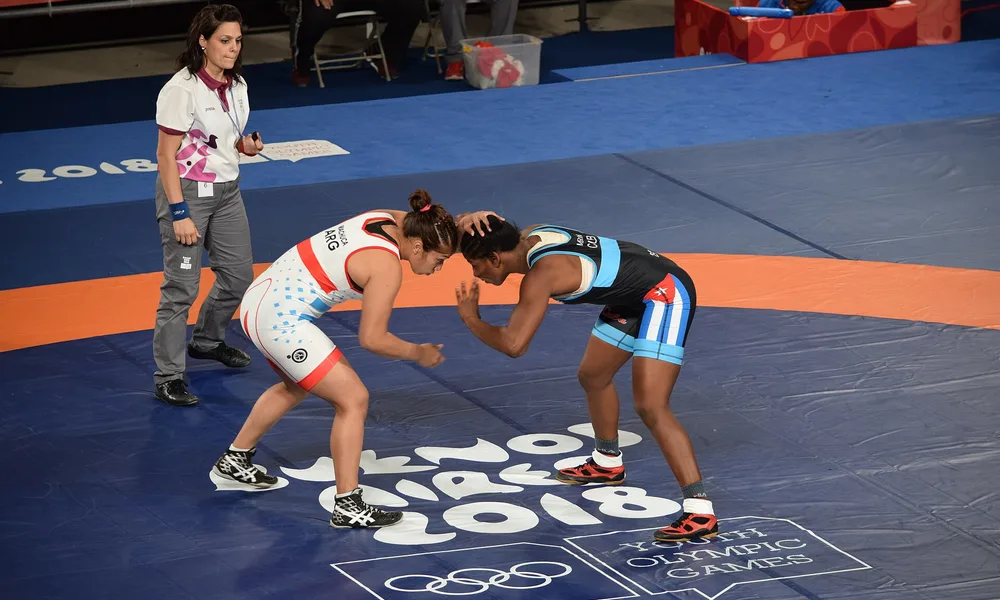
4. The gassing wrestler: fit for four minutes, lost in six
The gassing wrestler often leads early, which makes the collapse harder to watch. The first period looks sharp: quick shots, good motion, a takedown or two. Then the second period starts, the legs go heavy, the hands drop, and the shots that worked at the start now fall short. By the third period the gassing wrestler is standing upright, breathing hard, and giving up takedowns to an opponent who has barely warmed up. Conditioning is not a bonus in wrestling; it is the foundation everything else sits on. The mat exposes poor fitness faster than any other surface in sport.
5. The no-defence wrestler: a takedown waiting to happen
The no-defence wrestler treats every opponent’s attack as a surprise, even when it is the same shot for the third time. There is no sprawl, no whizzer, no hip pressure, and no sense of where the feet should be when the opponent changes level. A good attacker needs one clean entry, and the bout is effectively over: two points, then control, then more points from the top position. Defence is the least glamorous part of wrestling and the most important, because a wrestler who cannot be taken down is never out of a bout. The wrestlers below this one on the list at least make their opponents work; this type hands the points over.
6. The mat-weak wrestler: beaten from the bottom
The mat-weak wrestler can look respectable on the feet and then fall apart the moment the bout goes to the mat. From the bottom there is no escape, no stand-up, no switch, just a flat body waiting to be turned. From the top there is no ride, no pressure, no turn, just a loose hold that the opponent escapes from in seconds. Close bouts are decided on the mat, so this type loses the matches that matter most: tied at the end of the second period, put underneath, and ridden out until the clock runs down. Mat wrestling is a separate skill, and skipping it leaves half the sport unlearned.

7. The head-case: beaten by the scoreboard in his own mind
The head-case loses the bout twice: once on the scoreboard, and once in his own head. Concede a takedown and the composure goes with it. The wrestling gets wild, the shots get desperate, the hands start grabbing, and the fouls start coming. A head-case who is two points down wrestles like he is ten points down, and an opponent who stays calm simply picks him apart. Coaches dread this type more than any other, because the technique is often there and the temperament is not. Wrestling is a sport of small margins, and the athlete who cannot handle a bad call or a lost exchange will always find a way to lose a winnable bout.
What to avoid if you do not want to wrestle like the worst
The patterns above share one root cause: training that skips the boring parts. Avoid that trap by checking three things: can you score from three different setups, can you stop a takedown without panicking, and can you finish six minutes without your legs going? If any answer is no, that is where the next month of training goes. The same discipline applies in other combat sports, and our guide to the worst tennis players makes the same point about one-dimensional games, because a player with one shot and no backup loses the same way in every sport.
Checklist: spotting a worst wrestler before the bout starts
- Watch the first tie-up: a wrestler who never hand-fights will shoot from too far away within a minute.
- Count the attacks: one move repeated three times means the wrestler has no second option.
- Watch the feet at the edge: constant backing up is stalling, and the referee will catch it.
- Check the breathing after the first period: heavy legs and dropped hands mean the third period is already lost.
- Watch the bottom position: a wrestler who lies flat and waits is giving away riding time and turns.
- Watch the reaction to the first conceded points: wild rushing and arguing are the signs of a head-case.
Frequently asked questions
What makes a wrestler the worst in 2026?
A repeated pattern of losing the same way: bad setups, no defence, poor conditioning, weak mat wrestling or lost composure. One bad bout means nothing; the same mistake in every bout is what puts a type on this list.
Do the worst wrestlers lose in every style?
Mostly yes. Freestyle, Greco-Roman and folkstyle punish the same habits differently, but a wrestler who cannot defend a shot or finish six minutes will lose in all three, even if the scores look different.
Why is stalling so costly in modern wrestling?
Because the rules punish passivity directly, so a wrestler who refuses to attack gives away points without the opponent doing anything.
Can a one-move wrestler ever win at a high level?
Only briefly. A single great move wins early bouts, but good opponents scout it, take it away, and force the wrestler to score another way. Without a second and third option, the wins stop coming.
Is conditioning really more important than technique?
Neither works without the other, but conditioning decides close bouts. Technique wins the first period; the engine wins the third.
How do you fix the habits on this list?
By training the weak half of the sport: defence drills, mat wrestling, live conditioning and composure under pressure. The fix is slow and unglamorous, which is exactly why the worst wrestlers never do it.
Bottom line
The worst wrestlers of 2026 lose the same way every time: they shoot without a setup, they have one move and no backup, they stall, they gas out, they cannot defend, they cannot work on the mat, or they lose their temper when the score turns against them. None of those flaws is a mystery, and none of them is fixed by hoping the next opponent is weaker. Fix the setup, build a second attack, defend the shot, train the engine, learn the mat and keep your head, and the patterns on this list stop being yours.