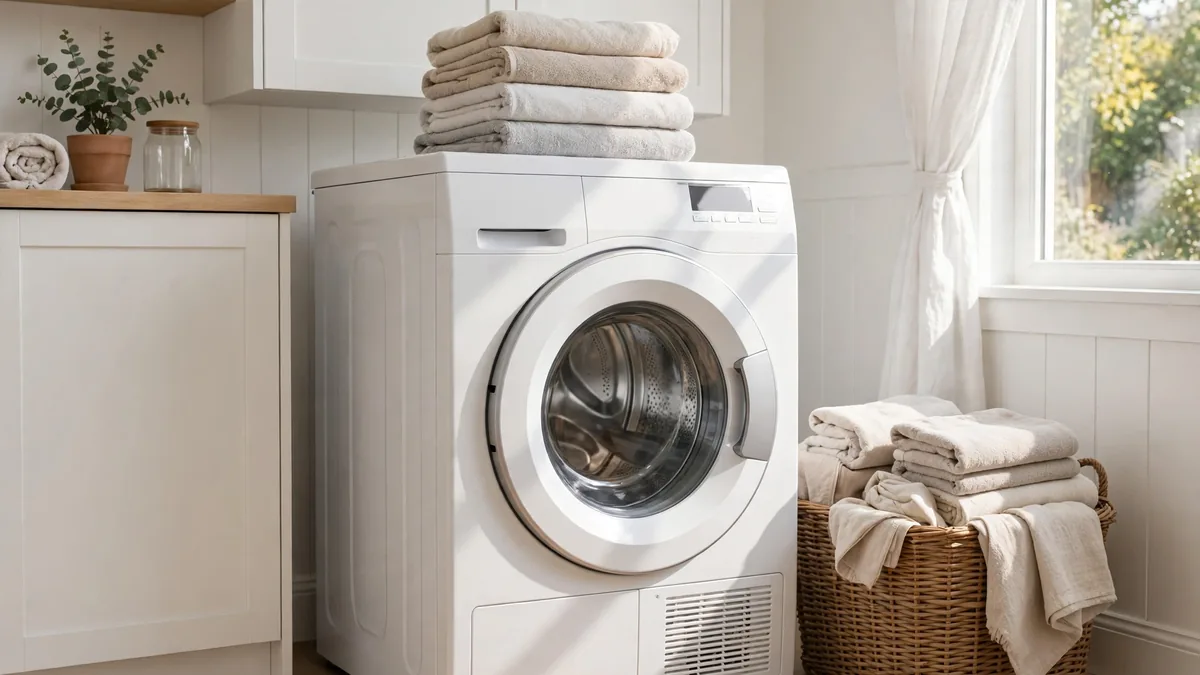
The top dryers in 2026 are laundry tumble dryers, the machines that take wet washing from the washer and return it dry, soft and ready to fold. They are not hair dryers, and they are not hand dryers for a bathroom wall: they are the big drum machines that finish wash day. A good tumble dryer dries a full load evenly without shrinking jumpers or turning towels into sandpaper, and it does it without doubling the electricity bill. This guide compares tumble dryers on drying speed, gentleness, energy use, noise and venting.
There is no single best dryer for every home, because the right dryer depends on where it will live and what you dry. A family drying school uniforms and bedding every day needs capacity and speed; a flat with no outside wall needs a condenser or heat-pump model; someone drying wool needs a gentle sensor programme, not a timer that keeps tumbling until the clothes are bone dry. The drying technology inside decides the running cost, and over five years that cost is usually bigger than the price of the machine.
Key Takeaways
- Heat-pump dryers cost the least to run by a wide margin, and they are the gentlest on clothes, but they take longer per load.
- Sensor drying beats a timer every time: it stops when the clothes are dry, so it saves energy and stops overdrying.
- Buy capacity to match your washer: a dryer smaller than the washer means splitting every load in two.
- Clean the lint filter after every single load; a clogged filter is the most common cause of slow drying and the biggest fire risk.
- Vented dryers are cheap and fast but need a hose to the outside, while condenser dryers work anywhere but cost more to run.
Vented, Condenser and Heat-Pump Dryers
Every tumble dryer falls into one of three families, and the family decides the running cost, the drying time and where the machine can live. A vented dryer is the simplest: it heats air, blows it through the drum, and pushes the damp air out through a hose that goes through a wall or a window. It is the cheapest to buy and the fastest to dry, and the thirstiest for power. It needs a vent to the outside, so it suits a laundry room or garage with an outside wall.
A condenser dryer works anywhere, because it does not need a vent. It cools the damp air inside the machine, turns the moisture into water, and collects it in a tank you empty or a drain you plumb in. It costs more to buy and more to run than a vented dryer, and it gives off some heat and moisture into the room. A heat-pump dryer is a condenser dryer with a heat pump that recycles the warm air instead of throwing it away. It uses roughly half the electricity of a standard condenser dryer and dries at a lower temperature, so it is the cheapest dryer to run by a long way, though it costs more to buy and takes longer per load.
Drying Speed and Sensor Drying
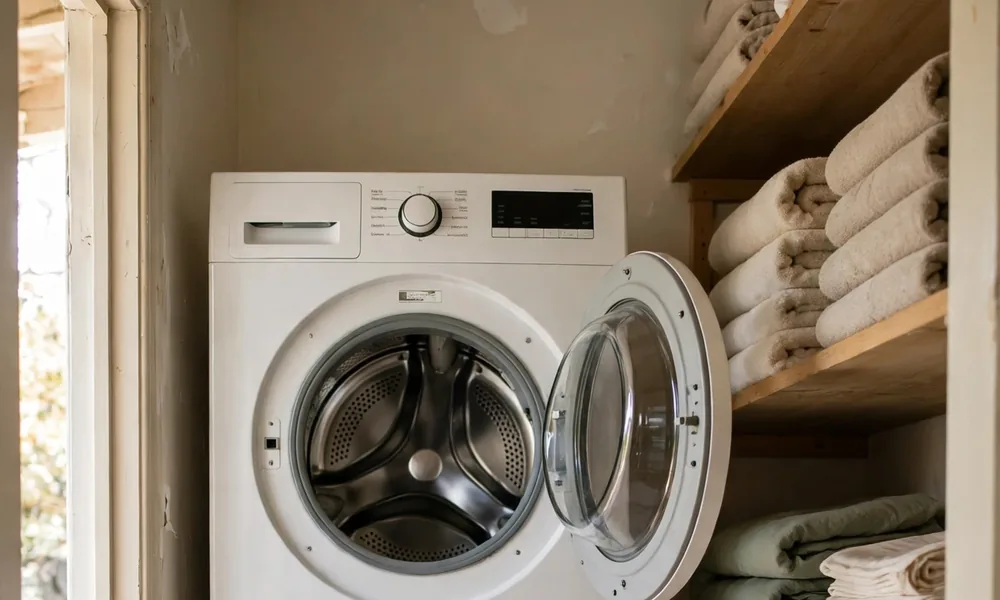
Sensor drying uses moisture sensors in the drum to measure how damp the clothes are, and it ends the cycle when they reach the dryness you chose. A timer runs for the minutes you set whether the clothes are dry or not, so it either stops too early and leaves damp patches or runs too long and bakes the load. Timed drying wastes electricity, wears clothes out faster, and shrinks anything with wool or elastic. Match the dryer to the washer: the best washing machines leave clothes drier after the spin, but a dryer with a smaller drum than the washer still forces you to split every load in two.
Gentleness: How Dryers Shrink Clothes
Shrinkage is the fear that stops people using a dryer at all, and it is mostly avoidable once you know what causes it. Wool shrinks when it is agitated in heat and moisture together, which is exactly what a hot dryer does, so wool and anything labelled dry-clean-only should never go in the dryer. Cotton shrinks a little on the first hot dry and then settles. Elastic, the waistbands and cuffs that keep clothes fitting, is damaged by sustained high heat, so it goes slack over time. The dryer is not the enemy of clothes; the wrong programme is.
The gentlest way to dry is a low-heat or delicate programme with sensor drying, which stops while the clothes are still very slightly damp and lets them finish drying on a rack. Heat-pump dryers are the gentlest of all, because they dry at around 50 degrees instead of 70 or more. If you dry a lot of delicates, look for a dryer with a dedicated wool or silk programme and a drum that reverses direction, which stops sheets tangling into a ball. Use dryer sheets sparingly: they leave a coating on the moisture sensor, so wipe the sensor bars clean every month.
Energy, Noise and Where the Dryer Lives
Energy is where dryers differ most, and the gap is bigger than most people expect. A vented dryer can cost roughly twice as much per load as a heat-pump dryer, and a household drying five loads a week will spend hundreds more a year on the vented machine. Compare kilowatt-hours per cycle on the label rather than the letter grade alone, and remember the label assumes a full cotton load, not the half loads most homes actually dry. The cheapest way to cut drying costs is to spin the washing harder in the washer, and to dry full loads instead of half loads.
Noise matters more with a dryer than with a washer, because a dryer runs for an hour or more at a stretch. A heat-pump dryer is usually the quietest, because its compressor hums rather than roars, while a vented dryer with a big fan is the loudest. Look for a noise rating under 65 decibels if the dryer sits near a living room or bedroom. Where the machine lives also decides the type: a vented dryer needs an outside wall, a condenser dryer needs a room that can handle the warm moist air it gives off, and any dryer needs space around it for air to circulate.
| Type | Best for | Running cost | Drying time | Watch out for |
|---|---|---|---|---|
| Vented | Garages and laundry rooms with an outside wall | High | Fast | Needs a vent hose to the outside |
| Condenser | Flats with no outside wall | Medium to high | Medium | Warms the room, tank needs emptying |
| Heat pump | Daily drying, delicates, low bills | Low | Slow | Higher price, longer cycles |
| Washer-dryer combo | Studio flats, one small load at a time | Medium | Slow | Dries half a wash load at a time |
The Mistakes That Ruin Dryers and Clothes
The first mistake is the lint filter, and it is the one nearly everyone makes. The filter catches the fibres every load sheds, and when it is clogged the air cannot flow, so drying takes twice as long, the machine overheats, and the fire risk rises sharply. Clean the filter after every single load, not once a week, and wash the filter mesh in warm soapy water every month, because fabric softener leaves an invisible film that blocks the airflow even when the filter looks clean.
The third mistake is drying things that should never go in a dryer: anything with rubber, foam or plastic, leather, silk, and wool unless the label says it is safe. Rubber melts, foam crumbles, and wool felts into a smaller, thicker version of itself. The fourth mistake is overdrying, usually from a timer programme left running. Clothes dried to bone dry are harder to iron and wear out faster; stop at slightly damp and let them finish on a rack. A drying rack in a ventilated room finishes a load gently and costs nothing to run.

Checklist Before You Buy
- Choose the type first: vented only if you have an outside wall, heat pump if you dry daily and want low bills, condenser if you need flexibility.
- Match the dryer capacity to your washer, so a full wash load dries in one dryer load.
- Insist on sensor drying, not a timer, and check it works on small loads as well as full ones.
- Look for a low-heat or delicate programme and a reversing drum if you dry wool, silk or bedding.
- Check the noise rating and the space around the machine: it needs air to circulate and room for the door to open.
- Read the energy label per cycle, not just the letter grade, and budget for the running cost over five years, not just the purchase price.
Frequently Asked Questions
Do tumble dryers shrink clothes?
They can, but heat and agitation together cause most shrinkage, not the dryer alone. Wool felts in a hot dryer, cotton shrinks a little on its first hot dry, and elastic weakens with sustained high heat. Use a low-heat programme with sensor drying, and keep wool and silk out of the dryer.
Is a heat-pump dryer worth the extra money?
For most households that dry several loads a week, yes. A heat-pump dryer uses roughly half the electricity of a standard condenser dryer, so the saving usually pays back the higher price within a few years, and the lower temperature is gentler on clothes. If you dry once a week or less, a cheaper condenser dryer may make more sense.
Why does my dryer take so long to dry?
Almost always airflow: a clogged lint filter, a blocked vent hose, or a dirty condenser. Clean the filter after every load, check the hose is not kinked or crushed, and clean the condenser unit. An overloaded drum also dries slowly, because the clothes cannot tumble.
Can I put a dryer on top of a washing machine?
Yes, if both machines are front loaders of the same width and you use the proper stacking kit, which bolts them together and absorbs vibration. Never stack a dryer on a top loader, and never stack without the kit: a dryer can walk off a washer on spin. Check the manufacturer’s stacking list before you buy.
Do I need to vent a condenser dryer?
No. A condenser dryer turns the moisture into water and collects it in a tank, so it needs no hose to the outside. It does give off warm, moist air into the room, so the room needs some ventilation, and the tank needs emptying unless you plumb the drain hose into a sink or standpipe.
Are dryer balls better than dryer sheets?
For most loads, yes. Wool dryer balls soften clothes, cut static and shorten drying time without leaving a coating on the sensor bars, while dryer sheets can leave a film that makes the moisture sensor read wrong. If you use sheets, wipe the sensor bars inside the drum clean every month.
The Bottom Line
Buy the dryer type that fits your home first, then the capacity that matches your washer, and always choose sensor drying over a timer. A heat-pump dryer is the best buy for most households that dry regularly: it costs the least to run, it is the gentlest on clothes, and the longer cycle is a fair trade for the saving. Keep the lint filter clean after every load, stop at slightly damp, and let a rack finish the job.


