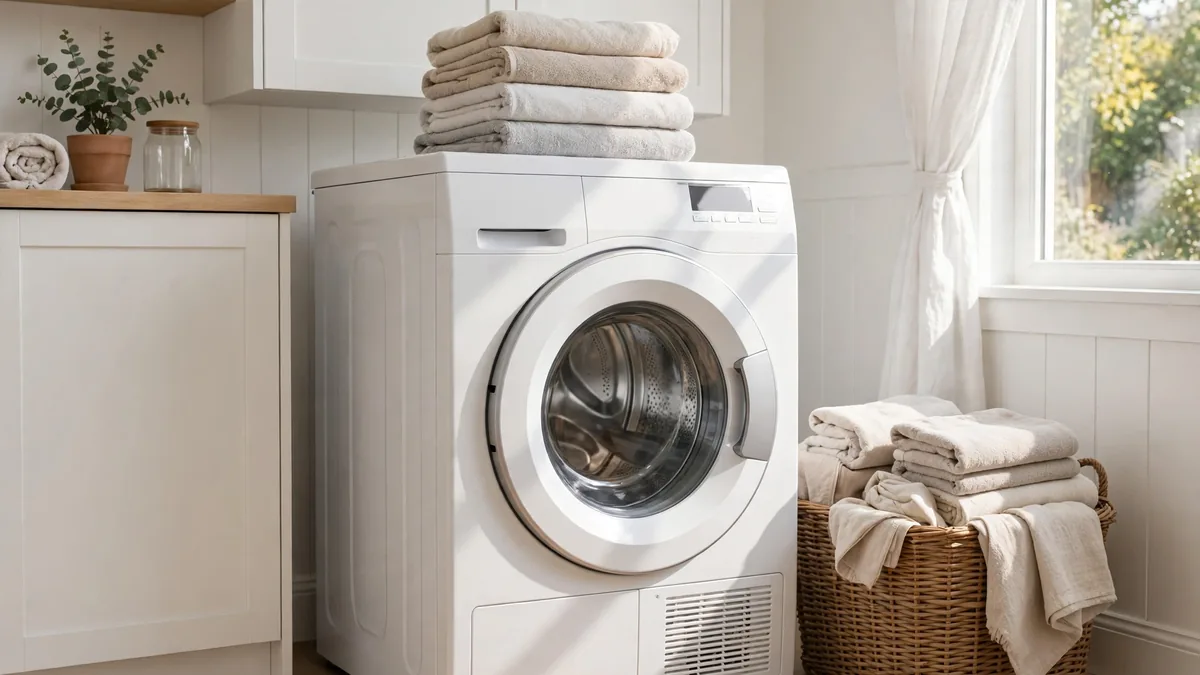
The best washing machines in 2026 are the ones you forget about. They wash a full load properly on a normal cycle, they do not shake the floor, and they do not turn a favourite jumper into a doll’s jumper. That sounds like a low bar, but it is exactly where most machines fail. A washing machine runs several times a week for a decade or more, so the difference between a good one and a mediocre one shows up hundreds of times. This guide compares washing machines on cleaning power, gentleness, noise, capacity and running costs.
There is no single best washing machine for every home, because the right machine depends on how you wash. A family washing school uniforms and sports kit every day needs capacity and a fast cycle; a couple in a flat needs quiet and a small footprint; someone washing wool and silk needs a genuinely gentle drum. The mistake is buying on spin speed or brand alone. What matters is the drum, the motor, the programmes, and whether the machine fits the space you actually have.
Key Takeaways
- Cleaning comes from the drum action, the water temperature and the detergent working together, not from the highest spin speed on the box.
- A front loader cleans better and uses less water, while a top loader is easier to load and usually finishes a cycle faster.
- Buy capacity for your biggest regular load, not your average one: a machine that is always stuffed full never washes properly.
- An inverter motor is the single best predictor of a quiet machine, and it is worth paying extra for if the machine sits near a bedroom.
- Overdosing detergent is the most common cause of smelly machines and grey laundry, and it costs money on every single wash.
Front Loaders, Top Loaders and the Rest
Most washing machines fall into two families. A front loader tumbles the washing through a shallow pool of water, which uses less water, is gentler on clothes because there is no central agitator rubbing the fabric, and usually cleans better on a normal cycle. It also stacks: put a dryer on top and a front loader takes half the floor space of a top loader. The trade-offs are real, though. You have to bend down to load it, a cycle often takes longer, and the rubber door seal needs wiping dry or it grows mould. If you have a bad back or a laundry room with no room to swing a door open, those trade-offs matter more than the water saving.
A top loader fills from above, and the washing sits in a deep drum of water. The classic design has a central agitator that twists clothes through the water, while newer high-efficiency models use an impeller plate at the bottom instead. Top loaders are easier on knees and backs, you can add a forgotten sock mid-cycle, and a standard cycle is often twenty minutes faster than the equivalent front-loader programme. They use more water per wash, they are rougher on delicate fabrics, and they cannot be stacked, so they need more floor space. In a house with a big laundry room and daily washing, a top loader is often the practical choice. In a flat where the machine lives in the kitchen, a front loader usually wins.

Cleaning Power: What Actually Gets Clothes Clean
Cleaning is a partnership between the machine, the detergent and the temperature, and the machine’s job is the mechanical part: moving water and detergent through the fabric and rinsing it all away. Front loaders do this by lifting the washing and dropping it through the water, which is gentle and thorough. Top loaders do it by churning, which is faster but harder on fabric. Either way, the programme you choose matters more than the machine’s headline features. A 40-degree cotton cycle with a proper dose of detergent will clean a muddy football kit; a 20-minute quick wash will not.
The detergent matters as much as the machine, and the two have to suit each other. A high-efficiency machine needs a low-sudsing detergent, and too much of any detergent leaves residue that dulls clothes and feeds the smell that makes people blame the machine. Our guide to the best laundry detergents covers which formulas actually clean in cold water and how much to use, because the dose on the box is usually more than a normal load needs. Most everyday washing is best at 30 or 40 degrees, with a monthly 60-degree maintenance wash to keep the machine itself clean. No programme rescues a stain that has been dried in, so treat stains before they go in the drum, not after.
Capacity: Buy for Your Biggest Regular Load
Capacity is measured in kilograms of dry cotton, and the number on the box is the maximum, not the comfortable load. An 8-kilogram machine washes 8 kilograms of dry laundry, roughly a week’s worth for two people, or a single bed’s worth of sheets and towels. A family of four usually needs 9 or 10 kilograms. The mistake is buying too small and then stuffing the drum full every time. A drum that is packed tight cannot tumble, so the clothes come out half-clean and creased, and the motor and bearings wear out years early.

Noise, Vibration and Where the Machine Lives
Noise is the complaint people discover after they buy, and it is the hardest to fix. A machine’s noise comes from three places: the motor, the pump, and the drum spinning an unbalanced load. The motor is the part you can shop for. An inverter motor, sometimes called a brushless or direct-drive motor, runs quieter and smoother than older brushed motors, and it usually carries a longer warranty, often ten years on the motor alone. The drum is the wild card: any machine will thump if the load is unbalanced, which is why one heavy bath mat makes more noise than a full mixed load.
Running Costs: Water, Power and Detergent
A washing machine’s real price is the purchase price plus ten years of water, power and detergent, and the running costs often add up to more than the machine itself. Front loaders use roughly half the water of a conventional top loader, which matters if you pay for water by the meter and if you wash daily. Energy ratings have changed in recent years, so compare machines on the label’s kilowatt-hours per 100 cycles rather than the letter grade alone, and remember the label assumes a 40-degree cotton cycle, not the quick wash you actually use. A machine with a good eco programme saves real money over a decade, but only if you use it: an eco cycle takes longer because it washes cooler and slower, and people who find it too slow switch back to the standard cycle and lose the saving.
| Type | Best for | Typical capacity | Water use | Watch out for |
|---|---|---|---|---|
| Front loader | Flats, stacking, gentle washing | 7–11 kg | Low | Door seal mould, longer cycles |
| Top loader | Big families, fast cycles | 8–12 kg | High | Rougher on delicates, no stacking |
| Washer-dryer combo | Studio flats, one small load at a time | 7–9 kg wash, 4–5 kg dry | Medium | Slow drying, long cycles |
| Compact | Cupboards, under-counter spaces | 5–6 kg | Low | Small loads, wetter clothes |
The Mistakes That Ruin Washing Machines
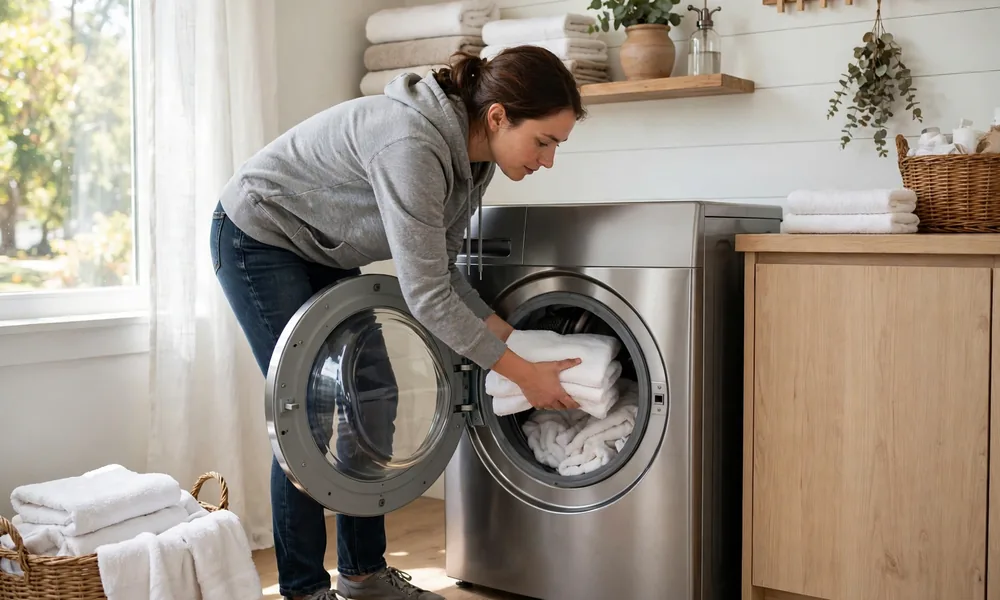
The fastest way to ruin a washing machine is to overload it. A drum stuffed to the brim cannot tumble, so clothes come out dirty and creased, the bearings take the strain, and the machine starts to smell because water cannot circulate. The rule is simple: you should be able to fit your flat hand vertically between the top of the load and the top of the drum. If you cannot, take something out. The second mistake is the opposite: running the machine nearly empty every day wastes water and power, so wait until you have a real load.
Checklist Before You Buy
- Measure the space, the door swing and the hose run, and check the machine will fit through the front door and up the stairs.
- Match capacity to your biggest regular load, using the bedding test: a double duvet needs 8 kilograms, a king duvet needs 10.
- Choose a front loader for gentle washing and stacking, or a top loader for speed and easy loading.
- Look for an inverter motor and a spin noise rating under 72 decibels if the machine sits near a bedroom.
- Check the programmes you will actually use: a proper wool cycle, a 30-degree everyday cycle, and a hot maintenance cycle.
- Read the warranty on the motor and the drum separately, and keep the delivery and installation receipt.
Frequently Asked Questions
How long should a washing machine last?
A well-looked-after machine lasts 10 to 12 years, and the motor often lasts longer than the rest of the machine. Cheap machines with thin drums and brushed motors tend to fail after 5 to 7 years, usually at the bearings or the pump. Regular filter cleaning, correct dosing and not overloading add years to any machine.
Is a higher spin speed always better?
Up to a point. A 1,400-spin machine gets clothes noticeably drier than a 1,200-spin one, which saves drying time and energy. Above 1,400 the gain is small, and very high spins are harder on fabric and noisier. For most homes, 1,400 is the sweet spot, and 1,200 is fine if the machine is otherwise good.
Why does my washing machine smell?
Almost always residue: too much detergent, always washing cold, and a door that is kept shut between washes. Run a hot 60-degree wash with no clothes and no detergent, wipe the door seal, clean the pump filter, and leave the door ajar. If the smell returns, cut the detergent dose in half.
Can I wash a duvet in a washing machine?
Yes, if the drum is big enough. A single duvet fits in an 8-kilogram machine, a double needs 9 or 10, and a king usually needs 10 or more. The duvet must have room to move: if you have to force it in, use a launderette machine instead. Dry it thoroughly afterwards, because a damp duvet mildews from the inside.
Do I need a special detergent for a front loader?
You need a low-sudsing detergent, usually labelled HE or suitable for front loaders. Ordinary detergent foams too much in the small amount of water a front loader uses, and the excess foam cushions the clothes, reduces cleaning, and leaves residue. The best stain removers work in either type, but the detergent itself must match the machine.
Should I sort laundry before washing?
Yes, at least by colour and by fabric weight. Sorting stops darks going grey and whites going pink, and it stops heavy jeans damaging light blouses in the same load. A laundry sorter with separate bags for lights, darks and delicates does the sorting as the washing piles up, so wash day itself takes minutes.
The Bottom Line
Buy the washing machine that fits your space, your biggest regular load and your noise tolerance, and favour a quiet inverter motor and a drum big enough to tumble properly. A front loader suits most homes, a top loader suits big families and bad backs. Then look after it: dose the detergent properly, leave the door ajar, clean the filter, and run a hot wash once a month. A machine bought well and kept well will wash properly for a decade.