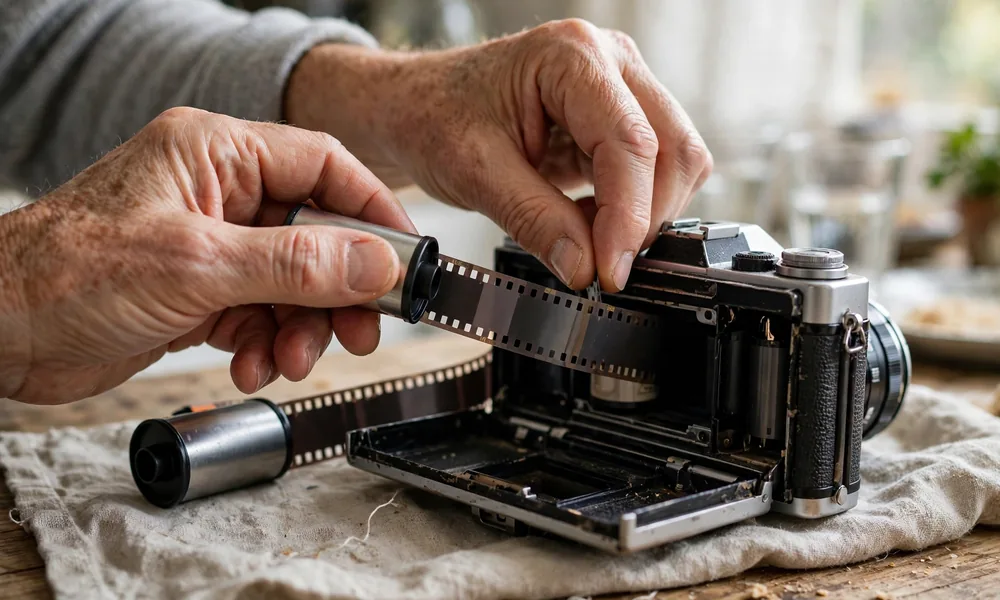
What is a film camera? A film camera records photographs on rolls of photographic film instead of a digital sensor. You load the film, take your pictures, and the images stay hidden until the roll is developed. There is no screen to check your shot, no delete button and no memory card. Film cameras are the cameras most of the world used for most of photography’s history, and in 2026 they are being bought and shot again by people who want a slower way of shooting.
The return of film is not only nostalgia: the grain and colour come from the film itself, not from a filter. With 24 or 36 frames on a roll, you slow down and only press the shutter when the picture is worth it. This guide explains the types worth buying in 2026, which film to start with, and what shooting film really costs.
Key Takeaways
- A film camera records images on film, so there is no screen or delete button: you see your pictures only after developing.
- For most beginners, a 35mm SLR or a simple point-and-shoot is the best first film camera: film is cheap, cameras are plentiful and repairs are possible.
- Film is the real running cost: a roll plus developing and scanning usually costs more than the camera within a few months.
- Colour negative film is the easiest place to start; black and white is cheaper at home, and slide film is the least forgiving.
- Buy a tested, serviced camera, check the light seals and shutter at every speed, and run a test roll through it first.
What Makes a Film Camera Different
The difference is what happens after you press the shutter. A digital camera turns light into numbers and shows you the result at once. A film camera turns light into a chemical change in the film, invisible until the film is developed. That delay is the character of film photography: you cannot check or retake on the spot, so you learn to trust your metering and focus fast.
Film also decides the look of your photographs before you take them. Each stock has its own colour, contrast and grain: one is warm and soft, another is cool and sharp, a third is grainy in low light. A digital camera can imitate these looks afterwards, but film bakes them in at exposure, which is why film photographs have a texture that is hard to fake.
The Main Types of Film Camera
Film cameras come in a handful of shapes, and the shape decides how you shoot: the right type depends on what you photograph and how much control you want.
35mm SLRs
The 35mm SLR is the workhorse of film photography and the best starting point for most people. You look through the lens itself, so what you see is what the film sees, and you can change lenses for portraits, landscapes and close-ups. Classic SLRs from the 1970s to the 1990s are plentiful, well built and repairable, and a 50mm lens is cheap and sharp. The wider guide to the best cameras in 2026 explains how SLRs sit alongside mirrorless and compact cameras.
Rangefinders
A rangefinder focuses with a small patch in the viewfinder instead of through the lens, which makes the camera quieter, smaller and less obvious on the street: the classic choice for street photography and travel, with famously sharp lenses. They are usually more expensive than SLRs, and focusing takes practice, because you never see exactly what the lens sees. Buy a rangefinder for discreet walking-around shooting; buy an SLR for the most control for the least money.
Medium Format Cameras
Medium format film is much larger than 35mm, which means finer detail, smoother tones and a shallower depth of field. The cameras are bigger, heavier and slower, and each roll gives you only 10 or 12 frames, so it suits portraits and landscapes, where quality matters more than speed.
Point-and-Shoot Cameras
A film point-and-shoot does the thinking for you: automatic focus and exposure, a fixed lens and a flash that pops up when it is dark. They fit a coat pocket, which is why they are popular for holidays and everyday carrying. Prices for the fashionable models have climbed steeply, so a plain, unfashionable one in good working order is often the smarter buy. Instant cameras are a different branch of the same idea: they print the photograph on the spot instead of saving it to a roll, and they suit parties and gifts more than serious photography.
Film Stocks Explained
Film stock is the other half of the camera, and beginners should start with colour negative film. It is forgiving: overexpose by a stop or two and the negative usually still gives a usable picture, and every lab can develop it. A 400-speed colour film is the best all-rounder, fast enough for dull days and indoor light.
Black and white film is the cheapest way to shoot a lot and the easiest to develop at home, because the chemicals are simple. It teaches you to see light and shape instead of colour, which is why teachers still start students on it. Slide film, the third type, gives rich transparencies but punishes exposure mistakes harshly: half a stop wrong and the picture is gone, so leave it until you can expose confidently. Film speed, printed as ISO on the box, tells you how sensitive the film is: slow film, ISO 100 or 200, is fine-grained and best in bright daylight, while fast film, ISO 800 and above, handles dim rooms but shows more grain.
The Best Film Cameras of 2026 at a Glance
| Type | Best For | Film Cost Per Roll | Watch Out For |
|---|---|---|---|
| 35mm SLR | Learning photography properly | Low to medium | Worn light seals, sticky shutter |
| Rangefinder | Street and travel photography | Low to medium | High prices, focusing practice |
| Medium format | Portraits and landscapes | High, only 10 to 12 frames | Weight, slow handling, cost |
| Point-and-shoot | Holidays and everyday carrying | Low to medium | Fashionable models are overpriced |
Our Top Picks for 2026
These picks are types rather than single models, because the used market changes weekly and condition matters more than the badge: a serviced humble model beats a neglected famous one every time.
Best Overall: A Classic 35mm SLR With a 50mm Lens
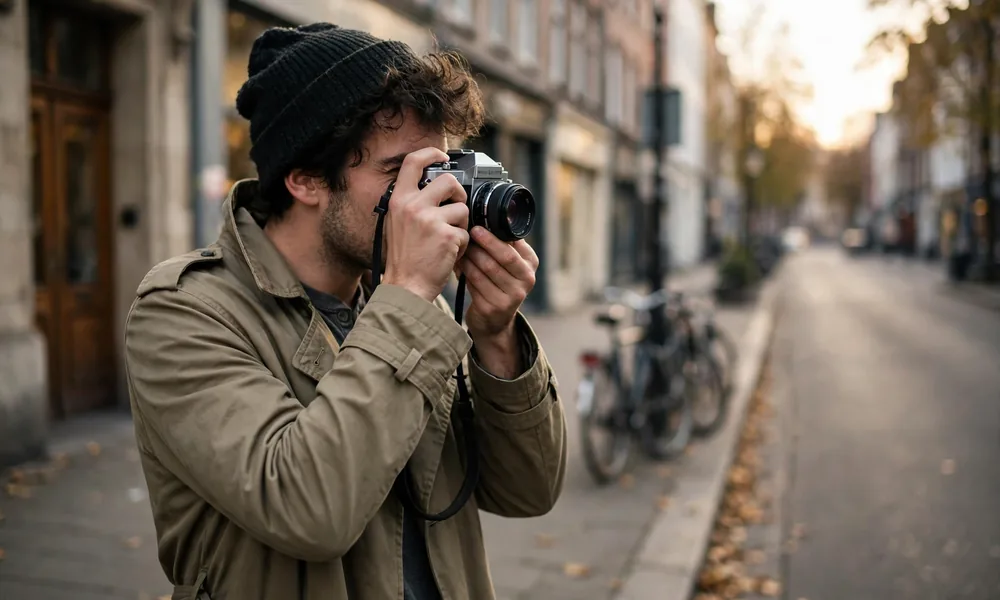
A manual or aperture-priority SLR with a bright 50mm lens is the best film camera for most people in 2026: it teaches exposure, focuses accurately, and the lens is sharp enough for portraits and landscapes. Look for new light seals and a serviced shutter, and test every shutter speed before you pay.
Best for Street Photography: A Compact Rangefinder
A small rangefinder with a 35mm lens is the street photographer’s film camera: quiet, quick and easy to carry all day, and the viewfinder shows more than the frame, so you can see people walking into the picture before they arrive. Prices are high for the famous names, so consider less fashionable rangefinders.
Best for Beginners: A Simple Point-and-Shoot
If you want film photographs without learning exposure first, a simple autofocus point-and-shoot is the honest choice: load 400-speed colour film, keep the flash off in daylight, and shoot. Avoid the models social media has made expensive; a plain tested camera from a good maker takes the same photographs.
Best Value: A Late-Model Plastic SLR
The unfashionable plastic SLRs of the 1990s and early 2000s are the bargain of film photography. They have autofocus, automatic exposure, built-in flash and modern metering, and they sell for very little because collectors ignore them.
The True Cost of Shooting Film
A film camera is cheap; shooting film is not. A roll of colour negative film, developing and scanning together usually costs as much as a modest meal out, and a regular shooter can spend more on film in a year than the camera cost. Budget for this honestly before you buy.
Developing is where the cost adds up. A high-street lab develops and scans a roll in a day or two; a mail-order lab is often cheaper with better scans, but you wait a week. Developing black and white film at home is cheapest once you own the tank and chemicals. Keep your negatives in archival sleeves, flat and away from heat and damp: a good scan can be remade from them years later.

Looking After a Film Camera
Film cameras are old, and old cameras need care. Keep yours dry, out of hot cars, and never force a stuck control: a jammed advance or stiff focus ring is a job for a repairer. Check the light seals around the film door every year or two, and replace them when they turn sticky or crumble, before they leak light onto your film. A good camera case is worth buying, because most damage happens in bags, not in use. Run a test roll through any camera you buy before you trust it, and check the scans for light leaks and focus errors.
Common Mistakes When Buying a Film Camera
The most common mistake is buying the fashionable camera instead of the working camera. A famous model with a hazy lens, a dead meter and rotten seals takes worse photographs than a boring model in perfect order, and costs more. Condition beats reputation every time, so buy from a seller who tests and guarantees their cameras.
The second mistake is forgetting the running costs: film, developing and scanning never stop, so work out what ten rolls will cost, developed and scanned, before you buy. The third is starting with the hardest film: slide, expired and very fast film all punish beginners, so start with fresh 400-speed colour negative film.
Film Camera Buying Checklist
- Test every shutter speed; listen for slow speeds dragging.
- Check the light seals around the film door for stickiness, crumbling or gaps.
- Check the lens for haze, fungus or scratches, and the aperture blades for free movement.
- Confirm the light meter works, or learn to use a phone meter app.
- Ask what servicing has been done and whether the camera is guaranteed.
- Price ten rolls, developed and scanned, before you commit.
Frequently Asked Questions
What is a film camera?
A film camera records photographs on photographic film rather than a digital sensor. The film is developed in chemicals after shooting, then printed or scanned. There is no screen to preview shots and no delete button.
Are film cameras worth it in 2026?
Yes, if you value the look of film and a slower way of shooting. Film cameras are affordable, their photographs have a grain and colour that is hard to imitate, and shooting film teaches exposure and composition faster than digital. They are not worth it if you need instant results.
How much does it cost to shoot a roll of film?
A roll of colour negative film plus developing and scanning usually costs roughly what a modest meal out costs. Black and white film developed at home is cheaper; slide film and premium scans cost more.
What film should a beginner start with?
Fresh 400-speed colour negative film is the best starting point. It forgives exposure mistakes, every lab develops it, and it works in daylight and indoors. Avoid expired and slide film until you can expose confidently.
Can I still get film developed?
Yes. High-street labs, camera shops and mail-order labs all develop film. Turnaround is usually a day or two locally and about a week by post.
Is a film camera better than a digital camera?
Neither is better in general. Film gives a distinctive look and a deliberate process; digital gives instant feedback, low running costs and far more frames. Many photographers use both.
The Bottom Line
A film camera trades convenience for character: it asks you to slow down and wait for your pictures, and gives you photographs with a texture digital cameras work hard to imitate. Start with a tested 35mm SLR or a simple point-and-shoot, fresh 400-speed colour film, and an honest budget for developing and scanning.