Best Ice Molds for Clear Cocktail Cubes in 2026
The best ice molds for clear cocktail cubes in 2026 freeze water slowly and from one direction, so the finished cube comes out glass-clear instead of cloudy white. A cloudy cube is air and minerals trapped as water freezes from every side at once. A good mold controls that process: clear ice melts more slowly, dilutes a drink far less, and looks bar-made. This guide compares the mold types that deliver clear cocktail cubes and shows how to get the clearest result.
Key Takeaways
- Clear ice comes from directional freezing: water freezes top-down, pushing air and minerals to the bottom.
- A two-inch cube is the sweet spot: slow-melting for whiskey and old fashioneds, yet fits a rocks glass.
- Insulated molds freeze the clearest ice with least effort; simple silicone molds are cheaper but need filtered or boiled water.
- Large cubes take six to eight hours to freeze, spheres longer still, so plan a day ahead and freeze in batches.
- A tight lid matters: it stops spills, blocks freezer smells, and keeps cubes tasting clean.
Why Clear Ice Is Worth the Effort
Ice is an ingredient, and it changes as it melts. A small, cloudy cube has a large surface for its size, so it melts fast and waters a drink down within minutes. A large, clear cube has far less surface for its volume: it chills just as well but melts slowly, so flavour stays put.
Clarity is also a sign of what is not in the ice. The white cloud in an ordinary cube is trapped air and minerals, pushed to the centre as the water freezes inward, and it melts first and fastest. Clear ice is dense and solid all the way through, so it holds its shape — and a single clear cube in a heavy glass makes an ordinary drink feel considered.
Ice Molds vs Ice Cube Trays: What Is Different?
A mold is not just a tray with bigger holes: the two are built for different jobs. Everyday ice cube trays are designed to freeze fast and release easily — small compartments, thin walls, a quick twist to pop cubes out. They are brilliant for iced coffee and water glasses, but they freeze from every direction at once, which traps the cloud in the middle.
An ice mold for clear cocktail cubes works the opposite way. Its compartments are larger, usually two inches across, and the best molds are insulated on the sides and bottom, so freezing starts at the exposed top and moves steadily down, pushing air and minerals into the water below instead of trapping them in the middle. Some molds have a reservoir or removable base where the cloudy layer collects, so you can snap it off and keep only the clear part.
For everyday drinks, a tray is faster, cheaper, and smaller. For clear cocktail cubes, you want a mold built for directional freezing.

The Main Types of Ice Mold Compared
Most clear-ice molds fall into four types.
| Mold type | Best for | Clarity | Freeze time | Downside |
|---|---|---|---|---|
| Insulated directional mold | Clearest cubes, least fuss | Excellent | 18–24 hours | Costly; only 2–4 cubes |
| Large silicone cube mold | Everyday cocktails on a budget | Good with filtered water | 6–8 hours | Cloudy centre unless water is treated |
| Sphere mold | Whiskey, slow sipping | Good | 8–12 hours | Spheres melt unevenly if thin-walled |
| Ball and cube combo | Variety for a home bar | Fair to good | 6–10 hours | Mixed sizes freeze unevenly |
The insulated directional mold is the closest thing to a guaranteed result: an insulated shell with open-topped wells, so water freezes from the top down and the cloudy layer ends up underneath, where it can be removed. These molds are slow — a full freeze can take most of a day — and they usually make only two to four cubes at a time. But if clarity is the whole point, they earn their price.
Large silicone cube molds are the practical choice for most people: cheap, flexible, easy to store, and they make four to eight two-inch cubes in one freeze. Their clarity depends on the water — filtered or twice-boiled water, frozen slowly, gives a respectably clear cube, while hard tap water frozen in a hurry gives a cloudy one. Sphere molds melt slower still, but the two halves must seal properly or the ball comes out with a seam or a flat spot.
What Makes a Good Ice Mold
Size and shape
Two inches is the standard: a cube that size fits a rocks glass, chills without crowding it, and lasts through a slow drink. Smaller cubes melt faster and defeat the purpose; larger ones may not fit the glass. Measure your glasses first — a mold making six cubes beats one making two.
Directional freezing
This is the most important feature if clarity is your goal. Look for insulation on the sides and base, an open top, and some way to separate the clear ice from the cloudy layer — a removable base or a reservoir. A mold freezing from all sides at once will never give truly clear ice, however good the water.
Material
Food-grade silicone is the standard: it releases easily, survives the freezer without cracking, and does not hold smells. Rigid plastic is cheaper and stacks neatly but can crack the cube on release. Stainless steel freezes faster but conducts cold from every side, which works against directional freezing unless insulated.
Lid and sealing
A lid does three jobs: it stops water sloshing out, keeps ice from picking up freezer smells, and lets you stack molds without crushing the cubes below. Check that it sits flat, stays put when tilted, and does not press into the water.
Release and cleaning
The best mold is useless if the cubes will not come out cleanly. Silicone should flex enough to push a cube out from below without tearing, and cavities should have slightly rounded corners so the ice does not grip. Cleaning should be simple — warm soapy water, a rinse, air drying. Avoid deep crevices or glued seams, which trap water and go musty.

How to Freeze Genuinely Clear Cubes
A good mold does half the work; the other half is technique, and it costs nothing. Start with the water: tap water carries dissolved air and minerals, and both end up as cloud. Filtered water helps; water boiled, cooled, and boiled again helps more, because boiling drives off dissolved gases. Let it cool before pouring it in.
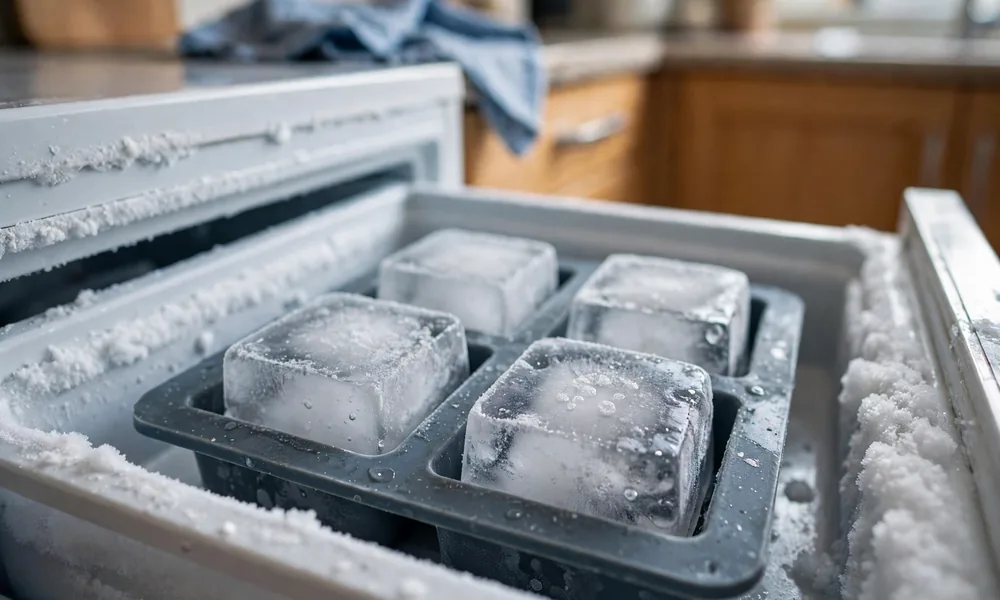
Fill each cavity to just below the rim: overfilling makes cubes join across the top, underfilling leaves a hollow. Put the lid on, set the mold on a flat shelf, and leave it alone — opening the freezer lets warm air in. Large cubes need six to eight hours; insulated directional molds need eighteen to twenty-four.
When time is up, let the mold sit for two or three minutes so the cubes loosen and come out cleanly instead of cracking. If your mold has a cloudy layer underneath, snap or cut it away. Store finished cubes in a sealed bag in the freezer and use them within a week or two.
Which Mold Suits Which Drink
Not every drink needs the same ice. A whiskey served neat over a single large cube is the classic case: the cube chills without diluting, and a sphere is arguably even better, with the least surface of all. Pair it with a proper glass — the right whiskey glass is heavy-based and wide enough for a two-inch cube.
An old fashioned, a negroni, or any stirred cocktail built in the glass wants the same treatment: one large cube, clear, cold, and slow to melt. A Manhattan or martini, stirred with ice and then strained, needs no showpiece cube at all. Long drinks are different: a gin and tonic needs several smaller cubes, since the drink is mostly mixer and needs chilling throughout. Break a two-inch cube into smaller pieces for a tall glass.
If you make cocktails regularly, a cocktail shaker and a mold are natural partners: the shaker needs plenty of small, hard ice for shaking, while the mold provides the single large cube for serving.
Looking After Your Molds
Rinse molds in warm soapy water after each use and let them dry completely — a damp mold stored in a drawer will pick up smells and go musty. Do not put silicone molds in the dishwasher on a hot cycle unless the maker says so. Check the mold before each freeze: silicone can tear at the corners, and a torn cavity will leak. A mold that has gone cloudy or sticky has absorbed freezer smells; a soak in baking soda and warm water, then a rinse, usually fixes it. Store molds flat with their lids on, somewhere cool and dry.
Checklist: Before You Buy
- Measure your rocks glasses first: a two-inch cube should sit in the glass with room to spare.
- Choose directional freezing if clarity is the priority, and accept the slower freeze.
- Count how many cubes you need per evening, and buy a mold that makes at least that many.
- Check the lid: it should sit flat, seal well, and let you stack the mold.
- Flex the silicone and check the corners: it should release a cube with a gentle push.
- Confirm the mold is food-grade silicone or BPA-free plastic, and washable by hand.
Frequently Asked Questions
Do ice molds really make clearer ice than trays?
Yes, when designed for it. Molds that freeze directionally push air and minerals to the bottom instead of trapping them in the middle, which is what makes ordinary tray ice cloudy. A plain large silicone mold without insulation will still be cloudier than an insulated one.
How long do large cocktail cubes take to freeze?
Expect six to eight hours for a two-inch cube in a standard home freezer, and eight to twelve for a sphere. Insulated directional molds are slower, at eighteen to twenty-four hours. Freeze overnight or a day ahead.
Does boiled water really make clearer ice?
It helps, noticeably: boiling drives dissolved gases out of the water, and those gases are a large part of the cloud. Twice-boiled water cooled to room temperature gives the clearest result from a simple mold.
Are sphere molds better than cube molds?
For slow sipping, yes: a sphere has the least surface area for its volume, so it melts slowest of all. For mixed drinks and general use, cubes are more practical — they stack, store, and fit more glasses. Whiskey-neat drinkers will love a sphere mold; for a range of cocktails, start with cubes.
Why do my cubes crack when I take them out?
Usually because they are too cold and too tightly held. Let the mold sit at room temperature for two or three minutes before releasing, and push the cube out from below rather than pulling it from the top.
Can I use an ice mold for anything besides cocktails?
Certainly. Large clear cubes are excellent in iced coffee, cold brew, and iced tea, because they chill without diluting. You can also freeze coffee, juice, or herbs into the cubes for drinks that gain flavour as the ice melts. Keep one mold for plain water and another for flavoured cubes.
The Bottom Line
The best ice molds for clear cocktail cubes in 2026 are the ones that freeze water slowly and from one direction — that is what makes ice clear, dense, and slow to melt. An insulated directional mold gives the clearest result and is worth the money if cocktails are a regular pleasure; a large silicone cube mold is the sensible everyday choice, rewarding good water and patience with cubes close to as good. Freeze a day ahead and keep the mold clean and dry. Do that, and the ice stops being an afterthought and becomes the detail that makes a home cocktail taste properly made.