
Vacuum Filters That Keep Suction Strong in 2026
Vacuum filters are the small parts that decide whether your vacuum keeps its suction or slowly turns into a noisy machine that pushes dust around. A clean filter lets air flow freely, so the brush head picks up dirt in a single pass. A clogged filter chokes that airflow, and suction drops long before the motor itself is worn out.
This guide covers the vacuum filters worth buying in 2026: the main types, how to tell when one is failing, and how to match a filter to your machine. It is about filters only, not whole vacuum cleaners. If you are choosing the machine itself, our guide to the best vacuum cleaners of 2026 compares the leading models by type and floor. Here the focus is narrower: the part inside the machine that quietly controls how well it cleans.
Key Takeaways
- A clogged filter is the most common reason a vacuum loses suction, and it usually happens months before the motor shows any wear.
- HEPA filters trap the finest dust and allergens, foam filters catch larger debris before it reaches the motor, and carbon filters deal with smells.
- Never fit a filter that is still damp, because a wet filter breeds mould and can damage the motor.
- Washable filters still need replacing eventually, usually after six to twelve months of regular washing.
- Always match the filter to your exact vacuum model, since a filter that looks right but seals badly lets dust leak straight past it.
What a Vacuum Filter Actually Does
A vacuum filter sits in the path of the air your machine sucks in, and it has two jobs. The first is to protect the motor: dust, hair and grit that reach the motor wear it out and can burn it out entirely. The second is to protect the air in your home: the finest dust should be trapped before the exhaust air blows it back into the room.
Most vacuums have more than one filter, and they work as a team. A pre-motor filter sits before the motor and catches the larger particles, while a post-motor filter, often a HEPA filter, sits after the motor and catches the fine dust that got through. When any one of these layers clogs, the whole system suffers. That is why a vacuum can feel weak even when the bin is empty and the brush head is clean: the filter is the bottleneck.
The Main Types of Vacuum Filter Compared
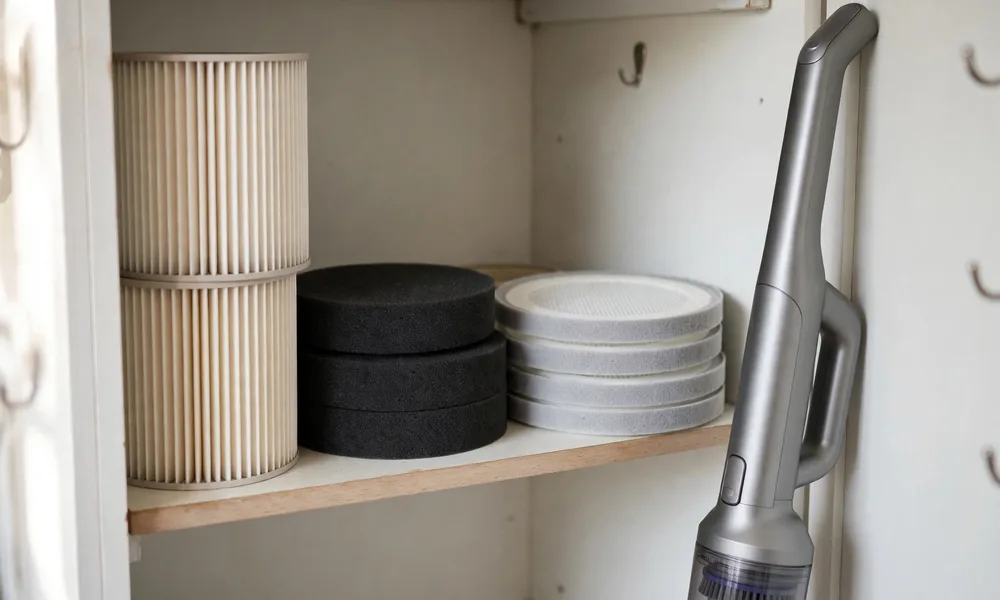
Vacuum filters come in four main kinds, and each one does a different job in the machine. Knowing which is which stops you buying the wrong replacement.
| Filter type | What it catches | Washable | Typical life | Best for |
|---|---|---|---|---|
| HEPA | Fine dust, pollen, pet dander | Sometimes | 6–12 months | Allergy homes |
| Foam | Larger dust and debris | Yes | 3–6 months | Pre-motor protection |
| Carbon | Smells and odours | No | 3–6 months | Pet homes |
| Pre-motor mesh | Coarse dirt and hair | Yes | 6–12 months | Everyday use |
HEPA Filters
A HEPA filter is the finest filter in the machine, and it is the one that matters most for the air you breathe. It traps at least 99.97 percent of particles 0.3 microns across, which covers pollen, dust mite waste and most pet dander. Some are washable and some are not: washing a non-washable HEPA filter can break the fibres apart and leave it trapping far less than it should, so check the label before it goes anywhere near water.
Foam Filters
A foam filter is a thick pad of open-cell foam that sits in front of the motor, catching dust and debris before they can reach it. It is the workhorse of the set: cheap, washable and easy to clean under a tap. Their job is to take the heavy load so the HEPA filter lasts longer. A foam filter that is torn, compressed or permanently grey after washing is finished, and it should be replaced rather than squeezed back into service.
Carbon Filters
A carbon filter is a thin sheet or pad impregnated with activated carbon, and its job is smell rather than dust. It absorbs odours from pets, cooking and damp carpets that would otherwise pass straight through the machine and back into the room. Carbon filters are not washable, and once the carbon is saturated they stop working even though they still look fine.
Pre-Motor and Post-Motor Filters
Pre-motor and post-motor describe where a filter sits, not what it is made of. The pre-motor filter guards the motor, and it is usually foam or mesh. The post-motor filter guards the room, and it is usually HEPA. The pre-motor filter is often hidden behind a cover, and it is the one that clogs first, because it meets the dirt before anything else does. Check both on the same day, or the one you forget will be the one that costs you suction.
How to Tell a Filter Is Failing
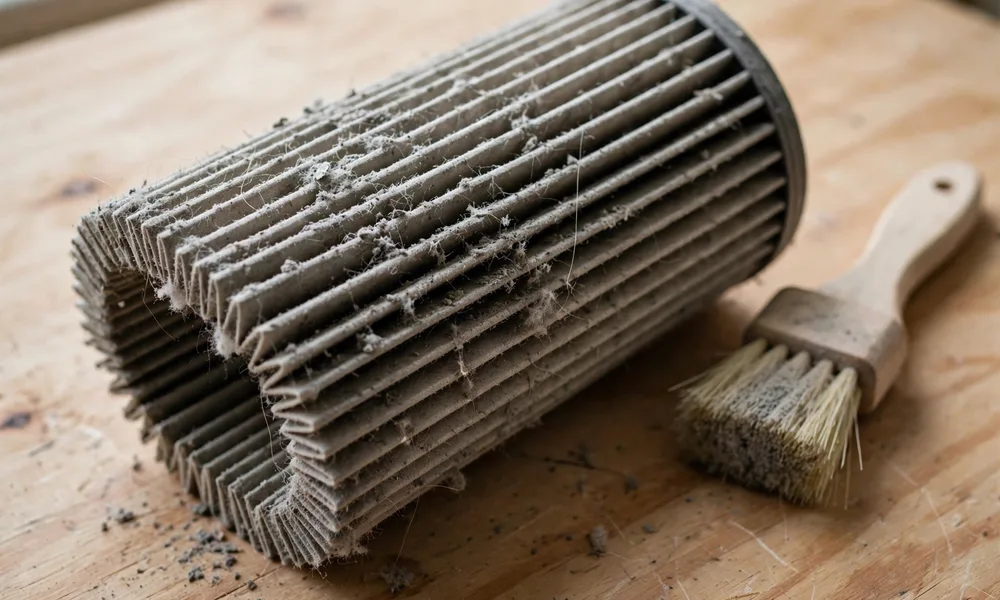
A failing filter rarely announces itself clearly. The most obvious sign is suction that fades during a clean: the vacuum starts strong and weakens after ten minutes, then recovers after it has sat for a while. That pattern points straight at a filter, because a clogged filter lets less air through as dust builds up on it, and the motor strains harder as the clean goes on.
The second sign is dust in the air. If you can see a faint haze in sunlight behind the vacuum, or if the room smells dusty after cleaning, the exhaust filter is letting fine particles through. The simplest test of all is to look: hold the filter up to a light. If you cannot see light through the pleats or the foam, it is not filtering well any more, whatever the calendar says. Our guide to the best vs worst vacuum cleaners shows how much of a vacuum’s real-world performance comes down to filtration and maintenance rather than the motor alone.
How Often to Replace or Wash Each Type
Replacement schedules depend on how much you vacuum, how big your home is and whether you have pets, but a few rules hold for most households. A foam pre-motor filter should be washed every month and replaced every three to six months. A HEPA filter should be checked every three months and replaced every six to twelve months, or sooner if it stays grey after a wash. A carbon filter should be replaced every three to six months, because it stops absorbing smells long before it looks worn.

Pet homes should halve those intervals. A home with a dog or a cat puts roughly twice the dust and hair through the filter, and a HEPA filter that lasts a year in a pet-free flat may be finished in six months. Judge by performance as well as by date. If suction drops, if the exhaust smells stale, or if light no longer passes through the pleats, the filter is done, even if the box said it had months left. Stretching a filter past its life is a false economy: a clogged filter makes the motor work harder, and a motor that works harder runs hotter and dies sooner.
Choosing the Right Filter for Your Vacuum
Choosing a vacuum filter starts with the model number, not the shape. Filters that look identical can differ by a few millimetres, and a filter that does not seal properly lets unfiltered air leak around its edges, which defeats the whole point. Find the model number on the machine, usually on a label near the bin or underneath the body, and match the replacement to that number exactly. If the listing says it fits several models, check that yours is on the list rather than assuming it is.
Genuine filters and good third-party filters both work well, but the difference is usually in the seal and the material. A genuine filter is made to the exact dimensions of the machine, while a cheap copy can be slightly loose or made from thinner material that lets fine dust through. An allergy household should prioritise a genuine sealed HEPA filter, and a pet household should prioritise a carbon layer for smells and a washable foam pre-filter. If your home also needs cleaner air between vacuuming sessions, our guide to the best air purifiers of 2026 covers machines that filter the air continuously rather than only while you clean.
Cleaning a Washable Filter Properly
Washing a filter sounds simple, and it is, but there are two rules that decide whether it works. The first is to wash with plain cold or lukewarm water only, never with soap or detergent, because soap leaves a residue in the fibres that blocks airflow and can foam up inside the machine. Rinse the filter gently until the water runs clear. Do not scrub it with a brush, which tears the fibres, and do not twist it, which distorts the shape.
The second rule is to dry it completely, and this is the one people get wrong. A filter needs at least twenty-four hours of air drying in a warm, ventilated spot, and it must be bone dry before it goes back in the machine. If you vacuum often, keep a second filter so one can dry while the other works.
The Buying Checklist
- Match the filter to your exact vacuum model number, not just to the brand or the shape.
- Check whether your HEPA filter is washable before it goes near water, since washing a non-washable one ruins it.
- Buy a spare foam filter so one can dry for twenty-four hours while the other is in use.
- Hold the old filter up to a light: if no light passes through, replace it rather than washing it again.
- Look for a proper seal around the edges, because a loose filter lets dust leak past it.
- Keep the receipt and the box, so you know the date fitted and the exact part number next time.
Frequently Asked Questions
How do I know which filter my vacuum needs?
Find the model number on a label on the machine, usually near the dustbin or underneath the body, and match the replacement filter to that exact number.
Can I wash a HEPA filter?
Only if the filter is labelled washable. Some HEPA filters are made to be rinsed and reused, but many are not, and washing a non-washable one breaks the fine fibres apart so it traps far less dust afterwards.
Why does my vacuum lose suction even with an empty bin?
A clogged filter is the most common cause. The bin being empty does not help if air cannot pass through the filter, and a blocked filter chokes airflow just as surely as a full bin.
How long does a vacuum filter last?
A foam filter lasts three to six months, a HEPA filter six to twelve months, and a carbon filter three to six months.
Are cheap third-party filters worth buying?
Many are, but the quality varies. A good third-party filter fits exactly and uses the same grade of material, while a very cheap one can be loose or thin and let fine dust through.
Can a dirty filter damage my vacuum?
Yes. A blocked filter makes the motor work harder and run hotter, which shortens its life and can burn it out entirely.
The Bottom Line
Vacuum filters are small, cheap and easy to ignore, and that is exactly why they cause so many problems. A clean filter keeps suction strong, keeps the air in your home cleaner and keeps the motor alive for years longer than a neglected one. The best filter for your vacuum is the one that fits your exact model, seals properly and gets changed before it clogs.


