
A faucet filter is the small fitting that turns an ordinary kitchen tap into a source of clean drinking water, and for most households it beats a pitcher on what matters every day: speed, freshness and cost per litre. You flip a small lever, and filtered water comes straight out of the tap, ready to drink or cook with. There is no jug to fill, no waiting, and no fridge shelf given over to a pitcher that is always half empty.
That everyday convenience is the whole point. A pitcher works for a single person in a small flat, but in a busy household it becomes a chore: somebody must fill it, wait for it to filter, and change a cartridge that is easy to forget. A faucet filter removes those steps, filters on demand, holds far more water per cartridge, and costs less per litre over a year. This guide explains how they work, how they compare with pitchers, which types suit which homes, and what to check before you buy.
Key Takeaways
- A faucet filter delivers filtered water on demand, with no waiting, no refilling and no fridge space taken up.
- Pitchers are cheaper to buy and suit renters and single-person households, but they filter slowly and cost more per litre.
- Carbon filters improve taste and remove chlorine well, but only certified filters with the right media tackle lead and other contaminants.
- Check your tap first: it needs a standard threaded spout, and pull-out or spray taps usually cannot take one.
- Change the cartridge on schedule, because a spent one filters slowly, tastes stale and can make water worse than the tap.
What a Faucet Filter Actually Is
A faucet filter, also called a faucet-mount filter, is a compact unit that screws directly onto the end of a kitchen tap, with a replaceable cartridge inside, usually built around activated carbon, sometimes with extra media for lead or sediment. Water passes through the cartridge as it leaves the tap, and a small lever switches between filtered and unfiltered water, so the cartridge is only used for drinking and cooking.
It is worth being clear about what it is not. It is not a shower filter, which sits in a bathroom, softens hard water and protects skin and hair, and never makes drinking water. It is not an under-sink system, which hides under the worktop, needs plumbing work and uses a separate small tap. Nor is it a whole-house system, which filters every tap at a far higher cost. A faucet filter is the simplest fixed option: it fits in minutes, needs no plumber, and comes off just as easily when you move out. Our guide to the best water filters of 2026 compares every system, from pitchers to under-sink units.
Faucet Filter vs Pitcher: The Daily Difference
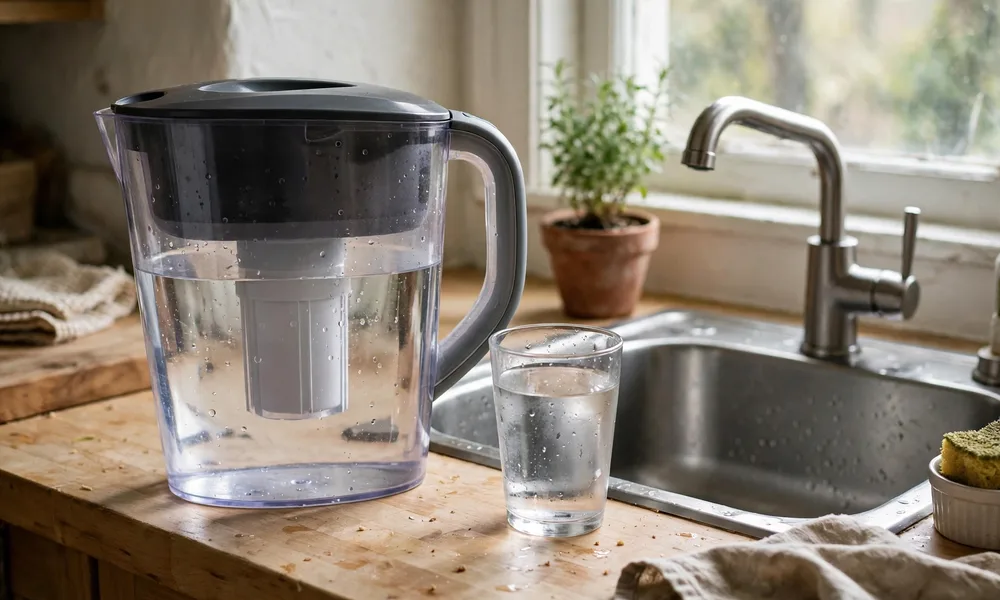
The difference shows up first thing in the morning. With a faucet filter, you hold a glass under the tap, flip the lever and drink. With a pitcher, you open the fridge, find the jug half full, pour what is there, then refill it and wait several minutes for the next glass. For one person that is a small delay; for a family making breakfast and filling bottles, it is a bottleneck that repeats all day.
A decent faucet filter delivers roughly a litre a minute or more, fast enough to fill a kettle without thinking about it. A pitcher filters by gravity, often taking five to ten minutes per jug, and the flow slows further as the cartridge ages. A faucet filter also keeps water fresh, filtering every glass as you drink it, while pitcher water sits in the fridge picking up smells.
| Feature | Faucet Filter | Pitcher |
|---|---|---|
| Filtered water | On demand, straight from the tap | After gravity filtering, jug by jug |
| Speed | About a litre a minute | Five to ten minutes per jug |
| Cartridge life | Two to four months, hundreds of litres | One to two months, far fewer litres |
| Cost per litre | Lower, from larger cartridges | Higher, with frequent small cartridges |
| Space needed | None beyond the tap itself | A full fridge shelf or worktop spot |
| Best for | Families and daily drinkers | Renters, small flats, occasional use |
The Five Faucet Filter Types Worth Knowing in 2026
Not all faucet filters do the same job. These are the five types you will actually find on sale.
1. Standard carbon faucet filters
The everyday choice. A carbon block or granular carbon cartridge removes chlorine, improves taste and smell, and catches sediment. It suits homes where the water is safe but tastes of chlorine or carries a faint chemical smell. It is affordable and easy to fit, but it will not remove lead, nitrates or dissolved salts, and it needs changing every two to three months in a busy household.
2. Lead-reducing faucet filters
Built for older plumbing, these add media that captures lead and sometimes other heavy metals, and the good ones carry independent certification for lead removal. If your home has old pipes or a lead service line, this is the type to look for. Check the certification: it should name lead specifically and state the percentage removed.
3. Multi-stage faucet filters
These stack two or three stages in one housing, often sediment first, then carbon, then a finer polishing stage. The result is better-tasting water, and a cartridge that lasts longer because the first stage protects the later ones. They cost more and filter slightly more slowly, but for households that drink a lot of tap water, the trade-off is worth it.
4. Faucet filters with a filter-life indicator
A small display or light counts litres or days and tells you when the cartridge is spent. It solves the most common faucet filter problem: forgetting to change the cartridge. If you will not remember a date on the calendar, an indicator is worth paying a little extra for.
5. High-flow faucet filters for large households
Designed for families that fill kettles, pots and bottles all day, with a larger cartridge and wider flow path that keeps water coming at a usable speed even as the cartridge ages. They cost more up front, but the cost per litre is the lowest of any faucet filter, and they are the closest thing to an under-sink system without plumbing.
What a Faucet Filter Removes, and What It Does Not
A faucet filter is good at the things you can taste and smell. Chlorine is its strongest suit: carbon absorbs it readily, which is why the first glass from a new filter tastes so noticeably cleaner. It also catches sediment, rust and many organic compounds that affect flavour, while lead-reducing models add heavy metals to that list.
What it does not do matters just as much. A standard faucet filter does not soften hard water, so limescale in the kettle will not disappear. It does not remove nitrates, fluoride or dissolved salts; those need reverse osmosis. And it does not disinfect: if your supply has a bacterial problem, follow your water supplier’s advice instead. Test your water first, or check your supplier’s report, then buy the filter certified to remove what is actually in it.
Running Costs: The Number That Decides It
The sticker price is only the beginning; the real cost is the cartridges, and here the faucet filter pulls ahead. A typical faucet cartridge lasts two to four months and filters several hundred litres, while a pitcher cartridge lasts one to two months and filters far less. Over a year, a household drinking two litres a day usually spends noticeably less on faucet cartridges, even though each one costs more on its own.
Do the sums before you buy: divide the cartridge price by the litres it is rated for to get the cost per litre, then multiply by how much your household drinks in a year. A bypass lever also helps, since using unfiltered water for washing up stretches the cartridge further. And a cartridge past its rated life not only works less well, it can slow to a trickle and affect taste, so budget for replacements on time. For the pitcher side of this comparison, see our guide to the best water pitchers of 2026.
Fitting One Without a Plumber
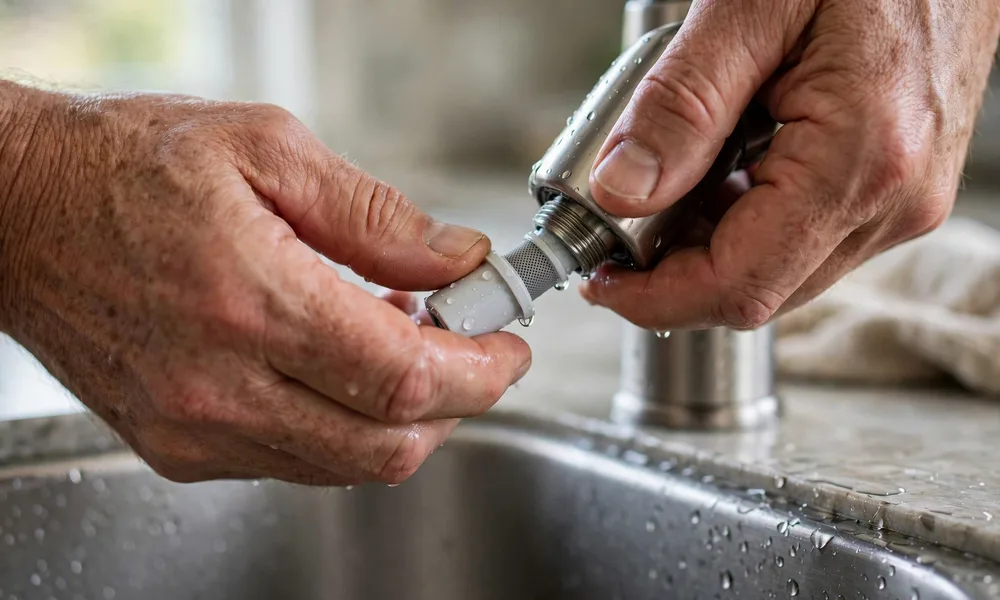
Most faucet filters fit in under ten minutes with no tools beyond what comes in the box. Unscrew the aerator from the end of your tap, choose the adapter that matches the thread, screw the filter housing on, and run water through it for a minute to flush the new cartridge and clear loose carbon dust.
Before ordering, check your tap: a faucet filter needs a standard threaded spout, the kind found on most ordinary kitchen taps. Pull-out spray taps, taps with a built-in spray head, and many modern designer taps with non-standard threads will not take one, and most bathroom taps are too small. If your tap has no removable aerator, measure the spout or check the manufacturer’s instructions before you buy. Our guide to the best kitchen faucets of 2026 explains spout types and fittings in plain terms.
Checklist: Before You Buy a Faucet Filter
- Check your tap has a standard threaded spout with a removable aerator, and is not a pull-out spray tap.
- Find out what is in your water, from your supplier’s report or a simple test, and buy a filter certified for it.
- Compare cost per litre, not cartridge price, using the rated litres and your household’s daily drinking.
- Look for a bypass lever, so you only filter drinking water and the cartridge lasts longer.
- Choose a model with a filter-life indicator if you will forget replacement dates.
- Confirm replacement cartridges are easy to buy where you live, at a price you will pay every few months.
Frequently Asked Questions
Does a faucet filter remove lead?
Only models designed and certified for lead removal do. A standard carbon filter improves taste and removes chlorine, but it is not certified for lead. If lead is your concern, look for a filter whose certification names lead and states the removal percentage.
Will a faucet filter fit my tap?
It fits most ordinary kitchen taps with a standard threaded spout and a removable aerator. It usually will not fit pull-out spray taps, taps with built-in spray heads, or taps with non-standard threads, so check your tap type before ordering.
How often should I change the cartridge?
Most last two to four months, depending on how much water your household drinks and how much sediment is in the supply. Follow the manufacturer’s rated litres or months, and change it on schedule rather than waiting for the flow to slow.
Is filtered tap water better than a pitcher?
For daily drinking, usually yes: a faucet filter is faster, filters on demand and costs less per litre, while a pitcher needs refilling and waiting. A pitcher still wins for renters, small flats and anyone whose tap cannot take one.
Does a faucet filter soften hard water?
No. It does not remove the calcium and magnesium that make water hard, so it will not stop limescale in kettles or on taps. Softening needs a different system, such as an ion-exchange softener.
Can I use a faucet filter in a rented home?
Yes, it is one of the best options for renters: it screws on and off in minutes, needs no plumbing changes, and you can take it with you when you move, as long as your tap has a standard threaded spout.
Bottom Line
For daily drinking water in 2026, a faucet filter beats a pitcher because it removes the waiting, the refilling and the fridge jug, while costing less per litre over the year. Pick a model certified for what is actually in your water, check that it fits your tap, and change the cartridge on time, and the best water in your home will come straight out of the tap.


