The best water filters 2026 turn ordinary tap water into clean, great-tasting drinking water, and the difference is bigger than most people expect. Depending on where you live, tap water can carry chlorine taste, sediment, lead, limescale and a long list of other contaminants, and the right filter removes the ones that matter while keeping the minerals that make water taste good.
This guide compares the leading home water filters of 2026, from simple pitchers to under-sink systems and whole-house units, so you can match the filter to your water, your kitchen and your budget. We judged each system on what it actually removes, flow rate, filter life, running costs and how easy it is to install and maintain.
Whether you rent and need something for the fridge, or you own a home and want filtered water from every tap, the eight systems below cover every situation and budget.
Key Takeaways
- Match the filter to your water: test first, then choose a system certified to remove what your water actually contains.
- Pitchers are cheap and renter-friendly, but under-sink systems filter faster, last longer and cost less per litre over time.
- Reverse osmosis removes the widest range of contaminants, including lead and nitrates, but it also removes minerals and wastes some water.
- Carbon filters are best for taste, chlorine and odour, while sediment filters protect the rest of the system from grit and rust.
- Check running costs, not just the sticker price: replacement cartridges decide what a filter really costs you each year.
How We Chose the Best Water Filters
We judged every system the way a household actually uses one: daily drinking, cooking, filling kettles and coffee machines, and topping up bottles for the gym and the school run. Filtration performance mattered most, so we favoured systems with independent certification for the contaminants they claim to remove, and we checked real flow rates rather than headline figures.
We also weighed installation effort, filter life, annual running costs and how the filtered water actually tastes. If your kitchen runs on filtered water, pairing it with the best electric kettles for the home makes the difference obvious every morning.
What Water Filters Actually Remove
No single filter removes everything, and the marketing rarely admits it. Carbon filters excel at chlorine, taste, odour and many organic chemicals, but they do not remove lead, nitrates or dissolved salts. Reverse osmosis membranes remove a very wide range, including lead, arsenic, nitrates and fluoride, which is why they are the choice for genuinely poor water. Sediment filters catch sand, rust and grit, protecting the finer stages downstream.
Look for certification from an independent body rather than a brand’s own claims: a certified filter has been tested to remove a stated percentage of a named contaminant.
Pitcher, Countertop, Under-Sink or Whole House
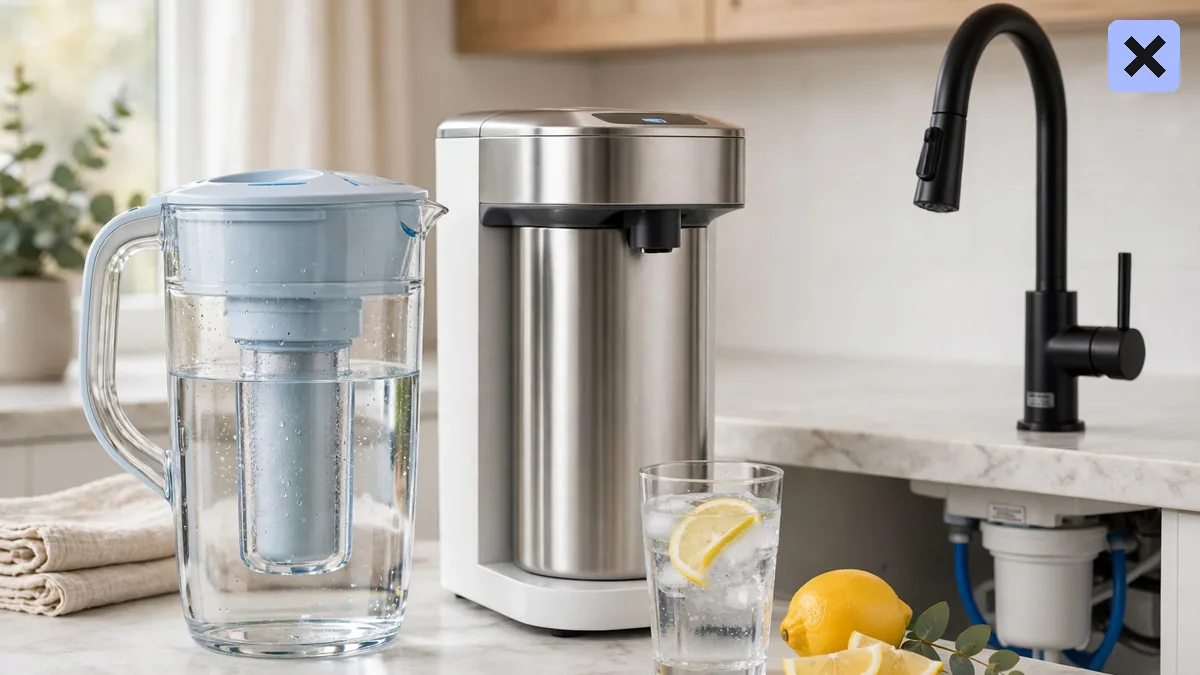
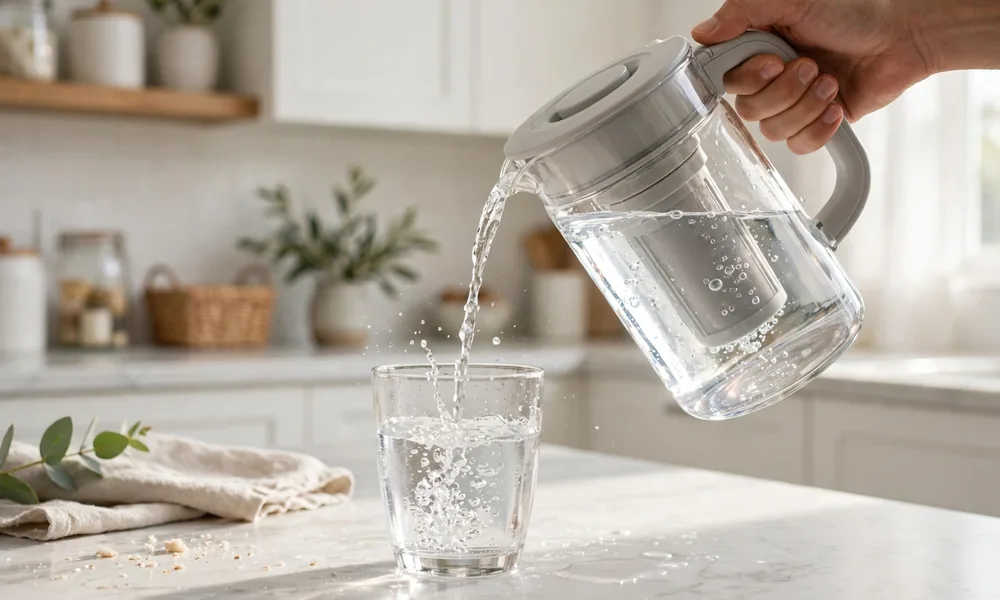
Pitchers are the simplest option: fill, wait, pour. They suit renters and small households, but they are slow and the cartridges need changing every month or two. Countertop filters connect to the tap with a diverter, filter faster and last longer, but they take up worktop space. Under-sink systems hide away, deliver filtered water through a dedicated tap and offer the best balance of performance and convenience for homeowners.
Whole-house systems filter every tap, but they cost the most and need professional installation. Most households do not need one unless their water is hard or heavily contaminated.
The Best Water Filters of 2026 at a Glance
| System | Type | Removes | Filter Life | Best For |
|---|---|---|---|---|
| Brita Everyday Pitcher | Pitcher | Chlorine, taste, odour | 2 months | Renters and small households |
| ZeroWater 10-Cup Pitcher | Pitcher | Lead, chlorine, dissolved solids | 2 months | Best-tasting pitcher water |
| Aquasana Clean Water Machine | Countertop | Chlorine, lead, cysts | 6 months | Countertop convenience |
| Berkey Big Berkey | Gravity | Lead, chlorine, bacteria | 3,000 gallons | Off-grid and emergencies |
| APEC ROES-50 | Under-sink RO | Lead, arsenic, nitrates, fluoride | 12 months | Widest contaminant removal |
| iSpring RCC7 | Under-sink RO | Lead, chlorine, heavy metals | 12 months | Best-value reverse osmosis |
| Waterdrop G3P800 | Under-sink RO | Lead, PFAS, chlorine, TDS | 12 months | Fast flow, smart design |
| Pentair Pelican PSE1800 | Whole house | Chlorine, sediment, scale | 5 years | Every tap in the home |
Best Pitcher: Brita Everyday Pitcher
The Brita Everyday is the water filter most people start with, and for good reason. It is cheap, widely available, fits in a standard fridge door and makes tap water taste noticeably better within minutes. The carbon cartridge cuts chlorine taste and odour, and the electronic indicator tells you when a change is due.
It will not remove lead or dissolved solids, and the cartridge needs replacing every two months, but for improving taste on a small budget it remains the sensible default for renters and small households.
Best-Tasting Pitcher Water: ZeroWater 10-Cup Pitcher
ZeroWater takes the pitcher further than anyone else, with a five-stage system that strips dissolved solids to near zero, and a meter in the box so you can see the reading for yourself. The result is exceptionally clean-tasting water that makes a real difference to tea and coffee.
The trade-off is cartridge life: in hard-water areas the filter can exhaust in weeks, and replacements are not cheap. If your water is fairly soft and you want the purest-tasting pitcher water available, ZeroWater is hard to beat.
Best Countertop Filter: Aquasana Clean Water Machine
The Aquasana Clean Water Machine sits on the worktop, connects to the tap in minutes and filters on demand, so there is no waiting for a pitcher to drip through. Its two-stage system is certified to reduce lead, chlorine, cysts and a long list of other contaminants, and the cartridges last six months.
It takes up counter space and the flow is slower than a direct tap, but for renters who want under-sink performance without drilling, this is the best compromise available.
Best Gravity Filter: Berkey Big Berkey
The Big Berkey needs no power, no plumbing and no tap connection at all: pour water in the top, and gravity pulls it through two Black Berkey elements into the lower chamber. It removes lead, chlorine, bacteria and sediment, and the elements last for around 3,000 gallons each, which makes the running costs remarkably low.
It is big, heavy and slow compared with a plumbed system. But for off-grid homes, emergencies or anyone who wants filtration without installation, nothing else comes close.
Best Reverse Osmosis System: APEC ROES-50
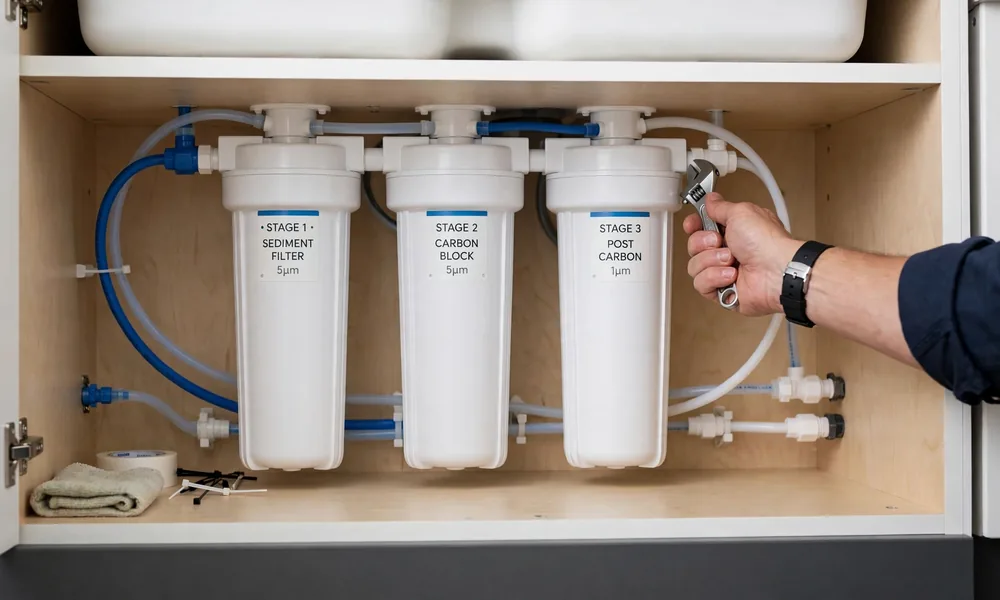
The APEC ROES-50 is the gold standard of under-sink reverse osmosis. Its five-stage system removes up to 99 percent of lead, arsenic, chlorine, fluoride, nitrates and more than a thousand other contaminants, delivering water that is as close to pure as a home system gets.
Installation takes an hour or two and needs basic DIY confidence, and the system produces some wastewater, as all reverse osmosis units do. But for households with genuinely poor water, the ROES-50 is the benchmark others are judged against.
Best-Value Reverse Osmosis: iSpring RCC7
The iSpring RCC7 delivers most of what the APEC offers at a lower price. Its five-stage reverse osmosis system removes lead, chlorine, heavy metals and dissolved solids, the build quality is solid, and replacement filters are affordable and easy to find.
The flow rate is a little slower and the fittings less premium than the APEC, but the filtered water is excellent. For homeowners who want reverse osmosis performance without the premium price, the RCC7 is the smartest buy.
Best Smart Reverse Osmosis: Waterdrop G3P800
The Waterdrop G3P800 is the most modern system here. Its tankless design filters on demand with a fast flow rate, the smart display shows filter life and water quality in real time, and the compact unit fits under sinks where older systems will not. It is certified to reduce lead, PFAS, chlorine and total dissolved solids.
It costs more and the cartridges are proprietary, but the convenience is real: no tank, no waiting, and a display that removes all guesswork about filter changes.
Best Whole-House System: Pentair Pelican PSE1800
The Pentair Pelican PSE1800 filters every drop that enters your home, cutting chlorine and sediment at every tap and reducing scale build-up in pipes and appliances. Showers feel better, laundry smells fresher and your water heater and dishwasher last longer.
It needs professional installation and does not remove lead or nitrates the way reverse osmosis does. But if your priority is better water everywhere, not just at the kitchen tap, the Pelican is the system to buy.
How to Test Your Water Before You Buy
Before spending money, find out what is actually in your water. Most suppliers publish an annual water quality report, and a home test kit costs very little and covers hardness, chlorine, lead, nitrates and pH.
Test first, then buy the filter that targets what you found. A household with hard water needs softening, not another carbon cartridge, while a household with lead in old pipes needs reverse osmosis. Guessing wastes money twice.

Running Costs: What a Filter Really Costs Each Year
The sticker price is the smallest part of owning a water filter. A cheap pitcher costs little to buy but needs a new cartridge every two months, while an under-sink system costs more upfront and then runs for a year on one set of cartridges. Work out the annual cost before you buy: divide the yearly cartridge bill by the litres you drink, and compare systems on cost per litre rather than cost per box.
As a rough guide, expect around 60 to 100 dollars a year for a pitcher, 100 to 150 for a countertop system, and 80 to 200 for an under-sink reverse osmosis unit. Whole-house systems cost more, but they protect every appliance in the home.
Buying Checklist
- Test your water first, then choose a filter certified to remove what your water actually contains.
- Decide on pitcher, countertop, under-sink or whole-house based on whether you rent or own, and how much space you have.
- Check independent certification for the contaminants you care about, not just the brand’s own claims.
- Work out the annual running cost, including cartridges, before you compare sticker prices.
- Measure your space: check fridge shelf height for pitchers and under-sink clearance for plumbed systems.
- Plan cartridge changes in advance, and set a reminder, because an expired filter can be worse than no filter at all.
Frequently Asked Questions
Do water filters remove lead?
Some do and some do not. Reverse osmosis systems and filters specifically certified for lead removal are effective, while basic carbon pitchers generally are not. Check the certification for your system before assuming it handles lead.
Is reverse osmosis water safe to drink?
Yes. Reverse osmosis removes contaminants and some minerals, but those minerals are a small part of a normal diet, and remineralising cartridges are available if you prefer them.
How often should I change my filter cartridge?
Follow the maker’s schedule: roughly every two months for pitchers, six months for countertop systems and twelve months for under-sink units. If the water starts tasting off or the flow slows noticeably, change it sooner.
Do water filters remove fluoride?
Only reverse osmosis and a few specialist filters remove fluoride effectively. Standard carbon filters do not. If fluoride removal matters to you, choose a system certified for it.
Can I install an under-sink filter myself?
Most confident DIYers can install one in one to two hours with basic tools, and most systems include everything needed. If you are unsure about plumbing, hire a professional: a slow leak under a sink is far more expensive than an installation fee.
Is filtered water better for coffee and cooking?
Yes, noticeably. Chlorine and off-tastes show up clearly in tea, coffee and anything where water is a main ingredient. Many coffee lovers find a filter improves their morning cup more than a new machine, which is why it pairs so well with the best coffee makers of 2026 and the best ice makers of 2026.
Bottom Line
The best water filter 2026 for most homes is the APEC ROES-50 if you own your home, or the Aquasana Clean Water Machine if you rent. If you only want better-tasting water on a small budget, the Brita Everyday pitcher does the job. Test your water, match the filter to what you found, and enjoy cleaner water from every glass.