Bathroom Cleaners That Cut Through Soap Scum in 2026
Bathroom cleaners that cut through soap scum are the difference between a bathroom that looks clean for a day and one that stays clean all week. Soap scum is the dull, grey-white film on shower screens, tiles, taps and baths, and it is stubborn because it is not just dirt. It is soap mixed with the minerals in hard water, bonded to the surface every time the shower runs, and a damp cloth barely touches it. The right bathroom cleaner dissolves that bond, so the film lifts away with one wipe. This guide covers the bathroom cleaners worth buying in 2026: the main types, what makes one cut soap scum fast without damaging tiles, glass or chrome, and how to use them well. For the rest of the house, our comparison of the best and worst all-purpose cleaners of 2026 explains when one spray can do the whole job.
Key Takeaways
- A bathroom cleaner with a mild acid formula is the fastest answer to soap scum, because it dissolves the mineral part of the film.
- Foam and gel cleaners beat thin sprays on vertical surfaces, since they cling to shower screens and tiles long enough to work.
- Dwell time does more work than scrubbing: spray, wait the time on the label, then wipe, and most soap scum lifts in one pass.
- Never mix a bleach cleaner with a limescale remover or any acid cleaner, and never use a harsh abrasive on glass, acrylic or chrome.
- A squeegee after every shower and a weekly spray are worth more than any single bottle, because soap scum is easier to prevent than to remove.
Why Soap Scum Is So Hard to Shift
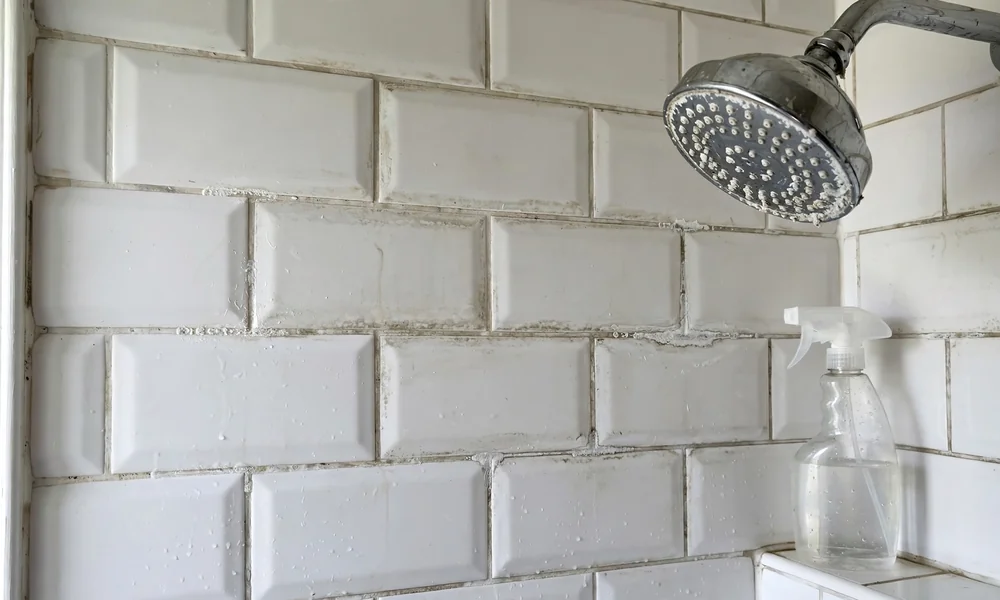
Soap scum forms because ordinary soap and hard water are a bad combination. When soap meets the calcium and magnesium in tap water, it stops dissolving properly and leaves behind a waxy, chalky residue. Every shower adds another thin layer, and the warm, damp air of a bathroom helps each layer bond to the surface underneath. After a few weeks the film turns from a faint haze into a grey coating that dulls tiles and clouds glass. That is why plain water and a cloth fail: water cannot break the bond, and a cloth just polishes the top of the film. A bathroom cleaner has to do two jobs at once: dissolve the mineral part of the scum and lift the greasy, soapy part away. Acid-based cleaners handle the mineral side well, which is why they are usually the fastest on soap scum, while alkaline cleaners are better on grease and body oils. Hard water makes everything worse, so homes in hard-water areas need a stronger descaling action than homes with soft water.
The Main Types of Bathroom Cleaner
Bathroom cleaners come in several distinct types, and the right one depends on the surface and the problem. A spray that is perfect for the basin may be useless on a shower screen, and a heavy-duty limescale remover is overkill for a weekly wipe-down.
Everyday Bathroom Sprays
An everyday bathroom spray is the best choice for the regular weekly clean. These are usually mildly alkaline or neutral formulas that lift light soap scum, toothpaste splashes and dust from tiles, basins and baths in one pass. They are gentle, smell mild, and are safe on most surfaces when used as directed. Their weakness is heavy build-up: on a shower screen that has not been cleaned for months, an everyday spray will need two or three applications and some scrubbing.
Foam and Gel Cleaners
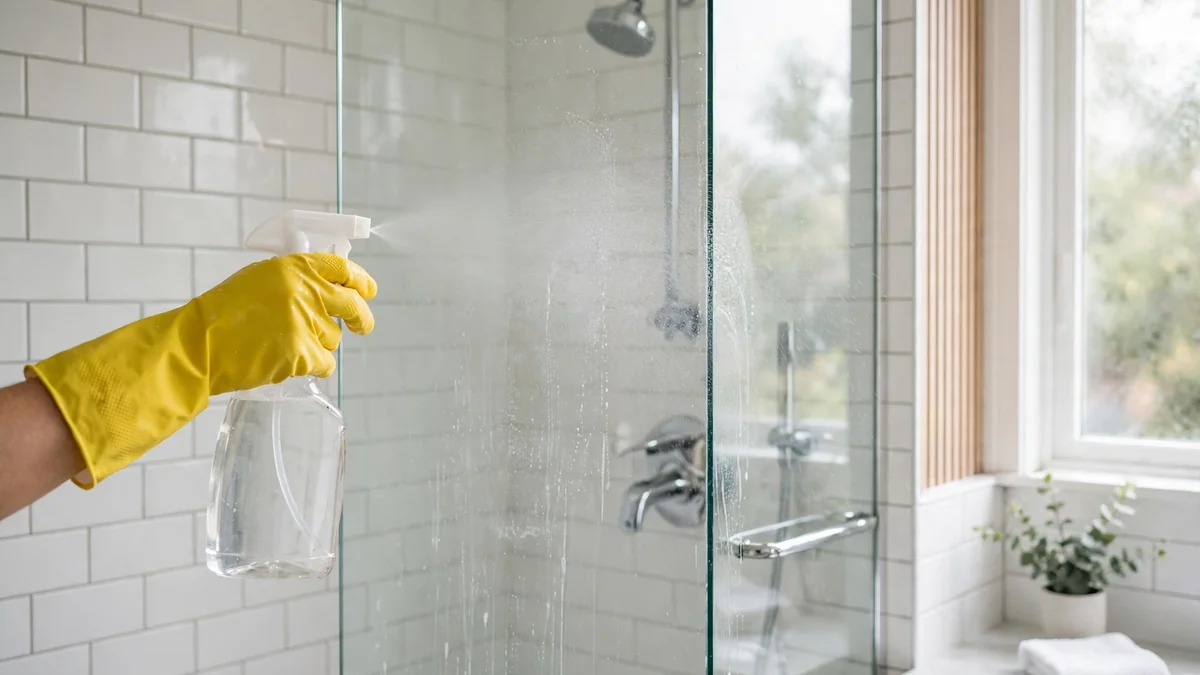
A foam or gel cleaner is the best bathroom cleaner for most homes in 2026, especially for soap scum. The thick foam clings to vertical surfaces such as shower screens, wall tiles and the sides of the bath, staying exactly where it was sprayed for the whole dwell time. That contact is what dissolves soap scum, so a foam often clears in one application what a thin spray needs two attempts to shift. They take slightly longer, since you need to leave them for several minutes, but the result is worth the wait.
Limescale Removers
Limescale removers are acid-based cleaners made for the chalky white deposits that hard water leaves on taps, shower heads and tiles. They are the strongest option for soap scum, because soap scum is partly mineral, and an acid cuts straight through it. The catch is surface safety: acids can damage natural stone, marble, some grouts and certain metals if left too long, so always check the label and never leave them on longer than directed.
Mould and Mildew Removers
Mould and mildew removers are usually bleach-based, and they are the best answer to the black spots that appear on grout, sealant and shower corners. Bleach kills mould and lightens the staining it leaves behind, which no ordinary cleaner does. These products are strong, so they need gloves, ventilation and care around coloured grout and fabrics, which bleach can mark. Never mix a bleach cleaner with a limescale remover or any other acid product, because the combination can release harmful fumes.
Plant-Based and Fragrance-Free Cleaners
Plant-based and fragrance-free bathroom cleaners suit homes with children, pets, asthma or sensitive skin. The best use plant-derived surfactants and mild acids such as citric acid, and they cut everyday soap scum well, though they usually need a longer dwell time than a conventional cleaner on heavy build-up. A fragrance-free formula is a genuine advantage in a small, steamy bathroom, where a strong chemical smell lingers.
What Makes a Bathroom Cleaner Good or Bad
A good bathroom cleaner is judged the way it is actually used: sprayed on a shower screen after a busy week, left for a few minutes, then wiped off before the next person needs the room. The first test is soap-scum cutting power. Does it dissolve a week of film with one application and a short dwell, or does it need three rounds and hard scrubbing? Contact and cling come next, because a cleaner that runs off the glass in a minute cannot dissolve anything, however strong its formula. A good cleaner wipes away cleanly; a bad one leaves a streaky film of its own. Surface safety is the test most people skip until it is too late. A strong acid can etch marble, dull chrome and damage grout, while a harsh abrasive can scratch glass and acrylic baths permanently.
Bathroom Cleaners Compared
| Type | Best for | Soap scum power | Dwell time | Care needed |
|---|---|---|---|---|
| Everyday spray | Weekly wipe-down | Good on light film | 1 to 2 minutes | Low |
| Foam or gel | Shower screens and tiles | Excellent | 5 to 10 minutes | Low |
| Limescale remover | Taps, heavy build-up | Excellent | 5 to 15 minutes | Check stone and grout |
| Mould remover | Grout and sealant | Poor | 10 to 30 minutes | Gloves and ventilation |
| Plant-based | Regular cleaning, sensitive homes | Good | 5 to 10 minutes | Low |
Speed and gentleness pull in opposite directions, and no cleaner is fast, fume-free, gentle on every surface and able to dissolve a year of soap scum in one go.
How to Clean a Bathroom Properly
Start at the top and work down, and put on rubber gloves before you spray anything.
The Shower and Bath
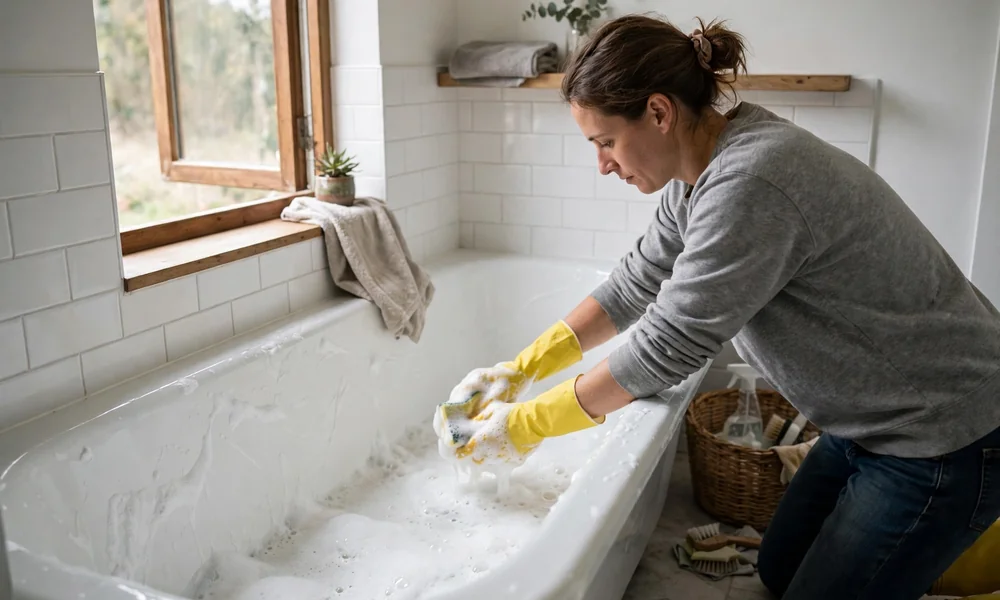
Spray the shower screen, wall tiles and bath with a foam cleaner and leave it for the full dwell time on the label. Then wipe the screen from top to bottom, rinse, and dry the glass with a second dry cloth to stop water spots forming. A quick pass with a good squeegee after every shower keeps the screen clear between deep cleans and is the single best habit for beating soap scum.
Basin, Taps and Toilet
Spray the basin and taps with an everyday cleaner, and tackle limescale on the taps with a limescale remover applied to a cloth rather than sprayed, so it does not run onto surfaces it should not touch. Wipe taps dry after cleaning, because water left to dry is what leaves the spots. For the toilet, apply cleaner under the rim, leave it while you clean the rest of the room, then brush and flush.
Tiles, Grout and Floors
For tiles, a foam or everyday spray and a clean microfibre cloth are usually enough, and microfibre lifts the film without scratching the glaze. Grout needs a different approach: a mould remover on blackened grout, left to work, then a stiff brush. Finish with the floor, mopping from the far corner towards the door.
Mistakes That Make Soap Scum Worse
The most common mistake is scrubbing dry. A dry sponge on a dry shower screen just moves the film around and can scratch the glass, while a cleaner given its dwell time does the work for you. Another is using the wrong product on the wrong surface: a limescale remover on marble, a bleach cleaner on coloured grout, or an abrasive pad on an acrylic bath can all cause damage that no cleaner can undo. Mixing products is the most dangerous mistake of all, so never combine a bleach cleaner with an acid limescale remover.
Bathroom Cleaning Checklist
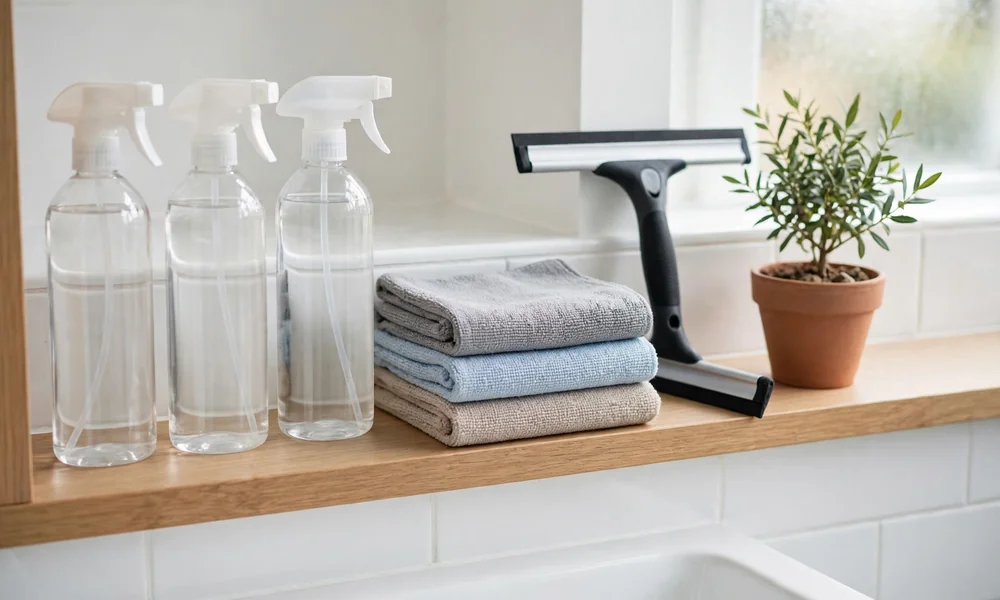
- Ventilate the room and put on rubber gloves before spraying anything.
- Spray foam cleaner on the shower screen and tiles and leave it for the full dwell time.
- Clean taps with a limescale remover on a cloth, then wipe them dry to stop spots.
- Wipe tiles and bath with a clean microfibre cloth, and use a separate cloth for the toilet.
- Treat blackened grout with a mould remover and a stiff brush, never with an abrasive pad.
- Squeegee the shower screen after every shower and rinse the bath after each use.
Frequently Asked Questions
What is the best bathroom cleaner for soap scum?
A foam or gel cleaner with a mild acid formula is the best all-round choice for soap scum, because it clings to vertical surfaces and dissolves the mineral part of the film.
How do I stop soap scum coming back?
Squeegee the shower screen after every shower, rinse the bath after use, and spray the shower weekly with an everyday bathroom cleaner. Keeping surfaces dry matters most, because soap scum bonds as water evaporates.
Can I use vinegar to clean soap scum?
White vinegar works on light soap scum because it is a mild acid, and it suits homes that want a gentle clean. It needs a longer dwell time and struggles with heavy build-up, and it should never be used on natural stone or marble.
Is bleach safe to use in the bathroom?
Bleach is safe for mould on grout and for the toilet bowl when used as directed, with gloves and ventilation. It should never be mixed with an acid limescale remover, and it can mark coloured grout and fabrics.
Why does my shower screen go cloudy even after cleaning?
A cloudy screen after cleaning is usually residue from the cleaner itself, or hard-water spots left when rinse water dries. Wipe the screen dry after rinsing, and finish with a squeegee.
How often should I deep clean the bathroom?
A weekly spray and wipe keeps the bathroom in good shape, with a deeper clean of the shower screen, grout and taps once a month.
The Bottom Line
The best bathroom cleaner for soap scum is a foam or gel with a mild acid formula, used little and often rather than saved for a crisis. Give it its dwell time, wipe with a clean cloth, and squeegee the shower after every use.