Air purifier filters are the part of the machine that does the actual cleaning, and the difference between a good one and a cheap one shows up in the dust on your shelves. The purifier itself is mostly a fan in a box: it moves air, and the filter catches what the air carries. Buy the wrong filter, and the machine hums while dust, pollen and pet dander drift straight through it. Buy the right one, and the same machine pulls the air cleaner, day after day.
That is why this guide is about the filters, not the machines. Most buying guides rank whole purifiers, but the filter is the consumable you will pay for repeatedly and replace every few months for years. A machine with a mediocre filter is a mediocre purifier, whatever the box promises. Here is how air purifier filters work, which types trap the most dust, how to match one to your machine, and when to replace it.
Key Takeaways
- A true HEPA filter traps at least 99.97 percent of particles 0.3 microns across, covering the dust, pollen and pet dander behind most allergy symptoms.
- Filters labelled HEPA-type or HEPA-like are not held to the same standard, and their dust capture varies widely.
- A washable pre-filter catches hair and large dust first, keeping the HEPA layer cleaner so it lasts longer.
- Activated carbon removes smells and smoke, but it does not trap dust, and it needs replacing more often than HEPA.
- Buy the exact filter made for your model: one that does not seal properly lets dirty air slip around it, unfiltered.
What an Air Purifier Filter Actually Does
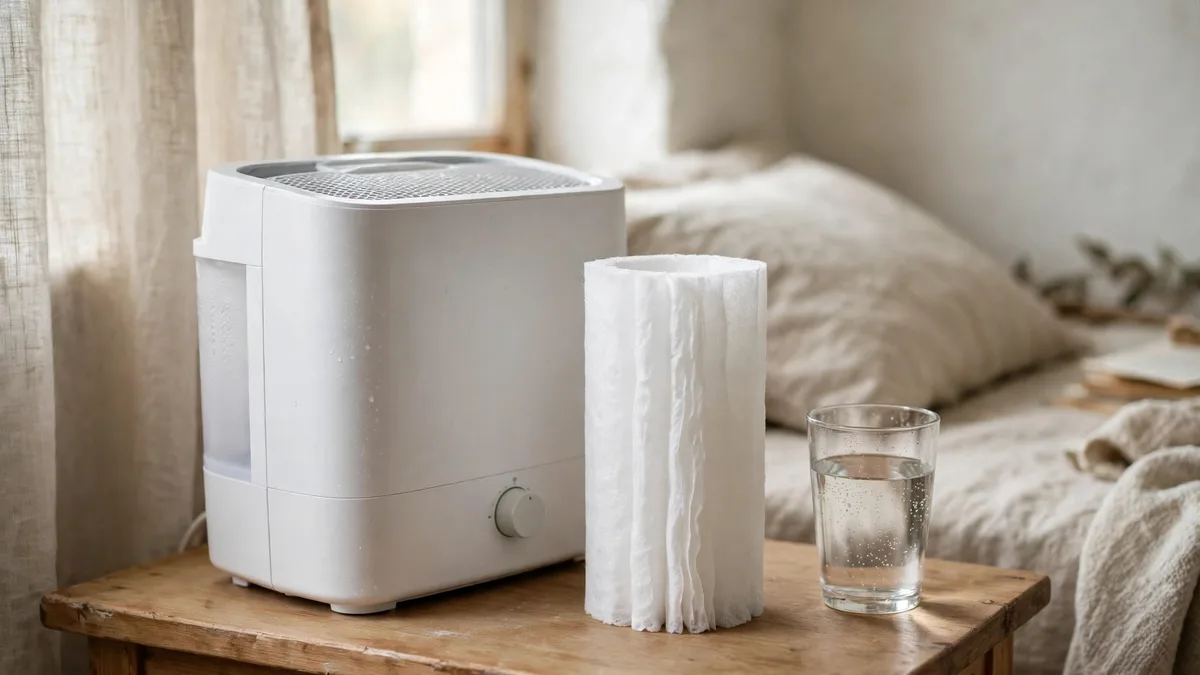
An air purifier filter is a dense mat of fibres, pleated to pack a large surface area into a small space. As the fan pulls room air through it, particles collide with the fibres and stick, while clean air passes through. The finer and denser the mat, the smaller the particles it can catch, but the harder the fan has to work.
This is a different question from which purifier to buy. Guides that rank whole machines judge the fan, the noise, the room coverage and the smart features as well as the filter. Here we judge only the filter: what it is made of, what size of particle it traps, how long it lasts, and what it costs to replace. If you are choosing the machine as well, our guide to the best air purifiers of 2026 covers that side, including room size and clean air delivery rate.
The Filter Types, Ranked for Dust
Not every filter sold for a purifier is built to trap dust well. These are the types you will find, ranked from the strongest dust capture to the weakest.
| Filter type | Dust capture | Also handles | Typical life |
|---|---|---|---|
| True HEPA | Excellent, 99.97% at 0.3 microns | Pollen, pet dander, mould spores | 6 to 12 months |
| HEPA-type or HEPA-like | Variable, often much lower | Larger dust only | 3 to 6 months |
| Activated carbon | Poor on its own | Smells, smoke, cooking odours | 3 to 6 months |
| Washable pre-filter | Good for large dust and hair | Protects the HEPA layer | Reusable, wash monthly |
1. True HEPA: the dust trap to beat
A true HEPA filter is the standard every other filter is measured against. It captures at least 99.97 percent of particles 0.3 microns across, the size that includes fine dust, pollen, dust mite debris, mould spores and most pet dander. Its pleated design gives it a large surface area, so it can trap a lot of dust before airflow suffers. If dust is your main complaint, insist on it, and check the packaging says true HEPA, not a vaguer phrase.
2. HEPA-type and HEPA-like: the label trap
These sound like HEPA, and that is the point. HEPA-type and HEPA-like filters are not held to the true HEPA standard, and their performance varies enormously. Some are nearly as good; many are far weaker, catching only larger dust while fine particles pass through. They are cheaper, which is why budget machines use them, but for a dusty home or an allergy sufferer they are a false economy. Always check for the words true HEPA.
3. Activated carbon: for smells, not dust
Activated carbon is a layer of porous charcoal that absorbs gases and odours: cooking smells, smoke, pet odours and chemical fumes. It does almost nothing for dust on its own, because dust is a particle and carbon works on gases. In a home with cooking smells or a smoker, a carbon layer alongside true HEPA makes the air feel genuinely fresher. It saturates faster than HEPA, though, and needs replacing every three to six months, sooner if smells return.
4. Washable pre-filters: the filter that protects the filter
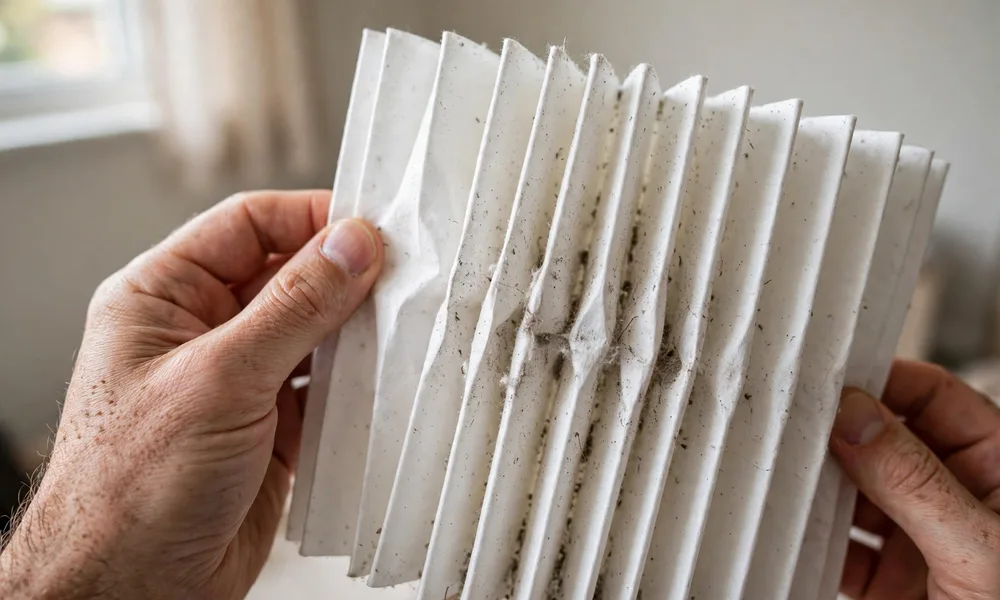
A pre-filter is a thin mesh or foam layer that sits in front of the HEPA filter and catches hair, lint and large dust first. By stopping the big stuff early, it keeps the HEPA layer cleaner for longer, so the HEPA filter lasts its full rated life instead of clogging early. Most pre-filters can be rinsed or vacuumed monthly and reused for years.
How Dust Actually Gets Trapped
A HEPA filter catches them in three ways at once. Large particles slam into fibres and stick. Medium particles follow the airflow around a fibre but brush against it and are caught. The smallest wander randomly, buffeted by air molecules, until they collide with a fibre too. That is why the 0.3-micron figure matters: it is the hardest size to catch, so a filter that passes at 0.3 microns will do even better on larger dust. A filter that only claims to catch larger particles is telling you, quietly, that the fine dust is passing through.
Matching the Filter to Your Machine
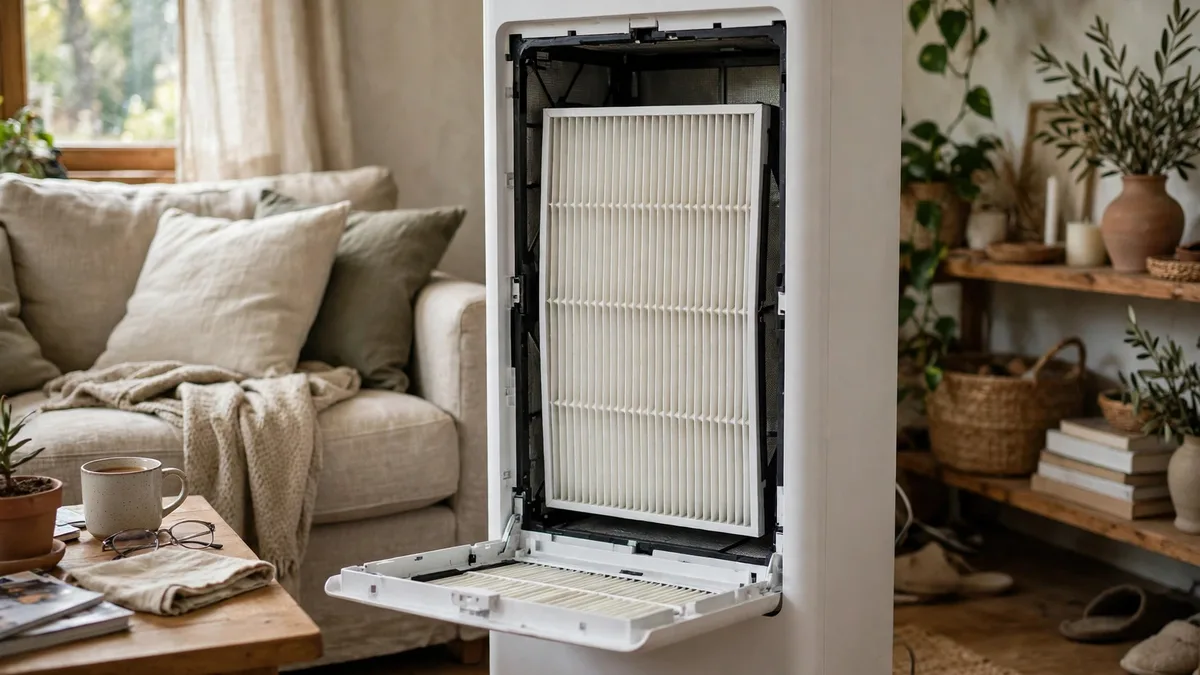
The best filter is useless if it does not fit your purifier. Filters are made to exact sizes, and one even slightly too small leaves a gap around its edge. Air takes the easiest path, so it slips around the filter instead of through it, and the dust goes with it. This is called bypass, and it is the most common reason a good purifier performs badly: the filter is fine, but the seal is not.
Buy the filter made for your exact model, not a lookalike. Check the model number on the machine, usually on a label on the back or base, and match it against the filter packaging. Third-party compatible filters can be good value, but only if they are made to the same dimensions and standard, and state true HEPA rather than a vaguer claim. Our comparison of the best vs worst air purifiers of 2026 shows what happens when machines cut corners on filtration.

When to Replace Your Filter
Filters do not last forever, and a spent filter slows the airflow, so the purifier cleans less air while still looking like it is working. Most true HEPA filters last six to twelve months in ordinary use, less in a dusty home, a home with pets, or a room where the purifier runs all day. Carbon layers last three to six months, and pre-filters should be cleaned monthly.
The signs are easy to spot. Dust returns to shelves faster than it used to. Allergy symptoms creep back. The purifier sounds louder on the same setting, because the fan is working harder to push air through a clogged filter. Smells linger where they used to clear quickly. Some machines have a filter-life indicator, but it usually counts hours, not dust, so a dusty home can need a new filter well before the light comes on. Open the machine and look every few months: if the pleats are grey and matted, it is time, whatever the indicator says.
Running Costs: The Real Price of Clean Air
A purifier’s price tag is only the first payment. Over two years, replacement filters often cost as much as the machine itself, and on budget machines they can cost more. A cheap purifier with expensive, short-lived filters is a worse deal than a pricier machine with long-life filters.
Work it out before you buy: divide the replacement filter price by its rated life in months, and multiply by 24. That is your two-year filter cost, so compare machines on that total, not the box price. Also check how easy the filter is to buy: one sold by a single shop, or only online from overseas, will cost more in time and delivery than one stocked everywhere. And never run a purifier without its filter fitted, or with a filter you tried to wash when it was not designed for washing: a damaged HEPA layer can shed fibres into the room.
Checklist: Before You Buy an Air Purifier Filter
- Confirm the filter says true HEPA, not HEPA-type or HEPA-like, and check the 99.97 percent at 0.3 microns claim.
- Match the filter to your exact purifier model number, so it seals with no air slipping around the edges.
- Look for a washable pre-filter in the set, to catch hair and large dust before it reaches the HEPA layer.
- Add activated carbon only if smells or smoke matter to you; it does not trap dust.
- Work out the two-year filter cost before you commit, from the replacement price and rated life in months.
- Check replacement filters are easy to buy where you live, and keep a spare so a clogged filter never waits weeks to be changed.

Frequently Asked Questions
Which air purifier filter traps the most dust?
A true HEPA filter traps the most dust, capturing at least 99.97 percent of particles 0.3 microns across, including fine dust, pollen and pet dander. No other common filter type matches it.
Can I wash a HEPA filter?
Usually no. Most true HEPA filters are not washable, and washing damages the fibre mat, so it traps less dust afterwards. Only wash one if the manufacturer explicitly says it is washable. Pre-filters, by contrast, are usually designed to be rinsed or vacuumed.
How often should I replace my air purifier filter?
Most true HEPA filters last six to twelve months, and carbon layers three to six months, but a dusty home or a house with pets shortens that. Check the filter every few months, and replace it when the pleats are grey and matted, even if the indicator light has not come on.
Do I need a carbon filter as well?
Only if smells matter to you. Carbon absorbs cooking odours, smoke and pet smells, which HEPA cannot do, but it does not trap dust. For dust and allergies alone, a true HEPA filter with a pre-filter is enough.
Will any HEPA filter fit my purifier?
No. Filters are made to exact sizes for specific models, and one that does not seal properly lets dirty air bypass it entirely. Always buy the filter made for your exact model number, and be cautious with cheap compatible filters that do not state their dimensions and standard.
Why is my purifier noisier than it used to be?
A clogged filter is the most likely reason. As dust builds up in the pleats, the fan has to work harder to push the same amount of air through, which makes it louder. Replacing the filter usually restores the original noise level, and cleaning the pre-filter helps too. For a bedroom machine, see our guide to the best air purifiers for bedrooms in 2026, where quiet running matters most.
Bottom Line
The air purifier filters that trap the most dust in 2026 are true HEPA filters, fitted exactly to your machine, protected by a washable pre-filter, and replaced on schedule. Skip the HEPA-type imitations, do not expect carbon to catch dust, and judge any purifier by its two-year filter cost, not its box price.