An air purifier is one of the few home appliances you buy and then cannot see working. You switch it on, a small light turns green, and you take it on faith that the air in your room is getting better. That invisibility is exactly why the gap between the best air purifiers of 2026 and the worst ones is so wide, and so easy to miss. The best machines quietly pull dust, pollen, pet dander and fine smoke particles out of the air hour after hour, while the worst ones hum in the corner, glow reassuringly, and change almost nothing.
This guide puts the two sides next to each other. On the best side are the machines that earn their place: true HEPA filtration, an honest clean air delivery rate, a noise level you can live with on the speed you will actually use, and replacement filters that do not punish you for owning the thing. On the worst side are the traps: filters that borrow the HEPA name without meeting the standard, ionizers that add a lung irritant to your room, boxes too small for the rooms they claim to cover, and cheap machines whose filter bills quietly overtake their purchase price within two years.
Key Takeaways
- The best purifiers use true HEPA filters and a sealed air path; the worst use HEPA-type or HEPA-like filters that are not held to the same standard.
- Judge a purifier by its smoke CADR against your room size, never by the coverage figure printed on the box.
- Noise on the speed you will actually use matters more than the quietest setting on the spec sheet.
- Add up two years of replacement filters before you buy, because cheap machines often cost more than good ones over time.
- Ionizers and ozone generators can put an irritant into your room while barely filtering anything at all.
How to Tell the Best From the Worst
Before comparing specific machines, it helps to know the four tests that separate the two sides. Every claim a manufacturer makes can be checked against one of them, and most bad purifiers fail at least two. Use them in order when you shop, and you will rule out most bad machines before you ever compare prices.
Filtration: true HEPA or not
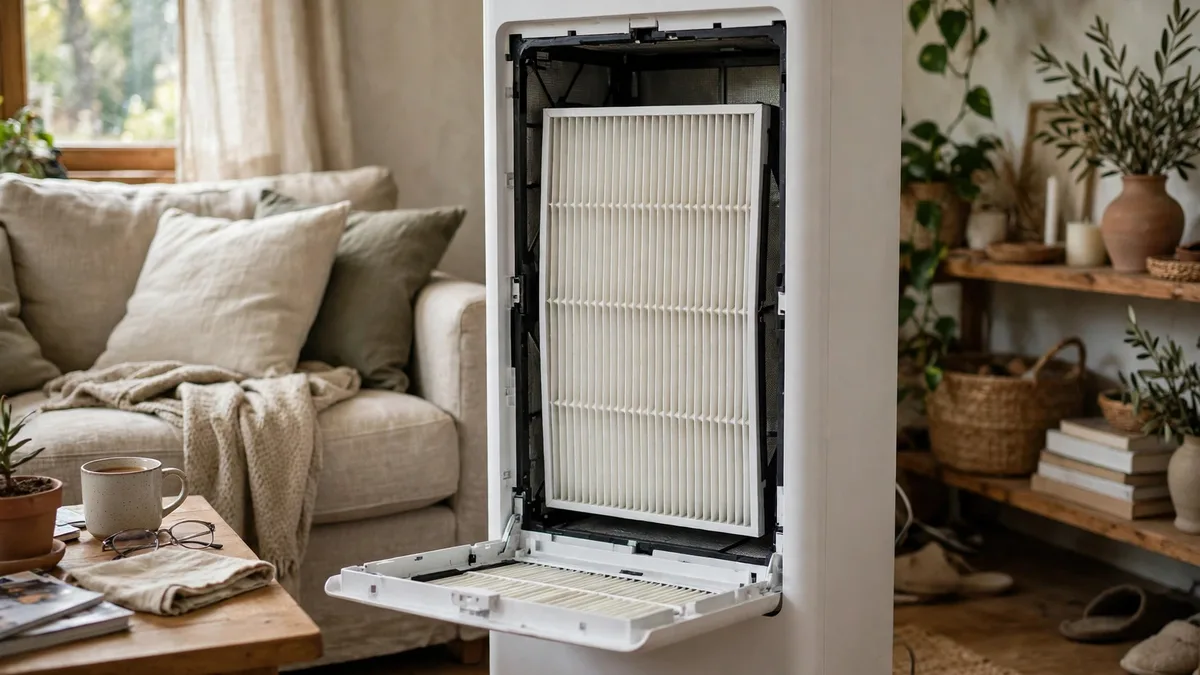
A true HEPA filter captures at least 99.97 percent of particles 0.3 microns across, which covers the pollen, dust mite debris, mould spores and pet dander behind most allergy symptoms. The best purifiers also seal the air path, so air cannot slip around the filter, and they add a real activated carbon layer for cooking smells and smoke, because HEPA alone cannot remove gases or odours.
Clean air delivery rate
The clean air delivery rate, or CADR, measures how much filtered air a purifier delivers each minute, and it is the most useful number on the box. As a rough guide, the smoke CADR should roughly equal your room area in square metres, and the machine should manage four to five full air changes per hour. Size every pick by CADR instead, and remember that a slightly oversized purifier is usually the better buy, because it can run quietly on low and still clean properly.
Noise and running costs
A purifier that is too loud on the speed you will use ends up switched off, and a switched-off purifier cleans nothing. Running costs matter just as much. A budget purifier with filters that cost a small fortune every six months can cost more over two years than a premium machine with long-life filters. Add up two years of filters before you buy, and treat that total as part of the price.
The Best Air Purifiers of 2026
The best purifiers share a pattern rather than a brand. They are honest about their numbers, quiet at the speeds people actually use, and built to run for years on filters that are easy to find and reasonably priced.
Best for allergy sufferers
For allergy households, the winning machines pair a true HEPA filter with a sealed housing and a smoke CADR high enough for the room they sit in. The best allergy picks also keep their filters affordable, because an allergy sufferer who skips a filter change to save money ends up breathing through a clogged filter that does the job badly. Look for a machine with a filter-change indicator based on run time rather than a fixed calendar date, so you replace the filter when it is actually used up.
Best for bedrooms
Bedroom purifiers live or die by their noise. The best ones run at a soft, steady murmur on low and medium, with a sleep mode that dims the lights and drops the fan to a whisper without dropping the cleaning to nothing. A bedroom machine does not need a huge CADR, because bedrooms are usually small, but it does need to hold its performance at a low fan speed, which is where cheaper machines fall apart.
Best for large open rooms
Large rooms punish undersized purifiers. The best large-room machines are tower units with high smoke CADR ratings, strong fans that stay reasonably quiet, and filters sized to match the airflow, so the machine does not choke on its own filter. If your living room connects to a kitchen, buy for the combined space, not just the seating area, and give the purifier open space around it so air can circulate.
Best value picks
The best value purifiers are rarely the cheapest on the shelf. They are the machines in the middle of the price range with true HEPA, an honest CADR, a quiet medium speed and filters that cost a sensible amount. An app that tells you the air is fine adds nothing if the filter is mediocre, and the money saved on gimmicks usually shows up in a better fan and a better filter.
The Worst Air Purifiers of 2026
The worst purifiers are not obviously broken, They simply clean far less air than their box claims, or filter through a filter that never met the standard its label implies, or cost so much in replacement filters that they end up switched off behind the sofa.
The HEPA-type impostor
The most common trap is the filter that borrows the HEPA name without earning it. Labels such as HEPA-type, HEPA-like and HEPA-style sound reassuring, but they are not held to the true HEPA standard, and the fine particles that trigger allergies pass straight through. If the box does not say true HEPA or HEPA H13, treat the filter as decorative.
The ionizer and ozone emitter
Some purifiers clean the air partly by charging particles or generating ozone, and both approaches deserve suspicion. Ozone generators are worse: ozone is a lung irritant, and deliberately adding it to a room you breathe in is a poor trade for any filtration benefit. A good purifier needs no ionizer and no ozone mode, and a machine that leans on them is usually compensating for a weak filter.
The undersized box
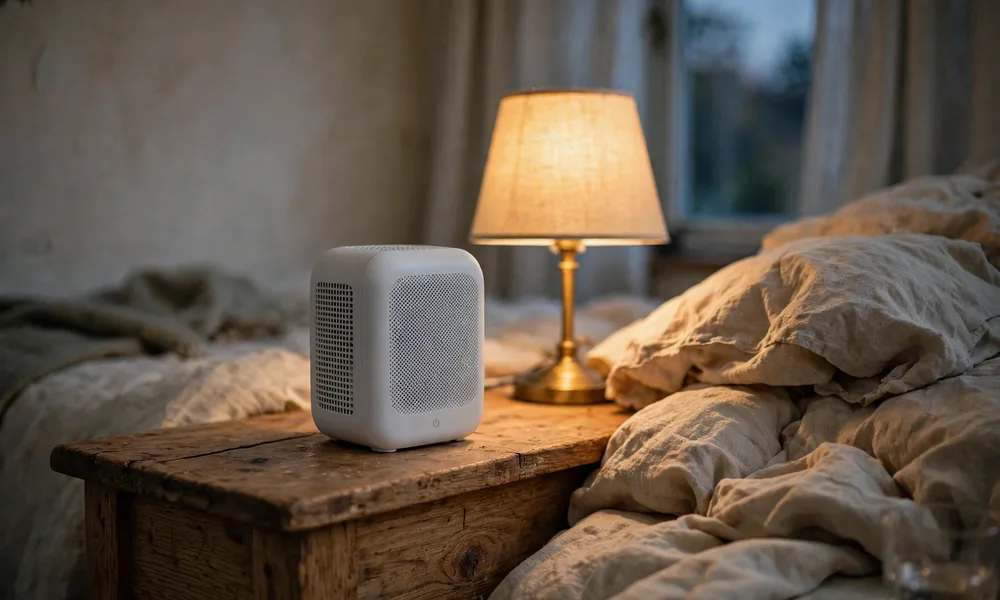
Undersized purifiers are the prettiest trap. They are compact, quiet and cheap, and their boxes claim coverage for rooms far larger than they can honestly serve. Put one in a real living room and it will clean the air in a small bubble around itself while the rest of the room carries on as before.
The filter-cost trap
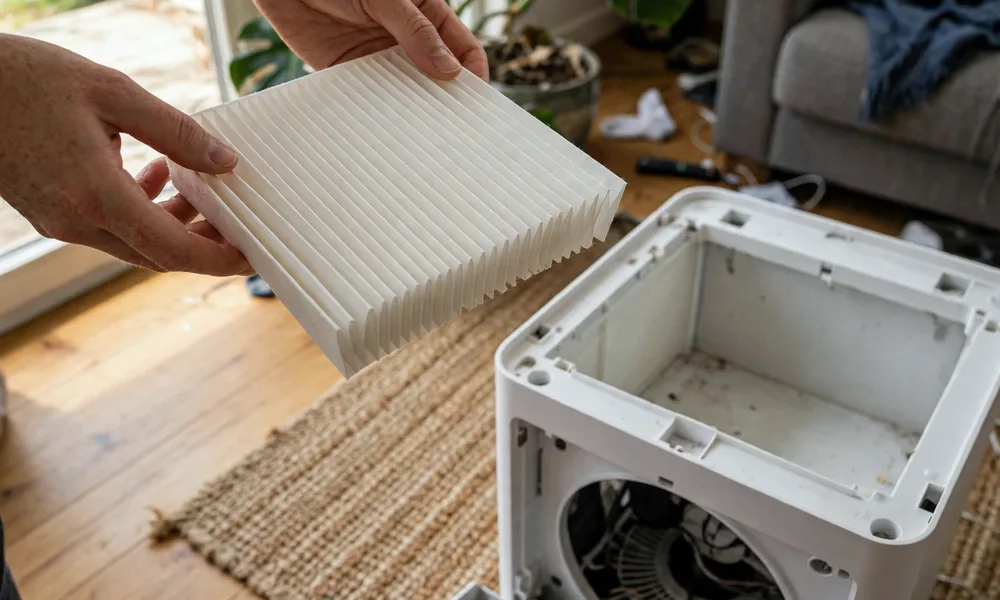
The filter-cost trap is the most expensive failure, because it only reveals itself after you have bought the machine. A purifier that costs very little upfront can need a costly filter every six months, and over two years the filters can cost more than the machine itself. Before buying any purifier, price two years of filters and add that to the purchase price. If the total stops looking cheap, it was never cheap.
The bedroom screamer
Some purifiers are quiet on their lowest setting and loud on every setting that actually cleans. In a shop or a review video, the quiet mode sounds wonderful. In a bedroom at night, the medium speed you need to keep the air clean sounds like a small fan heater, and the machine gets switched off within a week.
Best vs Worst at a Glance
| Feature | Best purifiers | Worst purifiers |
|---|---|---|
| Filter | True HEPA, sealed air path | HEPA-type or HEPA-like |
| Room sizing | Smoke CADR matched to the room | Coverage claim far beyond the CADR |
| Noise | Quiet on the speed you use | Quiet only on sleep mode |
| Filter costs | Affordable, long-life filters | Costly filters every few months |
| Extras | Useful sensors, simple controls | Ionizers, ozone, app gimmicks |
| Long-term result | Cleaner air, used daily | Switched off behind the sofa |
Which Rooms Need Which Purifier
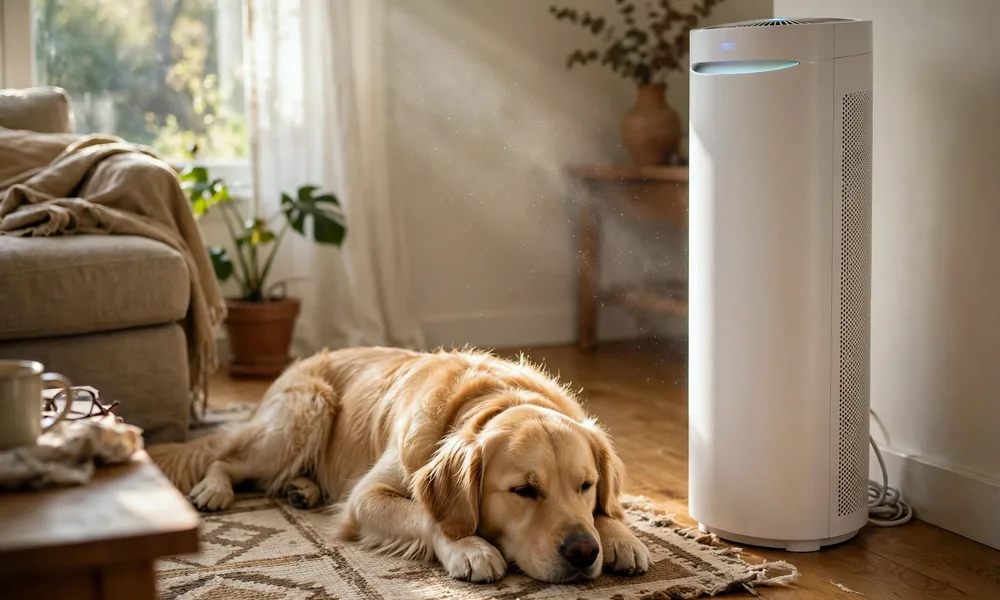
There is no single best purifier for every home, because rooms ask for different things. Bedrooms need quiet above all, and a small machine with a true HEPA filter and a gentle fan is usually enough. Living rooms need CADR, because they are bigger and often open to a kitchen, so a tower unit with a strong fan earns its keep. Allergy households need the strictest filter standard in every room they spend time in, because a good purifier in the bedroom and a bad one in the living room leaves half the day unfiltered. Our guide to the best air purifiers of 2026 ranks the strongest machines for each of these situations, while the worst air purifiers of 2026 names the types to avoid in each room. If you only purify one room, make it the bedroom, because you spend a third of your life there, and the best air purifiers for bedrooms are built for exactly that job.
Verdict
The verdict is clear, and it is not about brands. The best air purifiers of 2026 win because they are honest machines: true HEPA filtration, a CADR that matches real rooms, quiet operation at useful speeds and filters that do not punish ownership. The worst lose because they are dishonest machines, not broken ones: they borrow the language of good filtration, promise coverage they cannot deliver, and hide their real cost in replacement filters. Between the two, the price gap is often smaller than it looks once you add up two years of filters, and the performance gap is far larger than the boxes suggest.
If you buy one thing from this comparison, buy a purifier with true HEPA, a smoke CADR matched to your room, and a medium speed you can live with. That single combination rules out most of the worst machines on the shelf and points you straight at the best ones. A machine that passes all four is a good buy at almost any price. A machine that fails two of them is a bad buy at any price.
Who Each Side Is For
The best purifiers are for anyone who wants the air in their home to actually improve: allergy and asthma sufferers, parents setting up a nursery, pet owners fighting dander and hair, and anyone living near a busy road or cooking in an open-plan space. The worst purifiers, bluntly, are for nobody, but they end up bought by shoppers who compare boxes instead of numbers, who trust a familiar-sounding filter label, or who pick the cheapest machine and never price the filters. If that describes a past purchase, the fix is not to give up on purifiers. It is to buy the right one next time, using the four tests above, and to let the bad machine go.