
One bottle that cleans everything sounds like a promise too good to be true, and in a way it is. No single spray is the best choice for every surface in a home, but a good all-purpose cleaner comes closer than anything else in the cupboard. It cuts through kitchen grease, lifts bathroom grime, wipes fingerprints off light switches, and leaves worktops clean enough to eat from, all from one bottle. A bad one does the opposite: it smears grease into a thin film, leaves streaks on glass, smells so strongly it makes your eyes water, and quietly damages the finishes it was meant to protect.
The best all-purpose cleaners of 2026 share a simple profile: they clean fast with a small amount, they rinse or wipe away without residue, they are safe on the surfaces most homes actually have, and they smell mild or of nothing at all. The worst fail on residue first and safety second. They leave a sticky layer that attracts dust, they dull stone and wood, or they are so harsh that you need gloves and an open window just to wipe a table.
Key Takeaways
- The best all-purpose cleaners cut grease quickly, leave no streaks, and work on worktops, tiles, sinks, and painted surfaces.
- A pH-neutral formula is the safest all-round choice: strong enough for grease, gentle enough for stone, wood, and stainless steel.
- Spray, wait thirty seconds, then wipe: dwell time does more work than extra scrubbing or extra product.
- One good all-purpose cleaner can replace four or five single-room sprays and save cupboard space and money.
- Avoid harsh bleach-based sprays for everyday cleaning, and never mix cleaners or use them on unsealed stone.
How This Comparison Was Judged
We judged all-purpose cleaners the way they are actually used: grabbed in a hurry after dinner, sprayed on a greasy hob, wiped across a bathroom sink, and used to clean a sticky table before guests arrive. So the judging started with cleaning power. Does the spray lift a day-old grease mark and a ring of dried coffee with a short dwell and one wipe, or does it need three applications and hard scrubbing?
After cleaning power came residue and finish: does the surface dry streak-free and touch-clean, or does it feel tacky and attract dust within hours? Then surface safety and smell: is it safe on laminate, tile, sealed stone, stainless steel, and painted wood, and can you use it in a small bathroom without coughing? We also weighed value and simplicity, because a cleaner that needs a different bottle for every room is not all-purpose at all. The best cleaners here earn their place on cleaning power first and residue second; the worst fail on residue and then fail again on safety and smell.
The Best All-Purpose Cleaners of 2026
The best all-purpose cleaners share a quality that is easy to miss in a shop and impossible to miss at home: they do the work and then disappear. A good spray lifts the dirt, the cloth takes it away, and the surface is left clean, dry, and smelling of nothing. There is no sticky film, no white haze on dark worktops, no bleached patch on the wood. They are strong enough for the hob and gentle enough for the bathroom mirror, and they do it from one bottle with a trigger that still works when the bottle is half empty.
pH-Neutral Multi-Surface Sprays
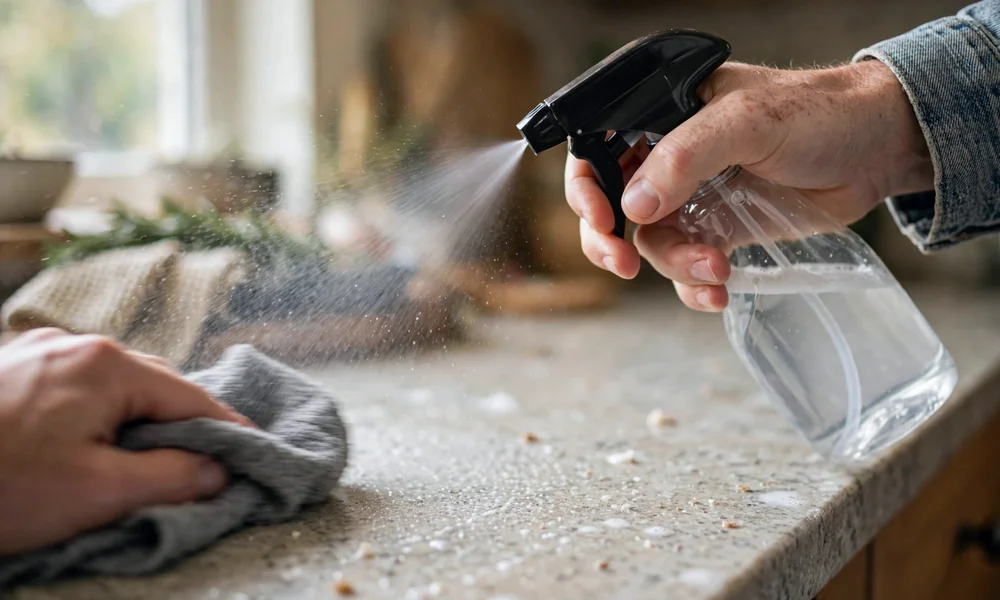
A pH-neutral multi-surface spray is the best all-round all-purpose cleaner for most homes, and it is not close. Neutral formulas sit in the middle of the acid-alkaline scale, which means they cut everyday grease and grime without attacking the surface underneath. They are safe on sealed stone, laminate, tile, glass, stainless steel, and painted wood, which covers almost everything you would ever spray in a kitchen or bathroom. A good one lifts a greasy fingerprint and a dried splash of sauce with a short dwell and a single wipe, and it dries without streaks on dark worktops, where cheaper sprays leave a white haze. Look for a spray that lists the surfaces it is safe for on the label, and beware of any cleaner that claims to do everything but names nothing.
Concentrated Refill Cleaners
Concentrated refill cleaners are the best value in the aisle, and the best choice if you are tired of throwing away a plastic bottle every month. You buy one durable spray bottle and small refills of concentrated liquid, then mix them with tap water at home. A good concentrate cleans exactly like a ready-made spray, because it is the same formula with the water removed, and one small refill bottle often makes five or six full sprays. The savings add up quickly, and the cupboard stays tidy because you store refills instead of full bottles. If you clean often, a concentrate system pays for itself within a few months and cuts the plastic you throw away to a fraction of what it was.
Plant-Based and Fragrance-Free Sprays
Plant-based and fragrance-free sprays are the best choice for homes with children, pets, asthma, or sensitive skin. The best of these use plant-derived surfactants that lift grease as effectively as conventional cleaners, but without the harsh solvents and heavy perfumes that make cheaper sprays smell like a chemical factory. A fragrance-free formula is a genuine advantage, not a missing feature: strong scent does not mean strong cleaning, and it often means residue, because the perfume oils linger on the surface long after the cleaning agents have gone. A good plant-based spray leaves a worktop clean and smelling of nothing, which is exactly what you want where food is prepared.
The Worst All-Purpose Cleaners of 2026
The worst all-purpose cleaners look convincing on the shelf and then disappoint the moment they dry. They share the same failures in different combinations: they smear instead of lifting, they leave residue, they smell overpowering, or they damage the surfaces they were sold to clean. The annoying part is that the damage is not always obvious straight away. A dulled worktop or a bleached patch on wood shows up weeks later, long after the bottle is open and the receipt is gone. These are the types to avoid, whatever the price or the promise on the label.

Harsh Bleach-Based Everyday Sprays
Bleach-based sprays have their place, but everyday cleaning is not it. Used daily on worktops, tables, and bathroom surfaces, they are too harsh for the job: they fade coloured grout, dull stainless steel, strip the finish from wood, and leave a chemical smell that lingers for hours. They also demand gloves and ventilation, which means a quick wipe-down turns into a chore you put off, and the surfaces get cleaned less often, not more. Keep a bleach product for the occasional deep clean of the toilet or a disinfection job after raw meat, and use a mild all-purpose spray for everything else. A cleaner that needs protective gear to wipe a table is not an everyday cleaner, whatever the label says.
Over-Scented Sprays That Leave Residue
A spray that smells strongly is usually a spray that leaves something behind. Heavy perfumes are carried in oils and solvents, and those oils do not evaporate cleanly; they settle into a thin sticky layer on the surface, which attracts dust and fingerprints within hours of cleaning. The result is a worktop that looks clean for ten minutes and feels tacky by lunchtime, and a home that needs cleaning again sooner than it should. The test is simple: wipe a dark surface, let it dry, and run your hand across it. If it feels sticky or looks hazy, the cleaner is leaving residue. A good all-purpose cleaner should dry to a surface that feels like nothing at all, and smells like nothing at all.
Single-Room Sprays Sold as All-Purpose
The most expensive mistake in the cleaning aisle is buying five single-room sprays when one good all-purpose cleaner would do. Brands split one basic job into a kitchen spray, a bathroom spray, a glass spray, a floor spray, and a hob spray, each in a different bottle with a different scent, and charge three or four times the price of a plain alternative. The worst cleaning products that waste money are almost all variations on this trick, and the cupboard full of half-used bottles is the proof. One good neutral spray, plus a specialist descaler for the shower and a degreaser for the oven, covers a whole home. Everything else is marketing, and the money saved buys a better cloth, a better sponge, and a cleaner home.
How to Use an All-Purpose Cleaner Properly
A good cleaner used badly cleans badly, and the fix is technique, not more product. Spray the surface lightly, not the cloth, and give the cleaner thirty seconds to work before you wipe. That dwell time lets the surfactants loosen grease, so one wipe lifts it instead of smearing it. Wipe with a clean, damp microfibre cloth, folding it to a fresh face as you go, and rinse the cloth often, because a dirty cloth spreads dirt instead of removing it. Never mix cleaners, and never mix a bleach product with anything else, because the fumes can be dangerous. Do not spray directly onto electronics, and test any new cleaner on a hidden patch of stone or wood first. A good dish soap and hot water still beat any spray for a greasy pan, and the spray is for the surfaces around it. Used this way, one bottle lasts months, and the surfaces stay clean longer between wipes.
What to Buy Instead
If your cupboard is crowded with disappointing sprays, the fix is a short shopping list rather than a big spend. Buy one pH-neutral multi-surface spray for everyday use, one concentrate refill system if you clean often, and one fragrance-free plant-based spray if anyone in the house has sensitive skin or breathing trouble. Add a pack of clean microfibre cloths, because the cloth matters as much as the spray, and a descaler for the shower, which is the one job an all-purpose cleaner should not be asked to do. The best kitchen towels work the same way as a good cleaner: one reliable tool used properly beats a shelf full of specialist products. Your cupboard will be tidier, your surfaces will be cleaner, and the money you save will pay for the better bottles several times over.
The Verdict
The best all-purpose cleaners of 2026 are the plain ones: a pH-neutral multi-surface spray for everyday cleaning, a concentrate refill system for value, and a fragrance-free plant-based spray for sensitive homes. They cut grease, they dry streak-free, they are safe on the surfaces you actually have, and they smell of nothing. The worst are the harsh bleach sprays used daily, the over-scented bottles that leave a sticky film, and the single-room sprays that charge five times over for one job. The rule is simple and cheap to follow. Buy one good neutral spray, give it thirty seconds to work, wipe with a clean cloth, and replace the cupboard full of bottles with the one bottle that does the job properly.


