
Kitchen Cleaners That Cut Grease Fast in 2026
Kitchen cleaners that cut grease fast are the bottles that earn their place on the worktop, because kitchen grease is unlike any other dirt in the house. It is cooking oil, butter and fat, splashed onto the hob and worktops and left to set on splashbacks, and it does not dissolve in water. A cloth and warm water just spread it into a thin, sticky film. The right kitchen cleaner breaks grease down so it lifts away in one wipe, leaving steel, tile and laminate clean enough to cook on. This guide covers the kitchen cleaners worth buying in 2026: the main types, what makes one cut grease fast without damaging worktops, hobs or sinks, and how to use them well. The inside of the oven is a different job, and our guide to oven cleaners that cut through baked-on grease covers that properly. Washing up is different again, and our guide to the best dish soaps that cut grease without drying your hands covers the bottle for the sink.
Key Takeaways
- A degreaser with strong surfactants is the fastest answer to kitchen grease, because it surrounds oil droplets and lifts them off the surface.
- Dwell time does more work than scrubbing: spray, wait thirty seconds to a minute, then wipe, and most grease lifts in one pass.
- Hot water helps enormously, since it softens solidified fat and lets the cleaner work faster than cold water ever will.
- Match the cleaner to the surface: a strong degreaser suits a steel hob but can dull sealed stone, wood and some laminates.
- Wipe the hob and worktops after every cook and the grease never builds up, which is far easier than a weekly deep clean of a sticky kitchen.
Why Kitchen Grease Is So Hard to Shift
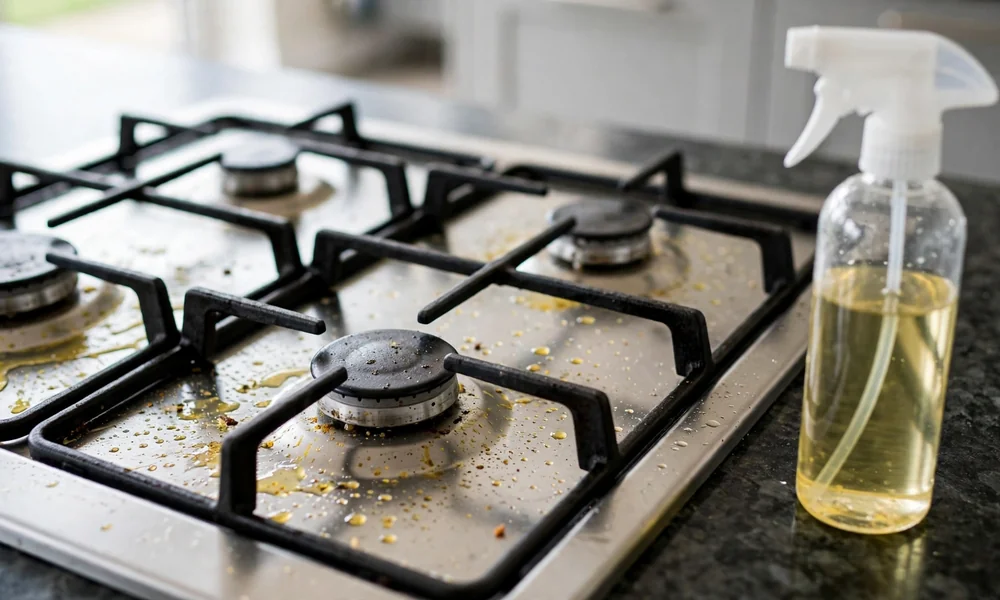
Kitchen grease is hard to shift because oil and water do not mix. When cooking oil hits a cool hob or worktop, it thickens and sticks, and every meal adds another thin layer. Heat makes it worse: oil that splashes onto a hot hob partly cooks onto the surface, bonding in a way that a cold spill never does. Left alone, the top layer darkens and turns tacky, attracting dust and crumbs. That is why plain water fails: water cannot dissolve oil, so a damp cloth just pushes the grease around. A kitchen cleaner works by surrounding tiny droplets of grease with surfactants, lifting them off the surface so they can be wiped or rinsed away. The most effective kitchen cleaners use a blend of surfactants that attack grease from several angles at once, which is why a good degreaser can clear a frying splatter with a single spray while a weak one needs three. Hot water also helps, since it loosens solidified fat and lets the cleaner work faster.
The Main Types of Kitchen Cleaner
Kitchen cleaners come in several distinct types, and the right one depends on the surface and the mess. A spray that is perfect for a steel hob may be too harsh for a wooden worktop, and a gentle everyday spray will struggle with a week of frying splatter.
Degreaser Sprays
A degreaser spray is the best kitchen cleaner for most homes in 2026, and the first bottle to buy. Degreasers are made for one job: cutting cooking grease on hobs, splashbacks, extractor hoods and worktops. A good one lifts a day-old splatter with a short dwell and one wipe, and it dries without streaks on steel, where cheaper sprays leave a cloudy film. Their weakness is delicate surfaces, since a strong degreaser can dull sealed stone, oil-finished wood and some laminates.
Everyday Kitchen Sprays
An everyday kitchen spray is the best choice for the daily wipe-down after cooking. These are usually mildly alkaline or neutral formulas that lift light grease, crumbs and spills from worktops, sinks and tables in one pass, and they are safe on most surfaces when used as directed. They are gentle, smell mild, and leave a surface clean enough to prepare food on. Their weakness is heavy grease: on a hob that has not been cleaned for a week, an everyday spray will need two or three applications.
Foam and Gel Cleaners
A foam or gel cleaner is the best choice for vertical surfaces such as splashbacks, extractor hoods and the sides of the cooker. The thick foam clings where it was sprayed instead of running down to the worktop, giving the cleaner time to work on the grease. That contact is what dissolves a baked-on splatter, so a foam often clears in one application what a thin spray needs two attempts to shift. They take several minutes to work, but the result is worth the wait on a badly splattered splashback.
Plant-Based and Fragrance-Free Cleaners
Plant-based and fragrance-free kitchen cleaners suit homes with children, pets, asthma or sensitive skin. The best use plant-derived surfactants that lift grease as effectively as conventional cleaners, but without the harsh solvents and heavy perfumes that make cheaper sprays smell like a chemical factory. A fragrance-free formula is a genuine advantage where food is prepared, since strong scent does not mean strong cleaning and perfume oils can linger on a worktop.
Concentrated and Refill Cleaners
Concentrated refill cleaners are the best value in the aisle, and the best choice if you are tired of throwing away a plastic bottle every month. You buy one durable spray bottle and small refills of concentrated liquid, then mix them with water at home. A good concentrate cleans exactly like a ready-made spray, because it is the same formula with the water removed, and one small refill often makes five or six full bottles.
What Makes a Kitchen Cleaner Good or Bad
A good kitchen cleaner is judged the way it is actually used: grabbed in a hurry after dinner, sprayed on a greasy hob, wiped across a worktop, and used to clean a sticky table before guests arrive. The first test is grease-cutting power. Does it lift a day-old splatter with a short dwell and one wipe, or does it need three applications and hard scrubbing? Residue comes next: does the surface dry streak-free and touch-clean, or does it feel tacky and attract dust within hours? A cleaner that leaves its own film behind has failed. Surface safety is the test most people skip until it is too late. A strong degreaser can dull sealed stone, strip the finish from wood and mark some laminates, so the label matters more than the price. For the rest of the house, our comparison of the best and worst all-purpose cleaners of 2026 explains when one bottle can cover the kitchen and the bathroom together.

Kitchen Cleaners Compared
| Type | Best for | Grease power | Dwell time | Care needed |
|---|---|---|---|---|
| Degreaser spray | Hobs and splashbacks | Excellent | 30 seconds to 1 minute | Check stone and wood |
| Everyday spray | Daily wipe-down | Good on light grease | Under 1 minute | Low |
| Foam or gel | Hoods and splashbacks | Excellent | 5 to 10 minutes | Low |
| Plant-based | Daily cleaning, sensitive homes | Good | 1 to 2 minutes | Low |
| Concentrate | Regular cooks, value | Good to excellent | 30 seconds to 1 minute | Mix as directed |
Speed and gentleness pull in opposite directions, and no cleaner is fast, fume-free, gentle on every surface and able to dissolve a week of frying splatter in one go.
How to Clean a Kitchen Properly
Work from the top down and from the cleanest surface to the dirtiest, and wear rubber gloves for anything stronger than an everyday spray.
The Hob and Splashback
Spray the hob with a degreaser while it is still slightly warm, never hot, and leave it for the time on the label. While it works, spray the splashback with a foam cleaner. Then wipe the hob from the back to the front with a clean cloth, lifting the grease rather than pushing it around, and buff steel dry with a second cloth so it does not streak.
Worktops, Sink and Taps
Clear the worktop, then spray with an everyday kitchen spray and wipe in long strokes towards yourself, so crumbs and grease end up at the edge where you can collect them. For the sink, spray the basin and taps, leave the cleaner for a minute, then wipe and rinse, finishing by drying the taps so water spots do not form.
Fridge, Bins and Floors
For the outside of the fridge, an everyday spray and a clean cloth are enough. Bins need a spray inside and out, with the lid and rim wiped properly, since grease and food residue collect there and cause smells. Finish with the floor, sweeping first, then mopping from the far corner towards the door.
Mistakes That Make Grease Worse
The most common mistake is wiping a cold, greasy hob with a dry cloth. The cloth just spreads the grease into a thin film, while a degreaser given its dwell time, or a quick wipe while the hob is still warm, does the work for you. Another is using the same cloth for everything: a cloth that has wiped the hob is full of grease, and using it on the worktop just moves the grease to a surface where food is prepared. Using the wrong product on the wrong surface is the costliest mistake, since a strong degreaser can dull stone and strip wood in a single use.
Kitchen Cleaning Checklist
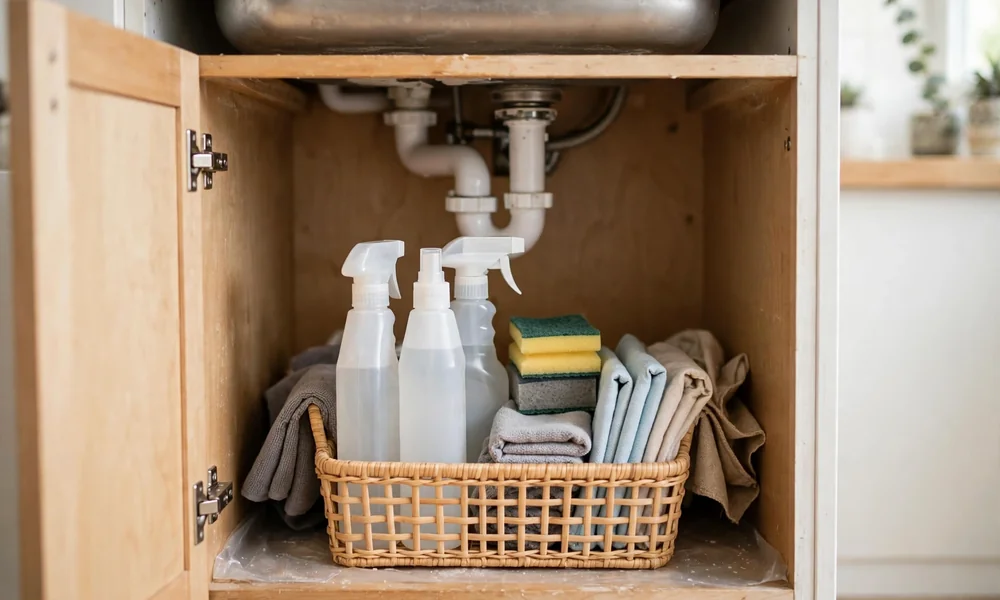
- Spray the hob with a degreaser while it is still slightly warm and leave it for the full dwell time.
- Wipe worktops with an everyday spray after every cook, using a clean cloth for food surfaces.
- Clean the sink and taps daily, and dry the taps so water spots do not form.
- Use a foam cleaner on splashbacks and the extractor hood so it clings instead of running off.
- Keep separate cloths for the hob and the worktops, and wash them often.
- Never pour cooking grease down the sink, and wipe the fridge handles and bin lid every day.
Frequently Asked Questions
What is the best kitchen cleaner for grease?
A degreaser spray is the best all-round choice for kitchen grease, because it is made to surround and lift oil rather than just move it around.
Can I use a kitchen degreaser on all worktops?
No, and the label is the only safe guide. A strong degreaser suits laminate, tile and stainless steel, but it can dull sealed stone and strip the finish from wood.
How do I clean a greasy extractor hood?
Spray the outside of the hood with a foam degreaser and leave it for five to ten minutes, then wipe from top to bottom.
Does hot water really help cut grease?
Yes, and it is the simplest trick in the kitchen. Hot water softens solidified fat and lets the cleaner work faster, which is why a quick wipe of a still-warm hob is easier than the same job the next morning.
Why does my hob look streaky after cleaning?
A streaky hob is usually residue from the cleaner itself, or grease that was spread rather than lifted. Wipe with a clean cloth and buff steel dry with a second dry cloth.
How often should I deep clean the kitchen?
A wipe after every cook keeps the kitchen in good shape, with a deeper clean of the hob, splashback and hood once a week.
The Bottom Line
The best kitchen cleaner for grease is a degreaser spray used straight after cooking, given its dwell time and wiped away with a clean cloth. Match the cleaner to the surface, and wipe down after every cook, and grease stops building up at all.


