The best ice cube trays in 2026 are the ones you barely have to think about: they freeze fast, release every cube with a gentle twist, and never leave your drink tasting faintly of freezer. That sounds like a small thing until you have wrestled with a rigid plastic tray at a dinner party, banging it on the counter while half the cubes crack and the other half refuse to move.
Choosing ice cube trays is not about buying the fanciest design on the shelf. It is about matching the tray to the way you actually drink, because a tray perfect for everyday water glasses can be wrong for slow-sipping cocktails, and a tray built for large cubes freezes far more slowly than a tray of small cubes. This guide compares the strongest ice cube trays of 2026 and helps you pick one that freezes fast and pops out clean every time.
Key Takeaways
- Flexible silicone trays release cubes far more cleanly than rigid plastic, and a steel frame or a firm base stops them wobbling on the way to the freezer.
- Small cubes freeze in about three hours, while large two-inch cubes can take six hours or more, so buy for the drink you make most often.
- Large cubes melt more slowly because they have less surface area for their volume, which keeps cocktails and iced coffee tasting right for longer.
- A tight lid is not a luxury: it stops spills, blocks freezer smells, and lets you stack trays without the cubes picking up odours.
- Fill each compartment to just below the rim and use filtered water if you want clearer, better-tasting ice.
Why the Tray Matters More Than the Ice
Ice is just frozen water, so it is tempting to think any tray will do. In practice, the tray decides three things: how fast the water freezes, how cleanly the cubes come out, and how the ice tastes. A thin tray with small compartments freezes quickly; a deep tray with large compartments freezes slowly because the centre of each cube is insulated by the ice forming around it.
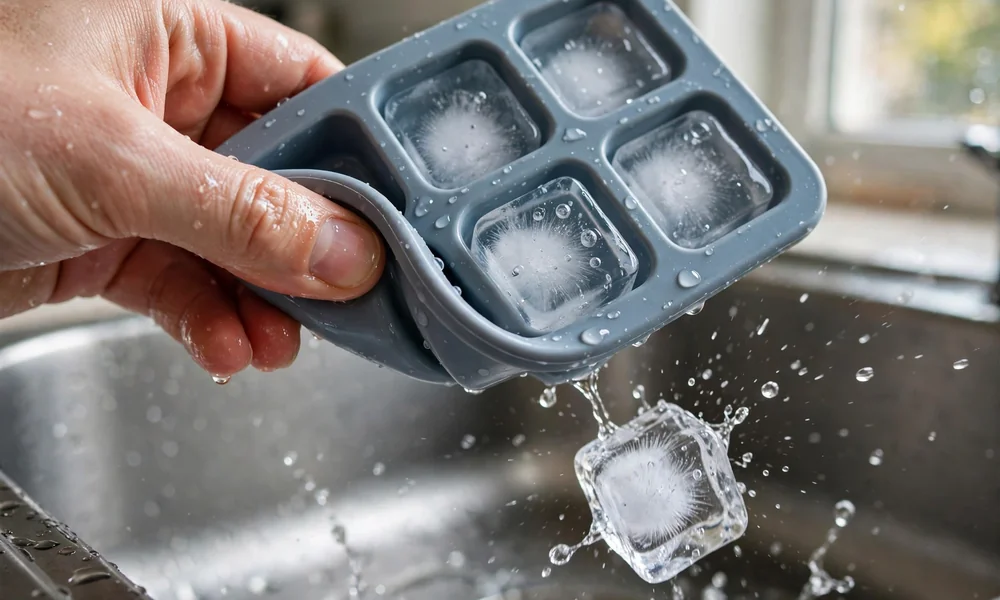
The release matters just as much. Rigid plastic trays rely on twisting the whole tray, which stresses the plastic and often cracks cubes in half. Flexible silicone lets you push each cube out from underneath, one at a time, with almost no force at all. The best trays combine the two ideas: a silicone body for easy release with a rigid rim or a steel frame that keeps the tray flat when it is full of water.
Taste is the third factor, and it is the one people notice last. Uncovered ice absorbs smells from the freezer, and those smells end up in your glass. Cheap plastic can also carry a faint taste of its own when it is new. A tray with a lid solves the first problem, and washing a new tray before its first use solves most of the second. For a fuller picture of the other end of the ice question, the guide to the best ice makers of 2026 covers machines that make ice in minutes when a tray alone is not enough.
Silicone vs Plastic vs Stainless Steel
Silicone is the clear winner for most households in 2026, and it is not close. It flexes, it releases cleanly, it does not crack in the cold, and it survives the dishwasher without warping. Its only real weakness is floppiness when full, which the better designs solve with a stiffened rim or a removable steel frame. Look for food-grade silicone that feels thick rather than thin and papery; thin silicone tears at the corners after a few months of twisting.
Hard plastic trays are cheaper and stack neatly, but they are the worst for release. They need a hard twist, they crack cubes, and after a year or two the plastic goes brittle and splits. They still have a place as a cheap spare tray, but not as the tray you use every day. Stainless steel trays look beautiful and freeze quickly because metal conducts cold well, yet they are the hardest to release from: frozen metal grips ice tightly, and you usually need warm water over the base before the cubes will move.
| Material | Release | Freeze speed | Durability | Best for |
|---|---|---|---|---|
| Silicone with frame | Excellent | Good | Excellent | Everyday use |
| Hard plastic | Poor | Good | Fair | Budget spare tray |
| Stainless steel | Poor | Excellent | Excellent | Fast freezing |
| Silicone, no frame | Excellent | Good | Good | Small freezers |
| Large-cube silicone | Excellent | Slow | Excellent | Cocktails |
Cube Size and Shape: What Freezes Fastest and Melts Slowest
Size is the single biggest decision you will make, and it is worth thinking about before you buy. Standard cubes, roughly one inch across, freeze in about three hours in a normal freezer and suit water, soft drinks and iced tea. They chill a drink quickly because they have a lot of surface area, but they also melt quickly, which means they water a drink down if you sip slowly. For a glass you finish in twenty minutes, that trade is fine.
Large cubes, around two inches across, are the opposite: they take five to seven hours to freeze solid, but they melt far more slowly once they are in the glass. That is why they are the standard choice for cocktails, whisky and iced coffee, where dilution is the enemy. A single large cube can keep a drink cold for an hour while adding far less water than a handful of small cubes.
Shape matters less than size. Spheres melt even more slowly than cubes, yet they are harder to freeze without a special mould and they roll around in the glass. Buy the shape that fits the glass you use most.
The Release Test: How to Tell a Good Tray in Ten Seconds
Here is a test you can do in a shop or as soon as a tray arrives: fill it, freeze it, then try to release one cube with one hand and no banging. A good tray gives up its cubes with a gentle push from underneath or a light twist, and the cube comes out whole, with sharp edges and no cracks. A bad tray needs two hands, a hard twist and a bang on the counter, and the cube comes out in pieces or not at all.
Three design details decide the result. First, the walls of each compartment should taper slightly, wider at the top than at the bottom, so the cube has somewhere to go. Second, the base of each compartment should be thin enough to flex when you push it. Third, the tray should have a flat, stable bottom, so it sits level in the freezer and every compartment fills evenly. Trays that fail on any of these three will fight you every time you use them.

Lids, Stacking and Freezer Smells
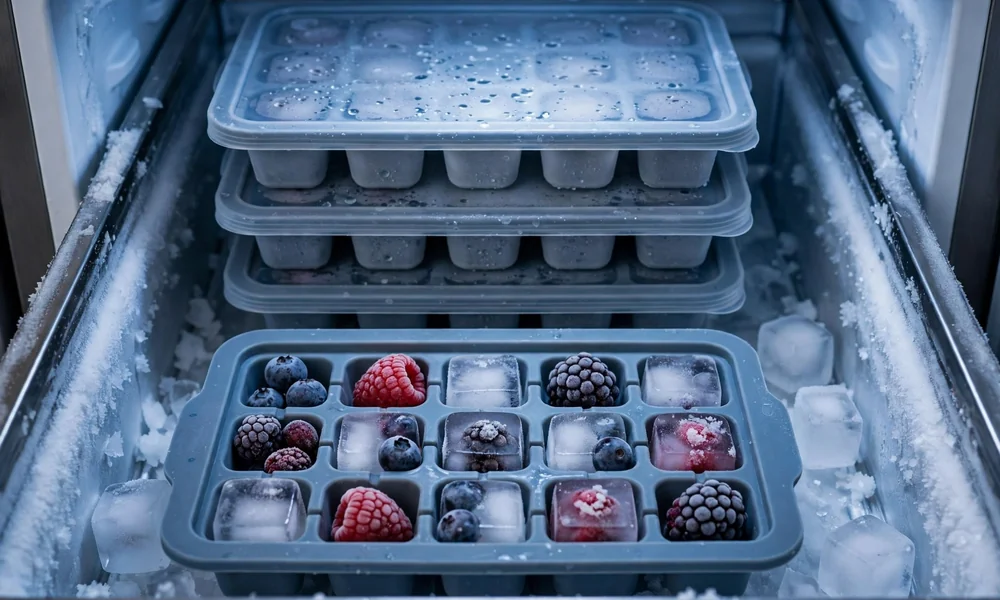
A lid is the feature most people skip and most regret skipping. Without one, a tray spills when you slide it into a crowded freezer, and the exposed ice picks up whatever smells are floating around in there. With a tight-fitting lid, you can stack two or three trays, which matters in a small freezer, and the ice stays clean-tasting for days rather than hours.
Stacking deserves a thought of its own. Trays that stack neatly save real space, but only if the lid is flat and the base of the tray above sits squarely on it. Trays with domed lids or wobbly rims slide around and defeat the purpose. If your freezer is small, measure the shelf before you buy and check the tray’s footprint: a tray that is a centimetre too wide for your shelf is a tray you will never use. For drinks that deserve good ice, the best versus worst cocktails of 2026 is a useful companion, because the right ice is half of a good cocktail.
How to Freeze Clearer Ice at Home
Cloudy ice is not dirty ice; it is ice with trapped air and minerals frozen into its centre. As water freezes from the outside in, the impurities get pushed towards the middle, where they form the white cloudy core you see in most home cubes. You can make your ice noticeably clearer with two easy habits.
First, use filtered water, or water you have boiled and cooled, because both reduce the dissolved gases and minerals that cause cloudiness. Second, fill each compartment to just below the rim rather than to the very top, which gives the ice room to expand without cracking. Freeze the tray on a flat shelf and leave it alone until it is fully solid: jiggling a half-frozen tray is how you get lopsided cubes.
Storage matters too. Once cubes are frozen, tip them into a sealed bag and refill the tray, so you always have a supply ready and the cubes do not sit exposed absorbing smells. A bag of cubes also frees the tray for its next batch, the fastest way to build up ice for a party. Good ice also deserves good glasses, and the best home bar essentials of 2026 covers the glasses and tools that make it worth having.
The 6-Point Checklist Before You Buy
- Release: push one cube out with one hand; it should come out whole with a gentle twist or push.
- Material: choose thick food-grade silicone with a rigid rim or steel frame over hard plastic.
- Size: match the cube to your drink, standard cubes for everyday glasses and large cubes for cocktails.
- Lid: insist on a tight, flat lid so you can stack trays and keep freezer smells out.
- Fit: measure your freezer shelf first and check the tray sits flat and level when full.
- Cleaning: pick a tray that is dishwasher safe, and wash it before first use to remove any factory taste.
Frequently Asked Questions
How long do ice cube trays take to freeze?
Standard one-inch cubes take about three hours in a freezer set to minus eighteen degrees, while large two-inch cubes take five to seven hours. A tray on a flat shelf in the coldest part of the freezer freezes fastest.
Why is my ice cloudy?
Cloudy ice is caused by trapped air and minerals pushed to the centre as water freezes from the outside in. Filtered or boiled and cooled water reduces the cloudiness, but will not remove it entirely.
Are silicone ice cube trays safe?
Food-grade silicone trays are safe for freezing. Choose a tray from a reputable maker, wash it before first use, and replace it if the silicone starts to tear or smell.
Do I need a lid on an ice cube tray?
A lid is worth having in almost every freezer. It stops spills, lets you stack trays, and keeps the ice from absorbing smells. If your freezer is crowded or you store strong-smelling food in it, a lid is essential rather than optional.
How do I get cubes out without breaking them?
Push each cube gently from underneath if the tray is silicone, or twist it lightly if it is rigid. If cubes still stick, run warm water over the base for a few seconds, then try again rather than banging the tray on the counter.
How long does ice last in the freezer?
Ice keeps indefinitely from a safety point of view, but it absorbs freezer smells after a few days if left uncovered. Tip frozen cubes into a sealed bag within a day or two, and they will stay clean-tasting for weeks.
The Bottom Line
The best ice cube trays in 2026 are simple, well-made objects: thick food-grade silicone, a rigid rim so they carry flat, a tight lid so they stack and stay clean, and a cube size matched to the drink you make most. Buy a standard tray for everyday glasses and a large-cube tray for cocktails, fill them with filtered water, and you will have fast-freezing ice that pops out clean and tastes of nothing but cold water.