
The best tagines turn a simple stew into something worth slowing down for. A tagine is a North African cooking pot with a wide, shallow base and a tall conical lid, and that shape is the whole point: steam rises into the cone, cools, and drips back into the food, so meat stays moist and flavours concentrate. The best tagines of 2026 do this job on a modern hob without cracking, and they carry straight to the table. This guide explains unglazed clay versus glazed ceramic, the sizes that suit real households, and how to use a heat diffuser so a clay pot survives a gas or electric hob.
A tagine is not a Dutch oven, even though both cook slow stews. A Dutch oven is heavy cast iron built to hold fierce, even heat, and our guide to the best Dutch ovens shows how that weight becomes an advantage for bread and braising. A tagine is lighter, thinner-walled clay, and it cooks more gently, at a lower simmer, with the conical lid keeping moisture in. It is also not an electric appliance: the best slow cookers do the same set-and-forget job with a timer and a plug, while a tagine asks you to watch the flame. What it gives back is a clay-cooked depth that suits lamb, chicken, chickpeas and preserved lemon.
Key Takeaways
- A tagine is a shallow clay base with a tall conical lid; the lid condenses steam and bastes the food, so stews stay moist on a low heat.
- Unglazed clay gives the deepest flavour but needs seasoning and gentle heat, while glazed ceramic is easier to clean and more forgiving for beginners.
- A 28 to 30 centimetre tagine suits most families, feeding four to six people, while a 24 centimetre pot suits one or two.
- Always use a heat diffuser, start on the lowest flame, and never put a cold clay pot on a hot burner.
- Tagines suit slow, moist cooking: lamb with prunes, chicken with preserved lemon, and chickpea stews.
What Makes a Great Tagine
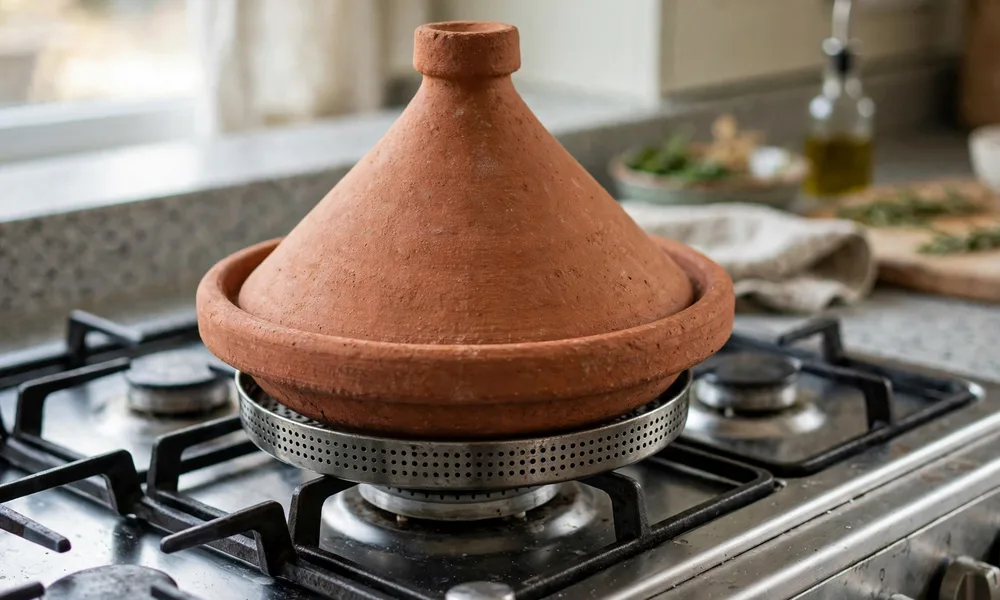
A good tagine starts with the clay. Traditional Moroccan tagines are made from unglazed terracotta, fired cooler than stoneware, which leaves the clay slightly porous. That porosity is a feature: the pot breathes, the steam cycle stays gentle, and the food picks up a faint earthy note. The trade-off is care: unglazed clay must be soaked and seasoned before first use, it stains with cooking, and it cracks if it meets sudden heat. Glazed ceramic solves most of that, sealing the clay so the pot absorbs nothing, and it wipes clean easily.
The lid matters as much as the base. A proper tagine lid is a tall cone, and the height is functional: steam rises a long way before it cools and runs back down inside the cone. A short lid behaves like an ordinary saucepan lid and loses that basting effect. Check the fit: the lid should sit evenly on the rim, with no rocking and no wide gap. The knob should be large enough to grip with an oven glove.
Clay, Glazed Ceramic and Cast Iron Tagines Compared
Unglazed Clay: Traditional and Full of Flavour
Unglazed clay is the connoisseur’s choice. Season it before first use by soaking the base and lid for several hours, then rubbing the inside with garlic and olive oil and baking it gently in a low oven. After that, cook with it often: clay improves with use. The downside is maintenance. Avoid soap, since the clay absorbs it; wash with hot water and a brush, dry it thoroughly, and store it with the lid slightly ajar. A pot put away damp can develop mould, and a pot heated too fast can crack.
Glazed Ceramic: The Easy Everyday Choice
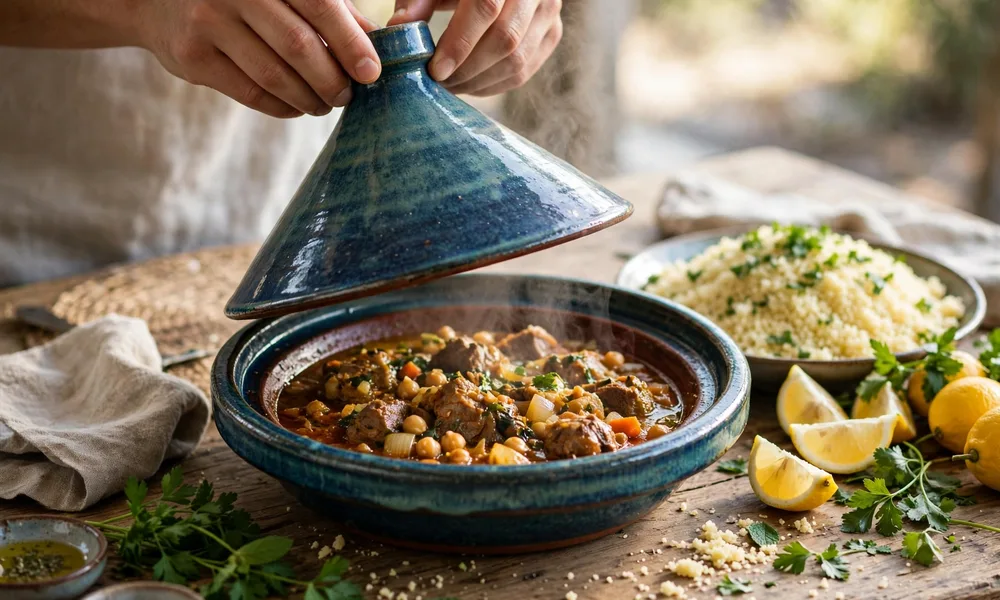
Glazed ceramic is the tagine most people should buy first. It needs no seasoning beyond a wash, it does not absorb soap or stains, and it can go in the dishwasher, though hand washing keeps the glaze looking better. The pot can also be used for serving and storing leftovers. The main risk is the glaze itself: a cheap glaze can craze, a fine network of cracks, after repeated heating, and a chipped glaze can expose the clay underneath. Buy from a maker who states the pot is lead-free and food-safe.
Metal Bases and Enamelled Tagines
Tagines with a metal base and a clay lid are a modern compromise, and a good one. The metal base spreads heat evenly, works on induction hobs where clay cannot, and can go under a grill or into a hot oven, while the clay lid still condenses steam the traditional way. Enamelled cast iron tagines go further: they are almost impossible to crack and need no diffuser. They are also the heaviest option by far. If you cook on induction, a metal-base tagine is the only practical choice.
The Best Tagines of 2026
The tagines below cover the materials and sizes that matter. Each was judged on how evenly it simmers, how well the lid seals, how easy it is to clean, and whether it survives weekly use without cracking.
Best Overall: 30cm Glazed Ceramic Tagine
The best all-round tagine for most households is a 30 centimetre glazed ceramic pot with a tall conical lid. It is large enough for a family stew of lamb, chickpeas and apricots, yet light enough to carry to the table with two hands. The glaze is thick and even, the lid sits flat on the rim, and the base sits steadily on a diffuser. It goes from hob to table without a serving dish. For a first tagine, this is the one to buy.
Best Traditional: 28cm Unglazed Clay Tagine
For cooks who want the real Moroccan flavour, a 28 centimetre unglazed clay tagine is the classic. It needs soaking and seasoning before its first use, and a diffuser and a low flame every time, but the stews it produces have a depth that glazed pots only approach. The clay darkens and seasons with use. Keep it for slow weekend cooking, and it will last for decades.
Best for Induction: Cast Aluminium Base Tagine
A tagine with a cast aluminium base and a ceramic conical lid works on any hob, including induction, and the aluminium spreads heat far more evenly than clay alone. The lid still does the steam work, and the base can go into the oven for finishing. It is the most versatile tagine here.
Tagines Compared
| Tagine | Material | Size | Best For | Care |
|---|---|---|---|---|
| Best Overall | Glazed ceramic | 30 cm | Family stews | Hand wash, easy |
| Best Traditional | Unglazed clay | 28 cm | Deep flavour | Season, no soap |
| Best for Induction | Aluminium base, ceramic lid | 30 cm | Any hob | Hand wash |
How to Use a Tagine Without Cracking It
The first rule is gentle heat. Clay hates sudden temperature change, so always start on the lowest flame and raise it slowly, and always use a heat diffuser on gas or electric hobs. The diffuser spreads the flame across the base and stops hot spots from stressing the clay. Never put a cold tagine on a hot burner, never add cold water to a hot pot, and never put a hot tagine on a cold stone worktop: set it on a wooden board or a folded cloth.
The second rule is liquid. A tagine is a moist-heat pot, and it should never be heated empty or allowed to boil dry. Always add oil, stock or water before the heat goes on, and keep the simmer low: you want a lazy bubble, not a rolling boil. If the stew looks dry halfway through, add a splash of hot water rather than cold, and resist lifting the lid to check: each lift lets out the steam.
Seasoning is the third rule for unglazed clay. Soak the pot for at least six hours, rub the inside with garlic and olive oil, fill it with water, and simmer gently for half an hour. Let it cool in the water, dry it thoroughly, and oil it once more. This fills the pores, making the pot far less likely to crack.
What to Cook in a Tagine
Start with a classic: lamb tagine with prunes, almonds and cinnamon. Brown the meat gently, add onions, garlic, ginger and a cinnamon stick, then add stock and prunes and simmer on the lowest heat for two hours. The meat should fall apart and the sauce should be glossy and sweet-sour. Chicken with preserved lemon and green olives is the second classic, needing about an hour; the preserved lemon goes in near the end, so its flavour stays bright.
Vegetarian tagines are just as good. Chickpeas, sweet potato, carrots and dried apricots with cumin and coriander make a stew that is rich without meat, and the clay keeps the vegetables tender without turning them to mush. Fish tagines are quicker still: white fish with tomatoes, peppers and herbs needs only twenty minutes. Serve everything with couscous that cooks in minutes, fluffed with a fork and dressed with olive oil and lemon, and put the tagine in the middle of the table so people can help themselves.

Tagine Buying Checklist
- Choose glazed ceramic for a first tagine, or unglazed clay for traditional flavour if you will season it.
- Pick 28 to 30 centimetres for a family, or 24 centimetres for one or two.
- Check the lid sits flat with no rocking, and the knob fits an oven glove.
- Buy a heat diffuser at the same time, unless your tagine has a metal base.
- Confirm the pot suits your hob: plain clay does not work on induction.
- Check the glaze is lead-free and food-safe, and the base is flat, with no chips.
Frequently Asked Questions
Can I use a tagine on an electric hob?
Yes, with a heat diffuser and a low setting. Electric hobs heat in hot spots that can crack clay, so the diffuser is essential. A tagine with a metal base is easier on electric hobs and the only option for induction.
Do I need to season a glazed tagine?
No. Glazed tagines need only a wash before first use, since the glaze seals the clay. Seasoning is only for unglazed clay, where soaking and oiling fill the pores and protect the pot.
Can a tagine go in the oven?
Most clay and ceramic tagines can go in a low oven, up to about 180 degrees, but put the pot into a cold oven and let it heat up with the oven. Metal-base tagines can usually handle higher temperatures, so check the maker’s limit first.
Why did my tagine crack?
Almost always sudden heat or sudden cold: a high flame without a diffuser, a cold pot on a hot burner, cold water added to a hot pot, or a hot pot set on a cold worktop. Unseasoned unglazed clay is the most vulnerable, so season it properly and heat it gently.
Can I use a tagine as a serving dish?
Yes, and that is half the point. A tagine goes from hob to table, and the conical lid keeps the food warm while people serve themselves. Use a wooden board or trivet underneath, and warn guests that the clay stays hot for a long time.
Is a tagine better than a slow cooker for stews?
It is different rather than simply better. A tagine gives a deeper, clay-cooked flavour and a beautiful table presentation, but it needs watching and a low flame. A slow cooker is more convenient and safer to leave alone, so many cooks own both.
Bottom Line
Verdict: The Best. A good tagine earns its place by doing one job beautifully: slow, moist, fragrant cooking that no ordinary saucepan matches. For most households the 30 centimetre glazed ceramic tagine is the right buy, easy to use and clean. Traditional cooks should choose unglazed clay, and induction cooks a metal base. Use a diffuser, keep the heat low, and let the conical lid do its quiet work.


