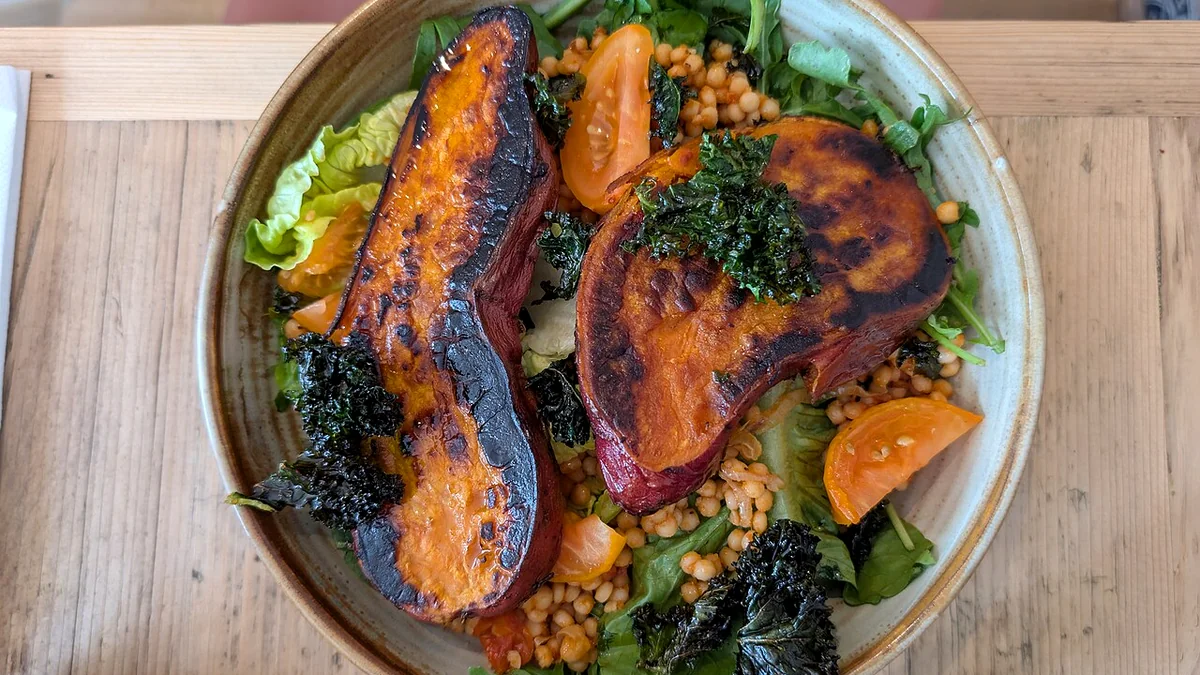
Couscous that cooks in minutes is the fastest honest dinner in the pantry. Pour boiling water over fine couscous, cover the bowl, wait five minutes, and you have a fluffy, nutty base for salads, stews, roasted vegetables, or anything else that needs something warm underneath it. No pot to watch, no draining, and no special equipment beyond a kettle and a fork.
The trick is that couscous is not really a grain at all. It is tiny pasta made from semolina, the same golden wheat that gives good pasta its bite, rolled into small granules and dried. That is why it cooks so fast: the granules are small, the starch is already close to the surface, and hot water finishes the job in minutes. It needs no simmering and no precise water ratio. What it does need is flavour: plain couscous on its own is mild. Cook it in stock, add olive oil, lemon, herbs, and salt, and it turns into something you actually want to eat.
Key Takeaways
- Fine couscous needs only boiling water and five minutes under a cover, with no simmering and no draining.
- Pearl couscous is different: larger toasted balls that simmer for eight to ten minutes like tiny pasta.
- Use equal parts couscous and boiling liquid by volume, then fluff with a fork and rest it for two minutes.
- Cook couscous in stock with olive oil, salt, and lemon for flavour, since plain water leaves it bland.
- Cooked couscous keeps for four days in the fridge and is one of the best grains for cold salads and meal prep.
What Couscous Actually Is
Couscous starts as semolina flour mixed with a little water, rolled into tiny granules, then dried. It comes from North Africa, where it has been a staple for centuries, traditionally steamed over a simmering stew in a special pot called a couscoussier. The steam flavours the granules as they cook, and the couscous is rolled and fluffed between steamings so the grains stay separate. The packet version most of us buy is pre-steamed and dried, which is why the five-minute method works at all.
Nutritionally, couscous sits in the middle of the pantry. A cooked cup gives around 175 calories, about 6 grams of protein, 2 grams of fibre, and useful amounts of selenium and B vitamins. It has less protein than quinoa, which carries all nine essential amino acids, and less fibre than bulgur or brown rice. What it offers instead is speed and lightness. One honest warning belongs here: couscous contains gluten, since it is made from wheat semolina, so anyone with coeliac disease should skip it. If your household needs gluten-free, rice is the safer weeknight choice, and our guide to the rice varieties worth stocking your pantry with covers the ones that cook fastest.
Fine Couscous vs Pearl Couscous
The two types on the shelf look similar in the packet and behave very differently in the pan, so knowing which one you are holding is the single most useful piece of couscous knowledge. Fine couscous, sometimes labelled Moroccan couscous, is the small sandy kind. It is the one that cooks in five minutes with boiling water and no hob at all. Pearl couscous, also sold as Israeli couscous or ptitim, is a different product: toasted balls about the size of small peas, with a chewy, almost pasta-like bite. It needs simmering in a pot for eight to ten minutes, and it does not work with the pour-and-cover method.
Fine couscous is the everyday choice. It is best for salads, for serving under stews and tagines, and for quick side dishes where you want the grain to carry flavour rather than dominate the plate. It clumps if you skip the oil, and it goes gummy if you drown it in water. Pearl couscous is the dinner-party choice. It holds its shape in salads, it works warm with roasted vegetables and herbs, and its chew makes it feel more substantial. It costs more and takes longer, but it reads as a deliberate dish. Medium couscous, which cooks in about seven minutes, sits between the two, while wholewheat couscous is nuttier and higher in fibre. Both types are made from durum semolina, and our guide to the best pasta brands that cook like the real thing explains what to look for on the packet.

How to Cook Fine Couscous in Five Minutes
The method is simple enough to memorise after one try. Measure one cup of fine couscous into a wide bowl. Add a pinch of salt, a tablespoon of olive oil, and any dry spices you want, such as cumin, paprika, or turmeric. Pour over one cup of boiling water or hot stock, straight from the kettle. Stir once, cover the bowl tightly with a plate or a lid, and leave it alone for five minutes. Then uncover, fluff the grains with a fork and leave it for two more minutes before serving.
A few details make the difference between good couscous and great couscous. The liquid should be properly boiling, not just hot. Use equal parts couscous and liquid by volume. Too much water gives a soggy pile; too little leaves dry, hard granules at the bottom. The olive oil matters more than it seems: it coats the granules and keeps them separate, so add it before the water rather than after. Fluff with a fork, never a spoon, since a spoon presses the grains together while a fork lifts and separates them.
Cooking Pearl Couscous Properly
Pearl couscous needs a pot, not a bowl, and treating it like fine couscous is the most common mistake people make with it. Start by toasting it: heat a little olive oil in a saucepan, add the dry pearl couscous, and stir for two minutes until it smells nutty and a few balls turn golden. Then add one and a quarter cups of water or stock per cup of couscous, bring it to a boil, turn the heat low, cover, and simmer for eight to ten minutes. Check at eight minutes: the balls should be tender with a slight chew.
The toasting step is not optional if you want the best result. Pearl couscous is already toasted during manufacture, which gives it its nutty flavour, but a second toast in the pan deepens it noticeably and helps the balls stay separate. Once cooked, pearl couscous is remarkably versatile: toss it warm with roasted vegetables and herbs, chill it for salads where it holds its shape far better than fine couscous, or serve it under grilled fish and meat, where its chew stands up to rich sauces.

Couscous Compared: The Quick Grains at a Glance
Couscous wins on speed and loses on fibre and protein, and the table below puts that trade-off in plain numbers.
| Grain | Time | Protein per cup | Fibre per cup | Best for |
|---|---|---|---|---|
| Fine couscous | 5 minutes | 6 g | 2 g | Quick salads, under stews |
| Pearl couscous | 8 to 10 minutes | 6 g | 2 g | Warm salads, grilled fish |
| Quinoa | 15 minutes | 8 g | 5 g | Protein-rich bowls |
| Bulgur | 15 minutes | 6 g | 8 g | Tabbouleh, pilafs |
| White rice | 15 to 18 minutes | 4 g | 1 g | Curries, stir-fries |
| Pasta | 9 to 12 minutes | 7 g | 2 g | Sauce-led dinners |
Couscous Salads and Meal Prep
Couscous is at its best cold, which is unusual for a grain and is the reason it dominates summer cooking and packed lunches. A couscous salad is really a formula: cooked and cooled couscous, chopped vegetables, herbs, something salty, something sweet, and a sharp dressing. Try cucumber, tomato, and mint with lemon, or roasted peppers, chickpeas, and feta with cumin. The grain absorbs the dressing as it sits, so make the salad an hour ahead if you can.

For meal prep, couscous is one of the most forgiving grains in the fridge. Cook a double batch on Sunday, keep it plain in a sealed container, and it lasts four days. Each day, take a portion and dress it differently: one day with lemon and herbs, the next with roasted vegetables, the next with beans and hot sauce. Keep the dressing separate until you eat, since dressed couscous softens over time. Pearl couscous holds up even better than fine couscous in the fridge, so choose pearl for salads that need to last three or four days.
What to Look for When Buying Couscous
Most supermarket couscous is perfectly good, but a few checks separate the best packets from the mediocre ones. First, read the ingredients: it should say durum wheat semolina and nothing else, or semolina and water. Soft wheat flour in the list means it will likely cook soft and clump. Second, look at the granules through the packet if you can. Good fine couscous is even in size, pale gold, and free of dust. A lot of powder at the bottom of the packet is a sign of poor milling.
Third, think about size, and treat flavoured instant couscous with suspicion. The sachets that promise a full meal in five minutes are mostly salt, sugar, and flavourings with a little couscous inside, and they cost several times more per gram than plain couscous plus your own seasoning. Storage is simple: keep couscous in a sealed jar in a cool, dry cupboard, away from strong smells, and it lasts for a year or more. Cooked couscous should be cooled quickly and refrigerated within two hours.
Checklist: Couscous That Works Every Time
- Check the packet: fine couscous for five minutes, pearl couscous for a pot and ten minutes.
- Measure equal parts couscous and boiling liquid by volume, and use stock when you have it.
- Add olive oil and salt before the water, not after, so the grains stay separate.
- Cover tightly and wait the full five minutes.
- Fluff with a fork, rest for two minutes, and season again with lemon and herbs before serving.
- Cool leftovers quickly, refrigerate within two hours, and use within four days.
Frequently Asked Questions
Is couscous pasta or a grain?
Couscous is pasta made from semolina wheat, rolled into tiny granules and dried. It is eaten like a grain and cooks like pasta, which is why most kitchens group it with grains.
Do you need to rinse couscous before cooking?
No. Fine couscous should never be rinsed, since rinsing washes away surface starch and leaves it gummy. Just measure it, add boiling liquid, and cook it as the packet directs.
Why is my couscous always clumpy?
Clumping usually comes from skipping the oil, using too much water, or stirring with a spoon instead of fluffing with a fork. Add olive oil before the water, measure equal parts liquid and couscous, and fluff gently with a fork when the time is up.
Can you cook couscous in a microwave?
Yes. Put the couscous and boiling water in a microwave-safe bowl, cover it, and microwave on high for two minutes, then leave it covered for three more minutes before fluffing.
How long does cooked couscous last in the fridge?
Cooked couscous keeps for four days in a sealed container in the fridge. Cool it quickly after cooking, refrigerate within two hours, and reheat until steaming hot.
Is couscous healthy?
Couscous is a reasonable everyday food: low in fat, moderate in protein, and easy to digest. It is lower in fibre than bulgur, brown rice, or quinoa, so pair it with vegetables, beans, or lentils for a balanced meal.
The Bottom Line
Couscous that cooks in minutes earns its place in the pantry by being the fastest real food you can make from a packet. Buy fine couscous for speed and pearl couscous for substance, cook it in stock with olive oil and salt, fluff it with a fork, and season it like it matters. Done right, a five-minute grain becomes the base for salads, stews, and weeknight dinners.