
Chair covers are the cheapest way to make an old chair look new again, and the best chair covers in 2026 do it without looking like a cover at all. A good one pulls tight over the back and seat, hides scuffs and stains, and lets you change the colour of a room for the price of a few metres of fabric. The wrong one slides off every time someone stands up, bunches at the corners, and makes a decent dining chair look like it is wearing a bin bag.
The trick is that chair covers are not one product. A stretch cover for a dining chair, a loose slipcover for an armchair, and a waterproof cover for a dog’s favourite seat are three different buying decisions, and the measurements, fabrics, and fastenings that matter for each one are different too. This guide explains what a chair cover really is, compares the main types, and shows you how to measure, fit, wash, and choose one that stays put.
Key Takeaways
- Buy the cover for your chair’s shape, not just its name: a dining chair, an armchair, and a folding chair need different covers.
- Stretch covers with spandex suit plain dining chairs best; loose slipcovers suit armchairs and sofas better.
- Measure the back height, seat width, and seat depth before ordering, and check the cover’s size range, not just the headline size.
- Polyester-spandex blends are the easiest to live with: they stretch, wash well, and resist stains better than cotton alone.
- Elastic hems, ties, and grippy backing matter more than pattern: a cover that slips off is a cover you will stop using.
Chair Cover Types Compared
| Type | Best For | Fit | Washing | Price Range |
|---|---|---|---|---|
| Stretch dining cover | Plain dining chairs | Snug, tailored | Machine wash, cold | Low |
| Loose slipcover | Armchairs, accent chairs | Relaxed, draped | Machine wash, gentle | Low to mid |
| Waterproof cover | Pets, kids, spills | Snug with elastic | Machine wash, cold | Mid |
| Event cover | Weddings, parties | Floor-length, tied | Hand wash or dry clean | Low per cover |
| Chair pad cover | Seat cushions only | Zip, cushion-sized | Machine wash, cold | Low |
What Counts as a Chair Cover
A chair cover is a removable fabric case that goes over a whole chair: back, seat, and usually the legs, or at least far enough down them to look finished. That whole-chair scope is what separates it from the smaller pieces of washable upholstery around it. A cushion cover protects a single cushion and comes off with a zip; a chair cover protects the chair itself, frame and all, and it is the cover you reach for when the chair underneath is stained, scratched, or simply the wrong colour for the room you have now.
It is also different from reupholstering. Reupholstery replaces the fabric permanently, costs far more, and takes the chair away for days. A cover is reversible: you can take it off for washing, swap it for a different colour in summer, or remove it entirely when you sell the chair. That reversibility is the whole point, and it is why covers are the first thing to try before you replace a chair that is still sound underneath.
The Main Types of Chair Cover
Most covers fall into five groups, and the group decides almost everything else: how it fits, how it washes, and how long it lasts.
Stretch Dining Chair Covers
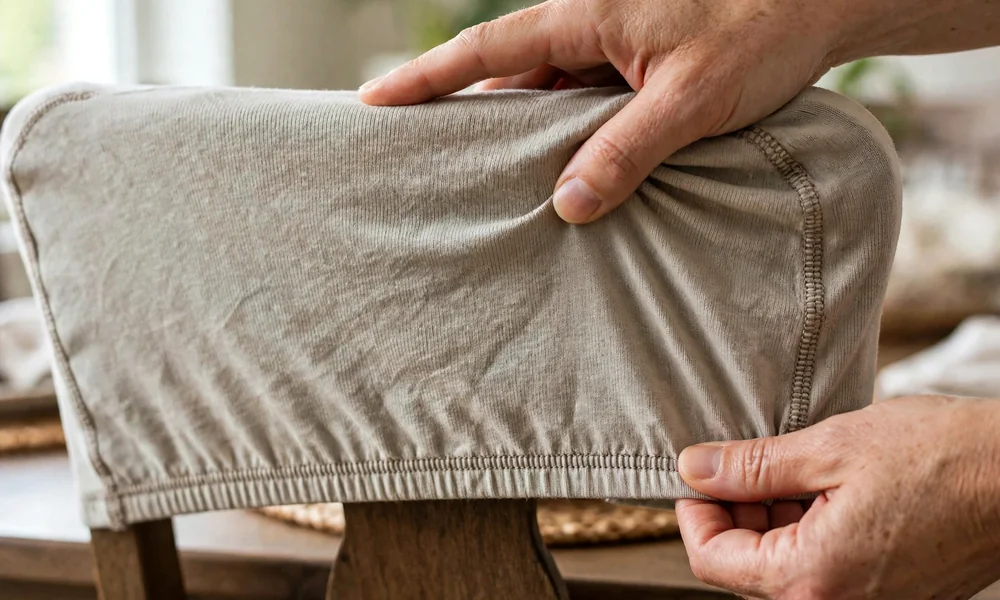
Stretch covers are made from a polyester and spandex blend that pulls tight over a plain dining chair like a second skin. They are the most popular type for a reason: they fit a wide range of chair sizes, they do not need ties or pins, and they look tailored rather than draped. The trade-off is that they only suit chairs with a fairly standard shape. A chair with a very wide back, a curved top rail, or arms will defeat a stretch cover, and forcing one on is how covers split at the seams.
Loose Slipcovers
Loose slipcovers drape over the chair and are held in place by their own weight, ties, and sometimes a few discreet tucks. They suit armchairs, wingback chairs, and accent chairs, where a tight stretch fit would fight the chair’s curves. The price is maintenance: a loose cover needs smoothing after every sit, and a household with children will be re-tucking it daily.
Waterproof and Pet Covers
Waterproof covers add a membrane or a tightly woven water-resistant layer under the decorative fabric. They are the right choice for a chair a dog sleeps on, a chair a toddler eats in, or a dining chair that sees red wine regularly.
Event and Party Covers
Event covers are floor-length, usually white or cream, and tied with a sash at the back. They turn a row of mismatched folding chairs into a matching set for a wedding or a party, and they are sold in packs for exactly that job.
Seat-Only Covers
Seat-only covers protect just the part of the chair that takes the wear: the seat itself.
Which Fabric Should You Choose?
Polyester-spandex is the default for a reason. It stretches, it holds its shape after washing, it resists stains better than natural fibres, and it dries quickly.
Cotton and linen look better and feel better, especially in a living room, but they crease, shrink, and stain more easily. A cotton cover that goes into a hot wash can come out a size smaller, which is a miserable discovery. For a house with pets, a tight-weave performance polyester is the honest choice: it is the fabric that survives claws, and it is the fabric that a chair cushion underneath it will thank you for, since the cushion stays clean too.
How to Measure a Chair for a Cover
Measure the chair, not the cover. Three numbers decide the fit: the height of the back from the seat to the top rail, the width of the seat at its widest point, and the depth of the seat from front to back. Write them down in centimetres, then compare them with the cover’s size range; a good listing gives a range, such as a back height of 45 to 60 centimetres.
Check the shape as well as the size: a chair with arms needs a cover made for armed chairs, a chair with a very tall back needs an extra-tall size, and a chair with a curved or sloping back will defeat a cover cut for a straight one.
Finally, check the leg length the cover expects. A dining cover that ends halfway down the legs looks unfinished, while one that pools on the floor is a trip hazard, so match the stated drop to your chair and remember that an elastic hem forgives a few centimetres either way.

Washing and Looking After Chair Covers
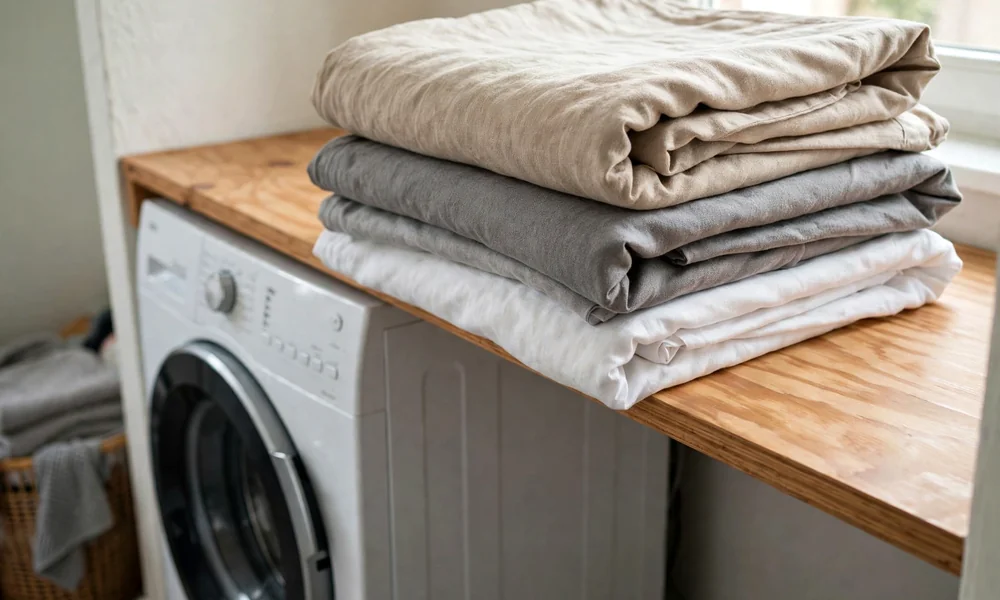
Most modern covers are machine washable, and that is their main advantage over reupholstery. Wash them cold on a gentle cycle, with a mild detergent and no fabric softener: softener coats the fibres and can reduce the stretch over time.
Dry covers on the line when you can, since high heat shrinks cotton and weakens the elastic in a stretch cover. If you must use a dryer, use the lowest heat setting and take the cover out while it is still slightly damp. Keep a spare set if you can afford it. One set on the chairs and one in the wash means a spill never leaves a bare chair, and it doubles the life of each set, since neither is washed as often. The same spare-set logic applies to the seat cushions underneath: a clean cushion under a clean cover is what makes the whole chair feel new.
Mistakes That Ruin a Good Chair Cover
The most common mistake is buying on colour alone. A cover in the perfect shade that does not fit is worse than a cover in a second-choice colour that does, because a badly fitting cover is visible from across the room. Fit first, colour second, and order one cover before you order six: a single test cover costs little and tells you everything about the fit, the fabric, and the colour in your light.
The third mistake is choosing white for a house with small children and a dog. White covers look wonderful in photographs and terrible after a week of real life unless you are genuinely happy to wash them weekly, so a mid-tone grey, beige, or sage hides far more and still brightens a room.
Where Chair Covers Work Best
In a dining room, a stretch cover is the obvious choice. Dining chairs take daily wear: food, drinks, and hands that grip the chair back every time someone sits down or stands up. A washable cover turns that wear into a laundry load, and a set of matching covers makes six chairs bought over years look like they were bought together.
In a living room, a loose slipcover suits an armchair far better than a tight stretch cover would.
Covers also shine in rented homes, where you cannot reupholster a landlord’s chair and cannot throw a stained one away. The same logic applies to event seating: a row of folding chairs in white covers looks deliberate and tidy, while the same chairs uncovered look borrowed.
Before You Buy: A Quick Checklist
- Measure back height, seat width, and seat depth, and check the cover’s size range against all three.
- Confirm the cover suits your chair’s shape: armed, armless, curved back, or folding.
- Check the fabric: spandex or elastane for stretch, and a tight weave if you have pets.
- Look for an elastic hem, ties, or grippy backing so the cover stays put when someone stands up.
- Confirm it is machine washable, and wash cold on a gentle cycle.
- Order one cover first to test the fit, fabric, and colour in your own light before buying the full set.
Frequently Asked Questions
Do chair covers fit all dining chairs?
No. Stretch covers fit most plain, armless dining chairs within their stated size range, but chairs with arms, very wide backs, or unusual curves need a cover made for that shape. Measure first and check the range.
Will a chair cover slide off when I stand up?
A good one will not. Look for an elastic hem, ties at the back, or a grippy silicone backing, and make sure the size is right: a cover that is too large is the one that slides.
Can I wash chair covers in the washing machine?
Most polyester-spandex covers can be machine washed cold on a gentle cycle. Cotton covers can usually be washed cold too, but check the label, skip fabric softener, and dry on the line rather than in a hot dryer.
Are chair covers good for homes with pets?
Yes, if you choose a tight-weave, water-resistant fabric. A cover protects the chair from claws, fur, and accidents, and it is far easier to wash a cover than to clean upholstery.
How do I stop a loose slipcover from looking messy?
Tuck the excess fabric into the creases where the seat meets the back and arms, and smooth it after each use. A heavier fabric holds a tuck better than a light one, so choose a medium-weight cotton or polyester blend.
Are chair covers cheaper than reupholstering?
Far cheaper. A set of six stretch covers usually costs less than reupholstering a single chair, and you can remove them, wash them, or change the colour whenever you like.
The Bottom Line
A chair cover is a small purchase that does a big job, but only when the fit, fabric, and fastening are right for your chair. Measure first, order one to test, and choose a tight-weave stretch fabric with an elastic hem for everyday dining chairs. Get those three things right and the cover will look like part of the chair, not something draped over it, and the chair underneath will stay clean for years longer than it would have done uncovered.


