A seat cushion is a small pad that sits between you and a hard chair, and it changes how long you can sit comfortably. It sounds minor, until you spend eight hours a day on an office chair or three hours on a firm car seat. A bad cushion goes flat within weeks, slides around, or traps heat. A good one spreads your weight, takes pressure off your tailbone and hips, and stays where you put it. The best seat cushions of 2026 make a hard seat feel like it was made for you, without needing a new chair.
What Makes a Seat Cushion Good
The first thing to judge is pressure relief. A cushion is only useful if it takes the load off the bony points where your body meets the chair, spreading your weight across a wider area instead of letting it concentrate under your sitting bones. Sit on a cushion for ten minutes and pay attention to your tailbone and the backs of your thighs. If either starts to ache or go numb, the cushion is not doing its job.
The second thing is support. A cushion that is too soft feels lovely for five minutes and then collapses, leaving you on the hard chair underneath, while one that is too firm feels like sitting on a board. The best cushions hold their shape under your full weight for hours, with a firm core and a softer surface layer.
The third thing is staying put. A cushion that slides forward every time you stand up is a cushion you will stop using. The best ones have a non-slip base, straps or ties, or a contoured shape that grips the seat. Check the underside before you buy: a rubberised or textured base is a good sign, and a smooth, shiny base is a warning.
The Main Types of Seat Cushion
Memory foam seat cushions are the classic choice. They mould to your body, spread your weight evenly, and suit office chairs, dining chairs and car seats alike. The trade-off is heat: ordinary memory foam traps warmth, so look for gel-infused or ventilated foam if you run hot. For most people, a memory foam cushion is the one to buy.
Gel seat cushions are the cool option. They use a layer of gel, or a grid of gel columns, to spread pressure and let air move, and they suit long drives and warm offices. The downside is weight: a gel cushion is heavier than a foam one. For someone who overheats, gel is the one that works.
Wedge seat cushions are the posture option. Thicker at the back than at the front, they tilt the pelvis slightly forward, and they suit anyone whose lower back aches after sitting. The trade-off is fit: a wedge that is too steep feels like sliding forward, so a gentle slope is better than a dramatic one.
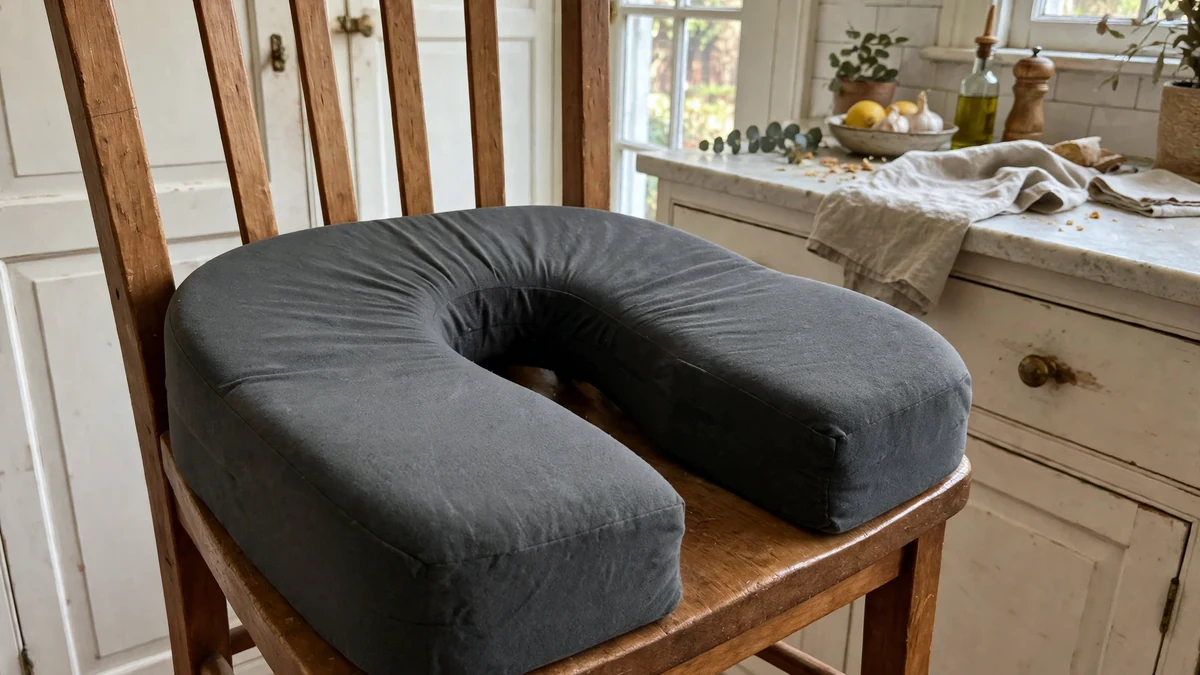
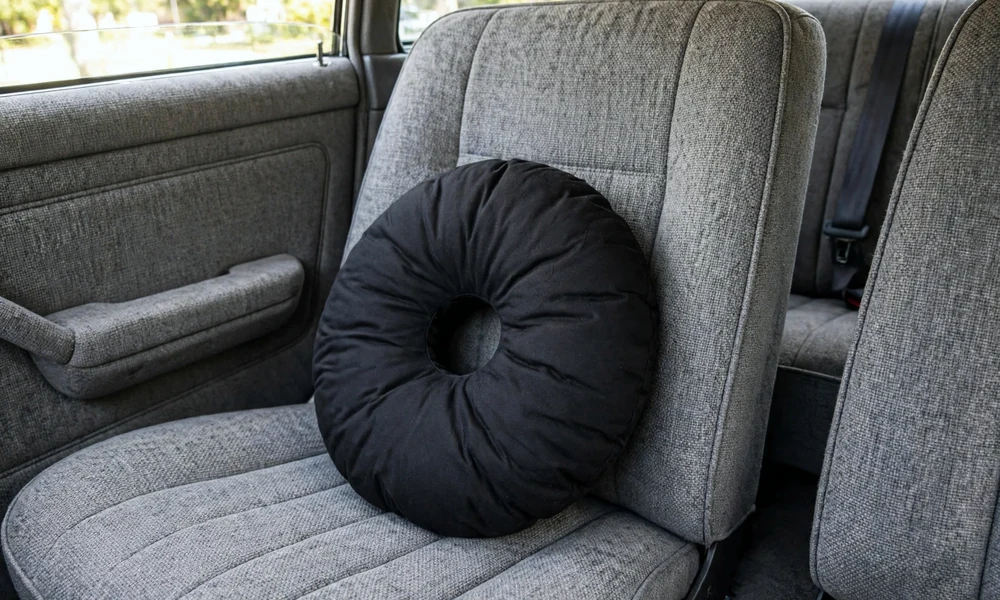
Donut seat cushions are the specialist option. They have a hole in the middle that takes all pressure off the tailbone, and they suit anyone recovering from an injury, surgery or childbirth, or living with tailbone pain. For tailbone pain, it helps most.
Orthopaedic and coccyx seat cushions are the shaped option. They have a U-shaped cutout at the back for the tailbone, a contoured surface for the thighs, and often a raised edge that keeps you centred. The trade-off is price: a well-made orthopaedic cushion costs more than a flat foam pad.
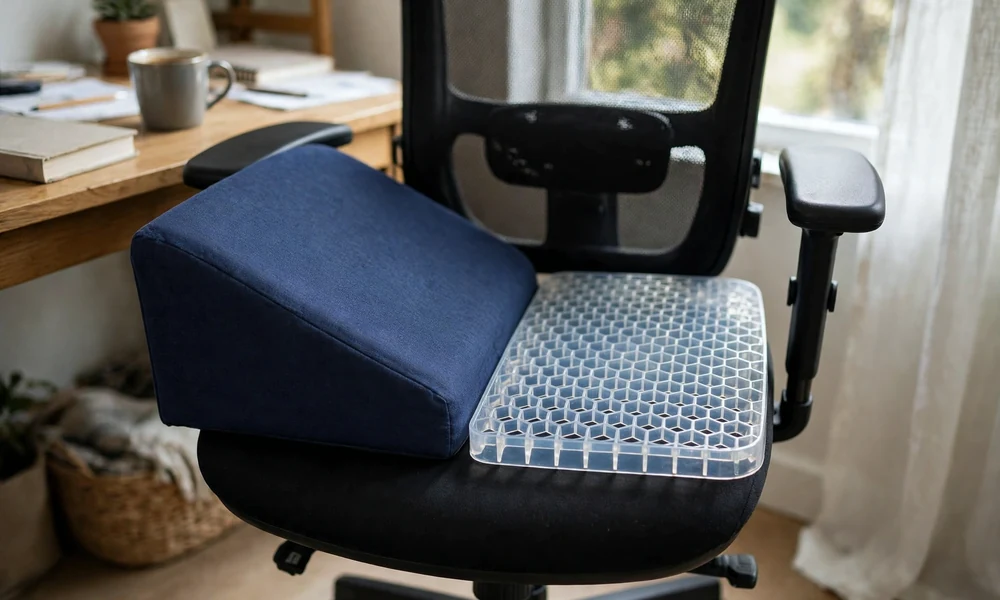
Thickness, Density and Firmness
Thickness is the first number to check. A cushion thinner than four centimetres will bottom out under most adults, which means you feel the chair through it. Five to eight centimetres is the sweet spot: thick enough to cushion, thin enough that your knees do not sit too high. Thicker than ten centimetres, and your feet may dangle, which strains the backs of your thighs.
Density matters more than softness. Low-density foam feels soft in the shop and collapses within weeks, while high-density foam feels firmer at first and keeps its shape for years. Density is the best predictor of how long a cushion lasts, and it is worth paying for. Firmness depends on your weight: a lighter person needs a softer cushion, a heavier person a firmer one.
Seat Cushions for the Office
An office chair is where most seat cushions earn their keep, because it is where most people sit longest. The best office cushions are contoured, with a coccyx cutout and a non-slip base, and thick enough to take the pressure off a chair that was never quite right. They should fit the seat pan without overhanging the edges, and not push you so high that your arms no longer rest on the desk. A cushion that works in the office is one you forget about by mid-morning.
Office cushions also need to breathe. Eight hours of sitting generates heat, and a cushion that traps it will leave you shifting by the afternoon. Ventilated foam, gel layers and breathable mesh covers all help, and a removable, washable cover is worth having. If your chair already has a padded seat, a thinner cushion is enough; if it is a hard shell, go thicker. Dining chairs have their own needs, and a guide to chair cushions for dining chairs covers the shapes and fabrics that suit a table rather than a desk.
Seat Cushions for the Car
A car seat cushion has a harder job than an office one, because it must survive heat, vibration and a seat designed for someone else. The best car cushions are contoured to fit a bucket seat, with a non-slip base that stops them sliding when you brake, and a thickness that does not push you too close to the steering wheel. They should not interfere with the seat belt or side airbags, and they should lift out easily when someone else drives.
Long drives are where a car cushion proves itself. A gel or ventilated cushion keeps you cooler on a summer motorway, a wedge eases the lower back on a three-hour drive, and a coccyx cutout helps anyone whose tailbone aches after an hour behind the wheel. Two to five centimetres is usually enough in a car, and straps around the seat back hold a cushion better than one that simply rests on the seat.
Seat Cushions for Home and Outdoors
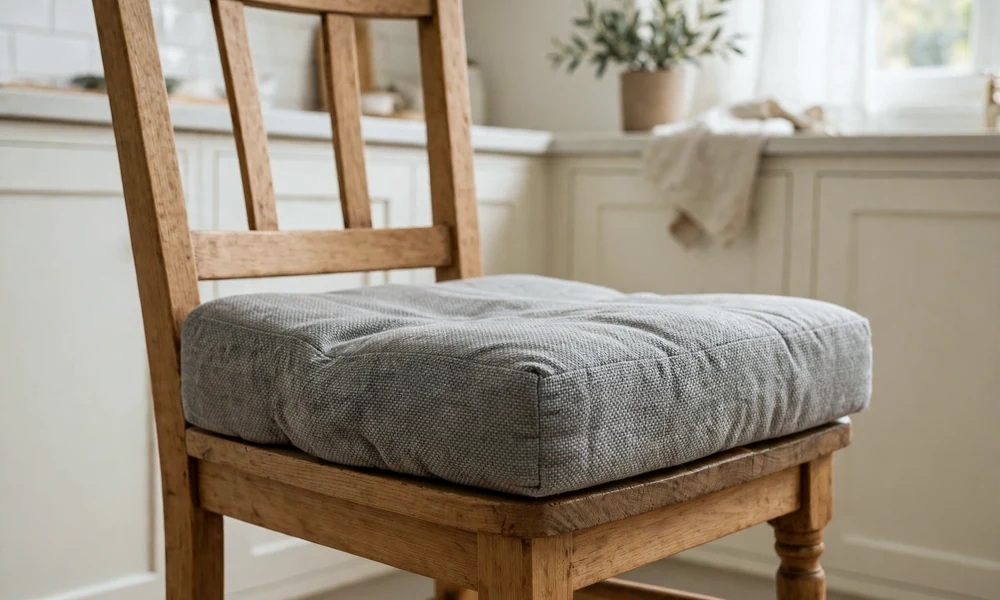
At home, a seat cushion is often about comfort rather than pain: a pad that makes a wooden dining chair bearable through a long meal, a bench cushion for a window seat, or a thick pad for a garden chair. The best home cushions are washable, because they live where food and drink are, and shaped to the chair they sit on rather than one-size-fits-all.
Outdoors, the rules change. A garden cushion must survive sun, rain and pollen, and ordinary foam and cotton fail within weeks. Quick-drying foam, water-resistant covers and ties that fasten to the chair are what matter, and outdoor seat cushions should be at least eight centimetres thick. A guide to outdoor cushions that stay comfortable all summer covers the foam and fabric that survive the weather, while a guide to floor cushions is the better read if your sitting happens on the floor rather than on a chair.
What Goes Wrong
The most common failure is flattening. A cheap foam cushion feels fine for a month, then loses its spring and becomes a thin mat. The fix is to buy density, not softness: high-density foam costs more upfront and lasts years, while a cheap cushion needs replacing every few months. If yours has gone flat, do not try to revive it; replace it and choose a denser one next time.
The second failure is sliding. A cushion with a smooth base creeps forward every time you stand up, and you spend the day pushing it back. The fix is a non-slip base, straps or a contoured shape, checked before you buy rather than discovered at home.
The third failure is heat. Memory foam traps warmth, and a cushion that feels fine in winter can become unbearable in summer. The fix is ventilation: gel layers, perforated foam, or a breathable cover. If you run hot, skip plain memory foam and choose gel or a ventilated design from the start.
Care and Replacement
A seat cushion lasts longer if it is cared for. Air it out regularly, especially foam, because trapped moisture is what makes foam break down and smell. Wash the cover when the maker says you can, with a mild detergent; harsh washing shrinks covers and weakens zips. Keep foam out of direct sunlight when not in use, because ultraviolet light degrades it faster than sitting does.
Replace a cushion when it stops springing back, has a permanent dent where you sit, or no longer relieves the ache it used to. For a daily-use office cushion, that is usually after one to two years; for a lightly used dining cushion, three or more.
Before You Buy: A Short Checklist
Measure your chair first. A cushion that overhangs the seat looks wrong and slides around, while one that is too small leaves the chair edges digging into your thighs. Measure the width and depth of the seat, and allow a centimetre of clearance on each side. Then think about where you will use it: an office cushion needs a non-slip base and a coccyx cutout, a car cushion needs straps and a low profile, and an outdoor cushion needs weatherproof foam and fabric.
Check the cover before you check the foam. A removable, washable cover is worth more than a fancy fill, because a cushion you cannot clean is one you will replace early. Look for a hidden zip, a fabric that suits where you will sit, and a base that grips.
Frequently Asked Questions
Are seat cushions good for back pain? A good one helps, because it spreads your weight and supports a straighter sitting position, and a wedge or coccyx cushion is the best choice for lower back pain. A cushion is not a cure, though: if your back pain is severe or persistent, see a doctor, and pair the cushion with regular movement.
How thick should a seat cushion be? Five to eight centimetres suits most adults for everyday use. Thinner cushions bottom out, thicker ones raise you too high for a desk or a car. Your feet should rest flat on the floor and your knees should sit level with your hips.
Do gel seat cushions really stay cooler? Yes, noticeably. A gel layer or gel grid moves heat away from your body and lets air circulate, while plain memory foam traps warmth. The difference is biggest on long sits in warm rooms, and smallest in a cool room for short periods.
The Bottom Line
The best seat cushion is the one that fits your chair, your body and your day. For most people that is a medium-firm memory foam cushion with a coccyx cutout and a non-slip base, thick enough to cushion and thin enough to keep your feet on the floor. If you run hot, choose gel; if your back aches, choose a wedge; if your tailbone hurts, choose a donut. Buy density over softness and measure before you order.