The best smartwatch chargers in 2026 are the ones you never have to think about. You set the watch down at night, it clicks into place, and by morning it is full, cool, and ready for the day. The worst ones look identical on a shelf, yet they charge slowly, slip out of alignment while you sleep, or run warm enough to worry you. A smartwatch tracks sleep, workouts, notifications, and heart rate all day, so the charger that refills it deserves more thought than most people give it. This guide compares the main kinds of smartwatch chargers and helps you pick the right shape for your bedside table, your desk, and your travel bag.
Key Takeaways
- Match the charger to your watch brand first. Apple Watch, Samsung Galaxy Watch, and Garmin each use different pucks.
- A magnetic puck is the simplest bedside choice, while a stand holds the watch upright so you can read the time at a glance.
- Three-in-one stations charge a watch, a phone, and earbuds from one plug, but only make sense if you own all three.
- Alignment matters more than speed. A puck that holds the watch firmly beats a faster puck that slips off overnight.
- For travel, a small portable charger with its own battery beats a second full-size dock.
Smartwatch Chargers Compared
| Type | Best for | Charge speed | Travel size | Price range |
|---|---|---|---|---|
| Magnetic puck | Bedside, everyday use | Fast | Tiny | Low |
| Charging stand | Nightstand clock view | Fast | Medium | Mid |
| Three-in-one station | Phone, watch, and earbuds together | Moderate | Bulky | Mid to high |
| Portable power puck | Travel and long days out | Moderate | Pocket size | Mid |
The Main Types of Smartwatch Charger
Every smartwatch charger falls into one of a few shapes, and the shape decides whether your watch is charged every morning or dead by lunchtime.
Magnetic pucks
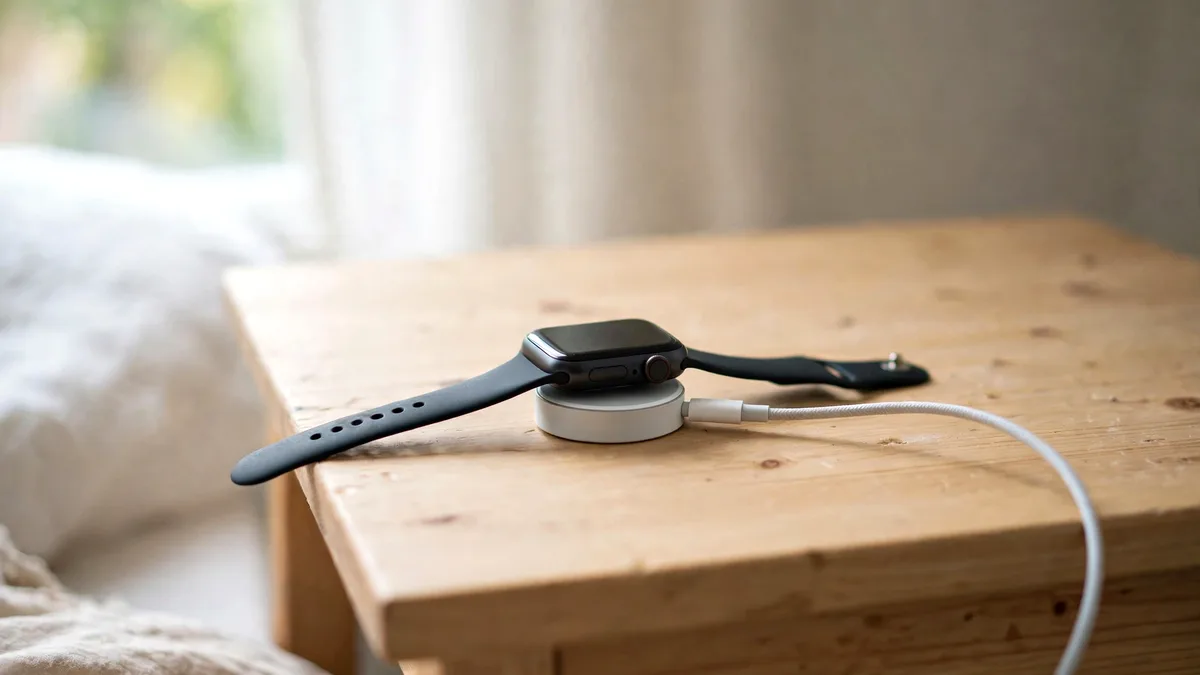
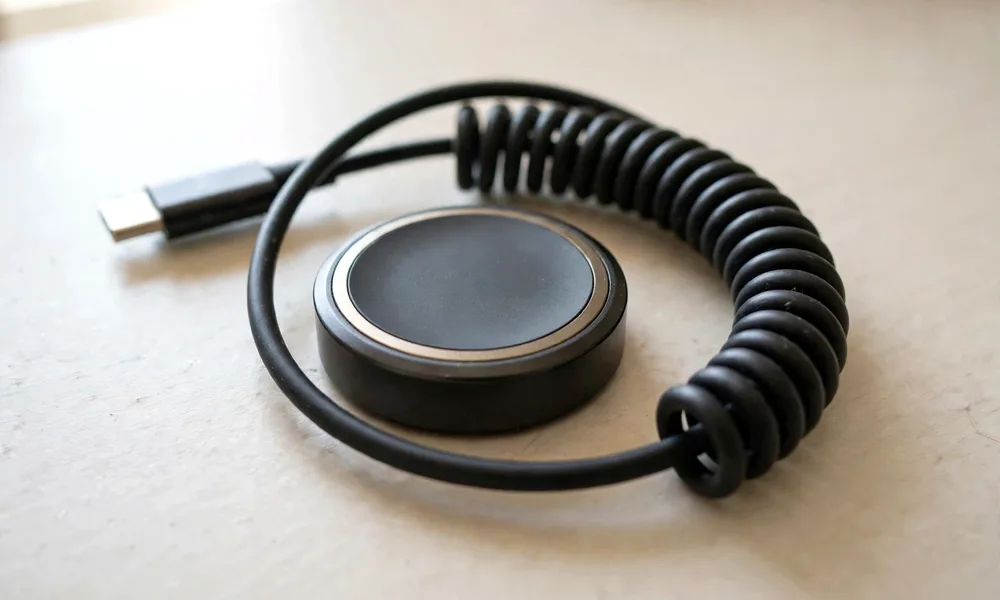
A magnetic puck is a small round disc with a magnet in the middle and a cable coming out of one side. You lay the watch face up on it, the magnet pulls it into the right spot, and charging starts. This is the charger most watches ship with, and it is still the best choice for most people. It takes up almost no space and works on a bedside table, a desk, or a hotel nightstand. The weakness is alignment on some third-party pucks. A weak magnet lets the watch slide a few millimetres overnight, which is enough to stop charging. The best wireless chargers use the same idea at a larger scale, but a watch needs the magnet to find its small charging coil, so a phone pad alone will not do the job.
Charging stands
A stand holds the watch upright on a small arm or cradle, with the puck built into the back. With the watch upright, its face becomes a bedside clock, and you can check the time and the alarm without picking it up. The trade-off is size. A stand takes up more room than a puck, and it is harder to pack for travel. Some stands are also fussy about strap types. A metal link bracelet or a thick leather strap can stop the watch sitting flush against the puck, so check the stand with your own strap, or choose one with an open cradle.
Three-in-one stations
A three-in-one station charges a smartwatch, a phone, and a pair of wireless earbuds from a single plug and a single cable to the wall. On a crowded bedside table, that is a genuine improvement. Instead of three cables and three plugs, you have one tidy base. The watch usually sits on a raised arm at the back, the phone lies flat or stands upright in the middle, and the earbuds case rests on a small pad at the front. The compromise is speed and heat. Splitting one power supply three ways means each device charges a little more slowly than it would on its own charger. That is usually fine overnight, when you have eight hours, but it is a poor choice if you need a fast top-up before a run. MagSafe chargers solve the phone half of this problem neatly, because the magnetic ring snaps the phone into place, and several good stations build their phone pad around that same idea. Before you buy a station, count the devices you actually charge every night. If you only own a watch and a phone, a two-in-one dock is cheaper and smaller, and it does the same job.
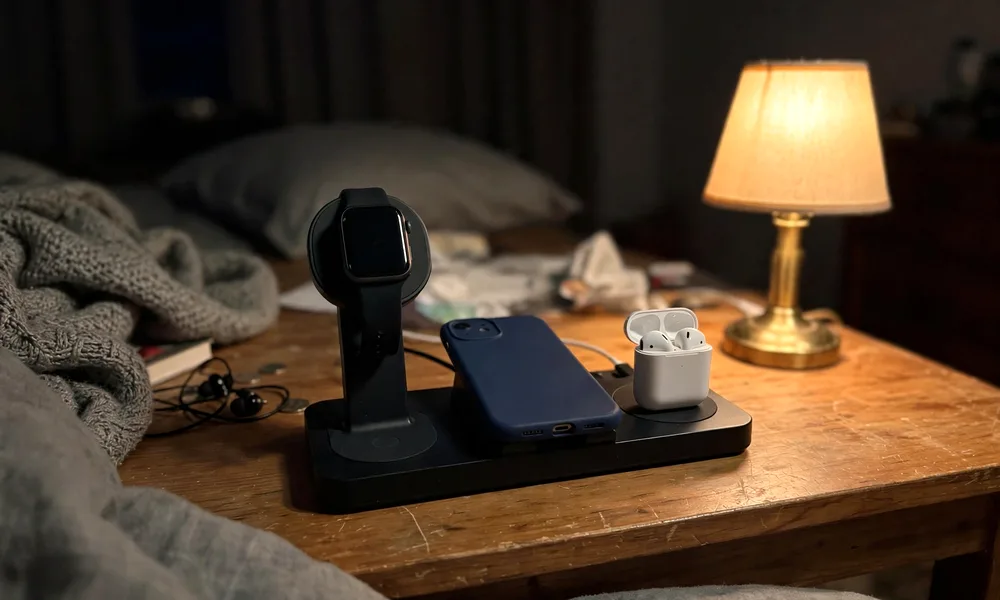
Portable chargers and power pucks
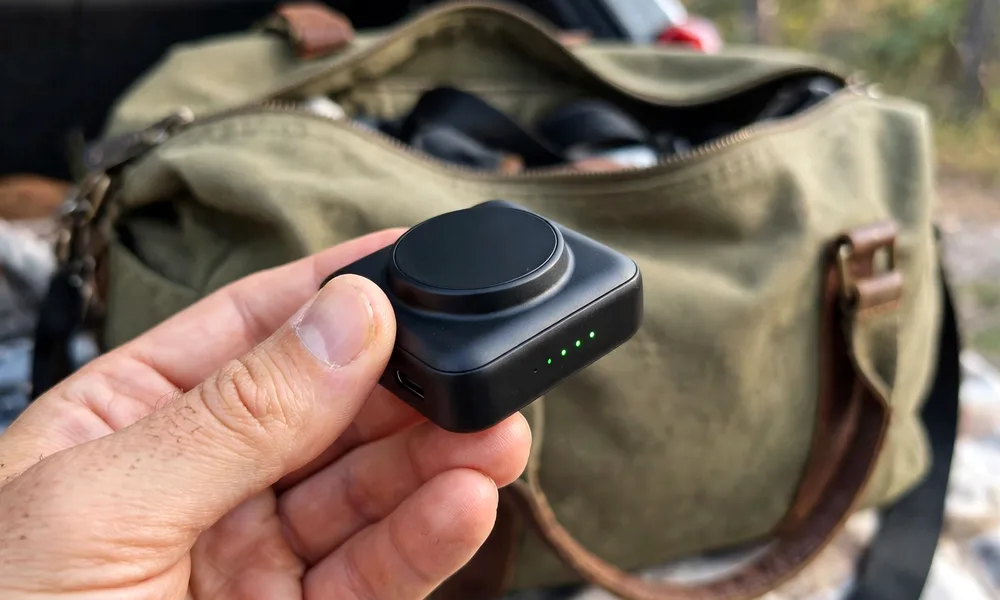
A portable smartwatch charger is a small puck with a battery built in, or a puck that plugs into a power bank you already own. It exists for one situation: the day your watch will not last until bedtime. Long travel days, conferences, and hikes all drain a watch faster than a normal day, because the screen is on more and the GPS is working. A portable puck that gives you one full charge from your pocket is the difference between a watch that tracks your whole day and one that dies at dinner. Look for two numbers when you compare them. The first is capacity, and you want at least enough for one full charge with some spare, usually around 1,000 milliamp-hours or more. The second is weight. Anything over about 80 grams feels like a stone in a jacket pocket, and you will stop carrying it.
What Actually Matters When You Choose
Charger shopping is full of numbers that sound important and mostly are not. Wattage is the classic example. A smartwatch battery is tiny, usually between 300 and 600 milliamp-hours, so it cannot take in power quickly no matter how powerful the charger claims to be. What matters is a steady charge and a watch that stays in place.
Magnet strength is the first real test. A good puck snaps the watch into place with a clear click, and you can lift the puck by the watch without the two separating. A weak magnet feels vague, and the watch drifts. Heat is the second test. A watch that feels hot after an hour is being pushed too hard, and heat ages a small battery fastest. Cable length is the third test. A cable shorter than a metre forces the puck to sit right next to the plug, which is rarely where your bedside table is. A cable of 1.2 to 1.5 metres gives you room to put the charger where you actually sleep. If you are replacing a frayed cable anyway, the best charging cables are the ones with reinforced ends and a length that matches your room.
Matching the Charger to Your Watch
Apple Watch owners have the easiest choice and the hardest trap. Every Apple Watch uses the same magnetic charging puck, so any puck labelled for Apple Watch will fit any model, but only Apple-certified fast-charge pucks will charge the newer models at full speed. A cheap uncertified puck will still charge your watch, just more slowly, and it may stop working after a software update. Samsung Galaxy Watch models use a different puck with a slightly different magnet layout, and the watch will not sit properly on an Apple puck. Garmin watches are the most varied of all. Some charge through small metal pins on the back, others through a cradle. If you own a Garmin, buy the charger made for your exact model line, not a generic one that claims to fit all Garmins. For other brands, such as Fitbit, Amazfit, and Huawei, the same rule holds. A charger that almost fits will charge slowly, run warm, and wear out the charging contacts on the watch itself.
Charging Speed, Honestly
Most smartwatches charge from empty to full in about one to two hours on their own charger, and from half full to full in well under an hour. That is fast enough for real life. You charge overnight, or you top up while you shower and eat breakfast, and the watch is ready. Third-party chargers sometimes advertise faster speeds, but a watch will only draw as much power as its battery management allows, so a charger rated for far more watts than the watch needs does not charge it any faster. What does make a real difference is whether the charger supports your watch’s fast-charging mode. A fast-charge puck plugged into an old five-watt phone charger will charge at the old slow speed, because the wall plug is the bottleneck. If speed matters to you, buy the puck and the plug together, and check that the plug delivers at least 20 watts.
Bedside, Desk, and Travel Setups
The best setup is often two chargers, not one. A stand or a three-in-one station lives on the bedside table, where it charges the watch every night and doubles as a clock. A small puck lives in your bag or your desk drawer, for top-ups and travel. On a desk, a stand works better than a flat puck, because you can glance at notifications without picking the watch up. In a hotel, a puck with a short cable and a USB-C plug is the most useful thing you can pack, because it can charge from a laptop, a power bank, or a television USB port.
Before You Buy Checklist
- Confirm the charger is made for your exact watch brand and model line.
- Test the magnet. The watch should snap on firmly and stay put if you lift it.
- Check the cable length. Aim for 1.2 metres or more for a bedside table.
- Match the wall plug. Fast charging needs a plug rated at 20 watts or higher.
- Feel for heat after an hour. The watch should be barely warm, never hot.
- Count your nightly devices before buying a three-in-one station.
Frequently Asked Questions
Can I use a phone wireless charger for my smartwatch?
Usually not. A phone pad uses a larger coil, and a smartwatch coil is too small to line up with it reliably. Some three-in-one stations include a dedicated watch spot, but a plain phone pad will charge a watch slowly or not at all.
Will a cheap third-party puck damage my watch?
A well-made third-party puck from a known brand is safe, but an unbranded bargain puck can deliver uneven power and run hot. Look for certification for your watch brand, and avoid any charger that makes the watch hot.
How long does a smartwatch take to charge?
Most watches charge from empty to full in one to two hours, and a half-hour top-up usually gets you through the rest of the day. Fast-charge models can reach about 80 percent in around 45 minutes with the right puck and plug.
Can I leave my smartwatch on the charger all night?
Yes. Modern watches stop drawing power when the battery is full, so overnight charging is safe, and the watch will be at full charge in the morning.
Do I need a different charger for each watch brand?
Yes, in almost every case. Apple, Samsung, Garmin, and the other brands each use their own puck shape and magnet layout.
What is the best smartwatch charger for travel?
A small portable puck with its own battery, or a flat puck that charges from USB-C. It should weigh under 80 grams and give at least one full charge without a wall socket.
The Bottom Line
Buy the charger that fits your watch, holds it firmly, and matches where you actually charge. For most people that is a magnetic puck at home and a small portable puck for travel, with a stand or a three-in-one station if the bedside table is crowded. Speed claims matter far less than a strong magnet, a cool charge, and a cable long enough to reach your table.