Why Umbrella Holders Beat a Crowded Stand in 2026
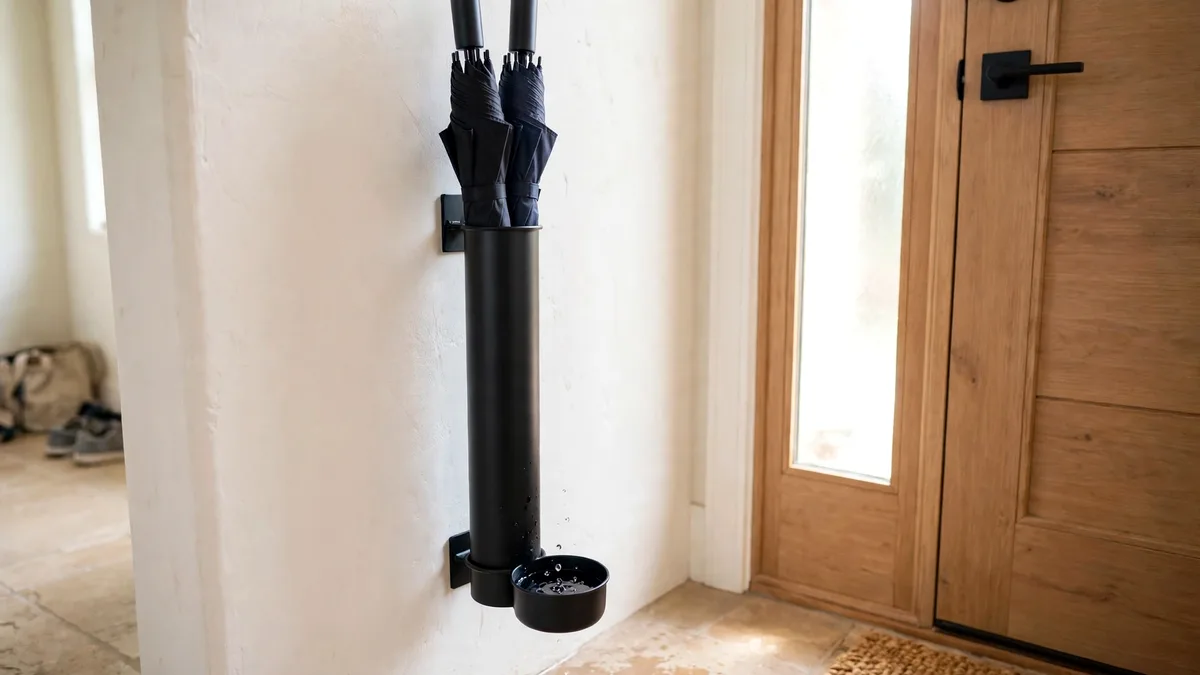
Umbrella holders are the small fix for a problem every hallway knows: wet umbrellas dumped in a corner, dripping on the floor, tangling with coats and falling over every time someone brushes past. A good holder mounts on the wall or the back of a door, keeps one or two umbrellas upright and out of the way, and catches the drips in a cup you can empty in seconds. A crowded floor stand does the opposite: it eats floor space, tips over under a heavy walking umbrella, and turns into a graveyard of broken umbrellas nobody throws away. This guide explains why umbrella holders beat a crowded stand in 2026, and how to pick one that fits your hallway.
The difference is not just tidiness. A floor stand holds umbrellas at floor level, where they are kicked, tripped over and knocked sideways by bags and dogs. A wall-mounted holder lifts them to hand height, where you can grab one on the way out without bending down or hunting through a forest of handles. It also dries them better: an umbrella hanging upright in open air dries in hours, while one wedged into a crowded stand stays damp against its neighbours.
Key Takeaways
- Wall-mounted umbrella holders free up floor space entirely, which matters most in narrow hallways.
- One or two umbrellas per holder dries faster and stays tidier than five or six crammed into a stand.
- A removable drip cup keeps rain off your floor, so never buy a holder without one.
- Match the holder to your umbrella type: long umbrellas need a tall tube or hook, folding ones need a short basket or clip.
- Fix the holder into a stud or solid wall: a wet umbrella is heavier than it looks and a weak fixing will pull out.
What an Umbrella Holder Is
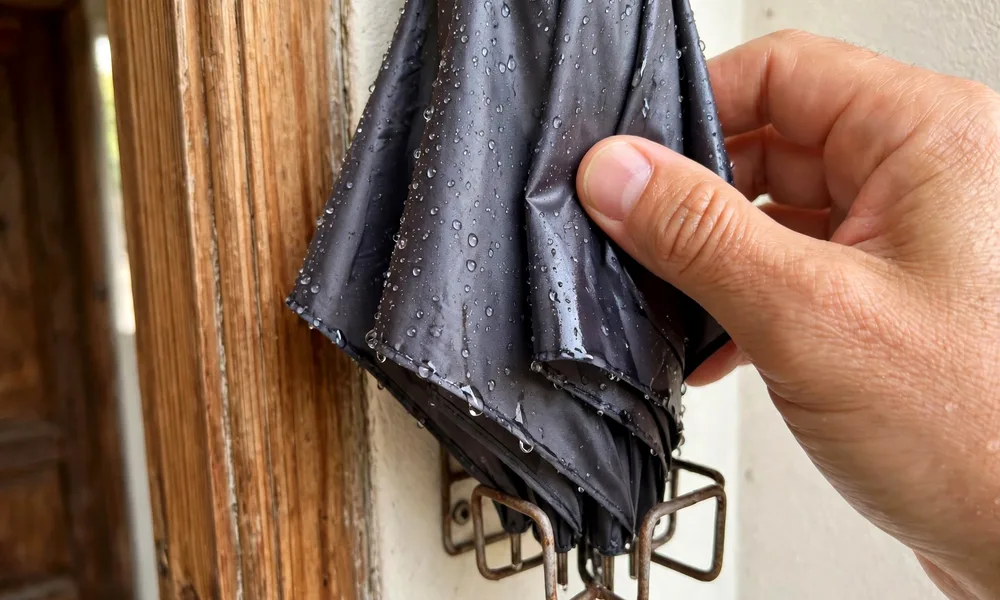
An umbrella holder is a compact mount that holds umbrellas upright off the floor, usually fixed to a wall or hung over the top of a door. The common types are a slim tube a folded umbrella slides into, a wire basket that cradles one or two umbrellas, a hook or clip that catches the handle, and an over-door rack. What they share is scale: they are built for the one or two umbrellas a household actually uses, and they use wall space instead of floor space.
That scale is the point. Most households use one umbrella each, and the rest of the umbrellas in a floor stand are spares, broken ones and freebies nobody would choose. A holder forces a small, honest decision: keep the good umbrellas where you can reach them, and throw away the rest.
There is a drying argument too. An umbrella dries fastest when it hangs upright, open to the air, with its tip pointing down so water runs off instead of pooling in the folds. A holder does exactly that. A crowded stand does the opposite: umbrellas lean on each other, the fabric stays pressed together, and the ones in the middle can stay damp for days.
Umbrella Holders Compared: The Main Types
Choosing between holder types comes down to your umbrellas and your wall. The table compares the main types on what decides whether one works in a real hallway.
| Type | Best for | Umbrellas held | Drip control | Fixing |
|---|---|---|---|---|
| Wall-mounted tube | Long walking umbrellas | 1 to 2 | Drip cup | Screws into wall |
| Wall-mounted wire basket | Folding umbrellas | 2 to 3 | Open base, tray below | Screws into wall |
| Hook or clip holder | One everyday umbrella | 1 | None, needs a mat | Screw or adhesive |
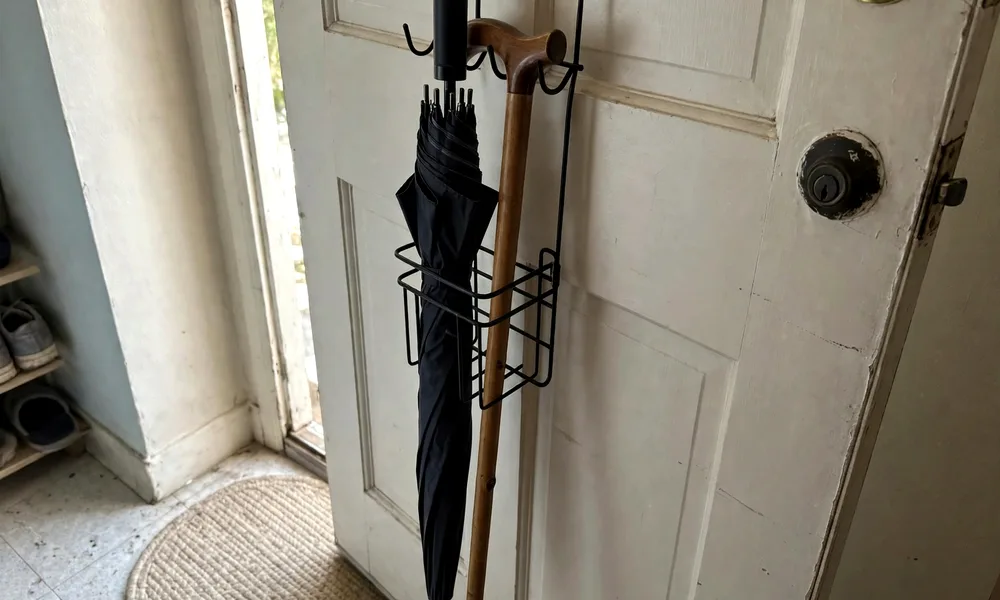
| Over-door rack | Renters, no drilling | 2 to 4 | Drip tray | Hangs over door |
| Freestanding slim holder | Hallways with no free wall | 2 to 3 | Built-in tray | None, stands on floor |
Wall-mounted tubes are the neatest option for a long walking umbrella: it slides in tip-first, the tube holds it upright, and a small cup at the bottom catches the drips. Wire baskets are the flexible choice: they hold folding umbrellas, a walking umbrella and even a cane side by side, and the open wire lets air through so everything dries. Their weakness is drips, since water falls through the base, so they need a small tray or a wipeable floor underneath.
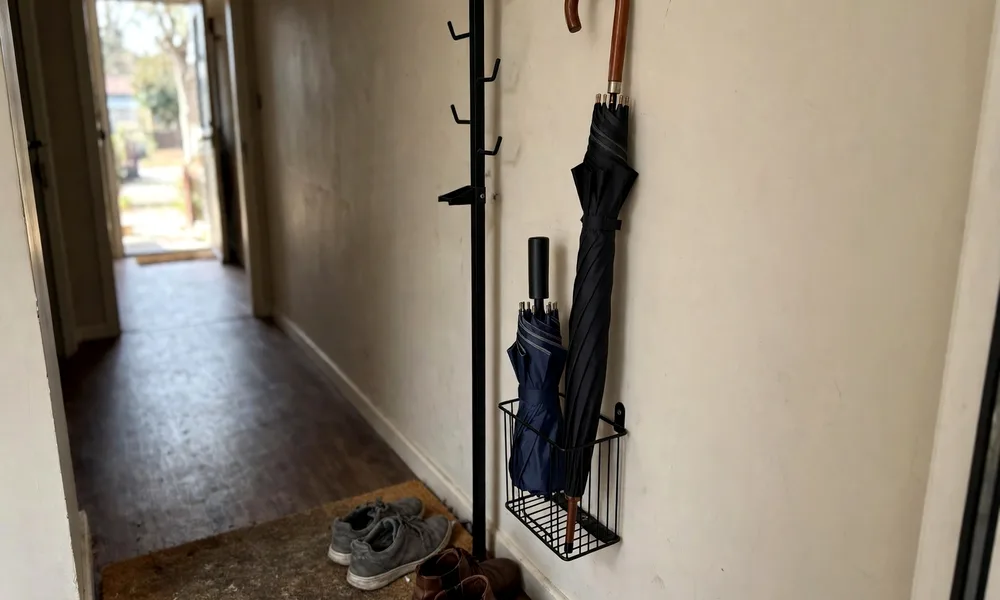
Hook and clip holders are the minimalist answer: a single strong hook or spring clip that catches the umbrella’s handle or shaft, holding it flat against the wall. They are cheap, nearly invisible and perfect for one everyday umbrella, but they catch no water at all, so they belong above a mat or a tiled floor. Over-door racks are the renter’s friend, because they need no drilling: they hang from the top of the door and hold two to four umbrellas in a basket with a drip tray. Slim freestanding holders are the fallback when there is no free wall: narrower than a stand, they stay tidy where a wide stand would sprawl.
Why a Holder Beats a Stand
It Gives You the Floor Back
A floor stand needs a circle of floor about 30 centimetres across, plus clearance so umbrellas can lean without hitting the wall. In a hallway a metre wide, that is a third of your walking space gone for a job a wall-mounted holder does with none at all. A holder uses a strip of wall beside the door that was doing nothing.
It Stops the Tipping
A floor stand tips over for a simple reason: a long, heavy walking umbrella leaning at an angle puts its weight far from the stand’s centre, and a light stand cannot hold it. A wall-mounted holder cannot tip, because it is screwed to the wall. Once it is fixed properly, the only way an umbrella falls is if someone takes it out.
It Forces a Smaller, Better Collection
A stand invites accumulation. Every broken umbrella, every freebie and every spare bought on a rainy day ends up in it, until finding the good one means digging through five bad ones. A holder that fits two umbrellas forces the household to choose: keep the two that work, and throw the rest away.
It Dries Umbrellas Faster
An umbrella in a holder hangs alone, with air on every side and its tip pointing down so water runs off. An umbrella in a crowded stand is pressed against its neighbours, and the fabric in the middle stays wet long after the rain stops. That dampness makes umbrellas smell musty and rots the fabric at the folds.
How to Choose the Right Umbrella Holder
Start with your umbrellas, not the holder. Measure the longest umbrella you own when folded, from tip to handle, and check the holder is tall enough to support it without the tip dragging. A long walking umbrella needs a tube or a hook at least 70 centimetres off the floor; a folding umbrella needs only a short basket or clip.
Next, look at the wall beside your front door. The holder belongs within arm’s reach of the door, on the side your hand naturally goes to as you leave. Measure the clear wall space and check for skirting boards, light switches and door frames that might get in the way. If the only free wall is plasterboard, find a stud or use proper fixings: a holder full of wet umbrellas is heavier than it looks and a single screw in bare plasterboard will work loose within weeks. Renters who cannot drill should choose an over-door rack.
Umbrella Holders vs Umbrella Stands and Key Holders
The nearest neighbour is the umbrella stand. Our guide to the best umbrella stands covers freestanding floor stands that hold a whole household’s umbrellas upright with a drip tray: the right choice for a large family, a mudroom with floor to spare, or a home where five or six umbrellas are in daily use. A holder is the compact alternative for one or two umbrellas in a hallway where floor space matters. If your stand is half empty and still in the way, a holder is probably the better answer; if your holder is always overflowing, a stand is.
The other neighbour is the entryway as a whole. A holder works best as part of a small system by the door: a key holder for keys, a coat rack for coats, and an umbrella holder for umbrellas, all within one step of the door. Each one does a single job and takes no floor space.
Mistakes to Avoid
The most common mistake is buying a holder for umbrellas you do not own. A tube built for a long walking umbrella will not grip a short folding umbrella, which slides down and pools water at the bottom, while a basket built for folding umbrellas lets a long one flop sideways. The second mistake is weak fixing: a holder screwed into bare plasterboard, or stuck on with an adhesive strip rated for a picture frame, will come off the wall the first wet winter. The third mistake is forgetting the drips: a holder without a drip cup does not solve the puddle problem, it just moves it.
Finally, do not let the holder become a stand in miniature. If it holds three umbrellas and you own seven, the extra four will end up leaning against the wall beside it. Keep the collection to what the holder holds, and store out-of-season umbrellas in a cupboard.
Umbrella Holder Buying Checklist
- Measure your longest folded umbrella and make sure the holder supports it.
- Count the umbrellas you actually use, and buy a holder that fits that number.
- Check for a removable drip cup or tray, and empty it after wet days.
- Measure the wall beside the front door and keep the holder within arm’s reach.
- Fix into a stud or solid wall, or choose an over-door rack if you cannot drill.
- Keep the holder to one or two umbrellas, and store spares elsewhere.
Frequently Asked Questions
Is an umbrella holder better than a stand?
For one or two umbrellas in a narrow hallway, yes: it uses no floor space, cannot tip over and dries umbrellas faster. For a large family with five or six in daily use, a floor stand holds more and is the better choice.
Will a wall-mounted holder damage my wall?
It leaves two small screw holes, like a picture hook. Renters who cannot drill should use an over-door rack instead, which needs no fixings at all.
Can a holder fit a long walking umbrella?
Yes, if you choose a tall tube or a hook mounted high enough. Measure the folded umbrella first: most walking umbrellas are 80 to 95 centimetres long.
What catches the water from a wet umbrella?
A good holder has a removable drip cup at the bottom, or sits above a small tray or a tiled floor. Empty the cup after wet days, because standing water goes stagnant and starts to smell.
Can I use an umbrella holder for a cane or walking stick?
Yes, most wire baskets and wide tubes hold a cane alongside an umbrella. Check the diameter first: a thick cane handle may not fit a narrow tube built for a folding umbrella.
Where is the best place to put an umbrella holder?
On the wall beside the front door, on the side your hand reaches as you leave, at a height where you can slide the umbrella in without bending down. Keep it clear of the door swing.
The Bottom Line
A crowded floor stand takes floor space, tips over and keeps umbrellas damp against each other. A wall-mounted umbrella holder does the same job with no floor at all, holds the one or two umbrellas you actually use where you can grab them, and lets them dry properly overnight. Measure your umbrellas, pick a holder with a drip cup, and fix it properly beside the door.