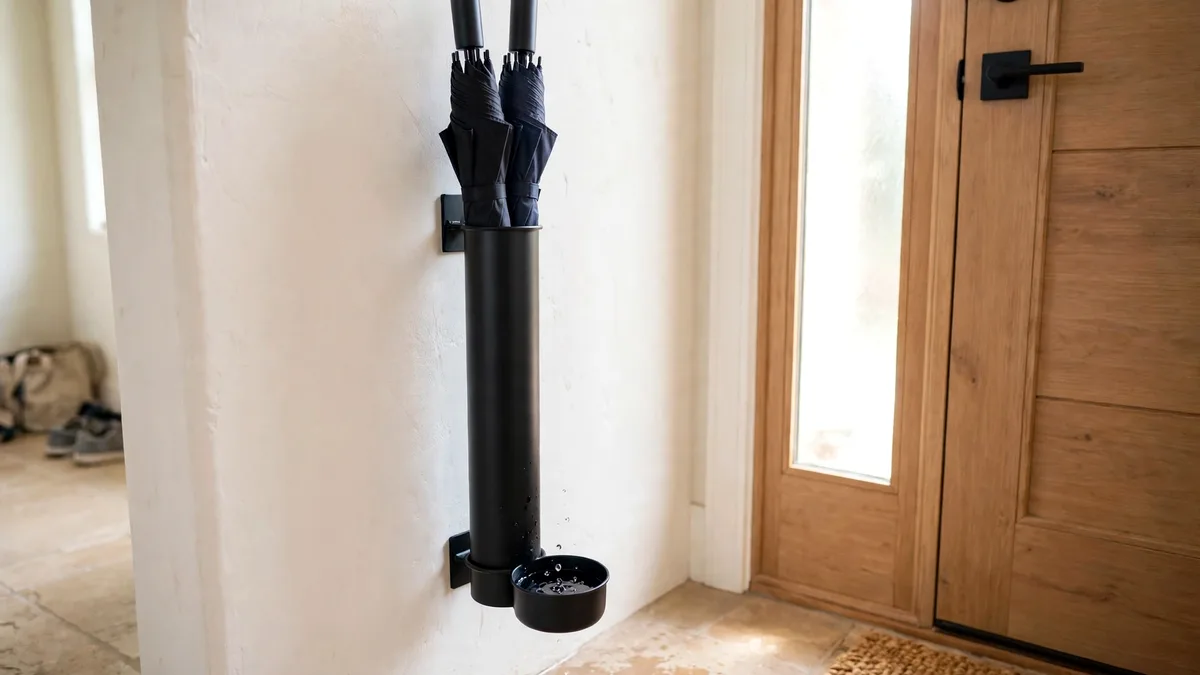
How to Choose Boot Racks That Keep Tall Boots Upright in 2026
Boot racks are the one piece of entryway furniture tall boots actually need. A good boot rack holds wellingtons, work boots and snow boots upright by the shaft, lets air move around them so they dry instead of going musty, and keeps their mud off your floors. A bad one lets tall boots flop over, crease at the ankle and pool water where it should not be. This guide explains how to choose boot racks that keep tall boots upright, dry and ready in 2026, whether you have two pairs by a flat door or a whole family’s worth in a mudroom.
Most boot storage fails because it was designed for shoes, not boots. A flat shelf suits trainers, which are short and stiff. A tall rubber boot is heavy at the foot, soft at the shaft and happiest standing straight. Lay it on its side and the shaft folds, the rubber creases and the inside stays damp for days. Stand it upright and the water drains, the air circulates and the boot keeps its shape.
Key Takeaways
- Buy for your tallest boots: a rack must support the full shaft height, or tall wellingtons will flop and crease.
- Open, slatted shelves dry boots far faster than solid ones, because air reaches the sole and shaft from every side.
- Measure your wall and door swing first: most returns happen because a rack is too deep for a narrow hallway.
- Metal and sealed hardwood survive wet boots best; raw pine and fabric racks soak up water and warp.
- Pair the rack with a drip tray underneath, and the floor stays clean even when the boots do not.

What a Boot Rack Actually Does
A boot rack is a stand or frame built to hold boots upright, usually with slots, pegs or angled shelves that grip the shaft or cradle the foot. Unlike a shoe rack, which stores footwear flat on horizontal shelves, a boot rack is designed around height: the shaft stays straight, the sole stays off the ground, and mud and water fall where you can clean them.
That drying job matters more than it looks. A boot that stays damp inside grows a smell in about two days, and its lining starts to break down within a season. Boots lying in a pile dry slowest of all, because the folded shaft traps moist air inside. A rack that holds boots upright with space between them can cut drying time in half.
Boot Racks Compared: The Main Types
Not every boot rack works the same way, and the right type depends on how many boots you have, how tall they are and how much wall you can spare. The table compares the main types on what decides whether one works in a real hallway.
| Type | Best for | Boots held | Drying speed | Floor space |
|---|---|---|---|---|
| Slotted wooden rack | Tall wellingtons | 4 to 8 pairs | Fast | Medium |
| Angled metal shelf rack | Mixed boots and shoes | 6 to 12 pairs | Fast | Medium |
| Wall-mounted peg rack | Ski and walking boots | 2 to 4 pairs | Very fast | Almost none |
| Freestanding tiered rack | Families, mudrooms | 8 to 16 pairs | Good | Large |
| Boot tray with rack insert | Wet and muddy days | 2 to 4 pairs | Moderate | Small |
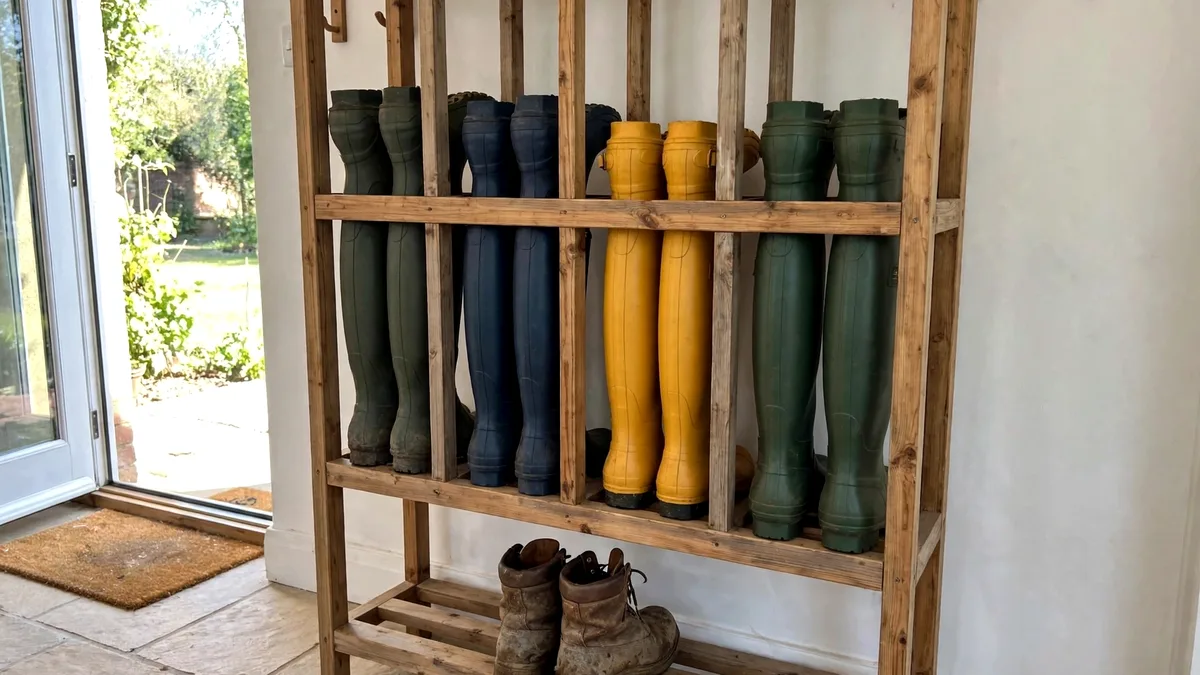
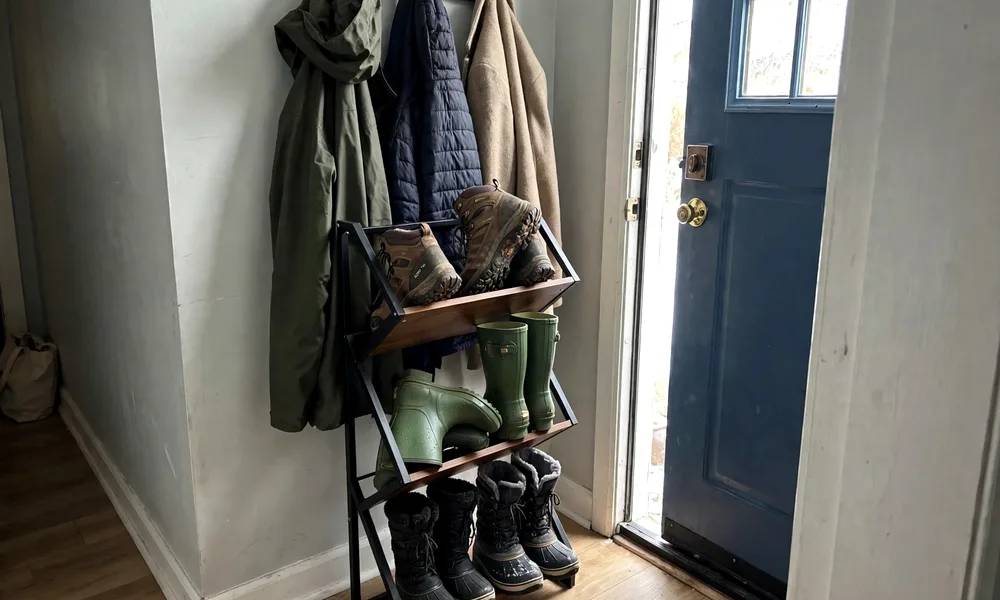
Slotted wooden racks are the classic choice for wellingtons: boots slide into vertical slots shaft-first, the weight of the foot holds the shaft straight, and they last for years if the wood is sealed, though they waste space on short boots. Angled metal shelf racks are the flexible option: boots sit on slanted shelves, water runs off the front edge, and the same rack can hold trainers on the top tier. They suit mixed households, though very tall boots can topple forward if the shelf angle is too steep.
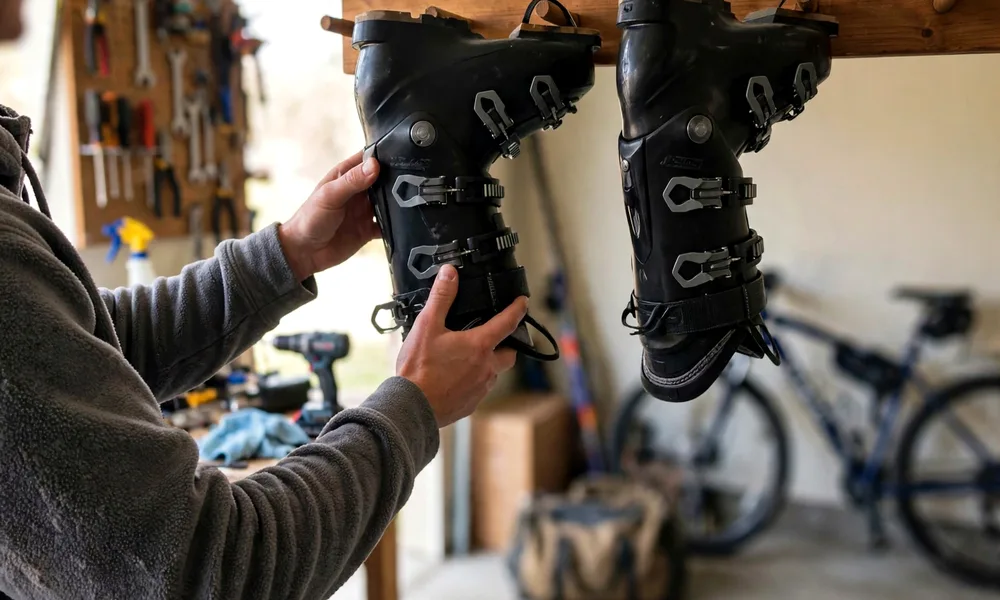
Wall-mounted peg racks are the space-savers: boots hang upside down, water runs straight out of the opening, and the floor underneath stays clear. They suit ski boots and stiff walking boots, but soft wellingtons can stretch on a peg if left hanging for months. Freestanding tiered racks hold the most pairs and suit a mudroom or garage, while a boot tray with a rack insert is the answer when the main problem is mud: the tray catches everything and the insert keeps the boots out of the puddle.
How to Choose the Right Boot Rack
Start With Your Tallest Boots
Measure the tallest pair you own from sole to cuff before you look at any rack. A rack built for ankle boots will not hold a 40-centimetre wellington shaft, and one built for wellingtons will swallow a short boot out of sight. The slot or shelf needs to support at least two-thirds of the shaft height; anything less and the boot leans, creases and flops.
Count Pairs, Then Add Two
Count every pair that lives by the door, then add two spaces. Boots multiply, and a rack exactly full on the day you buy it is overflowing by Christmas. Spare capacity also dries boots faster, because air moves between pairs that are not squeezed together. If you cannot fit a bigger rack, a second small rack in the garage for out-of-season pairs beats cramming six pairs onto a four-pair frame.
Check the Depth Against Your Hallway
Depth is the measurement most people forget, and it causes most returns. A rack 35 centimetres deep sounds modest until it sits in a hallway only 90 centimetres wide. Measure the wall, then the door swing, and leave at least 70 centimetres of clear walking space. In a narrow hallway, a wall-mounted peg rack or slim angled rack wins over a deep freestanding unit every time.
Pick a Material That Likes Water
Boots are wet, so the rack has to be made of something that does not mind water, day after day. Powder-coated steel and aluminium are the safest bets: they do not rust if the coating is intact, they wipe clean, and they hold heavy work boots. Sealed hardwood looks warmer, but check the finish is genuinely waterproof on every face; unsealed ends soak up water and swell. Avoid raw pine and fabric-covered racks: both absorb water, go soft and start to smell.
Where to Put It
The best place for a boot rack is within two steps of the door you actually use, on a hard floor if you have one. Boots come off at the door, so a rack anywhere further away will be ignored and the boots will end up in a pile where the rack should have been. If the entryway is carpeted, put a tray underneath: it catches water and grit, and you can lift it out and rinse it in seconds.
Think about light and air too. A rack tucked into a dark, airless cupboard dries boots slowly no matter how good its design is, while the same rack near a draughty door dries them overnight. If your only spot is a closed cupboard, leave the door ajar when boots are drying, or choose a wall-mounted peg rack in the hallway instead. A boot dryer also helps in winter: keep the rack close to a socket so the dryer can sit beside the boots.
Boot Racks vs Shoe Racks and Boot Trays
It is easy to confuse a boot rack with its closest cousins, but they solve different problems. Our guide to the best shoe racks covers flat-shelved storage for everyday shoes: trainers, sandals and low boots short and stiff enough to sit on a shelf. A boot rack is the specialist for tall, soft-shafted boots that need vertical support to stay upright and dry. If most of your footwear is short, a shoe rack is the right buy; if most of it is tall boots, a boot rack earns its place.
A boot tray is different again. Our guide to the best boot trays covers shallow, lipped trays that catch mud and meltwater and protect the floor. A tray does not store boots upright or dry them; it catches what falls off them. The best setups use both: the rack holds the boots upright and drying, the tray sits underneath to catch the drips. If you can only buy one, choose the rack when your boots flop and smell, and the tray when your floors are suffering.
Mistakes to Avoid
The most common mistake is buying a rack for the boots you wish you had instead of the boots you own. A rack sized for neat ankle boots will not hold muddy wellingtons, and a heavy-duty rack for a family of six is wasted on a single pair of garden boots. The second mistake is ignoring weight: a light, narrow rack tips over the moment heavy work boots lean on one side, so check the base width and the weight rating, and fix a tall rack to the wall. The third mistake is putting the rack somewhere boots never go.
Finally, do not forget maintenance. A boot rack collects mud, grit and salt, and if it is never cleaned it starts to smell as badly as the boots it holds. Wipe metal racks down once a week in winter and brush wooden slots clear of dried mud. A rack cleaned regularly lasts years longer than one left to cake up.
Boot Rack Buying Checklist
- Measure your tallest boots from sole to cuff, and make sure the rack supports at least two-thirds of that height.
- Count every pair by the door, then add two spare spaces for guests and new pairs.
- Measure the wall depth and the door swing, and leave at least 70 centimetres of clear walking space.
- Choose powder-coated metal or sealed hardwood, and avoid raw pine or fabric.
- Check the rack is stable under your heaviest boots, and fix tall racks to the wall.
- Put a drip tray underneath on wood or carpet floors, and keep the rack within two steps of the door.
Frequently Asked Questions
Do boot racks really help boots dry faster?
Yes. Holding a boot upright lets water drain out of the opening and air circulate inside the shaft, the slowest part to dry. Boots on a rack typically dry overnight, while the same boots lying in a pile can stay damp for two days.
Can I use a boot rack for shoes as well?
Yes, most angled and tiered racks hold short boots and shoes happily, though slotted racks built for wellingtons will swallow a trainer out of sight.
What is the best material for a boot rack?
Powder-coated steel is the most forgiving: it does not rust, it wipes clean and it holds heavy boots without bending. Sealed hardwood is the best-looking option if the finish is waterproof on every face.
How much space do I need for a boot rack?
A four-pair slotted rack is usually about 60 centimetres wide and 30 centimetres deep. Allow the rack’s depth plus at least 70 centimetres of walking space in front of it.
Should I put a tray under my boot rack?
Yes, whenever the floor underneath is wood, laminate or carpet. The tray catches mud and meltwater as the boots dry, and rinsing a tray beats cleaning a stained floor.
Are wall-mounted boot racks strong enough for heavy boots?
Yes, if fixed into a stud or a solid wall with the fixings supplied. A peg rack screwed into bare plasterboard will pull out under ski boots, so use the right fixings before you load it.
The Bottom Line
The best boot rack is the one that fits your tallest boots, your hallway and your household, and holds every pair upright with air around it. Measure first, buy for the boots you actually own, choose a material that likes water, and put the rack where boots come off. Do that, and your boots will dry overnight and keep their shape for years longer.