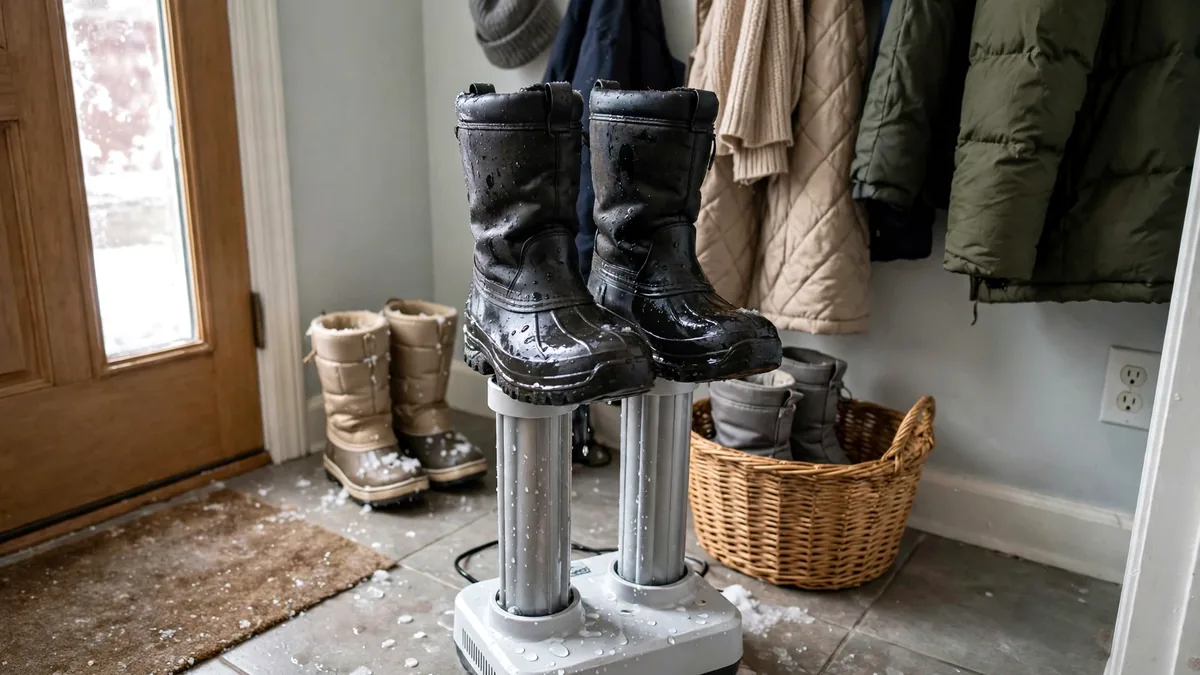
Boot dryers have quietly become one of the most useful gadgets in a cold-climate home, and in 2026 they have finally beaten the old standby: stuffing wet boots with newspaper. A boot dryer does in a few hours what newspaper does overnight, and it does it better — drying boots from the inside out and stopping the damp, sour smell that wet boots develop when left to dry slowly.
Anyone who has walked through snow, stood in a rainy field or worked a shift in wet boots knows the morning-after problem. You pull on boots that are still damp inside, your socks are wet within minutes, and by lunchtime your feet are cold and miserable. Newspaper helps a little, but it is slow and unreliable: the paper soaks through and the toes stay damp.
A boot dryer fixes the problem at its root. Warm air circulates inside the boot, carrying moisture out through the opening, so the lining, the insole and the toe box all dry evenly. Most dryers finish the job in two to six hours, use less electricity than a light bulb, and leave boots warm and ready for the next morning.
Key Takeaways
- A boot dryer dries boots from the inside out in two to six hours, while newspaper takes twelve hours or more and often leaves the toes damp.
- Warm-air dryers are the best all-round choice for most households, drying faster than unheated airflow without risking damage to leather or glue.
- Two-pair dryers are worth the extra cost for families, ski trips and work boots, because one pair is almost never enough in winter.
- Low, gentle heat is the safe setting for leather, suede and waterproof membranes; high heat can crack leather and melt adhesives.
- A dryer also kills the smell: boots that dry quickly do not give bacteria and mildew the damp hours they need to grow.
Why Wet Boots Are a Bigger Problem Than They Look
Wet boots are not just uncomfortable. Damp linings breed the bacteria and fungi that cause foot odour and athlete’s foot, and they thrive in exactly the conditions a slow-drying boot provides: warm, dark and damp for twelve hours or more. The longer a boot stays wet inside, the worse the smell gets.
Dampness also damages the boot itself. Leather that stays wet and then dries slowly stiffens and cracks, especially around the flex points. Glue holding soles together weakens with repeated soaking, and waterproof membranes lose effectiveness when the lining stays saturated. A boot dried properly after every wet day lasts noticeably longer.
How a Boot Dryer Actually Works
Most boot dryers are simple machines. A small fan pushes air through tubes that slide inside the boots, and a gentle heating element warms that air to around 40 degrees Celsius. The warm air absorbs moisture from the lining and insole and carries it out of the boot opening, drying the toe box evenly.
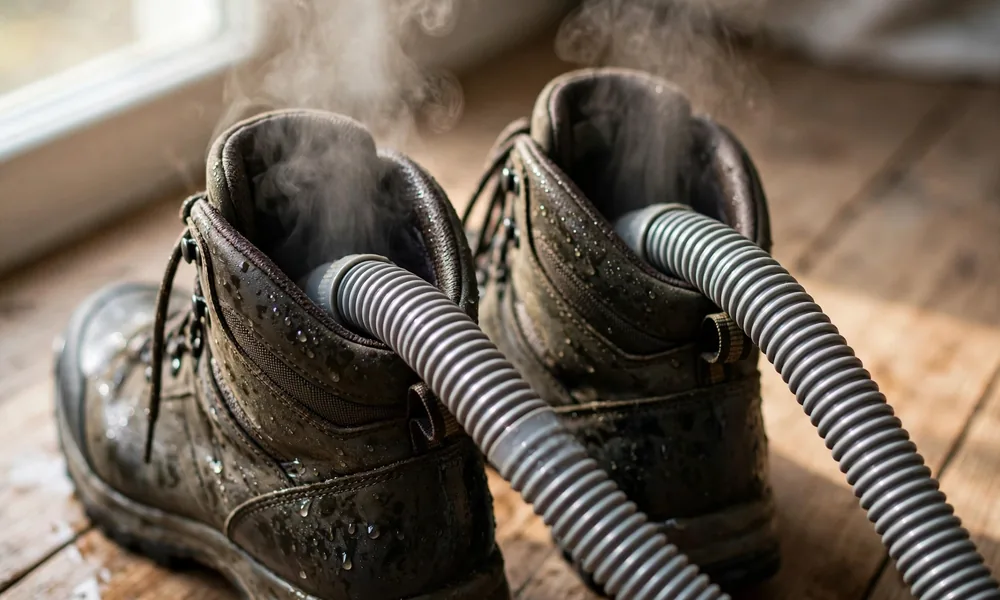
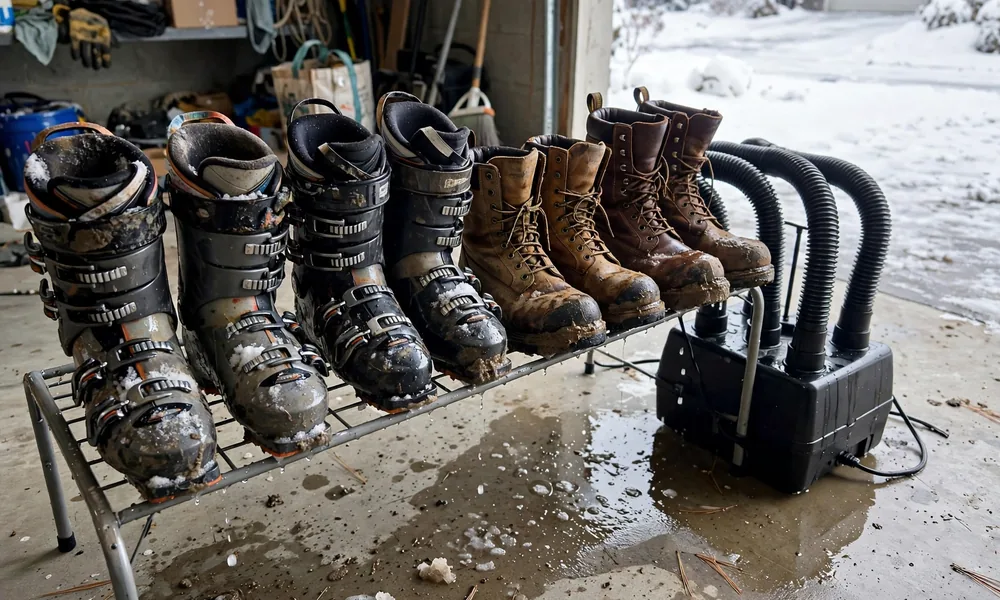
There are two main designs. Upright dryers stand the boots upside down on vertical tubes, so water drips out while warm air rises through the boot. Hose dryers use flexible tubes that snake into the boots wherever they stand, which suits tall boots and unusual shapes. Upright dryers are tidier for everyday boots; hose dryers are more flexible for ski boots and tall wellingtons.
Boot Dryers vs Newspaper: An Honest Comparison
Newspaper has one advantage: it costs nothing. Beyond that, it loses on almost every measure. It absorbs moisture only where it touches the lining, so the toe box and the heel dry last, if they dry at all. The paper goes soggy within an hour or two, and once saturated it stops absorbing anything, so it has to be replaced several times for one pair of boots.
A dryer, by contrast, reaches every part of the boot at once, works continuously without attention, and finishes the job in a few hours. It also warms the boot, which newspaper never does. Most dryers draw between 20 and 40 watts, roughly the same as an LED bulb, so an evening of drying costs a few pennies.
Choosing the Right Boot Dryer
Heated or Unheated
Heated dryers warm the air and dry boots in roughly half the time of unheated models. Unheated dryers rely on airflow alone, which is gentler on delicate materials but much slower — sometimes eight hours or more for a soaked boot. For most households, a heated dryer with a low-heat setting is the best compromise.
Avoid dryers that run hot. Anything above about 45 degrees Celsius risks cracking leather, warping synthetic ski boot shells, and degrading the adhesives that hold soles on. The best dryers advertise their temperature or describe themselves as low-heat; if a dryer feels hot to the touch on its tubes, it is too hot for your boots.
How Many Pairs
Single-pair dryers are compact and cheap, and they suit one person with one pair of boots. But winter multiplies wet footwear: two adults, two children, ski boots and work boots all come home wet on the same day. A two-pair dryer costs only a little more and doubles the capacity, and a four-pair model is worth it for families and ski trips.
Think about where the dryer will live, too. A two-pair upright dryer fits in a hallway corner or a utility room and doubles as a boot rack. A four-pair model needs a garage or a mudroom. Measure the space before you buy, and check the cord length.
Boot Types and Fit
Check that the dryer fits your tallest boots. Upright dryers with fixed tubes suit ankle boots, hiking boots and most winter boots, but tall wellingtons and ski boots may need longer tubes or a hose design. Removable or adjustable tubes are the most flexible, handling a child’s small boot and an adult’s tall wellington in the same evening.
If you wear a lot of leather, look for a dryer with a low-heat or no-heat mode. Leather dries best slowly and gently, and a low setting overnight is kinder than a fast hot blast. If you wear waterproof hiking boots, remember the membrane needs drying most: a dryer that pushes air all the way to the toe protects it far better than air-drying can.
Boot Dryers at a Glance
| Type | Drying Time | Best For | Watch Out For |
|---|---|---|---|
| Heated upright, 2-pair | 2–4 hours | Most households, daily use | Check the heat stays low |
| Unheated airflow | 6–10 hours | Delicate leather, suede | Too slow for soaked boots |
| Hose dryer | 3–6 hours | Ski boots, wellingtons, waders | Takes more floor space |
| 4-pair upright | 2–5 hours | Families, ski trips, work crews | Needs a garage or mudroom |
| Portable travel dryer | 4–8 hours | Trips, car boots, hotels | Slow and low-powered |
Which Boots Benefit Most
Winter boots and snow boots benefit most, because they come home wet every single day for months. Boots go on the dryer when you come in, and they are warm and dry by morning. Ski boots are a close second, because their rigid shells trap moisture and their liners take days to dry on their own.
Work boots benefit too, especially for builders, farmers and gardeners. A dry boot is a safer boot: wet insoles slip, cold feet lose feeling and grip, and damp leather wears out faster. Hiking boots are the same story — a dryer after a wet walk keeps the membrane working and the leather supple. Our guide to the best hiking boots for women explains what to look for in the boots themselves.
Using a Boot Dryer Properly
Start by shaking out loose mud, snow and grit, and pull the insoles out if they come out easily. Insoles dry faster on their own, and removing them lets air reach the bottom of the boot. Wipe the outside down, then slide the boots onto the tubes or hoses, making sure the tubes reach toward the toe.
Set the timer for two to three hours on the low-heat setting and leave the boots alone. Low and steady dries the lining without stressing the materials. When the timer ends, feel inside the boot — the toe, the heel and under the insole. If any spot is still damp, give it another hour.
Once the boots are dry, put the insoles back and store the boots somewhere ventilated rather than sealed in a cupboard. A dryer is not a storage solution, and boots left on a running dryer all night waste electricity and risk over-drying leather. Two to four hours is enough for most boots. Warm boots plus good wool socks is the combination that keeps feet comfortable through winter.
Mistakes That Damage Boots on a Dryer
The biggest mistake is too much heat. High heat cracks leather, melts the glue on soles, warps plastic ski boot shells and destroys waterproof membranes. If a dryer has a high setting, treat it as a setting for rubber wellingtons only, and use low heat for everything else.
The third mistake is drying dirty boots. Mud left on the outside bakes into the leather under warm air, and grit inside the boot grinds against the lining. Clean first, dry second. The fourth mistake is ignoring the smell: if boots still smell after drying, the problem is bacteria in the insole. Remove the insoles, wash or replace them.
Finally, do not use a boot dryer as a substitute for proper drying of the rest of your kit. A tumble dryer is no place for boots either. And if you are comparing drying appliances in general, our guide to the best vs worst dryers shows which machines handle laundry well and which ones to avoid.
Boot Dryer Checklist
- Choose a low-heat dryer with a timer, sized for the number of pairs your household wets daily.
- Check the tubes reach the toe of your tallest boots before you buy.
- Remove insoles and shake out mud and snow before the boots go on the dryer.
- Use low heat for leather, suede and waterproof boots, and never exceed about 45 degrees.
- Dry until the toe and heel feel dry inside, then switch the dryer off.
- Clean or replace smelly insoles separately instead of expecting the dryer to fix them.
Frequently Asked Questions
How long does a boot dryer take?
Most heated dryers finish a damp pair in two to four hours, and a soaked pair in four to six. Unheated dryers take six to ten hours.
Are boot dryers safe for leather boots?
Yes, on a low-heat setting. Low, gentle warmth dries leather without cracking it, and it is far safer than a radiator or a hair dryer. Keep the heat low and do not over-dry.
Can a boot dryer remove the smell from boots?
Mostly, yes. Smell comes from bacteria that grow in damp linings, and fast drying denies them the damp hours they need. If the smell persists, the insoles are usually the culprit — wash or replace them.
Do boot dryers use a lot of electricity?
No. Most draw 20 to 40 watts, about the same as an LED bulb, so a three-hour session costs only a few pennies.
Can I dry gloves and hats on a boot dryer?
Many dryers include glove attachments, and gloves dry well on low heat. Hats and thin gloves are fine; thick ski gloves may need longer. Keep anything with elastic on the lowest heat setting.
Is newspaper ever better than a boot dryer?
Only when there is no electricity or no dryer available. Newspaper absorbs some moisture and is better than nothing in an emergency, but it is slow and rarely dries the toes.
The Bottom Line
Newspaper was a clever improvisation for a time when there was no better option. In 2026 there is one, and it costs less than a pair of good socks to run for a whole winter. A low-heat boot dryer with a timer dries boots faster and more evenly than paper ever could, keeps the smell away, and makes leather boots last longer.