Salad Dressings That Make Greens Taste Good in 2026
Salad dressings are the reason a bowl of greens tastes like a meal instead of a chore, and the best salad dressings do it without drowning the leaves. A good dressing coats each leaf thinly and evenly, and makes the greens taste more like themselves, not less. A bad one pools at the bottom of the bowl, tastes of sugar or thickener, and turns a fresh salad into something soggy. The difference is rarely the brand. It is the match: a sturdy leaf needs a bold dressing, a delicate leaf needs a light one, and a grain bowl needs something else again.
Key Takeaways
- Match the dressing to the leaf: light vinaigrettes suit delicate greens, creamy dressings suit sturdy leaves, and bold dressings suit grain bowls and grilled vegetables.
- Use about two tablespoons per serving and dress the salad at the last minute, because leaves dressed too early go limp and dressing added too late pools at the bottom.
- Read the label first: oil, vinegar or citrus, and real herbs should come before water, sugar and a long list of thickeners.
- A homemade dressing takes five minutes, keeps for a week in the fridge, and beats most bottled versions on flavour alone.
- Taste the dressing on a leaf, not from a spoon, because a dressing that tastes strong on its own is often exactly right once it is spread across a bowl of greens.
Why Most Salads Taste Boring
Most salads taste boring for the same reason: the dressing is an afterthought. The greens are bought with care, washed, dried and arranged, and then a bottle is tipped over the top without a thought about whether that dressing suits those leaves. A thick creamy dressing on delicate baby leaves crushes them. A sharp vinaigrette on a sturdy kale salad barely registers. And a sweet dressing on bitter leaves makes the whole bowl taste of sugar. The salad is not the problem. The match is.
The second reason is quantity. Too little dressing and the salad tastes dry and plain. Too much and the leaves go limp within minutes, the dressing slides to the bottom, and the last mouthfuls are swimming in it. The right amount is smaller than most people think: about two tablespoons per serving, tossed well, so every leaf carries a thin glossy coat. The third reason is timing: acid wilts leaves and salt draws out water, so a salad dressed an hour early turns soft. Dress at the last minute, and the salad stays crisp.
The Main Dressing Families, Compared
Every dressing belongs to one of a few families, and knowing the family tells you most of what you need to know about how it will behave on a salad. Creamy dressings coat and comfort. Vinaigrettes brighten and lift. Citrus dressings are light and fresh. Asian-inspired dressings bring salt, sweetness and heat. The best choice depends on the greens, the other ingredients, and the meal the salad is part of.
| Family | Flavour | Best for | Body | Watch out for |
|---|---|---|---|---|
| Creamy | Rich, herby, tangy | Sturdy leaves, wedges, dips | Thick, coats well | Too heavy for delicate leaves |
| Vinaigrette | Sharp, bright, savoury | Green salads, potatoes, beans | Thin, glossy | Separates if not shaken |
| Citrus | Fresh, zesty, light | Fish, avocado, grain salads | Thin, bright | Too sharp if over-lemoned |
| Asian-inspired | Salty, nutty, gingery | Noodles, cabbage, slaws | Medium | Can be very salty |
| Honey mustard | Sweet, sharp, warm | Chicken salads, grain bowls | Medium, clinging | Too sweet in cheap bottles |
| Herb yoghurt | Cool, tangy, fresh | Everyday salads, grilled veg | Light, creamy | Short fridge life once opened |
Creamy Dressings
Creamy dressings are the comfort food of the salad world: rich, smooth and herby, built on mayonnaise, buttermilk or yoghurt. They suit sturdy leaves that can carry weight, such as romaine, little gem and iceberg, and they are the right choice for a wedge salad or a salad that is really a dip in disguise. The best creamy dressings taste fresh, with herbs you can actually taste, and a clean tang rather than a flat greasiness. A good ranch dressing is the classic example: buttermilk, dill, garlic and onion, tasting recently made.
Vinaigrettes
A vinaigrette is the simplest dressing in the kitchen: oil, acid and seasoning, shaken or whisked together. It suits delicate leaves that would be crushed by a creamy dressing, and it is the dressing that lets the greens themselves do the talking. The classic ratio is three parts oil to one part vinegar, adjusted to taste, with a teaspoon of mustard to help the mixture hold together. A good vinaigrette is bright without being sour, and rich without feeling greasy. The trap is cheap oil or cheap vinegar, because a vinaigrette has nowhere to hide a poor ingredient.
Asian-Inspired Dressings
Asian-inspired dressings are built on soy sauce, rice vinegar, sesame oil and ginger, and they bring salt, nuttiness and warmth to a salad. They suit cabbage slaws, noodle salads and grain bowls, where a Western dressing would taste out of place. Sesame oil is strong, so use it by the teaspoon, not the tablespoon, and balance the salt of the soy sauce with a little honey or rice vinegar. The trap is salt: a dressing that tastes fine on its own can make a whole bowl of salad taste too salty, because the leaves add almost no salt of their own.
How to Read a Bottle
Most of us buy dressing rather than making it, so knowing how to choose a good bottle matters. Read the ingredient list before you read the price. In a good bottled dressing, the first ingredients should be recognisable foods: oil, vinegar, egg, cheese, herbs and spices. If water is the first ingredient and the flavour comes near the end of a long list of thickeners, gums and flavourings, the bottle is mostly flavoured water, and it will taste like it. Watch for sugar, which appears in more dressings than it should. A dressing should not taste sweet unless sweetness is the point, as in a honey mustard.
Texture is the next test. Tip the bottle gently and watch how the dressing moves. A good creamy dressing flows slowly and evenly, like thick cream. One that barely moves is too thick and will sit on the leaves in blobs. A good vinaigrette looks cloudy after a shake and separates again within minutes, which is normal.

Making a Dressing at Home
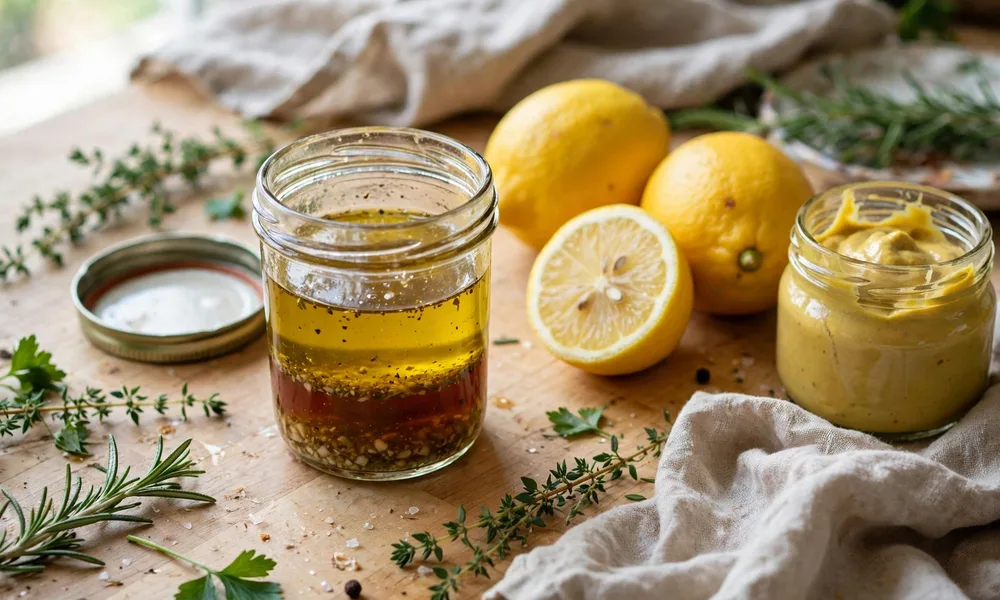
A homemade dressing takes five minutes, needs no special equipment, and beats most bottled versions on flavour alone. Start with a vinaigrette, because it is the easiest to learn. Put a teaspoon of mustard, a pinch of salt and a grind of pepper in a jar, add three tablespoons of oil and one tablespoon of vinegar, close the lid and shake hard for ten seconds. Taste it on a leaf. If it stings, add a little more oil. If it tastes flat, add a little more vinegar. If it tastes dull, add a little more salt. Once you can make it by feel, you can change it in a dozen ways: swap the vinegar for lemon juice, add garlic, stir in honey, or add chopped herbs.
A creamy dressing at home is almost as easy. Whisk yoghurt or mayonnaise with lemon juice, a little garlic and a handful of chopped herbs, and thin it with a spoonful of water or milk until it pours. A Caesar dressing made at home, with real parmesan, garlic, lemon and anchovy, takes five minutes and tastes noticeably fresher than anything from a bottle, though it keeps for only a week. Make homemade dressings in small batches: a fresh dressing made in five minutes is the point of making it at all.
Matching Dressing to Greens
The leaf decides the dressing. Delicate leaves such as baby spinach, butter lettuce and mixed baby leaves need a light vinaigrette or a citrus dressing, because anything heavier crushes them and makes them wilt. Sturdy leaves such as romaine, little gem, kale and cabbage can carry a creamy dressing, and they need one with enough flavour to stand up to their own bitterness. Bitter leaves such as radicchio, endive and rocket need a dressing with a little sweetness, such as a balsamic vinaigrette or a honey mustard, to balance the bite. Grain bowls need a bolder dressing than a leaf salad, because grains are mild and absorbent: a dressing that would overwhelm greens is exactly what a grain bowl needs.
Mistakes That Ruin a Salad
The most common mistake is dressing the salad too early, so the leaves go limp before it is eaten. The second is using too much dressing, so the salad swims in it. The third is using the same dressing for every salad, so every salad tastes the same. A salad of bitter leaves needs a different dressing from a salad of delicate leaves, and a grain bowl needs a different dressing again. The fourth mistake is not tasting the dressing on a leaf: one that tastes strong from a spoon is often exactly right on the salad.
Checklist: Choosing a Dressing
- Pick the dressing family that suits your leaves, not the one you always buy.
- Read the label and look for oil, vinegar and real herbs before water and sugar.
- Use about two tablespoons per serving and dress the salad at the last minute.
- Taste the dressing on a leaf before adding more.
- Make a homemade vinaigrette once, so you know what a fresh dressing tastes like.
- Store opened bottles in the fridge and use them within a few weeks.
Frequently Asked Questions
How much salad dressing should I use?
About two tablespoons per serving is enough for most salads. Toss the salad well so every leaf carries a thin coat, and add more only if the salad still tastes dry. It is easier to add dressing than to take it away.
Should I dress a salad in advance?
No, dress it at the last minute. Acid and salt wilt leaves, and a salad dressed an hour before it is eaten will be soft. Keep the dressing in a jug on the side if the salad has to wait, and dress it just before serving.
What is the healthiest salad dressing?
A simple vinaigrette made with olive oil, vinegar and mustard is usually the lightest choice, because it has no added sugar and no thickeners. The dressing matters less than the amount: two tablespoons of any dressing is better than a bowl swimming in a light one.
How long does homemade dressing keep?
A vinaigrette keeps for about a week in the fridge, a creamy dressing for three to four days, and a yoghurt dressing for two to three days. Shake a vinaigrette before use, because it separates, and make small batches so nothing is wasted.
Why does my salad go soggy?
Usually because it was dressed too early or too heavily. Dress at the last minute, use about two tablespoons per serving, and make sure the leaves are dry before you dress them, because water on the leaves stops the dressing clinging.
Can I use salad dressing as a dip or a sauce?
Yes, and many dressings are better that way. Creamy dressings suit wings, crudités and roasted vegetables, vinaigrettes suit grilled fish and potatoes, and a honey mustard dressing works as a sauce for chicken. Use a thicker dressing for dipping than you would for a salad.
The Bottom Line
The best salad dressings are the ones that match the salad in front of you. A light vinaigrette for delicate leaves, a creamy dressing for sturdy ones, a little sweetness for bitter leaves, and a bold dressing for grain bowls. Read the label, use less than you think, dress at the last minute, and make a fresh vinaigrette at home at least once. Do that, and the greens will stop being the part of the meal you endure, and start being the part you look forward to.