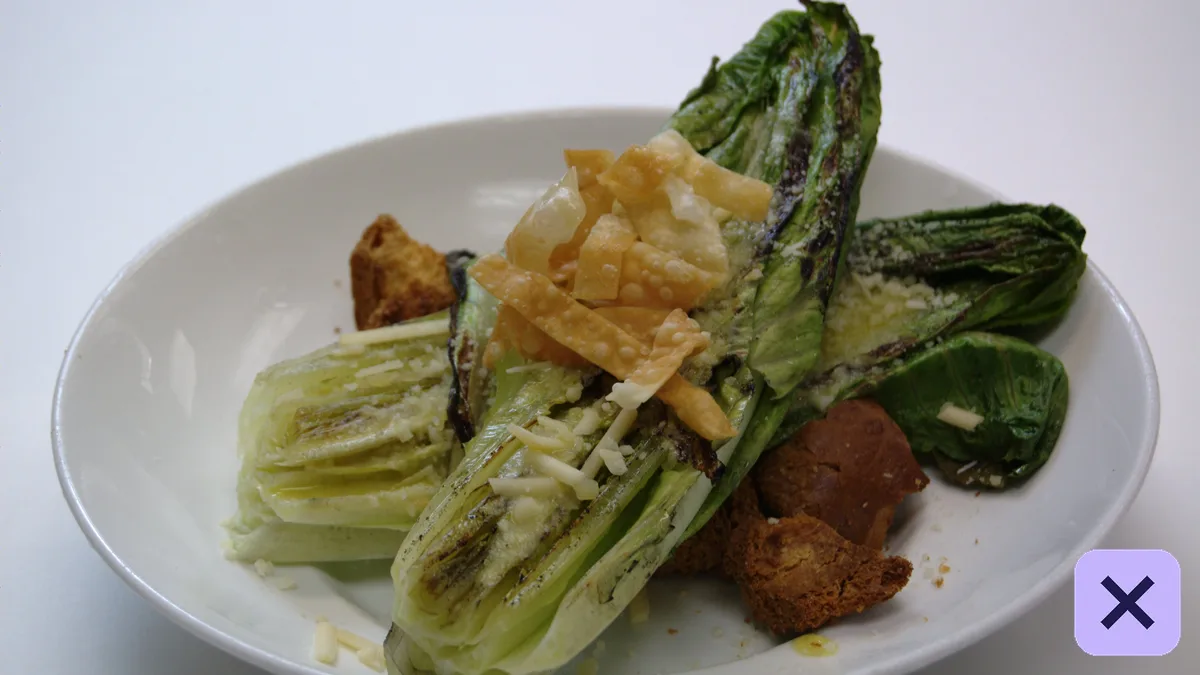
What Makes a Great Caesar Dressing in 2026?
Caesar dressing is the creamy, salty, garlicky sauce that turns a bowl of romaine into a Caesar salad, and a great Caesar dressing in 2026 is judged the same way it always has been: by balance. The best versions taste rich without feeling heavy, salty without tasting of salt alone, and garlicky without burning the back of your throat. They coat each leaf in a thin, even layer instead of pooling at the bottom of the bowl.
Walk down the chilled aisle of any supermarket and you will find a dozen bottles that all call themselves Caesar dressing, yet they taste nothing alike. This guide explains what Caesar dressing actually is, what goes into a great one, how to read a bottle label, and how to make a version at home that beats most of what you can buy.
Key takeaways
- A great Caesar dressing balances five flavours: salty parmesan, savoury anchovy, sharp garlic, bright lemon and rich egg yolk.
- Real parmesan and real anchovy matter most.
- Caesar dressing should coat, not drown: it clings to romaine in a thin layer.
- Read the label first: oil, egg and cheese should come before water, sugar and thickeners.
- Homemade Caesar dressing takes five minutes, keeps for a week, and beats most bottled versions.
What Caesar Dressing Really Is
Caesar dressing was born in Tijuana, Mexico, in the 1920s, at Caesar Cardini’s restaurant, where the salad was assembled tableside: whole romaine leaves, a coddled egg, garlic rubbed around the bowl, lemon juice, Worcestershire sauce, parmesan and croutons, tossed together in front of the diner. The original contained no anchovy as a separate ingredient, though the Worcestershire sauce brought a similar savoury depth.
At its heart, Caesar dressing is an emulsion: oil and lemon juice held together by egg yolk, whose lecithin keeps the two mixed instead of separating. That emulsion gives the dressing its creamy body. The flavour comes from five ingredients working together: parmesan brings salt and nutty depth, anchovy brings umami, garlic brings a warm bite, lemon brings brightness, and black pepper ties it all together.
What to Look for in a Bottled Caesar Dressing
Most of us buy Caesar dressing rather than making it, so knowing how to choose a good bottle matters. In a good bottled dressing, the first ingredients should be recognisable foods: oil, water, egg yolk, parmesan cheese, lemon juice, garlic and anchovy. If water is the first ingredient and the cheese appears near the end of a long list of thickeners, gums and flavourings, the bottle is mostly flavoured water held together by chemistry, and it will taste like it. Watch for sugar: Caesar dressing should not taste sweet.
Texture is the next test. Tip the bottle gently and watch how the dressing moves. A good Caesar dressing flows slowly and evenly, like thick cream. A dressing that barely moves is too thick and will sit on the leaves in blobs; one that runs like water will slide straight to the bottom of the bowl. Read the label first and the price second.
Best Caesar Dressing Styles Compared
There is no single best Caesar dressing for every table. A thick, rich dressing is wonderful on classic romaine with croutons, where it clings to the leaves. A lighter, brighter dressing suits a wrap or grain bowl, where a heavy dressing would overwhelm everything else.
| Dressing style | Flavour | Best for | Watch out for |
|---|---|---|---|
| Classic creamy bottled | Rich, garlicky, salty | Romaine salads, wraps | Too thick or too sweet |
| Light or low-fat bottled | Brighter, thinner, tangier | Everyday salads, dipping | Watery texture, added sugar |
| Homemade with egg yolk | Silky, fresh, balanced | Classic Caesar, entertaining | Keeps only a week |
| Homemade with mayonnaise | Quick, creamy, reliable | Weeknight salads, meal prep | Can taste of mayonnaise |
| Vegan Caesar-style | Nutty, tangy, lighter | Plant-based tables | Tastes of cashew, not Caesar |
| Anchovy-forward artisan | Deep, savoury, bold | Caesar purists, grilled romaine | Too fishy for some guests |
The classic creamy bottled dressing is the one most people reach for, and the best examples are genuinely good: thick enough to coat romaine, tasting of garlic and parmesan rather than thickeners. Homemade is where the biggest jump in quality lives: a version made with fresh egg yolk, good oil, real parmesan, garlic, lemon and anchovy takes five minutes and tastes noticeably fresher than anything from a bottle.

How to Make Caesar Dressing at Home
Making Caesar dressing at home needs no special equipment beyond a bowl and a whisk. Start with the flavour base: crush two garlic cloves with a pinch of salt until they form a paste, then mash in three or four anchovy fillets until they disappear into the garlic. The anchovy should melt into the dressing rather than remaining visible, because visible pieces put people off while the flavour itself is what makes the dressing taste like Caesar.
Next, whisk in two egg yolks, the juice of half a lemon, a teaspoon of Dijon mustard and a teaspoon of Worcestershire sauce. Then add the oil very slowly, in a thin stream, whisking constantly until the dressing thickens and turns pale and glossy. Use a neutral or mild olive oil. Our guide to the best olive oil of 2026 explains how to choose a mild bottle for dressings. Finish with three tablespoons of grated parmesan and black pepper, then taste and adjust. Use within a week, stored in a sealed jar in the fridge.
How Much Dressing, and When to Add It
The most common mistake with Caesar dressing is using too much of it. A Caesar salad needs about two tablespoons per generous serving, tossed thoroughly so every leaf carries a thin coating. Pouring half a bottle over the bowl ruins a good salad: the leaves wilt and the croutons go soggy. Start with less than you think you need, toss, and add a little more only if the leaves still look dry.
Timing matters as much as quantity. Dress a Caesar salad at the last minute, just before it goes to the table, because the acid and salt start softening the romaine the moment they touch it. For a proper sense of how dressing timing fits into the whole salad, our comparison of the best and worst salads of 2026 shows how the best bowls stay crisp while the worst ones wilt.
Caesar Dressing Beyond the Salad
Caesar dressing is far more versatile than its name suggests. It makes an excellent dip for raw vegetables, roasted potatoes and chicken wings, where its salty, garlicky richness suits anything crisp or charred. Thinned with a little extra lemon juice and water, it becomes a drizzle for grilled vegetables, grain bowls and roasted chickpeas.
It also works as a marinade base: a spoonful rubbed over chicken thighs before grilling adds flavour and helps the surface brown, though you should discard any dressing that has touched raw meat. And for anyone who prefers sharper, oil-based dressings, the contrast is worth exploring. Our guide to the best balsamic vinegar of 2026 covers the other great tradition of salad dressing, the vinaigrette.
Storing and Serving Caesar Dressing
An opened bottle of Caesar dressing belongs in the fridge, with the cap on tight, and most bottles keep well for a month or two after opening, though you should always follow the date on the label. Homemade dressing is more perishable: use it within a week, and discard it if it smells sharp or off, because the raw egg yolk does not keep the way a pasteurised bottled dressing does.
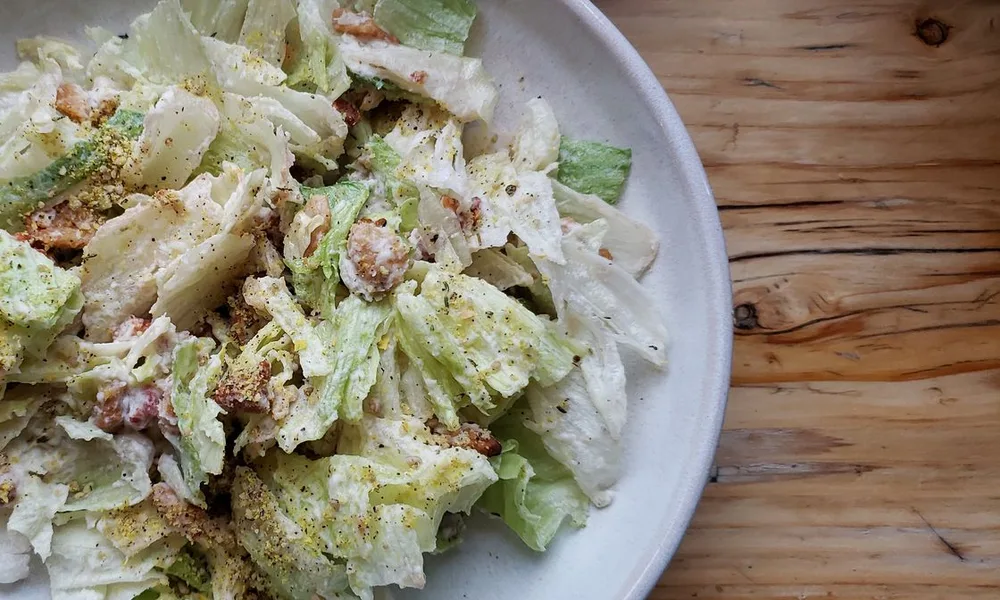
Common Caesar Dressing Mistakes
The first mistake is buying a bottle without reading the label, and ending up with a dressing that is mostly water, sugar and thickeners. The second is skipping the anchovy, either at home or in choosing a bottle, and then wondering why the dressing tastes like garlic mayonnaise. Anchovy is not an optional extra; it is the ingredient that gives the dressing its depth. If you genuinely cannot eat anchovy, Worcestershire sauce and capers together can approximate the savoury note, but the result will be a cousin of Caesar dressing rather than the thing itself.
The third mistake is drowning the salad, and the fourth is using stale parmesan. Pre-grated parmesan in a tub contains anti-caking agents and tastes dusty compared with a wedge of real parmesan grated fresh, and the difference shows up clearly in a dressing where the cheese is a leading flavour. The fifth mistake is forgetting the acid: without enough lemon juice, the dressing tastes heavy and one-note.
Checklist: Choosing a Great Caesar Dressing
- Read the ingredient list: oil, egg and parmesan should come before water, sugar and thickeners.
- Check for real anchovy or anchovy paste, not just anchovy flavouring, on the label.
- Choose a dressing that flows like thick cream, not one that plops or runs like water.
- Taste for balance: salty, garlicky, lemony and savoury all at once, with no note dominating.
- Use two tablespoons per serving, toss well, and dress the salad at the last minute.
- Store opened bottles in the fridge and use homemade dressing within a week.
Frequently Asked Questions
Does Caesar dressing contain anchovy?
Yes, in almost every good version. Traditional Caesar dressing gets its deep savoury flavour from anchovy fillets, or from Worcestershire sauce, which itself contains anchovy. Some bottled dressings use anchovy paste instead of whole fillets, and a few cheap bottles skip it entirely, which is usually why they taste flat.
Is Caesar dressing safe to eat when it contains raw egg?
Bottled Caesar dressing is safe, because it is made with pasteurised eggs. Homemade dressing made with raw egg yolk carries a small risk of salmonella, very low with fresh eggs but not zero. If you are pregnant, elderly, or cooking for someone with a weakened immune system, use pasteurised eggs or the mayonnaise-based shortcut instead.
How long does homemade Caesar dressing last?
About a week in a sealed jar in the fridge. Because it contains raw egg yolk and fresh cheese, it does not keep as long as a bottled dressing. Discard it if it smells sharp or has been left out for more than a couple of hours.
What is the difference between Caesar dressing and ranch dressing?
Both are creamy dressings, but they taste quite different. Caesar dressing is built on parmesan, anchovy, garlic and lemon, with a salty, savoury, umami-rich flavour. Ranch dressing is built on buttermilk and herbs like dill and chives, with a tangy, herby flavour. Caesar suits romaine and grilled flavours; ranch suits raw vegetables and wings.
Can I make Caesar dressing without anchovy?
You can, but the result will be a different dressing. The closest substitute is a combination of Worcestershire sauce, capers and a little extra parmesan, which together provide some of the salty, savoury depth that anchovy brings. It can be delicious, but it will not taste exactly like a traditional Caesar.
Why does my homemade Caesar dressing taste too fishy?
Usually because the anchovy was not mashed finely enough, or because too much was used. Anchovy should disappear into the dressing and season it from within, not sit in visible pieces or dominate the flavour. Use three or four fillets for a batch that serves four, mash them into a paste with the garlic first, and taste before adding more.

The Bottom Line
A great Caesar dressing in 2026 is not mysterious: it is a careful balance of salty parmesan, savoury anchovy, sharp garlic, bright lemon and rich egg, made with real ingredients and used with restraint. Read the label before you buy, looking for oil, egg and cheese ahead of water and sugar, and choose a bottle that flows like thick cream rather than plopping or running. Better still, make a batch at home in five minutes. Use two tablespoons per serving, dress at the last minute, and let the dressing coat the leaves rather than drowning them.