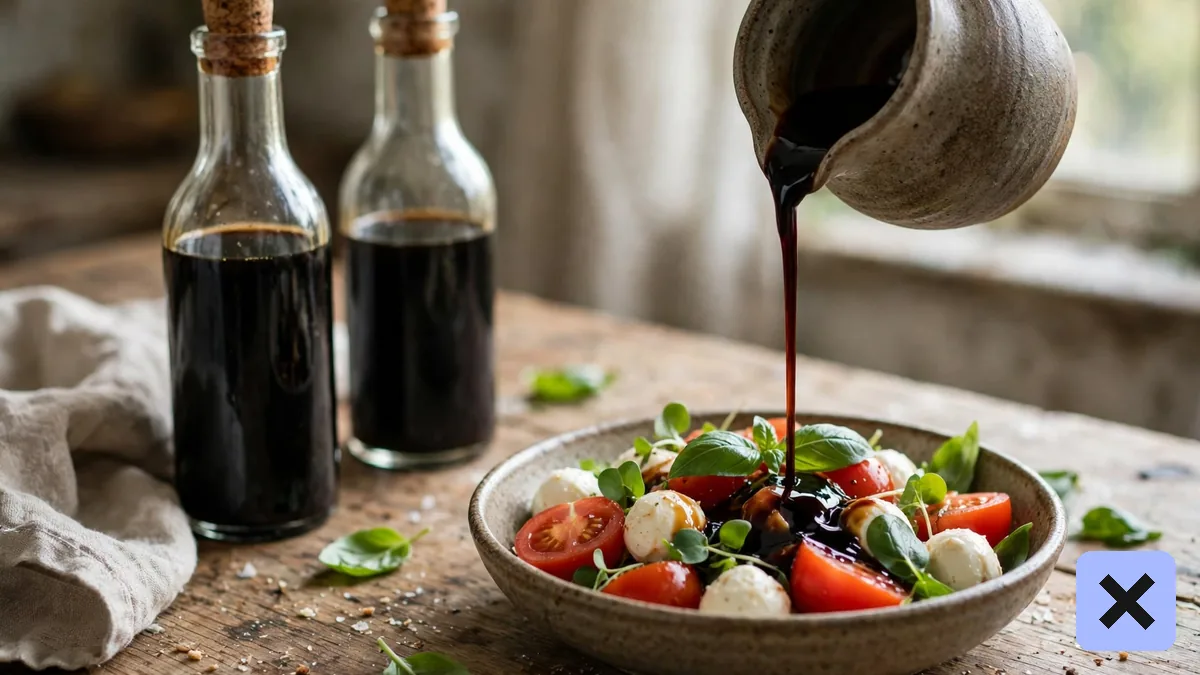
The best balsamic vinegar in 2026 is a small bottle with a big personality: dark, syrupy, sweet and sharp all at once, with a depth that cheap imitations never reach. The difference between a great balsamic and a bottle of coloured wine vinegar is obvious the moment you taste them side by side. One is complex and lingering, with notes of cherry, fig and wood. The other is thin, harsh and one-note, and no amount of fancy labelling can hide it.
Balsamic vinegar comes from Modena, in northern Italy, where cooked grape must has been aged in wooden barrels for centuries. The trouble is that the word balsamic is used loosely, and supermarket shelves are full of bottles that contain little more than wine vinegar, caramel colour and sugar.
Key Takeaways
- True balsamic comes from Modena and starts with cooked grape must, not wine vinegar with added colour and sugar.
- Look for IGP or DOP on the label, and check the ingredient list: grape must should come first.
- Aged balsamic is thicker, sweeter and more complex, and a little goes a long way.
- Use everyday balsamic for dressings and marinades, and save aged balsamic for drizzling over finished dishes.
- Store balsamic in a cool, dark cupboard with the cap on, and it will keep for years.
What Balsamic Vinegar Really Is
Traditional balsamic vinegar, Aceto Balsamico Tradizionale, is made from the cooked must of Trebbiano or Lambrusco grapes, aged for at least twelve years in a series of wooden barrels, each smaller than the last. As it moves from barrel to barrel it concentrates, darkens and picks up flavours from the wood: juniper, chestnut, cherry and oak. The result is thick, syrupy and intensely flavoured, sold in tiny 100ml bottles that can cost a hundred dollars or more, and used by the drop.
Most of us will never buy a traditional DOP balsamic, and that is fine: the everyday alternative, Aceto Balsamico di Modena IGP, is very good when made honestly. IGP balsamic is made from grape must and wine vinegar, aged for at least sixty days. The best bottles contain a high proportion of grape must, are aged for years rather than months, and taste rich and balanced. The worst are mostly wine vinegar with caramel colour and added sugar.

Reading the Label
The ingredient list is the most honest part of the bottle. In a good balsamic, cooked grape must should be the first ingredient, and the list should be short: grape must, wine vinegar, and perhaps a little caramel colour in small amounts. If wine vinegar comes first, or the list includes glucose syrup, sugar and flavourings before grape must, the bottle is a flavoured vinegar rather than a real balsamic. The label should also name Modena as the place of production, and IGP or DOP certification is a useful check, because it means the vinegar was made and inspected under Italian rules.
Best Balsamic Vinegar Types Compared
The right balsamic depends on how you plan to use it. An everyday IGP bottle is perfect for dressings and marinades, where it will be mixed with oil and other flavours. An aged IGP or a condimento is better for drizzling, where the vinegar is the star. A traditional DOP bottle is a luxury for special occasions.
| Vinegar Type | Flavour | Best For | Typical Price |
|---|---|---|---|
| Everyday IGP balsamic | Bright, tangy, lightly sweet | Dressings, marinades | $6–$12 per 250ml |
| Aged IGP balsamic | Rich, mellow, syrupy | Drizzling, glazing | $15–$30 per 250ml |
| Condimento balsamic | Complex, fruity, thick | Cheese, fruit, finishing | $20–$45 per 250ml |
| Traditional DOP balsamic | Intense, layered, sweet-sour | Special occasions, drops | $80–$200 per 100ml |
| White balsamic | Gentle, sweet, pale | Light salads, fish | $8–$15 per 250ml |
| Balsamic glaze | Very sweet, thick, sticky | Plating, drizzling | $5–$10 per 250ml |
Price tracks quality up to a point, but the label matters more. A twelve dollar IGP bottle with grape must first and a few years of ageing will beat a twenty dollar bottle that is mostly wine vinegar with added sugar.
How to Choose the Best Balsamic Vinegar in 2026
Start with the ingredient list, and then look at the ageing statement. Some producers print the years of ageing on the label, and longer ageing usually means a thicker, more complex vinegar. A bottle aged for three years will taste noticeably richer than one aged for sixty days. If no ageing is stated, the bottle was probably aged for the minimum, and the price should reflect that.
Next, consider the bottle itself. Balsamic is less fragile than olive oil, because its acidity protects it, but it still prefers a dark bottle and a cool cupboard. A good sign is a producer who names the grape varieties and the ageing barrels, and who sells a small range rather than dozens of flavoured versions. Finally, match the bottle to your cooking. If you make salad dressing twice a week, buy a solid everyday IGP and use it generously. If you love drizzling vinegar over grilled vegetables, strawberries or Parmesan, spend a little more on an aged bottle and use it sparingly. For the dressing itself, a good olive oil matters just as much, and our guide to the best olive oil of 2026 explains how to choose that half of the partnership.
Balsamic Vinegar in Dressings and Marinades
The classic use of balsamic is the vinaigrette, and the ratio matters. A good starting point is one part balsamic to three parts olive oil, whisked with a pinch of salt and a teaspoon of Dijon mustard to hold the emulsion together. Taste it and adjust: a sweeter balsamic needs less oil, a sharper one needs more. A pinch of honey or a crushed garlic clove can round it out, but the dressing should still taste of the vinegar, not of the additions.
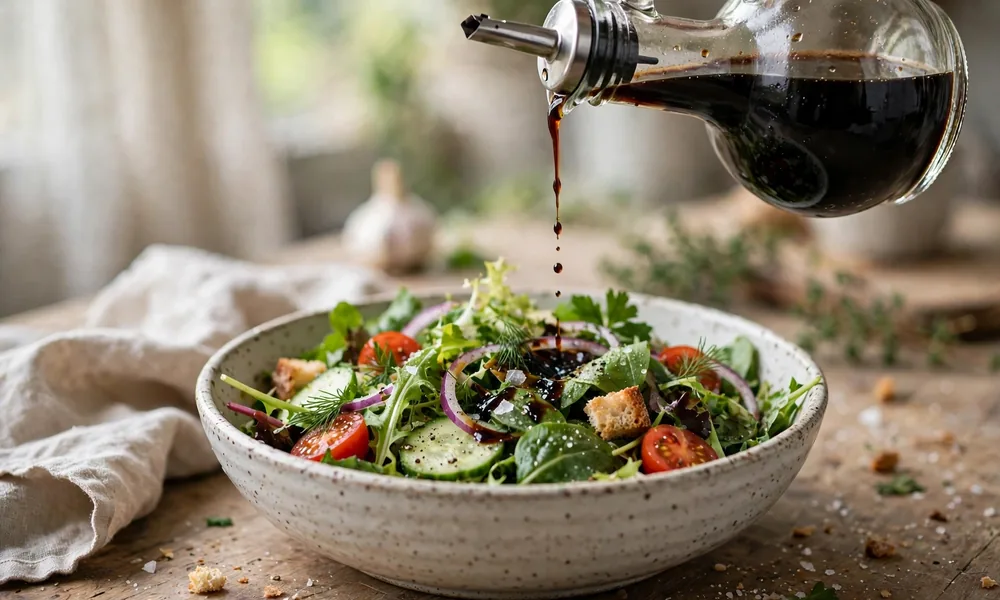
Balsamic also makes an excellent marinade. Its acidity tenderises meat and vegetables, while its sweetness helps them caramelise on the grill. Mix it with olive oil, garlic and herbs for chicken or mushrooms, and leave it for thirty minutes rather than overnight, because too long in acid can make meat mushy. If you want to compare vinegars more broadly, our guide to the best apple cider vinegar of 2026 covers a sharper, brighter vinegar that suits different dishes. Balsamic is the mellow, sweet one; apple cider vinegar is the bright, punchy one. A well-stocked pantry has room for both.
Drizzling, Glazing and Finishing With Balsamic
Where balsamic truly shines is as a finishing vinegar, added at the end rather than cooked in. A few drops over a Caprese salad of tomato, mozzarella and basil will transform it, because the sweet acidity cuts through the richness of the cheese. The same drizzle works over grilled peaches, roasted beetroot, a wedge of Parmesan, or a scoop of vanilla ice cream.
To make a glaze, simmer everyday balsamic in a small pan until it reduces by half and coats the back of a spoon. Do not add sugar unless your vinegar is very sharp; a good balsamic reduces into its own glaze. Let it cool before using, because it thickens as it cools, and store it in a small jar in the fridge for a few weeks.
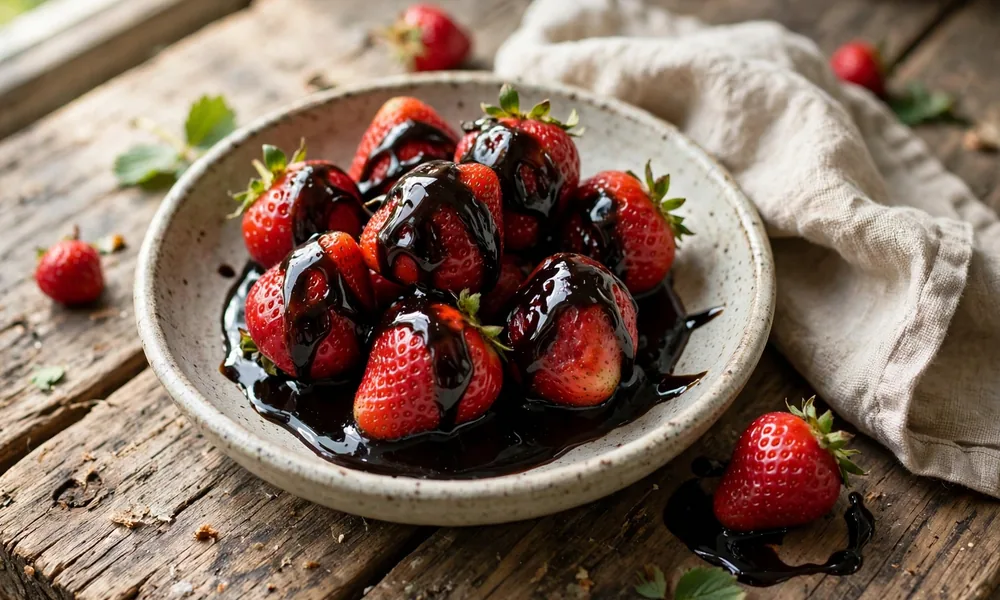
Strawberries and balsamic are a classic pairing for a reason. The vinegar sharpens the berries and deepens their flavour, especially when they are slightly under-ripe. Toss sliced strawberries with a teaspoon of balsamic and a pinch of sugar, leave them for fifteen minutes, and serve them with cream or ice cream. Bread is the other essential partner: a crusty loaf, torn and dipped in oil and balsamic, needs nothing else, and if you bake your own, our guide to the best bread makers of 2026 will help you choose the machine.
Storing Balsamic Vinegar
Balsamic vinegar is far more forgiving than olive oil. Its acidity keeps it stable, and an opened bottle will last for years in a cool, dark cupboard without going off. The flavour may mellow slightly over time, and a little sediment at the bottom is normal. Keep the cap on between uses, wipe the neck clean so it does not get sticky, and store it upright away from the stove. There is no need to refrigerate balsamic, even an expensive aged bottle.
Common Mistakes When Buying Balsamic Vinegar
The first mistake is buying by the word balsamic alone, without reading the ingredients. A bottle that is mostly wine vinegar with caramel colour and sugar is not balsamic in any meaningful sense, however pretty the label. The second mistake is using an expensive aged balsamic in a marinade, where its subtle flavours are lost in the mix; save the good bottle for drizzling and use the everyday bottle for cooking. The third mistake is the opposite: using a thin, harsh balsamic for finishing, where its acidity will dominate the dish. People also overcook balsamic, reducing it until it burns and turns bitter, or drown a salad in it instead of dressing it lightly. Balsamic is a seasoning, not a sauce, and a little goes a long way.
Balsamic Vinegar Buying Checklist
- Check the label says Modena IGP or DOP, and that cooked grape must is the first ingredient.
- Look for an ageing statement, and prefer bottles aged for years over the sixty-day minimum.
- Swirl the bottle: a good balsamic moves slowly and coats the glass.
- Buy an everyday bottle for dressings and an aged bottle for drizzling, rather than one bottle for both.
- Taste before you commit to a large bottle, if you can, and trust balance over sweetness.
- Store it upright in a cool, dark cupboard with the cap on, and wipe the neck clean after use.
Frequently Asked Questions
What is the difference between IGP and DOP balsamic vinegar?
DOP, or traditional balsamic, is made only from cooked grape must, aged for at least twelve years in wooden barrels, and sold in small 100ml bottles. IGP balsamic is made from grape must and wine vinegar, aged for at least sixty days, and is the everyday version.
Is expensive balsamic vinegar worth the money?
For drizzling, yes, because a little goes a long way and the flavour is unmistakable. An aged IGP or condimento at twenty to forty dollars will transform a salad or a plate of strawberries. For dressings and marinades, an everyday IGP at six to twelve dollars is the smarter buy.
Can balsamic vinegar go bad?
Rarely. Its acidity keeps it stable for years, and an opened bottle stored in a cool, dark cupboard will stay usable for a very long time. The flavour may mellow, and a little sediment is normal.
What is balsamic glaze, and is it the same as balsamic vinegar?
Balsamic glaze is balsamic vinegar reduced until thick and sweet, sometimes with added sugar or grape must concentrate. It is a finishing sauce, not a vinegar, and it is used for plating and drizzling. You can make your own by simmering everyday balsamic until it halves in volume.
What can I use instead of balsamic vinegar?
Red wine vinegar with a pinch of sugar is the closest everyday substitute in a dressing, though it lacks balsamic’s depth. Apple cider vinegar works in marinades where brightness matters more than sweetness. For drizzling over strawberries or cheese, there is no real substitute.
Should balsamic vinegar be refrigerated?
No. Balsamic keeps perfectly well in a cool, dark cupboard, and the fridge can make it thick and slow to pour. Store it upright with the cap on, away from heat and sunlight, and an opened bottle will last for years.
The Bottom Line
The best balsamic vinegar in 2026 is one made in Modena, with cooked grape must first on the ingredient list, aged long enough to turn thick and mellow, and balanced between sweetness and acidity. Buy an everyday IGP bottle for dressings and marinades, and an aged bottle for drizzling over salads, cheese and fruit. Use it sparingly, store it in a cool, dark cupboard, and let the vinegar do the talking.