Pita Bread That Puffs Like a Bakery in 2026
Pita bread is the simplest flatbread to love and the easiest to get wrong. A good pita puffs up in a hot oven like a balloon, then settles into a soft round with a pocket inside, ready to be torn, filled or dipped. A bad one stays flat, dries out in minutes, or tears when you try to open it. The best pita bread of 2026, whether you buy it or bake it, is soft, slightly chewy, warm from the oven, and full of steam, and this guide explains how to choose it, how to warm it, and how to bake a batch that actually puffs. Pita is not naan, and it is not a wrap. It is a leavened flatbread made from flour, water, yeast and salt, baked quickly at high heat so the steam inside lifts the dough into a pocket. That pocket is the whole point of pita, and everything in this guide comes back to it.
Key Takeaways
- A good pita puffs in a very hot oven, because the pocket is made by steam, not by rolling the dough thin.
- Buy pita that is soft and pliable, with a little give when you bend it, and avoid any pack that feels stiff or dry at the edges.
- Warm pita for a minute before serving, because cold pita tears and warm pita opens cleanly into a pocket.
- White flour makes the softest, puffiest pita, while wholemeal pita is denser, nuttier and less likely to form a full pocket.
- Store pita in a sealed bag and freeze any spares the same day, because pita goes stale faster than almost any other bread.
What Makes a Good Pita
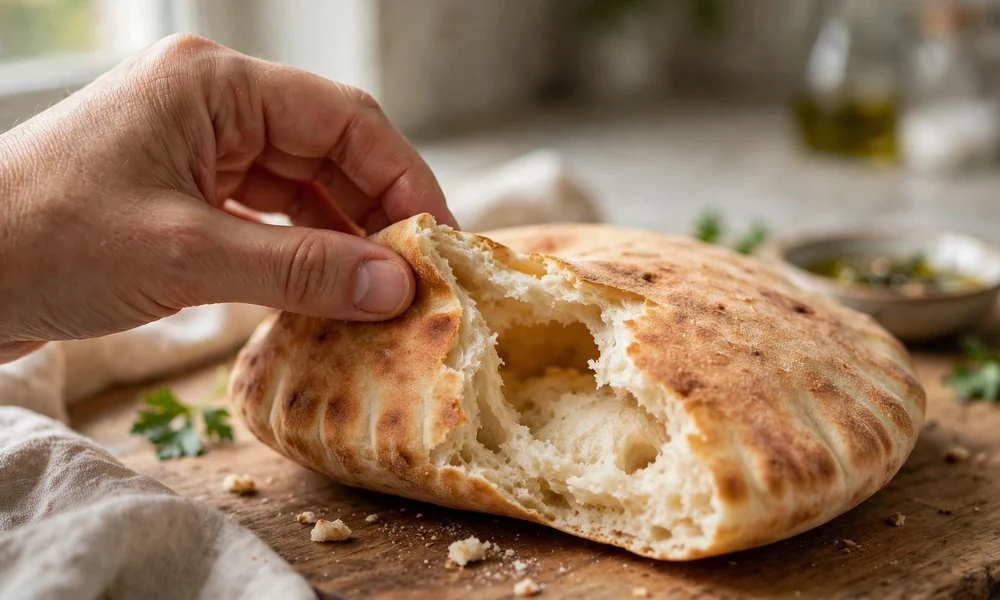
A good pita has three qualities, and you can check all of them before you eat it. It should feel soft and flexible when you bend it gently, with no cracking at the edges. It should smell faintly of fresh bread and yeast, not of plastic packaging or nothing at all. And when you tear it open, it should split into two thin layers with a clear pocket between them, rather than crumbling into crumbs. The colour should be pale gold with a few darker spots where the dough touched the hot surface, and the surface should be smooth, not rough or floury.
White, Wholemeal and Other Flours
White pita is the classic, and it puffs the most reliably. Strong white bread flour gives the dough enough strength to hold the steam, and the result is soft, pale and light. Wholemeal pita uses wholemeal flour, which is nuttier and more filling, but the bran in the flour weakens the dough, so the pocket is often smaller or missing altogether. A half-and-half mix of white and wholemeal is a good compromise, giving some of the flavour of wholemeal with most of the puff of white. Spelt and other flours can work, but they are less predictable, and they are best left until you have a white pita that puffs every time.
Buying Pita: What to Look For
Buy pita from the bakery section when you can, rather than the long-life aisle. Fresh pita, baked that day or the day before, is softer and more flexible than a pack with a long shelf life, and it warms better. Check the date, and choose the pack with the longest life left. Feel the pack gently through the plastic: the pitas should bend without cracking, and none of them should feel stiff at the edges. If the pack is vacuum-sealed tight, the pitas inside may be squashed, which does not matter for dipping but makes a pocket harder to open.
How to Warm Pita Properly
Cold pita is a disappointment, and warming it takes a minute. The best way is a hot, dry frying pan: lay the pita in the pan for thirty seconds on each side, until it is warm, soft and starting to puff again. A hot oven works too, at 200 degrees for two or three minutes, wrapped loosely in foil so it does not dry out. A microwave is the fastest option, but it is also the easiest to get wrong: ten to fifteen seconds, wrapped in a damp tea towel, is enough, and any longer will make the pita tough and chewy as it cools.
Baking Pita at Home
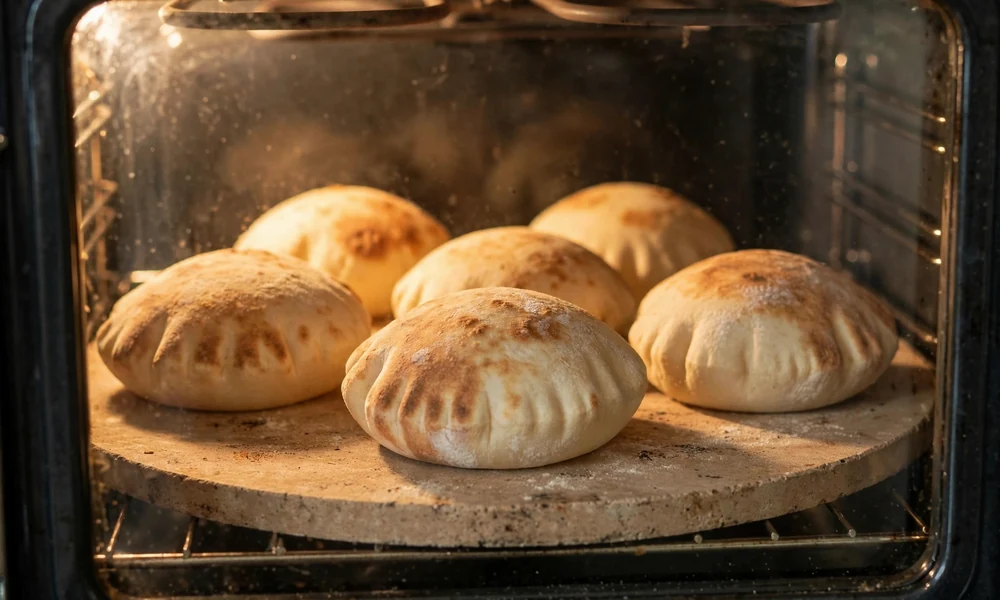
Baking pita at home is simpler than most bread, because there is no shaping to learn and no long proving to wait for. Mix strong white flour, water, yeast and salt into a soft dough, knead it for eight to ten minutes until it is smooth, and leave it to rise for about an hour, until it has doubled in size. Divide it into six or eight pieces, roll each one into a ball, and leave them to rest for ten minutes. Then roll each ball into a round about fifteen centimetres across and half a centimetre thick, and bake them one or two at a time in the hottest oven you can manage, on a preheated baking stone or an upside-down baking tray.
The heat is the whole secret. Preheat the oven to its highest setting, usually 250 degrees, for at least thirty minutes, with the stone or tray inside. The pita should puff within two minutes, and it is done after three or four, when it is pale gold with a few brown spots. Take it out, wrap it in a tea towel straight away, and the steam trapped inside will keep it soft as it cools. If a pita does not puff, the usual causes are an oven that was not hot enough, dough rolled too thick, or dough that was left to dry out before baking. Roll the next one thinner, check the oven is fully hot, and cover the rounds with a cloth while you wait.
The Pocket Test
Once the pitas are cool enough to handle, tear one open. A good pocket should run almost all the way across, with two even layers. If the pocket only covers half the pita, the dough was probably rolled unevenly, thicker on one side than the other. If there is no pocket at all, the oven was too cool, or the dough was too dry. Do not throw the flat ones away: they are still good bread, and they make excellent dipping bread, even if they will not hold a filling. The next batch, rolled a little thinner and baked in a hotter oven, will usually puff.
Comparing Pita Styles
| Style | Texture and pocket | Best for | Watch out for |
|---|---|---|---|
| White pocket pita | Soft, pale, full pocket | Filling, dipping, wraps | Goes stale quickly |
| Wholemeal pita | Denser, nuttier, smaller pocket | A heartier sandwich, dipping | Can be dry; warm well |
| Mini pita | Soft, small, easy pocket | Children, party food, lunchboxes | Dries out fast if left open |
| Greek-style pita | Thicker, softer, often no pocket | Wrapping souvlaki, scooping dips | Not a pocket pita; do not force it open |
| Homemade pita | Warm, soft, big pocket | The best pita you will eat | Needs a very hot oven |
| Long-life pita | Softer, flatter, weaker pocket | A standby in the cupboard | Can taste of packaging; warm well |
What to Eat With Pita
Pita is at its best with food that needs scooping, wrapping or dipping. Warm pita and hummus is the classic pairing, and it works because the soft bread and the creamy dip suit each other perfectly: tear the pita, scoop, and eat. Tzatziki is the other natural partner, cool and garlicky against warm bread, and the two together with grilled meat make a proper meal. The sesame paste that gives hummus its nutty flavour has its own story, and our guide to tahini explains how to choose a jar that actually tastes good.
Storing Pita So It Stays Soft
Pita goes stale faster than almost any other bread, because it is thin and has a large surface for its weight. Keep it in a sealed bag at room temperature, and eat it within two days of buying or baking it. Do not keep pita in the fridge, because the cold dries the crumb and makes it tough, and warming it afterwards will not fully bring it back. If you will not use the pack in two days, freeze it on the day you buy it: separate the pitas with a sheet of baking paper if they stick together, seal them in a bag with the air pressed out, and they will keep for a month.
Your Pita Checklist
- The pita bends without cracking, smells of fresh bread, and the ingredient list is short.
- The oven and the stone are fully hot, at least 250 degrees, before the first pita goes in.
- Roll each round evenly, about fifteen centimetres across and half a centimetre thick.
- Bake for three to four minutes, until pale gold with a few brown spots, then wrap in a tea towel.
- Warm shop-bought pita for a minute before serving, and serve it straight away.
- Freeze any spares the same day, and never store pita in the fridge.
Frequently Asked Questions
Why did my homemade pita not puff?
The oven was probably not hot enough, or the dough was rolled too thick. Preheat the oven to its highest setting for at least thirty minutes with a stone or tray inside, roll the rounds to half a centimetre, and keep them covered with a cloth so they do not dry out before baking.
What is the difference between pita and naan?
Pita is baked quickly at very high heat so steam forms a pocket, and it is made with a lean dough of flour, water, yeast and salt. Naan is a softer, richer flatbread, usually made with yoghurt or milk, cooked on a hot surface, and it has no pocket. They are different breads for different meals.
Can I make pita without a baking stone?
Yes. Turn a heavy baking tray upside down in the oven and preheat it with the oven, so the pita lands on a hot surface. A cast iron pan works too, on the hob over a high heat, with the pita cooked for a minute or two on each side.
How do I open a pita pocket without tearing it?
Warm the pita first, because cold pita tears. Cut a small slit across the top edge with a knife, then ease your fingers inside and open the pocket gently, working around the edge. A well-made pita will split into two even layers.
Is wholemeal pita healthier than white pita?
Wholemeal pita has more fibre and a nuttier flavour, and it is more filling, so it suits many people better. White pita puffs more reliably and is softer, so it is better for pockets. Either is a reasonable choice, and the best one is the one you will actually enjoy eating.
Can I freeze pita bread?
Yes, and it freezes well for about a month. Separate the pitas with baking paper if they stick, seal them in a bag with the air pressed out, and warm them straight from frozen in a hot pan or oven, giving them an extra minute.
The Bottom Line
The best pita bread of 2026 is warm, soft and full of steam, with a pocket that opens cleanly and a flavour that tastes of real bread. Buy it fresh, warm it for a minute, and eat it straight away, or bake a batch at home in the hottest oven you can manage and watch it puff. Either way, pita is at its best with good company on the table: a bowl of hummus, a pot of tzatziki, and a basket of warm bread, torn and shared. That is a meal that needs nothing else, and it is the reason a simple flatbread has lasted for centuries.