Lifted, Then Let Down: The Worst Aerial Lifts of 2026
The worst aerial lifts of 2026 are not the biggest machines on the hire-yard forecourt or the ones with the tallest brochure figures. They are the lifts that look like the answer to a tight access problem and then waste the whole job: a towable boom that will not level on a slope, a spider lift that sinks its outriggers into soft ground, a mast lift with a platform too small for two workers, or a push-around lift that takes four people to move ten metres. An aerial lift that cannot hold its platform steady is a dangerous one, not a slow one. This guide ranks the worst types by the patterns that ruin a job, not by naming any brand or model, because no reliability-score data exists for this class of machine.
Key takeaways
- The worst aerial lifts of 2026 fail on stability, access or support, and the worst fail on all three at once.
- A platform that sways, creeps or drifts at height is a safety problem, not a quirk: lower it and send the lift back.
- Cut any claimed working height by a third once two workers and their tools are on board, and walk away from a firm that quotes height with no load figure.
- Outriggers, ground conditions and battery health are the three things to check before the first lift: they are what cause the expensive failures.
- If the lift needs a dealer laptop to clear a fault, it will strand your crew on a Friday afternoon: support matters as much as steel.
How the worst aerial lifts of 2026 were chosen
Every type below was scored on five measures. Stability comes first: does the platform hold steady at full height, on real ground, without swaying or creeping? Access honesty is second, judged on whether the lift can actually reach the work through the gate, the doorway or the garden it was hired for. Build quality is third, from the outriggers to the platform controls. Power and drive are fourth, and support is fifth: spare parts, a reachable hire firm and a warranty that answers the phone.
Two notes before the list. First, no brand or model is named, because the point is the pattern. Second, this guide is strictly about the aerial lifts the other guides do not cover: towable trailer booms, tracked spider lifts, mast lifts, push-around lifts and atrium lifts. It does not cover scissor lifts, which rise straight up on a folding stack and are ranked separately in our guide to the worst scissor lifts of 2026, and it does not cover self-propelled boom lifts, which reach out and over on an articulated or telescopic arm and are ranked in our guide to the worst boom lifts of 2026.
Comparison table: the worst aerial lifts of 2026
| Rank | Aerial lift type | Main fault | First warning sign |
|---|---|---|---|
| 1 | The towable trailer boom lift | Will not level on slopes | Outriggers max out on uneven ground |
| 2 | The spider lift | Outriggers sink in soft ground | Tracks settle after every move |
| 3 | The push-around mast lift | Four people to move it | Crew drags it instead of pushing |
| 4 | The driveable mast lift | Batteries die mid-shift | Gauge drops fast after charging |
| 5 | The atrium lift | Too wide for the doorway | Tracks will not fit the entrance |
| 6 | The do-everything hire lift | Does nothing well | Hire firm calls it universal |
| 7 | The orphaned hire lift | No parts, no support | Hire firm stops answering |
The worst aerial lifts of 2026, ranked
1. The towable trailer boom lift: a lift that will not level on a slope
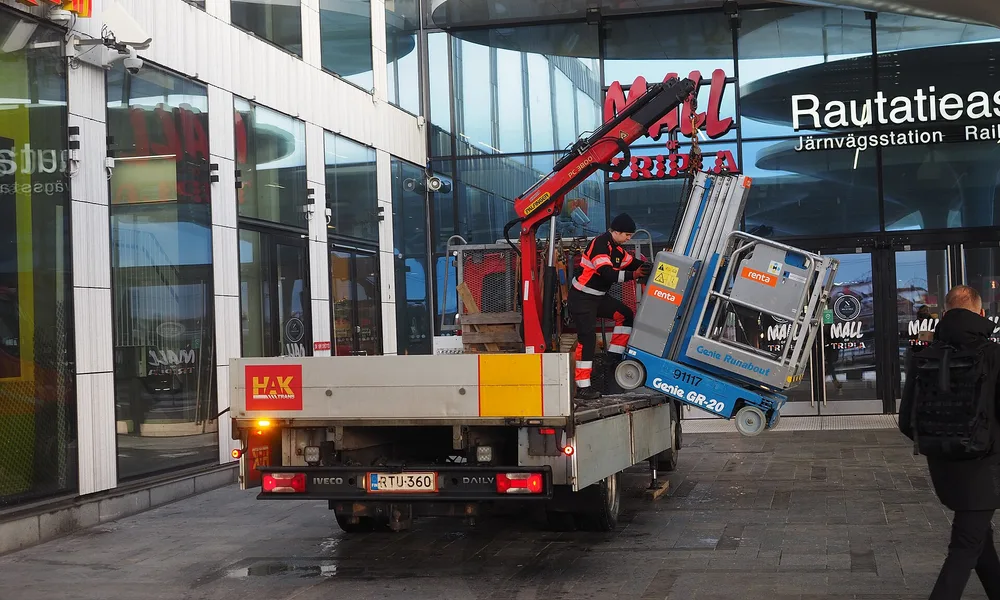
The towable trailer boom lift is the worst aerial lift type of 2026, because a platform that will not sit level is a safety problem before it is a delay. The lift arrives behind a van, unhitches in the driveway, and looks like the perfect answer to a job over a hedge or a roofline, until the outriggers run out of travel. The platform leans, the tilt alarm sounds, and the operator must pack the outriggers with blocks. The tow is the second fault: a small van will struggle with a heavy trailer on a wet gradient. Ask for the level range in writing and measure your ground first.
2. The spider lift: tracks that settle after every move
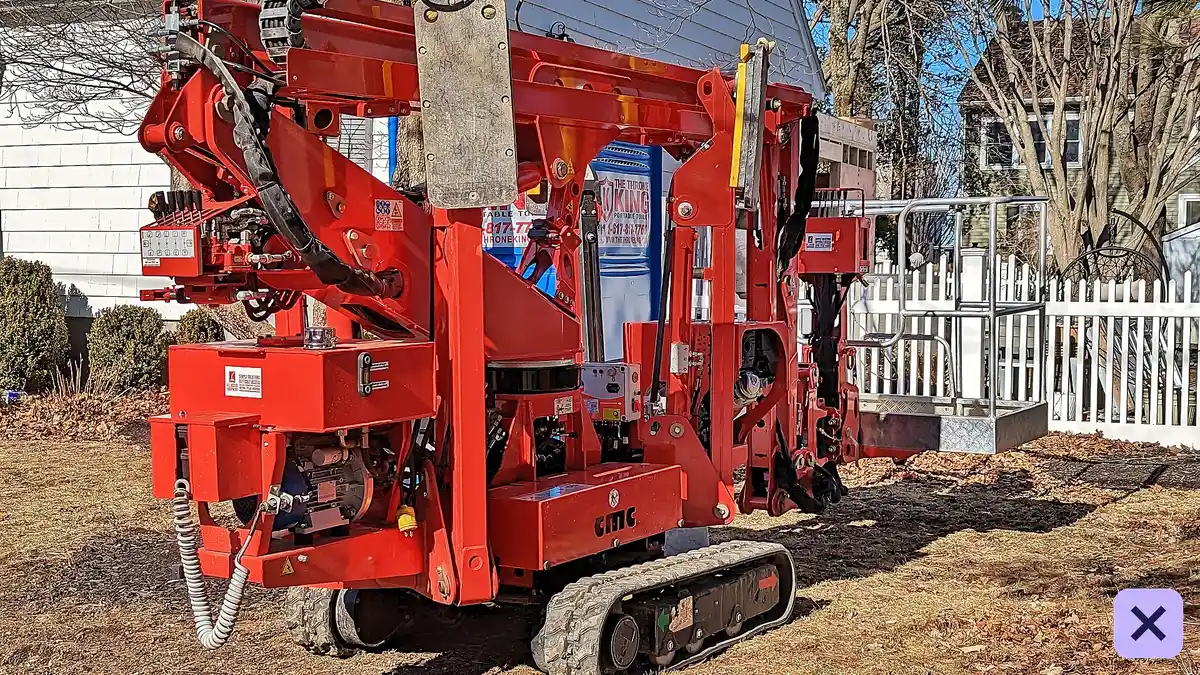
A spider lift spreads its weight on tracks and outriggers, which sounds like the answer to soft ground, until the outriggers start to sink. The spider arrives on a garden or a churchyard with no mats, or mats too small for its weight, and after the first set-up the outrigger pads have settled into the soil, the platform is out of level, and the tilt alarm sounds. Its other trap is width: many are too wide for the side gate they were hired to pass. Measure the narrowest point of the access route, and ask for the width with the tracks fitted.
3. The push-around mast lift: four people to move it ten metres
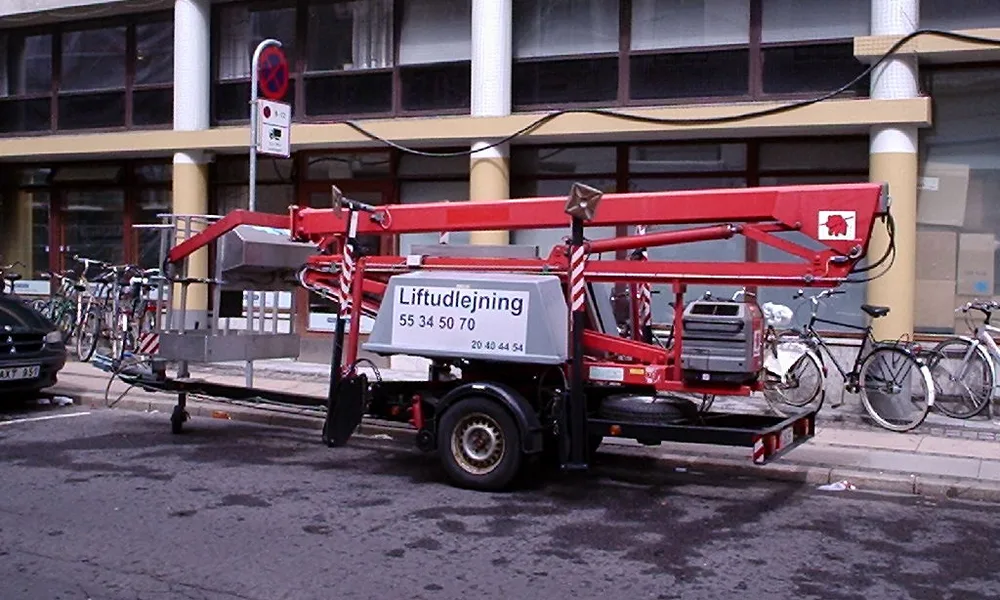
The push-around mast lift is sold as the simple answer to indoor work: a small vertical mast on a wheeled base, no drive, no fuss. The reality on a real site is different. The lift weighs far more than it looks, and once a worker and tools are on the platform it takes three or four people to push it across a warehouse floor, let alone over a threshold. The castors are the second fault: small hard wheels catch on every joint and drain, and a jammed wheel can tip a raised platform. A smooth level slab is the only floor a push-around truly suits; with joints or ramps, hire a driveable lift.
4. The driveable mast lift: dead by lunch on a full charge
Driveable mast lifts are quiet, clean and ideal for indoor work, until the batteries give up. The battery-fade lift leaves the yard with a full charge on the gauge and a battery pack that has done thousands of cycles without a proper service. By mid-morning the gauge is dropping fast, and by lunch the platform will not rise at all. Its platform is the second fault: a mast lift is built for one worker, and two workers with a box of fixings will trip the overload alarm before the platform leaves the ground. Ask for the battery age and load test, and check the rated load against the real crew.
5. The atrium lift: too wide for the doorway it was hired for
Atrium lifts are compact tracked machines built to work inside glass-roofed buildings, and the worst of them fail at the first doorway. The lift arrives at the entrance, and the crew discovers that the tracks, the outriggers or the folded boom make it a few centimetres too wide for the door. The lift cannot get inside at all, and the job never starts. Inside, its reach fails next: atrium lifts trade reach for compactness, and one that fits through the door often cannot reach the far side of the glass. Measure every doorway on the route, and demand the working envelope for your exact height.
6. The do-everything hire lift: a lift that does nothing well
Every hire fleet has a do-everything lift, and it is the one to avoid first when the job has a specific problem. The do-everything lift is sold as a universal machine: it tows, it tracks, it fits indoors, it reaches outdoors, and it does all of it badly. Its boom is too short for the facade, its platform too small for the crew, and its batteries too tired for a full shift. The real cost is the wasted day: each shortcoming appears only once the lift is on site. Hire the lift that matches the job, not the hire firm’s yard.
7. The orphaned hire lift: no parts, no support
The orphaned hire lift is the quietest failure on this list, because nothing about it looks wrong on the day it arrives. The lift goes up, the platform holds, and the work starts well. Then a sensor fails, a control sticks, or a hydraulic hose weeps, and the hire firm stops answering. The lift is an old model the firm no longer supports, and the engineer who knew it has retired. Before you sign, ask: how old is this lift, who services it, and how long will a part take on a Friday. If the firm cannot answer all three, hire a newer lift from a firm that can.
What to avoid when hiring an aerial lift
The most common hiring regret is not a bad lift but a wrong match: a towable boom hired for sloping ground, a spider hired for a narrow gate, or a mast lift hired for a two-person job. Avoid the trap by checking three things before you pay: the real working height with a loaded platform, not the brochure maximum; the true width and weight as delivered; and the total cost with delivery and damage cover, not the headline day rate. The same checks work on other site plant too, and our guide to the worst cherry pickers of 2026 makes the same point about dealer-only controls and thin support, because the traps are the same everywhere a crew works at height.
Checklist: hiring an aerial lift
- Measure the narrowest gate, doorway and corridor turn on the access route, and the slope of the ground where the lift will stand.
- Check the working height with a loaded platform and a real crew, not the brochure figure.
- Ask for the battery age and the last load test on any electric lift, and confirm where the charger will plug in.
- Confirm the outrigger footprint and whether mats are included, especially on grass, gravel or fresh tarmac.
- Ask the hire firm how old the lift is, who services it, and how long a part takes if it breaks on a Friday.
- Read the hire terms for damage cover, and photograph the lift before the first use.
Frequently asked questions
What is the worst aerial lift to hire in 2026?
The towable trailer boom lift, because a lift that cannot level on real ground is a safety problem before it is a delay. Check the outrigger level range in writing and measure your ground before you sign.
How is an aerial lift different from a scissor lift?
A scissor lift rises straight up on a folding stack for work directly overhead, while the lifts here tow, track or mast their way to work a scissor lift cannot reach.
How is an aerial lift different from a boom lift?
A self-propelled boom lift drives itself and reaches out and over on an articulated or telescopic arm, while the lifts here are towable, tracked or mast machines for tighter access.
Can a spider lift work on soft ground?
Only with proper mats under every outrigger pad. Without mats the pads sink and the tilt alarm stops the job.
Is a push-around mast lift good for indoor work?
Only on a smooth, level floor with one worker and light tools. On a floor with joints, ramps or debris it takes three or four people to move, and a driveable mast lift is the better hire.
What should I check before hiring an aerial lift?
The loaded working height, the true width and weight, the ground slope and access measurements, the battery age, and the hire firm’s service and parts answers.
Bottom line
The worst aerial lifts of 2026 are the ones that cannot do the job they were hired for: a towable boom that will not level, a spider that sinks its outriggers, a mast lift with a platform too small for the crew, or an atrium lift that cannot fit through the door. Hire the lift that matches the ground, the access and the crew, and it will make the job easier instead of getting in its way.


