Reach Too Far: The Worst Boom Lifts of 2026
The worst boom lifts of 2026 look unstoppable on the hire-yard forecourt and then waste the whole job. They drift at full reach, dip when the platform loads up, or strand a crew at height with controls that will not answer. A boom lift that cannot hold its platform steady is not a slow lift, it is a dangerous one, and a lift that spends the day waiting for a dealer engineer earns nothing at all. This guide ranks the worst types by the patterns that ruin a job, not by naming any brand or model, because no reliability-score data exists for this class of machine.
Key takeaways
- The worst boom lifts of 2026 fail on stability, reach honesty or support, and the worst ones fail on all three at once.
- A boom that drifts, dips or creeps at full reach is a safety problem, not a quirk: lower the platform and send the lift back.
- Cut any claimed outreach figure by a third at full height, and walk away from a hire firm that quotes reach with no load figure attached.
- Ground conditions, platform size and control health are the three things to check before the first lift: they are what cause the expensive failures.
- If the lift needs a dealer laptop to clear a fault, it will strand your crew on a Friday afternoon: support matters as much as steel.
How the worst boom lifts of 2026 were chosen
Every type below was scored on five measures. Stability comes first: does the platform hold steady at full reach, up and over, without drifting or dipping? Reach honesty is second, judged on whether the outreach figure means what it says with a real crew and their tools on board. Build quality is third, from the boom pins to the platform controls. Ground and drive are fourth, and support is fifth: spare parts, a reachable hire firm and a warranty that answers the phone.
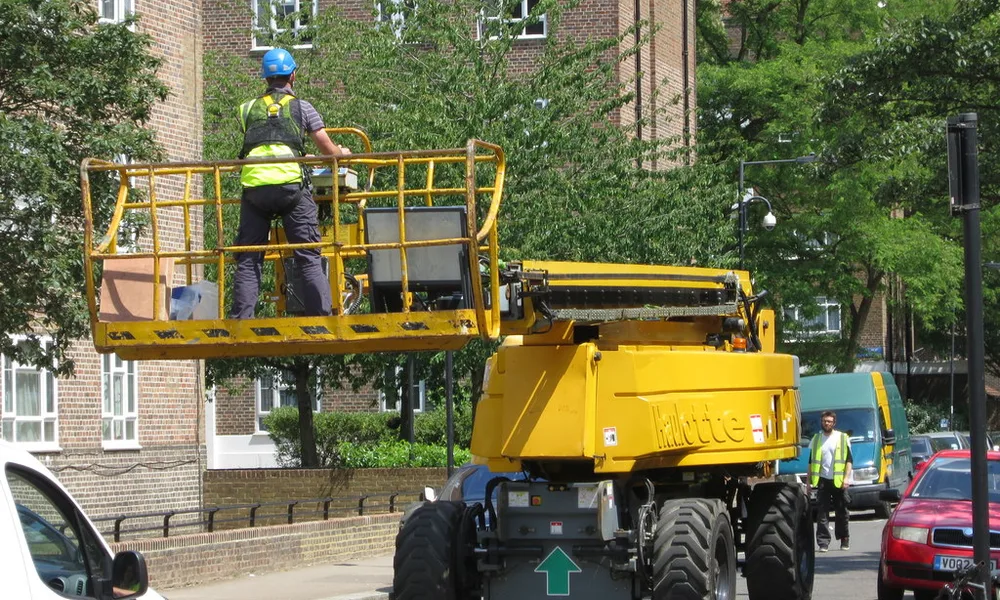
Two notes before the list. First, no brand or model is named, because the point is the pattern. Second, this guide is strictly about self-propelled boom lifts: driveable machines with an articulated or telescopic boom that carries a small platform up and over an obstacle, for work that a straight-up lift cannot reach. It does not cover truck-mounted bucket lifts, which are road vehicles with a boom on a truck chassis, covered separately in our guide to the worst cherry pickers of 2026. It does not cover scissor lifts, which rise straight up on a folding stack and cannot reach sideways at all. A crane lifts heavy loads on a hook, a different job again, and our guide to the worst cranes of 2026 covers those. The same support traps appear on other site plant, and our guide to the worst excavators of 2026 shows how the same patterns play out on machines that dig instead of lifting crews.
Comparison table: the worst boom lifts of 2026
| Rank | Boom lift type | Main fault | First warning sign |
|---|---|---|---|
| 1 | The drifting articulating boom | Boom drifts at full outreach | Platform sags after the boom stops |
| 2 | The telescopic dipper | Boom dips under load | Platform drops when tools load on |
| 3 | The outreach liar | Reach overstated at height | Overload alarm at modest reach |
| 4 | The cramped-platform boom | Platform too small for the crew | Two workers cannot fit with tools |
| 5 | The rough-ground tipper | Tips on slopes and soft ground | Tilt alarm on gentle slopes |
| 6 | The controls-lockout boom | Dealer-only fault codes | Friday fault, Monday engineer |
| 7 | The orphaned hire boom | No parts, no support | Hire firm stops answering |
The worst boom lifts of 2026, ranked
1. The drifting articulating boom: up and over, then slowly down
The drifting articulating boom is the worst boom lift type of 2026, because a platform that will not stay put is a safety problem before it is a delay. The boom folds up and over a roofline exactly as promised, the platform reaches the work, and then it starts to sink. The boom pins and cylinders have play in them, so the platform keeps creeping down after the operator stops the controls. The worker has to keep correcting, the work slows to a crawl, and every correction moves the platform a little further from the mark.
2. The telescopic dipper: a straight boom that sags under load
Telescopic booms promise a straight, stiff reach, and the dipper breaks that promise the moment the platform loads up. The boom extends smoothly with an empty platform, then a worker steps on with a toolbox and the tip drops a few centimetres. The telescopic sections have wear in their slides, so the boom flexes more than it should, and the platform ends up lower than the operator aimed for. On a tall facade the worker has to re-aim after every load, and the job takes twice as long.
3. The outreach liar: reach that vanishes at height
The outreach liar is built around a number that was never true at the height you need. The brochure quotes a big maximum outreach, in small print, at low height, with an empty platform and no wind. On your site the work sits high and far out, and the real outreach is less than half the headline figure. The overload alarm trips on reaches the chart seemed to allow, and the operator is forced to reposition, re-rig or leave the work undone. Demand the chart for the exact height and load of your job.
4. The cramped-platform boom: two workers, one toolbox, no room
Boom lift platforms are small by design, and the cramped-platform boom is the one where the platform is just too small for the job it was hired for. Two workers, a drill and a box of fixings go on board, and there is nowhere to stand, nowhere to put the tools, and no room to turn around. The crew has to work in shifts, one up and one down, and every trip doubles the time the job takes. Check the platform size against the actual crew and tools before hiring, and hire the next size up when the numbers are close.
5. The rough-ground tipper: a tilt alarm on a gentle slope
A boom lift on rough ground needs a wide base, good tyres and a levelling system that works, and the tipper has none of them in working order. The machine arrives on a site with a gentle slope, the tilt alarm sounds before the boom is halfway up, and the operator has to reposition onto flatter ground that may not exist near the work. On soft ground the tyres settle, the machine goes out of level, and the boom chart no longer applies.
6. The controls-lockout boom: a Friday fault, a Monday engineer
Modern boom lifts are full of sensors, load-moment limiters and software, and the lockout boom is the one where that software becomes the enemy. A sensor fails on a Friday afternoon, the platform derates itself to a crawl or refuses to move at all, and the fault code can only be read and cleared by a dealer laptop. The hire firm has no engineer of its own, the dealer is booked until Monday, and the crew loses two days of work to a sensor that costs less than a tank of fuel. The lift itself may be mechanically sound, which makes the waste worse.
7. The orphaned hire boom: no parts, no support, no answer
The orphaned hire boom is the most common worst boom lift of all, and the one that turns every other fault into a dead end. It arrives from a hire firm with no depot near your site, no spares stock, and a phone that rings out when something breaks. The lift may look tidy, but the boom pins are worn, the platform controls are sticky, and the drive has not been serviced since last winter. When a hose bursts or a joystick dies, there is nobody to call and nothing to order, so the lift sits idle while the programme slips.

What to avoid when hiring a boom lift
The most common mistake is hiring on maximum height and daily rate alone. A glossy reach figure tells you nothing about the drift, the platform, the ground or the hire firm, the four things that decide whether the lift works safely, on time and without a breakdown. Avoid any lift with no inspection record for its boom pins and platform controls, any hire that quotes reach without a load figure, and any firm with no local depot or out-of-hours engineer.
Checklist: testing a boom lift before the first lift
- Extend the boom to full reach with no load and stop: the platform should stop dead, with no drift, dip or creep.
- Load the platform with the real crew and tools, extend fully, and watch the tip hold its height for a full minute.
- Demand the outreach chart for the exact height and load of your job, not the headline maximum.
- Check the platform fits two workers with tools, before the lift leaves the yard.
- Ask for the gradeability and ground pressure figures, and walk the slope the lift will work on.
- Ask who clears fault codes and how fast, including out of hours and on a Friday.
Frequently asked questions
What is the difference between a boom lift and a cherry picker?
A boom lift is a self-propelled driveable machine with an articulated or telescopic boom, while a cherry picker is a boom lift mounted on a road-going truck chassis, also called a bucket truck. The boom lift drives itself around a site; the cherry picker drives on the road to the job.
What is the difference between an articulating and a telescopic boom lift?
An articulating boom folds at joints, so it can reach up and over an obstacle like a roofline, while a telescopic boom extends in straight sections for maximum height and straight-line reach. Articulating booms flex more at full reach; telescopic booms cannot reach around obstacles.
How much drift is too much on a boom lift?
Almost any visible drift at full reach is too much. The platform should stop dead when the controls return to neutral. If it keeps sinking, dipping or creeping, lower it and send it back.
Why does my boom lift keep tripping the overload alarm?
Usually the load is heavier than the chart allows at that reach, or the lift is not in the configuration the chart assumes. Check the reach, the height and the counterweight fitted, and weigh the crew and tools rather than guessing.
Can a boom lift work on a slope?
Only within its rated gradeability, on firm ground, with working levelling jacks. On a slope beyond the rating the tilt alarm will sound and the boom will not rise. The hire firm should supply the gradeability figure before the lift arrives.
What should I do if a boom lift faults and will not move?
Stop work, lower the platform safely if it is raised, and do not override the load-moment limiter. Call the hire firm and ask for the fault code and the engineer. If only a dealer can clear the code and none is available, the lift is out of service until one arrives.
Bottom line
The worst boom lifts of 2026 fail in the same few ways: a boom that drifts, a telescopic section that dips, reach that vanishes at height, a platform too small for the crew, a base that tips on a slope, software only a dealer can clear, and a hire firm that vanishes when it breaks. Check the drift at full reach, demand the chart at your height and load, test the platform fit, and check the support before you sign.