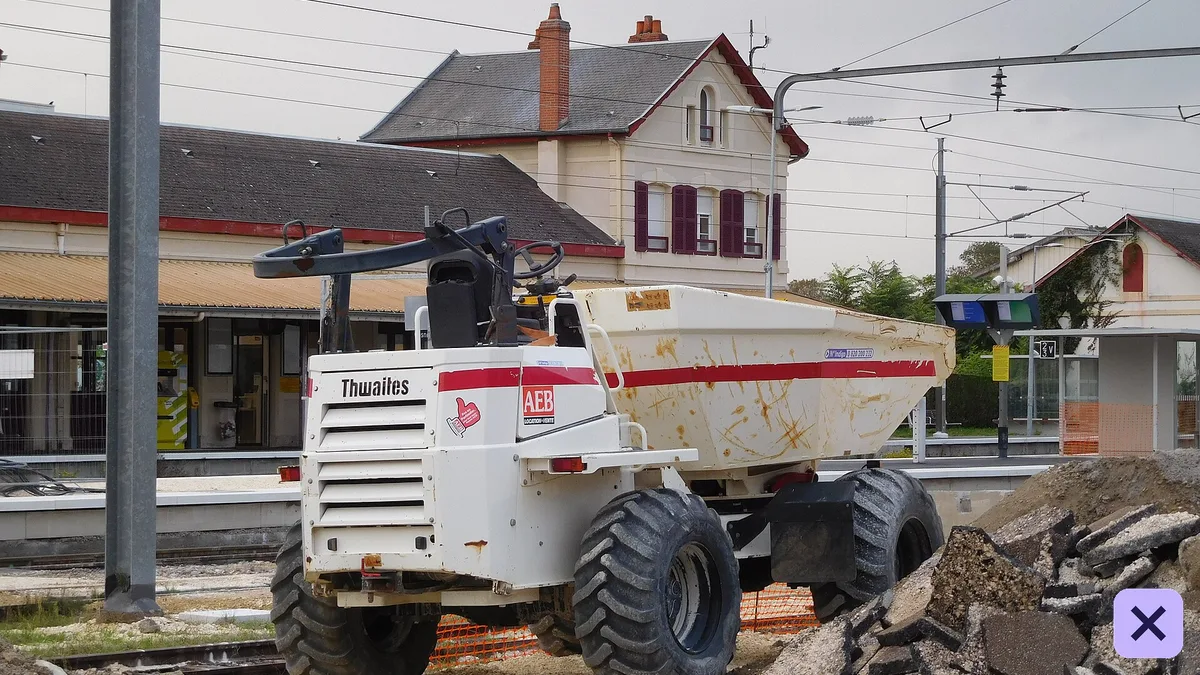
Off the Road and Out of Luck: The Worst Dumpers of 2026
The worst dumpers of 2026 are not the oldest machines on the site or the plainest ones in the hire fleet. They are the site dumpers that look unstoppable on the hire-yard forecourt and then wear their operators down: a skip that tips too high and throws the load, a swivel that jams halfway round, a tracked mini slower than a wheelbarrow, or a hire dumper with no parts when a hose bursts on a Friday. A dumper that cannot tip its load where the job needs it is a useless one, not a slow one. This guide ranks the worst types by the patterns that ruin a job, not by naming any brand or model, because no reliability-score data exists for this class of machine.
Key takeaways
- The worst dumpers of 2026 fail on tipping, traction or support, and the worst ones fail on all three at once.
- A skip that tips too high, too fast or not at all is a safety problem, not a quirk: lower it and send the dumper back.
- Cut any claimed payload by a third once the load is wet soil or rubble, and walk away from a firm that quotes capacity with no load figure.
- Ground, skip condition and hose health are the three things to check before the first load: they cause the expensive failures.
- If the dumper needs a dealer laptop to clear a fault, it will strand your site on a Friday afternoon: support matters as much as steel.
How the worst dumpers of 2026 were chosen
Every type below was scored on five measures. Tipping comes first: does the skip lift smoothly, tip fully and lower safely with a real load on board? Traction is second, judged on whether the dumper can cross soft ground, climb a spoil heap and stop on a slope without sliding. Build quality is third, from the skip and pins to the tyres and steering. Power and drive are fourth, and support is fifth: spare parts, a reachable hire firm and a warranty that answers the phone.
Two notes before the list. First, no brand or model is named, because the point is the pattern. Second, this guide is strictly about site dumpers: small off-road construction machines that carry soil, rubble and aggregate around a building site, from one-tonne mini dumpers to nine-tonne forward tippers. It does not cover road dump trucks, which are Class 6 to Class 8 vocational haulers for the highway and are ranked separately in our guide to the worst dump trucks of 2026. A road truck needs a licence and a public road; a site dumper needs a level yard and a competent operator.

Comparison table: the worst dumpers of 2026
| Rank | Dumper type | Main fault | First warning sign |
|---|---|---|---|
| 1 | The one-tonne hi-tip dumper | Tips too high, tips over | Skip rises past the tipping point |
| 2 | The open-cab three-tonne dumper | No rollover protection | ROPS frame missing or folded |
| 3 | The heavy six-to-nine-tonne dumper | Too heavy for the ground | Tyres settle after every move |
| 4 | The swivel-skip dumper | Swivel jams halfway round | Skip sticks at ninety degrees |
| 5 | The tracked mini dumper | Too slow for the job | Crew walks faster than it drives |
| 6 | The walk-behind power barrow | Operator walks behind the load | No seat, no protection at all |
| 7 | The orphaned hire dumper | No parts, no support | Hire firm stops answering |
The worst dumpers of 2026, ranked
1. The one-tonne hi-tip dumper: a skip that tips too high
The one-tonne hi-tip dumper is the worst dumper type of 2026, because a skip that tips too high is a safety problem before it is a delay. The hi-tip is hired to drop spoil into a tall skip or over a wall, lifting the whole skip high on a scissor frame before tipping it. The trouble starts when a full skip of wet soil lifts the frame past the point of balance: the dumper rocks and tips forward onto its nose. Its second fault is size: a one-tonne skip of wet soil weighs far more than a tonne. Never tip a hi-tip on a slope or with the wheels turned.
2. The open-cab three-tonne dumper: no rollover protection
The open-cab three-tonne dumper is the workhorse of the small site, and the worst arrive with no rollover protection at all. The ROPS frame is missing, folded down, or removed to pass under a low scaffold, and the operator sits in the open with nothing above them. A dumper that tips on a spoil heap with no ROPS leaves the operator nowhere to go. Its second fault is visibility: a full skip blocks the view of the ground directly in front of the wheels. Refuse any dumper with a missing or folded ROPS frame, and walk the route before the first load.

3. The heavy six-to-nine-tonne dumper: too heavy for the ground
A six-to-nine-tonne dumper spreads its weight on four big tyres, which sounds like the answer to a big earthmoving job, until the tyres start to sink. The heavy dumper arrives with no mats, or mats too small for its weight, and after the first move the tyres have settled into the mud. The skip is no longer level, the tip becomes uneven, and the operator must reposition before the next load. Its other fault is its turning circle: a site laid out for three-tonne machines will not fit a nine-tonne one. Match the dumper to the ground and the site layout, not to the size of the job.
4. The swivel-skip dumper: a skip that jams halfway round
Swivel-skip dumpers promise to tip to either side without turning, and the worst break that promise on the first day. The swivel ring is worn, the slew motor is weak, or the locking pins are bent, and the skip sticks at ninety degrees with a full load of rubble hanging off the side. The dumper leans, the operator cannot tip forward or back, and the only way out is to unload by hand. Its second fault is the seal: a worn swivel ring leaks hydraulic oil, and the leak gets worse every time the skip turns. Check the swivel before you sign: if it sticks, grinds or drips, hire a forward tip instead.
5. The tracked mini dumper: slower than a wheelbarrow
Tracked mini dumpers are sold as the answer to tight, soft sites, and the worst of them are too slow to earn their hire. The tracks spread the weight beautifully and cross mud that would stop a wheeled dumper, then it crawls back to the loading point at walking pace. A crew with shovels and a wheelbarrow can move spoil faster than a mini dumper that tops out at a slow walk. Its second fault is the skip: a skip that holds only a few barrow-loads means endless trips back and forth. If the loading point is far from the tipping point, a wheeled dumper wins every time.
6. The walk-behind power barrow: no seat, no protection
The walk-behind power barrow is the smallest machine on this list, and the worst of them put the operator in the most exposed position of all. The operator walks behind the skip, steering with handlebars, with no seat, no ROPS frame and no protection from the load. A barrow that tips forward throws its load towards the operator’s feet, and one that runs away downhill leaves the operator chasing it. Its second fault is the controls: the levers are simple and easy to get wrong, and a new operator can drive the barrow into a trench. Never overload a power barrow, never use one on a slope.

7. The orphaned hire dumper: no parts, no support
The orphaned hire dumper is the quietest failure here, because nothing about it looks wrong on the day it arrives. The dumper starts, the skip tips, and the work starts well. Then a hydraulic hose bursts, a wheel bearing seizes, or a control cable snaps, and the hire firm stops answering. The dumper is an old model the firm no longer supports, and the fitter who knew it has retired. Before you sign, ask: how old is this dumper, who services it, and how long will a part take on a Friday. If the firm cannot answer all three, hire a newer dumper from a firm that can.
What to avoid when hiring a site dumper
The most common hiring regret is not a bad dumper but a wrong match: a hi-tip hired for sloping ground, a heavy dumper hired for soft ground, or a mini hired for a long haul. Avoid the trap by checking three things before you pay: the real payload with wet material, not the dry brochure figure; the true width, weight and turning circle as delivered; and the total cost with delivery and damage cover, not the headline day rate. The same checks work on other site plant too, and our guide to the worst excavators of 2026 makes the same point, as does our guide to the worst bulldozers of 2026, because the traps are the same everywhere a machine digs or carries.
Checklist: hiring a site dumper
- Check the rated payload against wet soil or rubble, not the dry brochure figure, and never tip on a slope or with the wheels turned.
- Refuse any dumper with a missing or folded ROPS frame, and walk the route before the first load.
- Put mats down before the first load on soft ground, and match the dumper to the site layout.
- Test the swivel fully to both sides with the engine running, and look for grinding or oil leaks on the ring.
- Measure the round trip from loading point to tipping point, and hire wheels for distance and tracks only for ground that needs them.
- Ask the hire firm how old the dumper is, who services it, and how long a part takes if it breaks on a Friday.
Frequently asked questions
What is the worst site dumper to hire in 2026?
The one-tonne hi-tip dumper, because a skip that tips past the point of balance is a safety problem before it is a delay. Never tip a hi-tip on a slope or with the wheels turned.
How is a site dumper different from a dump truck?
A site dumper is a small off-road machine that carries soil and rubble around a building site, while a dump truck is a Class 6 to Class 8 road hauler that needs a licence and a public road.
Do site dumpers need rollover protection?
Yes, always. A ROPS frame is the difference between a fright and a funeral when a dumper tips on a spoil heap. Refuse any dumper with a missing or folded frame.
Can a tracked dumper work on soft ground?
Yes, tracks spread the weight well, but tracked minis are slow, so they only earn their hire when the ground truly will not take wheels. For distance, a wheeled dumper is faster.
Is a swivel-skip dumper worth hiring?
Only if the swivel turns fully to both sides without grinding or leaking. A swivel that jams halfway leaves a full load hanging off the side, which is worse than no swivel at all.
What should I check before hiring a site dumper?
The payload with wet material, the ROPS frame, the ground and mats, the swivel or tip mechanism, the round-trip distance, and the hire firm’s service and parts answers.
Bottom line
The worst dumpers of 2026 are the ones that cannot do the job they were hired for: a hi-tip that tips too high, a dumper with no rollover protection, a heavy machine that sinks into soft ground, or a swivel skip that jams halfway round. Hire the dumper that matches the ground, the load and the site layout, and it will make the job easier instead of getting in its way.


