Tip, Stick and Spill: The Worst Garden Carts of 2026
The worst garden carts of 2026 are not the oldest carts in the shed or the cheapest ones in the garden centre. They are the carts that look sturdy on the shop floor and then wear their owners down: a bed that buckles under a full load of soil, wheels that seize on the first root, a handle that snaps at the joint, or a cart that tips on the first slope and spills its load across the path. A bad garden cart rarely announces itself in the shop. This guide ranks the seven worst garden cart types of 2026, by what actually goes wrong, so you can spot the pattern before you buy and leave the worst ones in the shop.
Key takeaways
- The flat-bed cart with no sides is the type to avoid first: the load slides off before the cart reaches the bed.
- Tiny hard wheels are the most common fault: they sink in soft ground, jam on roots and stop the cart dead.
- A tipper latch that will not hold is a safety problem, not a quirk: the bed dumps the load early, usually onto your feet.
- A folding cart that folds under load is a write-off: check the hinges and the locking pins before you pay.
- Measure your gates and paths before you buy: a cart too wide for the garden is a cart that never leaves the drive.
How the worst garden carts of 2026 were chosen
Every type below was scored on five measures. Load handling comes first: can the cart carry a full load of soil, compost or plants across a real garden without tipping, spilling or buckling? Wheels are second, judged on whether they roll over soft ground, roots and paving without sinking or seizing. Bed and sides are third, from the strength of the bed to whether the sides hold the load in. Handle and steering are fourth: the pull handle, the turning circle and whether the cart follows or fights. Build quality is fifth: the welds, the hinges, the latch and whether the cart survives a season outdoors.
Two notes before the list. First, this guide covers garden carts only: pull carts with a bed, used to haul soil, compost, plants and tools around a garden. Hand-pushed wheelbarrows are a different machine, with one or two wheels and a tray you lift and tip, and the worst of those are ranked separately in our guide to the worst wheelbarrows of 2026. Second, no brand or model is named as the worst, because the same bad patterns appear across many brands, and what matters is learning to recognise them for your own garden. Powered site dumpers are a different machine altogether, with an engine and a tipping skip, and the worst of those are ranked in our guide to the worst dumpers of 2026.
Comparison table: the worst garden carts of 2026
| Rank | Garden cart type | Main fault | First warning sign |
|---|---|---|---|
| 1 | Flat-bed cart with no sides | Load slides off | Soil spills on the first turn |
| 2 | Cart with tiny hard plastic wheels | Sinks, jams, stops dead | Wheels sink on soft ground |
| 3 | Tipper cart, latch that will not hold | Bed dumps early | Latch slips under a half load |
| 4 | Folding cart, weak hinges | Folds under load | Hinges flex when loaded |
| 5 | Steel cart that rusts at the welds | Frame rots from inside | Paint bubbles at the joints |
| 6 | Mesh-sided cart that snags and tears | Load catches, mesh splits | Tools snag on the mesh |
| 7 | Oversized cart, too wide for the gate | Never leaves the drive | Cart will not fit the gate |
The worst garden carts of 2026, ranked
1. The flat-bed cart with no sides: a load that slides off
The flat-bed cart with no sides tops this list because it fails at the one job a garden cart exists to do: keep the load on the cart until you reach the bed. A flat bed with no sides, no rails and no lip holds a load only while the cart is still and level. The cart is not useless for everything. It can carry a bag of compost or a potted plant that sits flat. But a cart that can only carry flat, heavy, single items is not a garden cart. It is a trolley with ambitions, and the garden is the one that waits while you shovel the load back on. Buy a cart with sides, or at least a raised lip, and check that the sides lock upright before you pay.
2. The cart with tiny hard plastic wheels: wheels that stop the cart dead
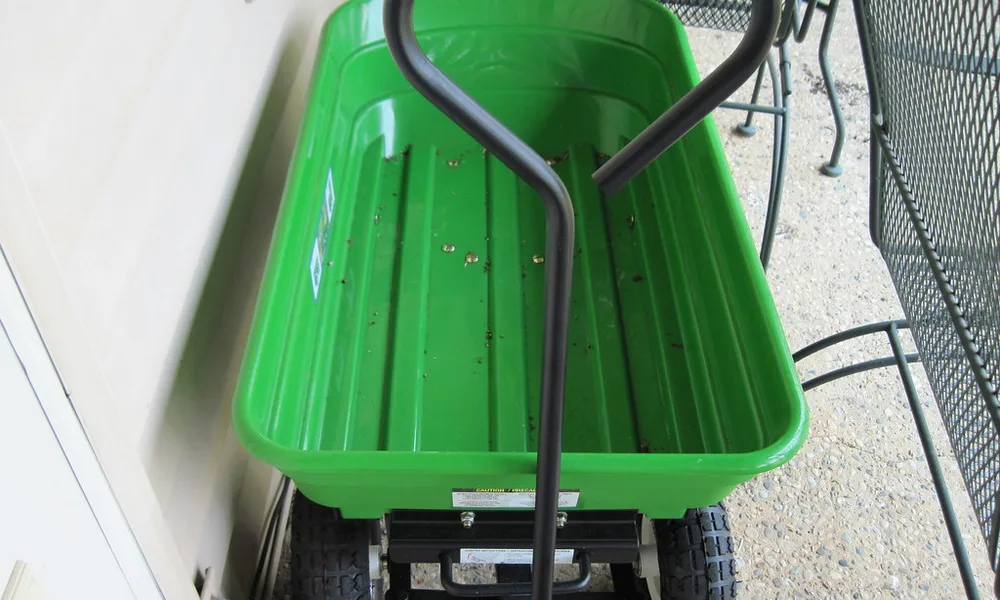
Tiny hard plastic wheels are the most common fault in cheap garden carts, and they ruin the cart on its first real job. Owners report dragging the cart rather than pulling it, and a dragged cart with a full load is heavier than a wheelbarrow. A good garden cart has large pneumatic tyres that roll over roots and spread the weight on soft ground. If the wheels are small, hard and plastic, the cart will not move when it matters.
3. The tipper cart with a latch that will not hold: the bed dumps early
A tipper cart is the most useful kind of garden cart when it works: pull the latch, the bed tips, and the load slides out where you want it. The worst tipper carts have a latch that will not hold. The latch is usually a thin bent-steel hook with no safety catch, and once it bends it never holds again. Check the latch before you buy: load the bed, lift the handle, and shake the cart. If the latch slips, walk away.
4. The folding cart with weak hinges: a cart that folds under load
Folding carts promise to pack flat in the shed, and the good ones do. A folding cart that folds under load is not a storage feature. The hinges are the weak point, because a hinge that carries the whole load is a hinge that will wear. A good folding cart has thick hinges, solid locking pins and a bed that stays flat under load. If the hinges flex when you press the bed down in the shop, they will fold when the cart is full.
5. The steel cart that rusts at the welds: a frame that rots from inside
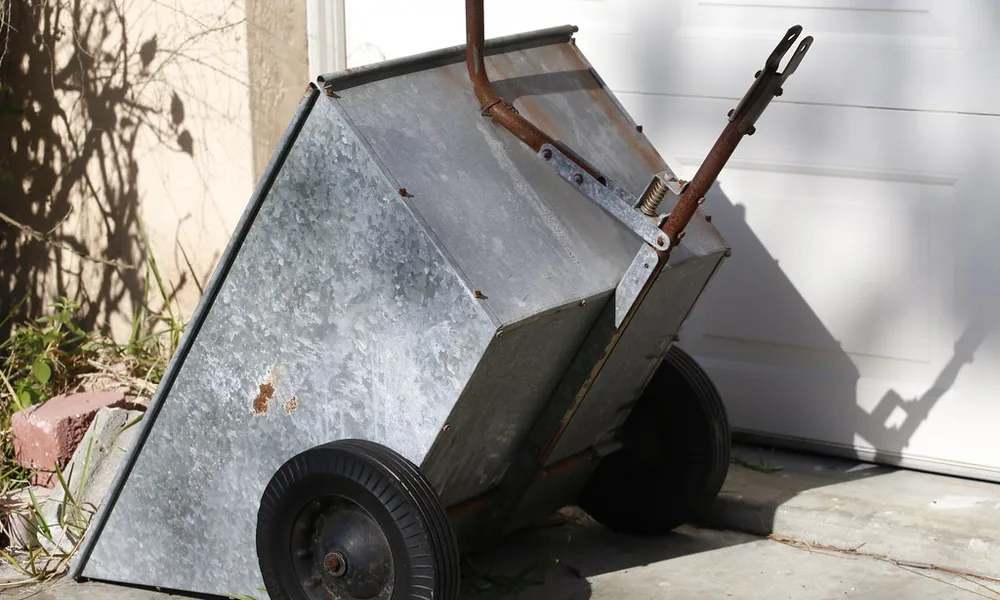
The steel garden cart looks like the proper tool: a deep steel bed, a solid frame, a price that suggests it will last for years. The trouble is the welds. The cart is not repairable at that point. A new bed costs nearly as much as a new cart, and the frame is usually rusted too. Check the welds before you buy: look for paint bubbling at the joints, and press the bed where it meets the frame. If the steel flexes or the paint is already lifting, the rust has started.
6. The mesh-sided cart that snags and tears: a bed that catches everything
Mesh-sided carts are sold as the light answer to the steel cart, and the mesh keeps the cart light and lets water drain through. The trouble is what the mesh does to the load. The mesh itself is the second fault: thin wire splits at the welds, the split catches more, and the side slowly unravels.
7. The oversized cart too wide for the gate: a cart that never leaves the drive
The oversized garden cart is the biggest cart in the shop, and it is sold with a photograph of a huge load of logs. Garden machines share the same trap: the worst lawn mowers of 2026 fail on the same mismatch between the machine and the garden it has to work in, and a cart bought for its size rather than its fit will fail the same way.
What to avoid when buying a garden cart
The most common garden cart regret is buying for the photograph rather than the garden. A cart that is too wide, too small-wheeled or too weakly built costs more in spilled loads and wasted trips than a good cart costs to buy. Avoid the trap by checking three things before you pay: the wheel size and whether the tyres are pneumatic, the sides and whether they lock upright, and the width against your narrowest gate. Check the spares too: a cart with no replacement wheels, no replacement latch and no spare pins is a cart with a short life, because the parts that wear out first are the parts you will need first. A cart that cannot be repaired is a cart you will replace, and the garden is the one that waits while you shop again.
Checklist: buying a garden cart
- Measure your narrowest gate and path first, then buy the cart that fits through them.
- Check the wheels: large pneumatic tyres roll over roots and soft ground, small hard wheels do not.
- Load the bed and shake the cart: if the latch slips or the hinges flex, walk away.
- Look for sides that lock upright and a raised lip, so loose loads stay on the bed.
- Run your finger along the mesh and the welds: sharp wire ends and bubbling paint mean trouble.
- Ask for spare wheels, a spare latch and spare pins before you buy: if there are none, walk away.
Frequently asked questions
What is the best garden cart for hauling soil?
A steel or thick plastic cart with sides that lock upright, large pneumatic tyres and a tipper bed. The sides keep loose soil on the bed, and the tipper lets you unload without shovelling.
Are folding garden carts any good?
A well-built folding cart with thick hinges and solid locking pins is good for small gardens and tight sheds. A cheap folding cart flexes under load and folds when it should not, so check the hinges before you buy.
How much weight can a garden cart carry?
Most garden carts carry between 150 and 300 kilograms. Check the rated load and cut it by a third for wet soil, which is far heavier than dry soil or compost.
Should I choose pneumatic or solid tyres on a garden cart?
Pneumatic tyres roll better over roots and soft ground and spread the weight. Solid tyres never puncture but ride harder. For a garden with lawns and beds, pneumatic tyres are usually the better choice.
Can a garden cart replace a wheelbarrow?
For hauling across a garden, yes: a cart carries more and is steadier. For tipping into a narrow bed or working in a tight space, a wheelbarrow is still the better tool.
How do I stop a garden cart rusting?
Keep the bed clean and dry, store the cart under cover, and touch up any paint chips at the welds before winter. Once rust starts inside a weld, it is hard to stop.
Bottom line
The worst garden carts of 2026 fail on the same few things: a bed with no sides that spills the load, tiny hard wheels that stop the cart dead, a latch that dumps early, hinges that fold under load, and a size that never fits the gate. Measure your garden first, check the wheels, the sides and the latch before you pay, and test the cart loaded on your own ground. A good cart disappears into the work. A bad one makes every load a negotiation, and the garden is the one that waits while you shovel the spill back on.