The Best Razors for a Close, Comfortable Shave in 2026
The best razors in 2026 are not the ones with the most blades or the flashiest handle. They are the ones that cut cleanly on the first pass, suit your skin and your beard, and cost a fair amount for every shave. A razor touches your face more often than almost anything else you own, so getting it wrong means nicks, razor burn and ingrown hairs morning after morning. Getting it right means a smooth face in five minutes and skin that stays calm.
This guide is about manual razors: the cartridge, disposable, straight and safety razors you push across your skin by hand. Electric shavers are a different family, covered in full in our guide to the best electric shavers, and safety razors get their own deep dive in our safety razors guide. Our best vs worst shavers guide sorts the whole shelf. What follows is the manual-razor buying guide: which type suits which face, what to check before you buy, and how to use it well.
Key takeaways
- A cartridge razor is the easiest daily choice for most faces: a pivoting head, several blades and a lubricating strip do most of the work.
- Disposable razors are fine for travel and the gym bag, but a dull one is harsh on skin, so replace them early.
- A straight razor gives the closest shave of all, yet it demands stropping, honing and a steady hand.
- Sharp blades and light pressure matter more than blade count: press lightly and shave with the grain first.
- Work out the cost per shave, not the price of the handle: cheap handles with pricey cartridges often cost more over a year.
The four manual razor families
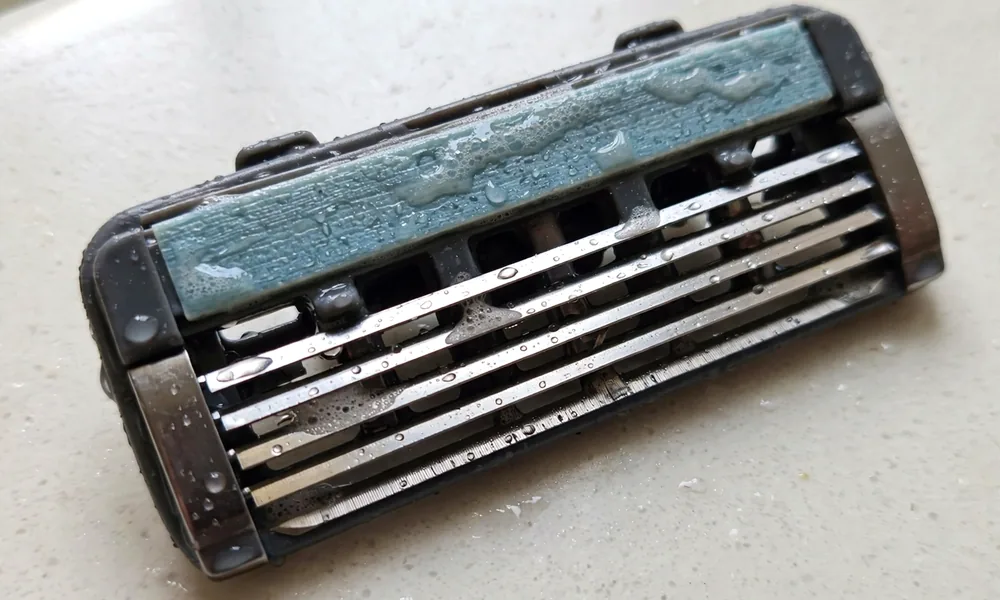
Every manual razor belongs to one of four families, and the differences matter more than the brand on the handle. A cartridge razor holds several blades in a plastic head that clicks onto a reusable handle. The head pivots to follow your chin and neck, and a lubricating strip helps it glide. Most men who shave every day use one: it is fast, forgiving and hard to cut yourself with badly.
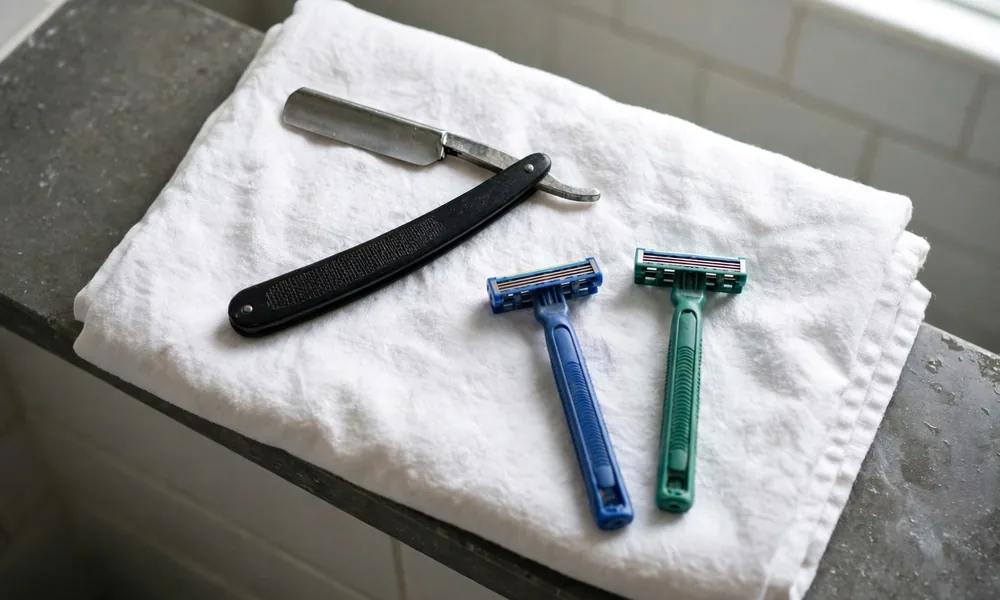
A disposable razor is a cartridge razor with the handle built in, thrown away when the blades dull, usually after a handful of shaves. Disposables are light, cheap and handy for travel, the gym or a guest bathroom. Their weakness is the blades: they dull quickly, and because the razor cost almost nothing, people keep using them long past their best. A fresh disposable shaves decently; a week-old one pulls, scratches and leaves razor burn.
A straight razor is a single long blade that folds into its handle. It cuts at skin level with one edge, giving the closest shave of any razor and the least irritation for men prone to ingrown hairs. The price is skill and upkeep: the blade must be stropped before each shave and honed when it dulls, and the technique takes weeks to learn.
A safety razor holds a single double-edge blade in a weighted metal handle with a guard that limits how much blade touches the skin. The blades cost pennies, the shave is very close, and there is almost no plastic waste. The catch is technique: no pivoting head and no forgiveness, so a heavy hand earns a nick. Men who switch from cartridges usually need two weeks to adjust, and most never go back.
How to judge a razor before you buy
Blade quality comes first. A good blade is sharp, evenly ground and coated so it slides rather than drags. You cannot test sharpness in the shop, so look for a brand with a long record, cartridges that seat firmly with no wobble, and blades that are easy to find locally. If replacement blades are hard to buy or cost more than the handle, the razor is a bad deal.
The head matters as much as the blades. A pivoting head follows the jaw and neck without you having to twist your wrist, which is where most nicks happen. A fixed head gives more control for shaping sideburns and the line under the nose, but it demands more care. Some cartridge razors add a trimmer blade on the back of the head for edges and sideburns, which is genuinely useful if you keep facial hair shaped rather than shaving it all off.
Handle, grip and balance
Hold the razor if you can before buying. It should feel balanced, and the grip should stay secure when wet and soapy. Rubberised grips help, but a well-shaped metal or resin handle grips fine too. A handle that is too slim twists in the hand; one that is too fat hides the blade angle. Hold it the way you shave and make a few slow strokes in the air: if your wrist feels strained, the handle is wrong for you.
Skin type and beard type
Sensitive skin does best with a sharp, clean cutter and as little pressure as possible. Fewer blades can help, because each blade is another pass over the same skin: a two- or three-blade cartridge often irritates less than a five-blade one. Coarse, curly beards that ingrow easily usually do better with a single blade, whether a safety razor or a straight razor, because one blade cuts at skin level instead of below it. Fine, straight beards are the easiest to shave, and almost any sharp cartridge will do.
Cartridge vs disposable vs straight vs safety
| Razor type | Best for | Closeness | Running cost | Skill needed |
|---|---|---|---|---|
| Cartridge | Daily shaving, most faces | Very close | Medium to high | Low |
| Disposable | Travel, gym, guests | Good when fresh | Low per razor | Low |
| Straight | Closest shave, ritual shavers | Closest | Low after setup | High |
| Safety | Ingrown hairs, low waste | Very close | Very low | Medium |
The table tells the story in one glance. Cartridge razors win on ease, safety razors on running cost, straight razors on closeness, and disposables on convenience. Your face decides which matters most.
Best cartridge razors: what to look for
The best cartridge razor has a head that pivots smoothly, blades that stay sharp for a week or more, and cartridges that cost a fair price. Three blades suit most faces; five blades suit men with fine hair who want the closest finish, but they can irritate sensitive skin because each blade drags across the same spot. A lubricating strip helps the first few shaves and then wears away, so judge a cartridge by its fifth shave, not its first.
Check the cartridge lock before you buy. The head should click on firmly and release with one press, not wobble or need force: a wobbling head changes the blade angle with every stroke, which is how nicks happen. Check the handle weight too: a handle with some weight does the pressing for you, so you can keep your hand light. Very light handles tempt you to press harder, which is the opposite of what your skin wants.
Disposable and straight razors: when they win
Disposable razors win in exactly three situations: travel, the gym bag and the guest bathroom. For those jobs, buy a pack with a pivoting head and a lubricating strip, and treat each razor as good for three to five shaves at most. The moment it pulls instead of gliding, throw it away: keeping a disposable because it still looks fine is the most common cause of razor burn, and it costs nothing to avoid.
Straight razors win for men who enjoy the ritual and want the closest shave money can buy. The setup costs more than a cartridge handle: razor, strop, brush and decent soap. After that the running cost is almost nothing, and a well-kept blade lasts for years. Learning takes patience: expect two to four weeks of slow, careful shaves before it feels natural. Shave after a warm shower, stretch the skin with your free hand, use short strokes, and never rush the jawline. If that sounds like a chore, a safety razor gives most of the benefit with far less learning.
Technique that prevents razor burn
Technique matters as much as hardware. Shave after a warm shower, when the beard is soft. Use a proper shaving soap or gel rather than a drying foam, worked in so it lifts the hairs. Shave with the grain first, using short, light strokes, and let the weight of the razor do the work. Rinse the blades often so they do not clog.
Only go against the grain on a second pass if your skin tolerates it, and skip it entirely on the neck. Rinse with cool water, pat dry rather than rubbing, and use a simple fragrance-free moisturiser. Change blades on schedule: a cartridge that tugs is already too dull.

Caring for your razor
Rinse the head after every shave and shake it dry, then store the razor upright somewhere dry rather than in a steamy shower: blades left damp rust and blunt far faster than blades kept dry. Do not share a razor, and do not wipe the blades with a towel, which dulls the edge. For a straight razor, strop before each shave and dry the blade fully before folding it away. For a safety razor, loosen the head slightly after shaving so the blade dries, and replace it every three to five shaves.
Keep track of cartridge cost: a handle that seems cheap can cost a fortune in cartridges over a year. Count the shaves per cartridge honestly and divide the price by that number. The cheapest shave is rarely the cheapest razor.
Checklist: buying a razor
- Match the type to your face: cartridge for daily ease, single blade for ingrown hairs, disposable for travel only.
- Check cartridge price and availability before you fall for a handle.
- Hold the razor: balanced, secure when wet, comfortable in your hand.
- Pick fewer blades if your skin is sensitive; more blades only if your beard is fine.
- Make sure the head pivots smoothly and locks on without wobbling.
- Plan the upkeep: dry storage, blade changes on schedule, no sharing.
Frequently asked questions
How many blades should a cartridge razor have?
Three blades suit most faces. Five give a closer finish on fine hair but can irritate sensitive skin, because each blade drags across the same spot. Two are enough for light beards. Quality matters more than count.
How often should I change a cartridge?
Most cartridges stay sharp for five to ten daily shaves. Change it the moment it pulls or tugs. A dull blade causes more nicks and burn than a sharp one.
Are disposable razors bad for your skin?
A fresh disposable is fine, but the blades dull after a handful of shaves, and a dull one is one of the harshest things you can drag across your skin. Use them for travel and replace them early.
Is a safety razor better than a cartridge razor?
For ingrown hairs and running cost, yes: one blade cuts at skin level and the blades cost pennies. For speed and forgiveness, a cartridge wins.
Should I shave against the grain?
Only on a second pass and only if your skin tolerates it. Shave with the grain first, then decide. Skip against-the-grain passes on the neck, where irritation starts most often.
Why does my razor rust in the shower?
Blades left damp rust and blunt quickly. Rinse the head, shake it dry and store the razor upright somewhere dry, not in a steamy shower.
The bottom line
The best razor is the one that matches your beard and your skin: a good cartridge razor for a fast daily shave, a safety razor for ingrown hairs and low running cost, a straight razor for the closest shave if you enjoy the ritual, and a fresh disposable only for travel. Spend a little more on sharp blades and a solid handle, keep them clean and dry, change them on schedule, and shave with a light hand.