
An electric shaver is one of the few things you press against your face every single day, yet most of us buy one in a hurry and then live with the consequences for years. A good electric shaver gives you a close, comfortable shave in a few minutes and leaves your skin calm. A bad one tugs, misses patches, heats up, and leaves you with redness, ingrown hairs and a five o’clock shadow by lunchtime. The difference is not always the price. It is the cutting system, the condition of the blades, and whether the tool actually suits your beard and your skin. The best electric shavers of 2026 are the ones that cut cleanly on the first pass, stay cool against the skin, and keep working properly between charges. A shaver is a daily tool, so the wrong choice costs you comfort every morning, not just money.

What Makes an Electric Shaver Good
The first thing to judge is the cut. A good electric shaver slices the hair rather than pulling it, and the head should glide without you having to press hard. If you find yourself going over the same spot five times, or pushing the shaver into your cheek to get it to work, the shaver is failing. Pressure is the enemy of a comfortable shave: it causes irritation, nicks and ingrown hairs, and it wears the blades out faster. The best electric shavers do the work with light, short strokes and a head that follows the shape of your face.
The second thing is comfort. A shaver that leaves your skin burning, even if the result looks smooth, is not a good shaver. Look for a head that stays cool and a motor that holds its speed in thick growth instead of slowing down and snagging. A good electric shaver should give you at least two weeks of daily shaves on a charge, and a quick five-minute charge should be enough for one shave.
The third thing is upkeep. Foils and rotary heads need rinsing after every shave and a proper clean at least once a week, or trapped stubble and skin oil will blunt the cut and breed smells. Replacement heads are part of the real cost, so check their price and how often they need changing before you buy. A shaver with cheap spares and a head that pops off easily will serve you better than a flashy model whose spares cost almost as much as a new shaver.
Foil Shavers: The Daily Shaver
The best foil shavers of 2026 are the quiet achievers. A well-made foil shaver uses a thin perforated metal foil over fast-moving blades, and it suits men who shave every day, have sensitive skin, or want a neat, even finish with little fuss. The foil keeps the blade off the skin, which means fewer nicks, and the straight head is easy to guide along the cheeks and neck. The best ones run quietly, stay cool, and cut close enough that you will not feel stubble until evening.
When you compare foil models, look at the number of cutting elements and the flex of the head. More elements usually mean fewer passes, and a head that pivots a little will follow the neck better than a fixed one. Our comparison of the best vs worst shavers of 2026 puts foil models alongside the other types, and the same lesson holds there: a sharp cutter and a light hand beat an expensive motor every time.
Rotary Shavers: The Coarse-Beard Shaver
Rotary shavers earn their place for a different kind of beard. Their three spinning heads flex and tilt, following the curves of the chin and neck where a straight foil can struggle. If you shave every two or three days rather than daily, or your beard grows in different directions, a good rotary will catch hairs a foil misses. The best rotary models have heads that pivot freely, motors that do not slow in thick growth, and a grip that does not slip when wet.

Wet and Dry Shavers: The Shower Shaver
Wet and dry shavers round out the best list for people who shave in the shower or with gel. A genuinely waterproof model lets you shave with lather, which softens the beard and suits sensitive skin, and rinses clean in seconds. Look for a proper waterproof rating rather than a vague splash-proof claim, and dry the head afterwards so the blades do not rust.
The wet shave is the gentlest way to use an electric shaver, because the lather lifts the hairs and lets the cutter glide. It is also the slowest, since you need to prep and rinse, but for men whose skin complains after a dry shave it is often the difference between shaving daily and dreading it. A good wet and dry shaver does both jobs well: it cuts dry in a hurry on a weekday morning and takes lather on a slow Sunday.
Travel Shavers and Trimmers
A good travel shaver is small but still cuts properly, holds a charge for a week of trips, and comes with a case that keeps the foil safe. One that only trims stubble is not a travel shaver; it is a souvenir. The best travel models are single-foil shavers with a simple on-off switch and a USB charge, so they work with the same cable as your phone and take up almost no room in a wash bag.
Many electric shavers also come with a pop-up trimmer for sideburns and the neckline, and it is worth checking that it actually works. A trimmer that is blunt or hard to reach is useless, and a good one saves you from owning a separate tool. For longer beards, though, a dedicated tool is better: our guide to the best beard trimmers of 2026 covers the models that handle a full beard properly, which is a job no electric shaver does well.
How to Choose the Right One for You
Choosing between foil and rotary comes down to your beard, your skin and your habits. If you shave daily and your skin complains easily, start with a foil: it is the gentlest electric option. If you shave less often or have coarse hair, try a rotary, whose flexing heads cope better with curves and longer growth. If you enjoy a slow morning routine and want the closest shave for the least money, a manual razor is still worth considering, and our guide to the best safety razors of 2026 shows how close a single blade can get once you learn the technique.
Skin type should steer the choice more than marketing. Sensitive skin does best with a sharp, clean cutter and as little pressure as possible, whatever the system. That means changing heads on schedule, shaving with the grain first, and using a light, fragrance-free gel or soap rather than a drying foam. Whatever you choose, give it two weeks: your skin needs time to adjust, and judging a shaver on the first shave is unfair.
Technique: Getting the Most From Your Shaver
Good technique matters as much as good hardware. Shave after a warm shower, when the beard is soft. Use short, light strokes and let the shaver do the work, rinsing the head often so it does not clog. Shave with the grain first, and only go against it on a second pass if your skin tolerates it. With a foil, use straight strokes; with a rotary, use small circles and let the heads follow the curves of your face.
Cleaning and Looking After Your Shaver
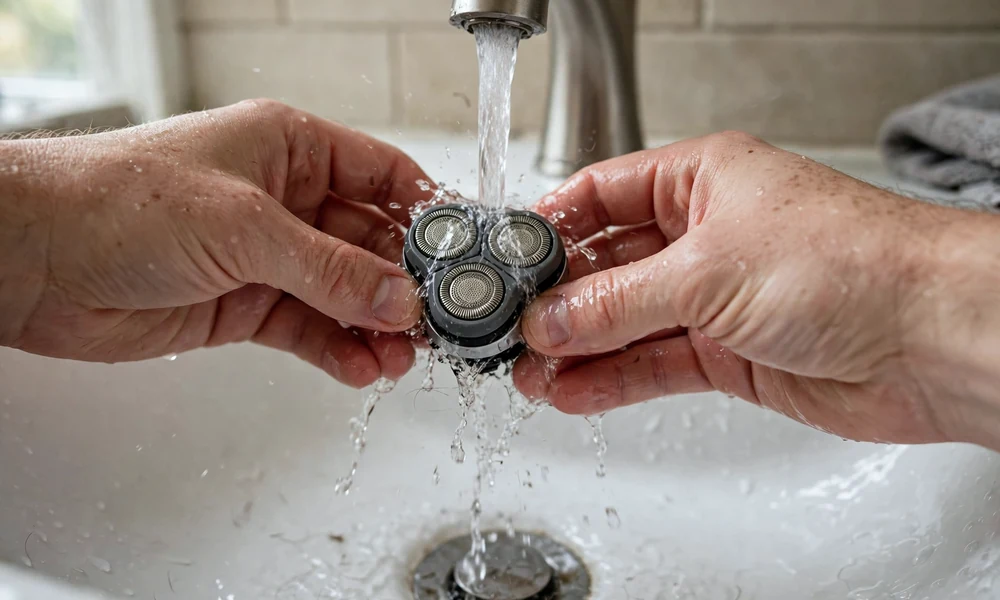
Rinse the head after every shave, let it dry fully, and store it somewhere dry rather than in a steamy shower. Trapped stubble and skin oil blunt the cut and breed smells, so a proper clean at least once a week is not optional. Most heads pop off for brushing, and a small brush is usually in the box.
Change the foil or the rotary heads on schedule, usually every twelve to eighteen months, or sooner if the shave starts to tug. A dull head is the most common reason a good shaver turns bad, and owners often blame the motor when the head is the problem. Check the price of spares before you buy the shaver, because a model whose heads cost almost as much as a new shaver is a poor deal in the long run.
What to Avoid When Buying
The worst electric shavers share one flaw: dull, cheap cutting parts. A bargain electric shaver with a weak motor and a rough foil will tug at every hair, and tugging is what turns a morning shave into a sore, spotty face. These models often feel light and plasticky, the head wobbles, the battery fades after a few minutes, and the shave is patchy no matter how many passes you make. They are usually the cheapest option on the shelf, and they are cheap for a reason.
Be wary of gimmick shavers: models sold on a single feature, like a heated head, a built-in trimmer, or a vibrating handle, while the basic cutting mechanism is poor. A heated shaver that cannot cut closely is still a bad shaver, and a fancy display does not make up for a foil that scratches. Be wary too of shavers with no replacement heads available, or heads that cost more than the shaver itself.
Buying Checklist
Start with your shaving rhythm: daily shaving points to a foil, shaving every few days points to a rotary. Choose a head that flexes and a motor that holds its speed in thick growth. Check the battery: at least two weeks of daily shaves per charge, with a five-minute quick charge for one shave. Make sure the model is genuinely waterproof if you plan to shave in the shower, and check the rating rather than trusting a splash-proof claim.
Frequently Asked Questions
How long does an electric shaver last? A good one lasts five to seven years with the heads changed on schedule. The motor rarely fails first; the heads wear out, the battery fades, or the foil gets dented. Treat it well and it will outlast the warranty by years.
How often should I replace the foil or heads? Every twelve to eighteen months for most men, or sooner if the shave starts to tug or pull. A dull head causes more irritation than any other single fault, so do not stretch it.
Can I use an electric shaver on sensitive skin? Yes, often better than a cartridge. A foil shaver keeps the blade off the skin, which means fewer nicks, and shaving with the grain first keeps irritation down. Use a light touch and a fragrance-free moisturiser afterwards.
Bottom Line
The best electric shaver of 2026 is the one that matches your beard and your skin: a good foil for daily shaving and sensitive skin, a good rotary for coarse or less frequent growth, and a wet and dry model if you shave in the shower or with lather. Spend a little more on sharp blades and a solid motor, keep the head clean and dry, change it on schedule, and shave with a light hand. Your face will feel the difference every single morning.


