Agility ladders are the flat, runged training ladders that footballers, boxers and fitness coaches lay on the ground to sharpen quick feet, and the best ones in 2026 are simple, tough and easy to carry. An agility ladder is not a climbing ladder: it is two straps joined by flat plastic rungs, usually about six metres long, that lies flat on grass, turf or a gym floor while you run, hop and shuffle through the squares. Your feet have to land in the right box at the right time, which trains coordination, balance, reaction speed and footwork in a way jogging never does. This guide explains what an agility ladder is, how the types differ, and how to choose the right one.
Key Takeaways
- An agility ladder is a flat training tool, not a climbing ladder: two straps with rungs that lie on the ground for footwork drills.
- Length matters most: a six-metre ladder with ten to twelve rungs suits most adults, while shorter ladders suit children and tight spaces.
- Adjustable rung spacing is worth paying for, because the same ladder can train quick small steps and longer running strides.
- Flat, wide rungs stay put better than round or narrow ones, and ground pegs or a non-slip backing help outdoors.
- Three ten-minute sessions a week, done at full focus, sharpen foot speed faster than one long session done tired.
What Is an Agility Ladder?
An agility ladder is a training aid made of two long straps, usually nylon webbing, joined at regular intervals by flat rungs. It is laid flat on the ground, and the athlete moves through it using set footwork patterns: one foot in each square, two feet in each square, side steps, hops, and crossovers. The squares are normally about 40 to 50 centimetres wide, and the whole ladder is usually between four and eight metres long. There is nothing electronic about it and nothing to assemble: you unroll it, straighten the straps, and start moving.
The training effect comes from the constraint. Without the ladder, most people run with long, lazy strides and slow feet. With it, every step has a place to land, so your feet must move quickly and precisely. That is why coaches in football, rugby, basketball, boxing and tennis all use them: the ladder trains the small, fast steps that change direction, dodge an opponent or recover balance. It also trains your brain, because the patterns demand concentration, and the moment your attention drifts, your feet catch a rung. If you already skip for fitness, a rope and a ladder make a natural pair, and our guide to the best jump ropes of 2026 covers the rope side of that combination.
The Main Types of Agility Ladders
Fixed-Rung Ladders
Fixed-rung ladders have their rungs stitched or riveted to the straps at set intervals, usually 40 or 45 centimetres apart. They are the simplest and cheapest type, and the right choice if you know what spacing you want and will use the ladder for one sport. The downside is that the spacing cannot change, so a ladder bought for quick small steps cannot be opened out for longer running strides.
Adjustable-Rung Ladders
Adjustable ladders let you slide the rungs along the straps, or unclip and re-clip them, so the spacing can be set anywhere from about 30 to 60 centimetres. They cost more, but they are the most versatile choice, and the best value where adults and children share one ladder.
Heavy-Duty and Outdoor Ladders
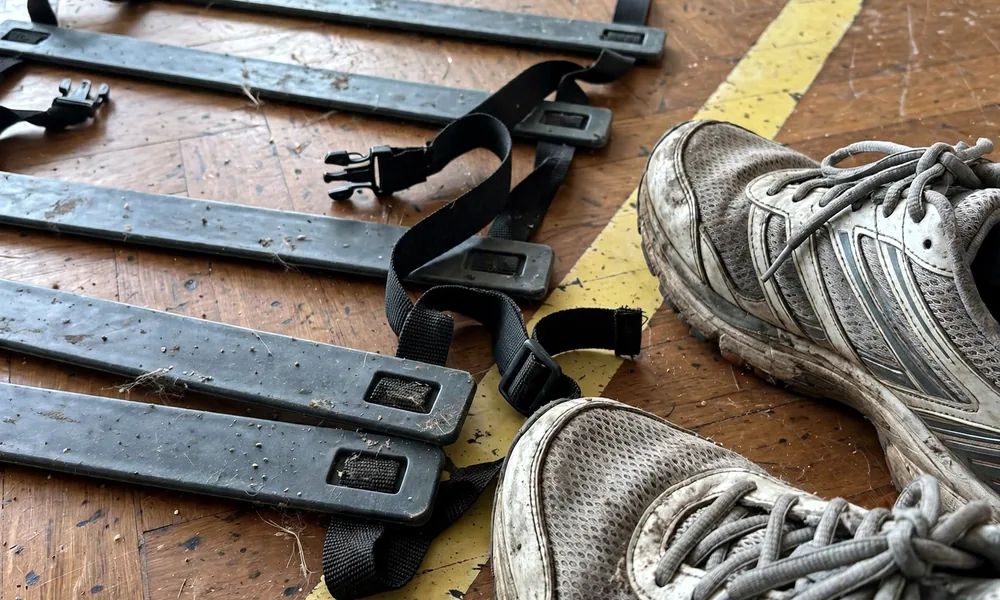
Heavy-duty ladders use thicker rungs, wider straps and stronger stitching, and they are built for daily use on rough ground. Some come with metal ground pegs that pin the ladder down on grass, stopping it bunching up when a foot clips a rung. If you coach a team or train outdoors every day, this is the type to buy
Double-Width Ladders
Double-width ladders have two parallel lanes, so two athletes can train side by side or one athlete can work lateral drills across both lanes. They suit group sessions and sideways movement, a big part of basketball and tennis footwork.
How to Choose the Best Agility Ladder for You
Get the Length Right
A ladder of about six metres, with ten to twelve rungs, suits most adults: long enough for a full drill run, short enough to fit in a garden or sports hall. Shorter ladders of three to four metres suit children, small gardens and indoor use. Longer ladders of eight metres or more suit team coaches, but they need a big flat space and are harder to keep straight.
Pick the Right Rung Spacing
Tight spacing of 30 to 40 centimetres forces short, quick steps, which builds foot speed. Wider spacing of 45 to 60 centimetres allows longer strides and running patterns. If you can only buy one ladder, buy adjustable: it covers both.
Check the Rungs and the Straps
Flat, wide rungs are better than round or narrow ones: a flat rung sits flush on the ground, so it does not roll under your foot, and it is less likely to trip you if you clip it. Look for rungs at least 4 centimetres wide. The straps should be woven nylon at least 4 centimetres wide, with double-stitched joins: thin straps twist and bunch, while wide straps lie flat and keep the ladder straight.
Think About Your Surface
On grass, a ladder with ground pegs or a textured non-slip backing stays put; a smooth-backed ladder slides on wet grass and bunches up. On turf and gym floors, almost any ladder works, but check the rungs do not mark the floor. On concrete, a ladder wears fast and your joints take a beating, so use a mat or train on grass instead. Good footwear matters for ladder work, and our guide to the best gym shoes of 2026 explains what to look for in a training shoe.
Agility Ladders vs Training Cones
Ladders and cones train different things. A ladder trains foot placement and quick feet in a straight line: your feet must land in small, defined spaces at speed. Cones train direction change and spatial awareness: you run around them, cut between them and change direction at full speed. The best sessions use both: ladder drills first, while you are fresh and focused, then cone drills for change of direction.
Five Drills That Actually Make You Quicker
A ladder is only as good as the drills you run on it. These five cover the basics.
1. One Foot in Each Square
Run through the ladder placing one foot in each square, keeping your knees high and your steps short. This is the foundation drill: it teaches quick ground contact and a fast cadence.
2. Two Feet in Each Square
Step into each square with both feet, left then right, as fast as you can. This is harder than it looks, and it is the drill that most improves coordination.
3. Lateral Shuffle
Face sideways and shuffle through the ladder, two feet in each square, then turn and shuffle back. Lateral movement is the part of agility that straight-line running never trains.
4. In-Out Hops
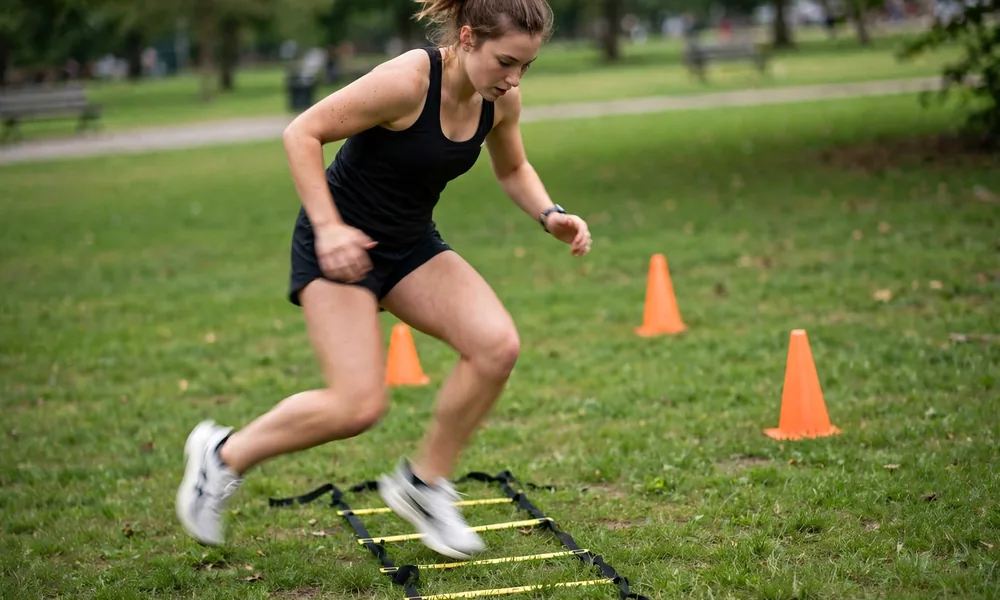
Hop with both feet into each square, then hop out to the sides of the ladder, alternating in and out as you move forward. This builds power and landing control, and it is a good warm-up for jumping sports.
5. Crossover Run
Run through the ladder crossing one foot in front of the other in each square. This is the most advanced of the five, and it trains the crossover step used in tennis and basketball. As your legs get stronger, you can add resistance work around the ladder, and our guide to the best dumbbells of 2026 covers the weights that pair well with home agility training.
Agility Ladders Compared
| Ladder Type | Best For | Typical Price | Rung Spacing | Key Strength |
|---|---|---|---|---|
| Fixed-rung | One sport, known spacing | $10–$20 | Fixed, 40–45 cm | Cheapest, lays flat easily |
| Adjustable-rung | Families, mixed training | $15–$35 | Adjustable, 30–60 cm | Most versatile, one ladder fits all |
| Heavy-duty outdoor | Coaches, daily outdoor use | $25–$50 | Fixed or adjustable | Toughest, pegs stop it sliding |
| Double-width | Group sessions, lateral drills | $30–$60 | Two lanes | Two athletes at once, sideways work |
Common Agility Ladder Mistakes to Avoid
Most ladder training problems come from a handful of avoidable mistakes. Going too fast too soon is the first: speed without control teaches sloppy feet. Start every drill slowly, and only add speed when the pattern is clean. Looking down at your feet is the second: it ruins your posture and slows you down, so keep your eyes up and learn to feel the squares. The third is training on the wrong surface: a ladder on wet grass slides, a ladder on concrete punishes your knees, and a ladder on a slope is dangerous. The fourth is buying a ladder that is too short: a three-metre ladder is over before your rhythm starts, so measure your space and buy the longest ladder that fits it. The fifth is skipping the warm-up: cold calves and Achilles tendons do not like quick footwork, so jog for five minutes first.
Agility Ladder Buying Checklist
- Check the length fits your training space: six metres suits most adults, shorter only for children or small gardens.
- Choose adjustable rung spacing if one ladder will serve different people or different drills.
- Pick flat, wide rungs at least 4 cm across, on straps at least 4 cm wide, with double-stitched joins.
- Buy ground pegs or a non-slip backing if you will train on grass, especially wet grass.
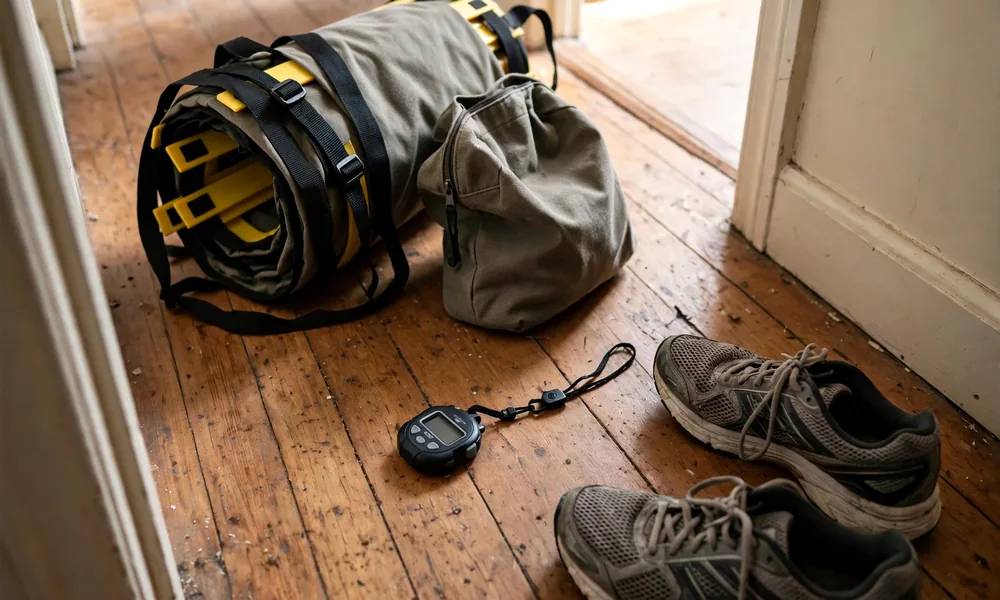
- Check the ladder rolls up small and comes with a carry bag, or it will live in a cupboard instead of your kit bag.
- Try it in flat-soled trainers first, and keep the drills short and sharp: ten focused minutes beats thirty tired ones.
Frequently Asked Questions
What is an agility ladder used for?
An agility ladder trains quick feet, coordination, balance and reaction speed. Athletes run, hop and shuffle through the squares in set patterns, forcing fast, precise foot placement.
How long should an agility ladder be?
Six metres with ten to twelve rungs suits most adults. Shorter ladders of three to four metres suit children and small spaces, while eight-metre ladders suit team coaches and sprint training.
Are agility ladders good for beginners?
Yes. Start with the simplest drill, one foot in each square, at a slow pace, and build speed only when you stop catching rungs.
Can I use an agility ladder indoors?
Yes, on a gym floor, sports hall or large room with a hard floor. Check the rungs do not mark the floor, and leave at least a metre of clear space at each end.
Do agility ladders help you lose weight?
They help as part of a training routine: ten minutes of fast ladder drills raises your heart rate and burns calories, and builds the coordination that makes other training more effective.
How do I stop my agility ladder sliding on grass?
Buy a ladder with ground pegs, or one with a textured non-slip backing, and lay it on the flattest patch of grass you can find. Peg the ends down before you start.
The Bottom Line
The best agility ladders of 2026 are simple tools done well: a six-metre ladder with adjustable spacing, flat wide rungs, strong straps and a carry bag. Buy adjustable if one ladder will serve different people, buy heavy-duty with pegs if you train outdoors every day, and keep the drills short, sharp and focused. Three ten-minute sessions a week will sharpen your feet, your balance and your coordination faster than any single piece of kit at this price.