
The best gym shoes of 2026 are not running shoes with a different label. That is the most expensive mistake people make when they start training, and it is why so many gym-goers end up with sore knees, wobbly squats and shoes that wear out in six months. A running shoe is built to move you forward in a straight line on soft foam. A gym shoe has the opposite job: keeping you stable when you move sideways, stopping you sinking under a heavy barbell, and gripping a rubber floor through burpees, box jumps and sled pushes.
The best gym shoes for 2026 do all of that without feeling like a brick on your foot. The current generation of cross-trainers is lighter, flatter and more breathable than the gym shoes of a few years ago, and the gap between a good all-rounder and a specialist shoe has narrowed to the point where one well-chosen pair can genuinely cover most of a training week. Whether you do high-intensity interval classes, heavy barbell work, circuit training or a bit of everything, there is a shoe below that fits how you actually train.
This guide compares the strongest gym shoes you can buy in 2026, explains what each one does best, and shows you how to pick the pair that suits your training style, your feet and your budget.
Key Takeaways
- Gym shoes and running shoes are built for different jobs: running shoes cushion forward motion, gym shoes prioritise stability, lateral support and a flat base.
- A heel-to-toe drop of 4 to 8 millimetres suits most gym training; a flat, firm sole is best for heavy lifting, while a little cushion helps for HIIT and conditioning.
- One good cross-trainer can cover most training weeks, but serious lifters should consider a dedicated flat shoe or a heeled lifting shoe as a second pair.
- Fit matters more than brand: your toes need room to spread, your heel must not slip, and the shoe should feel locked in when you cut sideways.
- Replace gym shoes when the outsole tread wears smooth, the lateral support softens, or the heel starts to compress unevenly, usually after 12 to 18 months of regular training.
What Makes a Gym Shoe Different From a Running Shoe
The difference starts under your foot. A running shoe stacks soft, springy foam under the heel, often 30 millimetres or more, with a heel-to-toe drop of 8 to 10 millimetres that rolls you forward with every stride. That is wonderful on the road and terrible under a barbell: the foam compresses unevenly, your weight shifts, and your knees and ankles have to work overtime to stay balanced. Our guide to the best running shoes of 2026 covers road shoes in depth, and the contrast is instructive, because almost everything a running shoe does well is something a gym shoe deliberately avoids.
A gym shoe keeps you low and close to the floor. The midsole is firmer, the heel is lower, and the base is wider, especially through the midfoot, so your weight spreads evenly when you squat or press overhead. The outsole wraps up the sides of the shoe, which stops your foot rolling over the edge during lateral lunges and side shuffles. The upper is tougher too, with reinforced panels that survive rope climbs and sled drags, where a mesh running upper would tear in weeks.
Best Overall Gym Shoe: The Cross-Trainer That Does It All
The best all-round gym shoe of 2026 is a cross-trainer with a 6-millimetre drop, a wide, flat base and a firm midsole that barely compresses under load. It is the shoe we reach for when a session mixes everything: a strength block, a conditioning finisher and a few minutes of skipping. It feels planted during squats and deadlifts, yet it does not punish you when the workout turns fast.

What sets it apart is the outsole. The rubber wraps high around the heel and the sides, and the tread grips rubber flooring even when it is dusty, which is where cheaper gym shoes start sliding. The upper uses tough, abrasion-resistant mesh with reinforced overlays at the toe and the inside of the foot, so rope climbs and lateral drags do not chew through it. The lacing system locks the midfoot down without pinching, and the heel counter is firm enough to stop your foot sliding around during quick changes of direction. It is not the lightest or the cheapest shoe here, but it is the one pair a regular gym-goer can buy and stop thinking about shoes for a year.
Best Gym Shoe for HIIT and Cross-Training Classes
High-intensity classes ask the most of a shoe. One minute you are doing box jumps, the next you are lunging sideways, then you are sprinting on a treadmill and dropping into burpees. The best HIIT shoe of 2026 handles all of that because it is built around lateral stability first and cushioning second. The midsole is firmer than a running shoe but slightly more forgiving than a pure lifting shoe, with a responsive forefoot that makes jumps feel springy rather than jarring.
The upper matters more in HIIT than in any other kind of training. You need a shoe that holds your foot tight through side-to-side movement, and the best HIIT shoes use a snug midfoot wrap, a firm heel counter and a lacing system that pulls the whole shoe in around your arch. Look for a wide outsole that extends beyond the upper at the sides: that flare is what stops your ankle rolling when you land from a jump at an angle. Breathability matters too, because a shoe that traps heat will leave your feet sliding inside it by the third round.
Best Gym Shoe for Lifting: Flat, Firm and Close to the Floor
For heavy lifting, the rules change. You want the thinnest, firmest sole you can get, because every millimetre of foam between your foot and the floor is a millimetre of instability. The best lifting-friendly gym shoe of 2026 has a near-zero drop, a completely flat outsole and a midsole that does not compress at all under load. It feels almost like lifting barefoot, with just enough protection and grip to train safely.
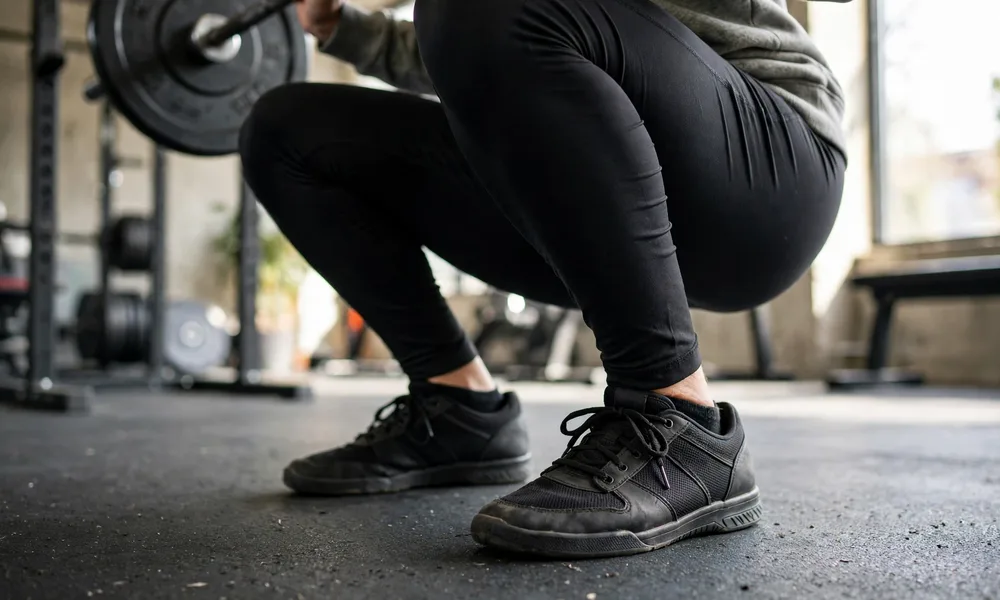
This is the shoe for squats, deadlifts, overhead presses and any lift where balance and force transfer matter. The wide, flat base spreads your weight evenly, the firm heel keeps you from tipping forward, and the grippy rubber outsole stops your feet sliding on a platform. It is less comfortable for running or jumping, so it is not the right single pair if your training is mostly conditioning, but as a lifting shoe it is unmatched for the price. If you squat heavy several times a week, a heeled shoe is worth considering as a second pair, and our guide to the best weightlifting shoes of 2026 explains the difference.
Best Budget Gym Shoe
You do not need to spend a fortune to train well. The best budget gym shoe of 2026 costs roughly half the price of the premium options, yet it gets the fundamentals right: a flat, stable base, a grippy outsole and an upper that holds your foot securely through lateral movement. It will not feel as refined as the top picks, and the cushioning is firmer, but for someone training two or three times a week it is genuinely good value.
Best Gym Shoes Compared
| Shoe Type | Best For | Heel Drop | Sole Feel | Price Range |
|---|---|---|---|---|
| All-round cross-trainer | Mixed strength and conditioning | 4–6 mm | Firm, stable | Mid-range |
| HIIT specialist | Classes, circuits, box jumps | 6–8 mm | Responsive forefoot | Mid-range to premium |
| Flat lifting shoe | Squats, deadlifts, presses | 0–4 mm | Very firm, minimal | Budget to mid-range |
| Budget trainer | New gym-goers, light training | 4–8 mm | Firm | Budget |
| Heeled lifting shoe | Olympic lifting, deep squats | 15–20 mm | Rigid, raised heel | Premium |
How to Choose the Right Gym Shoe
Start with your training, not the shoe. Write down what a typical week looks like: how many strength sessions, how many classes, how much running or jumping. If most of your week is barbell work, buy flat and firm. If most of it is classes and conditioning, buy a HIIT-focused cross-trainer with more cushioning and lateral support. If it is a genuine mix, buy the all-rounder and stop overthinking it.
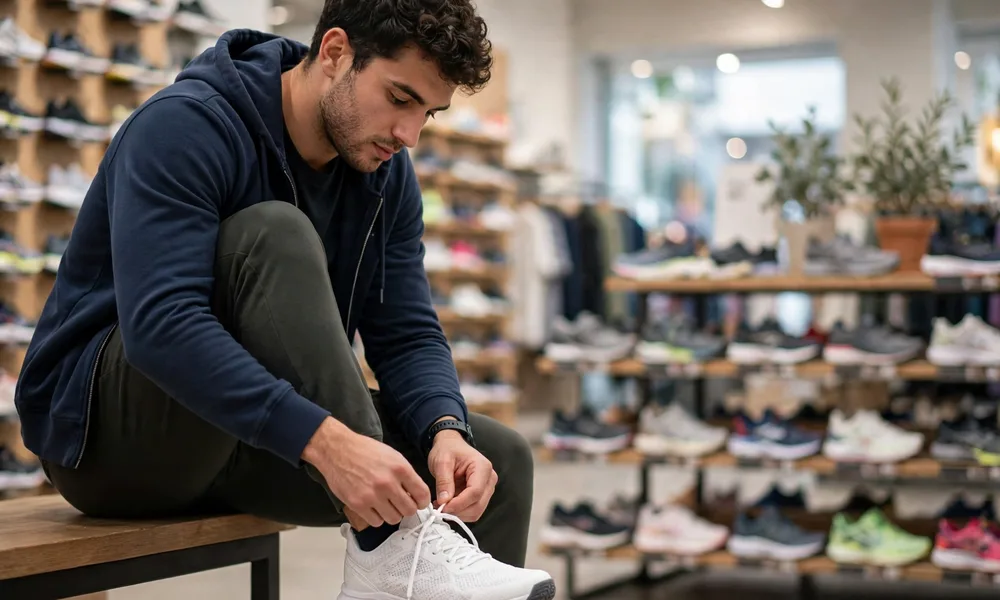
Try shoes on properly. Shop in the afternoon, when your feet are slightly swollen from the day, and wear the socks you train in. Lace the shoe fully, stand up, and do a few bodyweight squats and side lunges in the shop. Your toes should have a thumb’s width of space at the front, your heel should not lift when you step forward, and the shoe should feel stable when you shift your weight sideways. If a shop will not let you move in the shoe, buy somewhere that will. And if you are building out the rest of your kit, our roundup of the best gym essentials for 2026 covers the bag, gloves and accessories that are actually worth owning alongside your shoes.
Gym Shoe Buying Checklist
- Match the shoe to your training: flat and firm for lifting, cushioned and supportive for HIIT, an all-rounder for a mixed week.
- Check the heel drop: 0 to 4 millimetres for lifting, 4 to 8 millimetres for general gym training.
- Test lateral stability: the shoe should resist rolling when you lunge sideways, with an outsole that extends past the upper.
- Try them on in the afternoon with your training socks, and do squats and side lunges before you decide.
- Make sure your toes can spread and your heel stays locked in; a wide fit beats a bigger size for wide feet.
- Check the outsole tread and upper reinforcement: both wear first, and both decide how long the shoe lasts.
Frequently Asked Questions
Can I wear running shoes to the gym?
You can, but not for lifting. Running shoes have soft, high foam that compresses unevenly under a barbell, making you unstable and straining your knees and ankles. They are fine for the treadmill, but squats and deadlifts need a flat, stable gym shoe.
Do I need separate shoes for lifting and cardio?
Not necessarily. One good cross-trainer covers most mixed training weeks. Separate shoes make sense if you lift heavy three or more times a week, or if you run seriously, in which case a dedicated running shoe protects your legs far better than any gym shoe can.
What heel drop is best for gym shoes?
For general gym training, a drop of 4 to 8 millimetres works for most people. For heavy lifting, 0 to 4 millimetres is better, because a flatter sole keeps you closer to the floor and more stable.
How long do gym shoes last?
With regular training, expect 12 to 18 months. Replace them when the outsole tread wears smooth, the heel compresses unevenly, or the lateral support goes soft. Training in worn-out shoes is a quiet way to invite knee and ankle trouble.
Are expensive gym shoes worth it?
Usually, yes, if you train often. Premium gym shoes use better outsole rubber, tougher uppers and firmer heel counters, so they grip better and last longer. If you train once or twice a week, a budget shoe is fine.
Should gym shoes be tight or loose?
Snug, not tight. Your heel should be locked in with no slipping, your midfoot should feel held, and your toes should have room to spread and a thumb’s width of space at the front.
The Bottom Line
The best gym shoes of 2026 are the ones that match how you train. For most people, that is a firm, stable cross-trainer with a 4 to 6 millimetre drop, a wide base and a grippy outsole that handles both the barbell and the conditioning finisher. Lifters who train heavy should go flatter, class-goers should go a little more cushioned and supportive, and wide feet should get a genuinely wide fit rather than a bigger size. Buy the shoe for the training you actually do, try it on properly, and replace it when the grip and support go.


