The best corn strippers of 2026 are the ones that take the kernels off the cob in one clean pass, without sending half of them across the kitchen. Cutting kernels off a cob with a knife is slow, uneven, and a good way to nick a finger. A corn stripper does the same job in seconds, with a blade shaped to follow the curve of the cob, and it leaves the kernels whole instead of crushed.
Corn on the cob is easy to love and awkward to serve any other way. The moment you want corn for a salad, a salsa, fritters, or a freezer bag, the kernels need to come off, cleanly and in quantity. A stripper turns a five-minute knife job into a thirty-second one, without the mess that makes most people give up and buy a tin instead.

Key Takeaways
- A corn stripper cuts kernels off the cob in seconds, with a blade shaped to follow the curve of the cob.
- Ring-style strippers are the fastest for whole cobs, while peeler-style and cup-style tools give more control for smaller jobs.
- Sharp stainless steel blades cut cleanly; dull or plastic blades crush kernels and leave ragged rows behind.
- The best strippers catch the kernels as they cut, so they land in a bowl instead of across the counter.
- Strip over a wide bowl, work from the top of the cob down, and keep the blade away from your fingers.
Why a Knife Is the Wrong Tool for the Job
A kitchen knife can cut kernels off a cob, but it was never designed for it. The cob is round, the kernels sit in tight rows, and the knife edge is straight, so every cut is a compromise: too shallow and half the kernel stays behind, too deep and you take a strip of tough cob with it. The kernels scatter as they come off, and the cob rolls under the blade unless you hold it firmly, which puts your fingers close to the edge.
A stripper shapes the tool to the cob. The blade follows the curve, cutting each row at the same depth, while the tool holds the cob steady and your fingers stay clear. Most designs catch the kernels as they fall, in a built-in cup or straight down into the bowl. The same cob that takes five minutes with a knife takes under a minute with a decent stripper, and the kernels come off whole, which matters for salads and fritters where crushed kernels turn mushy.
When stripping corn is easy, fresh corn stops being a side dish you only serve on the cob and becomes an ingredient you reach for all week. That is the real value of the tool: not the minutes it saves, but the meals it unlocks.
The Main Types of Corn Stripper, Compared
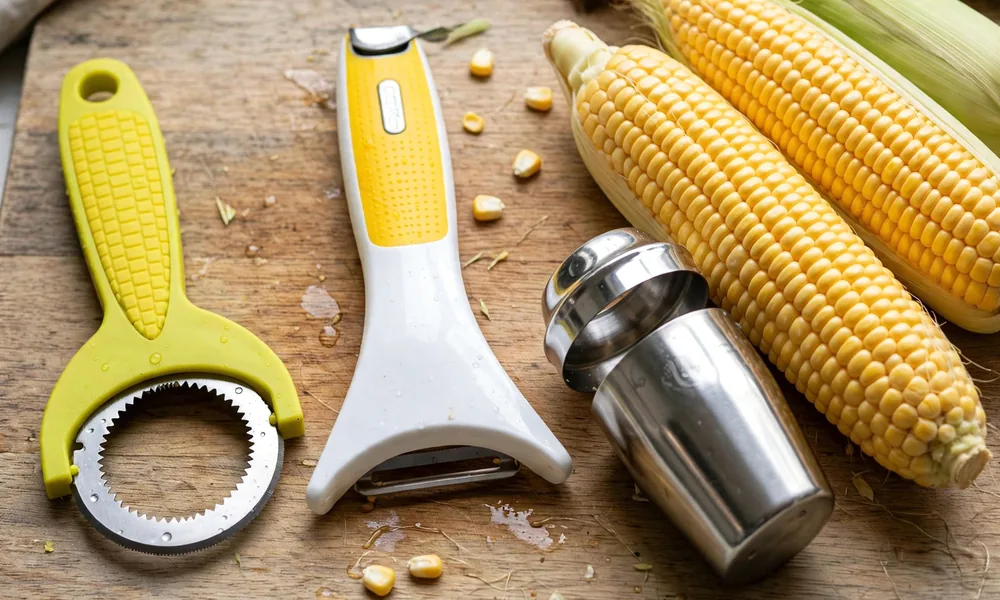
Most corn strippers fall into three types, and the right one depends on how much corn you strip and how you like to work.
Ring Strippers
A ring stripper is a circular blade you push down over the cob, stripping every row at once: one smooth push and the cob is bare. Most are sized for standard sweetcorn, and very thin or very fat cobs can jam or slip. They suit anyone who strips several cobs at a time, for freezing or for a crowd.
Peeler-Style Strippers
A peeler-style stripper works like a vegetable peeler with a wider, curved blade. You hold the cob upright in a bowl and draw the blade down one side at a time, turning the cob as you go. Slower than a ring, but it gives far more control and handles thin, fat, or uneven cobs without complaint.
Cup and Container Strippers
A cup stripper combines the blade with a container that catches the kernels as they fall. You push the cob through the cup, and the kernels drop inside instead of scattering. These are the tidiest option, though the container makes the tool bulkier to store and some designs are fiddly to empty and wash.
| Type | Best for | Speed | Watch out for |
|---|---|---|---|
| Ring stripper | Several cobs, freezing, big batches | Very fast | Needs a standard-size cob |
| Peeler-style | One or two cobs, careful work | Steady | Kernels can scatter |
| Cup / container | Tidy kitchens, small counters | Fast | Bulky to store, fiddly to wash |
| Knife | No tool to hand | Slow | Uneven cuts, scattered kernels |
What to Look For Before You Buy
Blade sharpness comes first. A sharp stainless steel blade slices each kernel off cleanly at the base, leaving it whole and the cob smooth. A dull blade tears instead of cutting, crushing kernels and leaving ragged rows. Stainless steel holds its edge far longer than plastic or coated blades, and it will not rust if left damp.
The grip is the next thing to check. Stripping corn takes force, and a handle that slips in a wet hand is a safety problem as much as a comfort one. Look for a textured or rubberised grip you can hold firmly even with damp hands, and a shape that lets you push straight down without twisting.
Kernel catching matters more than most buyers expect. The best strippers direct the kernels into a bowl or a built-in cup, so the counter stays clean. If the kernels spray sideways off the blade, the tool will make a mess no matter how sharp it is.
Ease of cleaning is easy to overlook and annoying to live without. Corn juice dries sticky, and kernels lodge in every crevice. A stripper that rinses clean under the tap will get used far more often than one that needs a brush and a soak.
Finally, check the fit. Ring strippers are sized for standard cobs, and a ring that is too tight jams while one that is too loose leaves rows behind. If your corn runs small or large, a peeler-style tool is the safer bet, because it follows whatever cob you give it.
How to Strip Corn Cleanly
Start with the cob cooked or raw, whichever the recipe needs. Raw kernels are firmer and hold their shape better for salads, while cooked kernels are sweeter and softer for fritters. Snap a long cob in half: a shorter cob is easier to control, and most bowls are not deep enough for a full-length cob standing upright.
Stand the cob upright in a wide, heavy bowl, flat end down, so it cannot wobble. With a peeler-style stripper, start at the top and draw the blade down one side in a single smooth stroke, turning the cob a quarter turn after each pass. With a ring stripper, centre the ring over the top of the cob and push straight down in one steady motion, keeping your fingers clear of the blade. With a cup stripper, push the cob through the cup over the bowl and let the container catch the kernels.
Work from the top down, so the kernels fall away from the blade instead of piling against it. Do not force the tool: if it sticks, the blade is dull or the cob is too wide for the ring, and forcing it will crush kernels and risk a slip. A sharp stripper should glide.
Fresh, Frozen, or Canned: When Stripping Wins
Fresh corn stripped at home beats the alternatives on flavour and texture, but it is not always the practical choice. Our guide to the best frozen corn for quick, easy sides shows frozen kernels are cut at their peak and hold up well in cooked dishes, and they are the right call in winter or on a busy night. Top canned corn for quick, easy sides is softer still, but it is ready in seconds and suits soups and fritters where texture matters less.
Stripping wins when the corn is in season and the dish shows it off: a summer salad, a salsa, grilled corn fritters, or a bowl of kernels tossed in butter. The kernels are firmer, sweeter, and brighter than anything from a bag or a tin, and you control the cut. For eating corn on the cob itself, of course, no stripping is needed at all, and a good pair of holders does the job, as our guide to corn holders that stay put explains.
Common Mistakes That Waste Good Corn
The most common mistake is cutting too deep. A blade pushed hard into the cob takes a strip of the cob with the kernels, which is tough, bitter, and impossible to pick out later. Let the blade ride the surface of the cob and cut only the kernel bases. If the cob looks chewed after stripping, you pressed too hard.
The second mistake is stripping over a flat board instead of a bowl. Kernels bounce and roll, and half of them end up on the floor. A wide bowl with steep sides catches almost everything, and it gives the cob something stable to stand in.
The third mistake is storing the stripper dirty. Dried corn juice glues the blade, and a sticky tool needs more force, which is when slips happen. Rinse the blade under hot water as soon as you finish, dry it, and put it away clean.
Checklist: Before You Buy
- Blade is sharp stainless steel, not plastic or coated metal.
- Handle grips firmly even with damp hands.
- Kernels are caught in a bowl or built-in cup, not scattered.
- Ring size fits standard cobs, or choose a peeler-style for varied sizes.
- Tool rinses clean easily or is dishwasher safe.
- Blade is guarded or covered for safe storage in a drawer.
Frequently Asked Questions
Do corn strippers work on raw corn?
Yes. Raw kernels are firmer and come off cleanly, which makes them ideal for salads and salsas. Cooked kernels are softer and sweeter, and they suit fritters and soups. Either way, work from the top of the cob down in smooth strokes.
What is the difference between a corn stripper and a corn peeler?
They are the same job under two names. A peeler-style stripper is one type of corn stripper, alongside ring and cup designs. All of them cut kernels off the cob; the difference is only in how the blade is shaped and how the kernels are caught.
Can I strip corn with a knife instead?
You can, but it is slower and messier. A knife cuts unevenly, scatters kernels, and puts your fingers near the edge. A stripper follows the curve of the cob, cuts every row at the same depth, and catches the kernels as they fall.
How do I clean a corn stripper?
Rinse it under hot running water straight after use, before the corn juice dries. Most stainless steel strippers are dishwasher safe, but hand washing keeps the edge sharper for longer. Dry it fully before storing so the blade stays rust-free.
Do ring strippers fit all corn cobs?
No. Most rings are sized for standard sweetcorn, and very thin or very fat cobs can jam or leave rows behind. If your corn varies in size, a peeler-style stripper is the safer choice because it follows any cob.
Is a corn stripper worth it if I only eat corn on the cob?
Probably not. If you never need loose kernels, a pair of corn holders is the better buy. A stripper earns its keep when you cook with kernels: salads, salsas, fritters, soups, and freezer bags for winter.
The Bottom Line
A corn stripper is a small tool that removes the one annoying job standing between fresh corn and the dishes that use it. Buy one with a sharp stainless steel blade, a grip that holds in a wet hand, and a design that catches the kernels instead of scattering them. Strip over a wide bowl, work from the top down, and rinse the blade clean when you finish. Fresh kernels in under a minute, with no mess, is a fair trade for a tool that costs less than a bag of groceries.