
The Worst Dinghies of 2026: Seven Tenders to Leave on the Shore
The worst dinghies of 2026 are not the boats that look rough in a photograph. They are the tenders that fail at the one job a dinghy exists to do: carry people and gear safely between a yacht and the shore, and back again, without drama. A dinghy is a working boat. It is loaded with shopping, fuel and children, dragged up beaches and lifted onto davits. When it does that job well, nobody notices it. When it does it badly, every trip ashore becomes a wet, heavy argument with a boat that was never up to the work.
Key takeaways
- A dinghy is a tender first: it lives or dies on carrying people and gear between yacht and shore, not on how fast it rows.
- The transom fails most expensively: a soft or rotten transom cannot hold an outboard, and the engine is the first thing lost.
- Weight decides whether a dinghy is useful: a tender too heavy to lift, davit or drag up a beach is a burden, not a boat.
- A tender that tips when a second person steps aboard, or sits so low that waves come over the side, is not safe for shore runs.
- Check the transom, the hull, the real load limit and the weight before you pay, and walk away from any tender that hides them.
How the worst dinghies of 2026 were chosen
Every tender below was scored on five measures. Transom and hull condition comes first: is the structure sound, dry and stiff, or soft, patched and flexing where the outboard clamps on? Carrying capacity is second, judged on whether the boat takes its rated crew plus bags, fuel and shopping without sitting dangerously low. Stability is third, because a tender that tips when someone steps aboard is a hazard on a shore run. Weight and handling is fourth: can one or two people carry, launch, beach and lift it onto davits? Towing and beaching is fifth: does the boat tow straight and take a beach without damage, or does it wander, fill and grind itself apart?
Two notes before the list. First, this guide is strictly about rigid dinghies used as tenders: small open boats of wood, fibreglass or aluminium that ferry crew and gear between a larger boat and the shore, rowed or driven by a small outboard. It does not cover inflatable boats, which are air-filled craft with their own faults, and it does not cover rowboats as rowing craft: a rowboat is judged on its oars and how it tracks under oar power, as our guide to the worst rowboats of 2026 explains, while a tender is judged on the shore run. Second, no dinghy here is named by brand or builder: the same bad patterns appear in many boats.
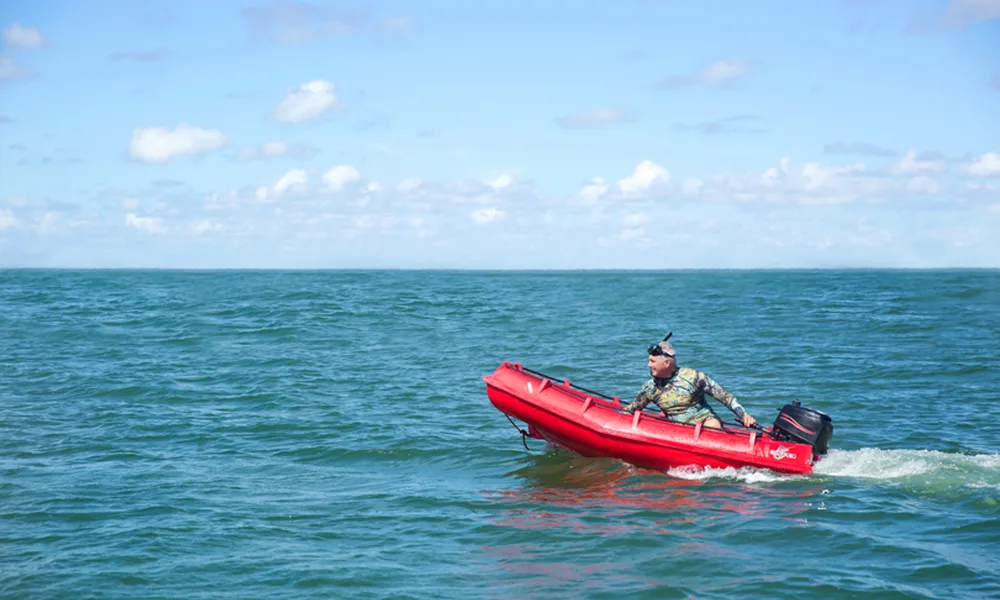
Comparison table: the worst dinghies of 2026
| Rank | Dinghy type | Main fault | First warning sign |
|---|---|---|---|
| 1 | Leaking old wooden tender | Hull takes on water | Wet feet within ten minutes |
| 2 | Tender with a rotten transom | Outboard mount fails | Transom flexes under the engine |
| 3 | Too-heavy GRP tender | Cannot lift or beach it | Four people to carry it ashore |
| 4 | Tippy narrow tender | No stability with a load | Tips when someone steps aboard |
| 5 | Too-small tender | Overloaded on every trip | Waterline a finger from the top |
| 6 | Flat-bottomed tender | Pounds and slams in chop | Every wave is a bang |
| 7 | Folding tender | Joints jam and leak | Hinges stiff, seams weeping |
The worst dinghies of 2026
1. The leaking old wooden tender: bail all day, row nowhere
The leaking old wooden tender is the worst dinghy of 2026 because it fails at the one job no tender can fail at: keeping the water out while it carries people to the shore. From the pontoon it looks charming, all varnished planks and honest wear, and the seller will tell you it just needs a little bailing. On the water the seams open, the old repairs weep, and the water rises around your feet faster than a bucket can empty it, so you spend the shore run bailing instead of steering, with shopping and dry clothes sitting in bilge water.
2. The tender with a rotten transom: the engine is the first thing lost
The tender with a rotten transom looks sound until the outboard is clamped on and the throttle is opened, and then the truth arrives all at once. The transom is the stern board that carries the engine, and on a bad tender the plywood inside it has rotted to pulp while the paint outside still looks fresh. Press it and your thumb sinks in, flex it and the whole stern moves, and under power the engine twists and the steering goes vague. Check the transom before anything else: press it hard all round, look for fresh paint hiding soft wood, and walk away from any tender whose stern flexes.
3. The too-heavy GRP tender: a boat you cannot move
The too-heavy GRP tender is a fine boat in the water and a miserable one everywhere else, which is half of what a tender has to be. It is built thick and solid, and it weighs so much that two people cannot carry it down a slipway, lift it onto davits or drag it above the tide line on a beach. A tender that cannot be moved by its own crew ends up left in the water or simply never used, and a yacht with a tender nobody will launch is a yacht without a way ashore.

4. The tippy narrow tender: balance on a knife edge
The tippy narrow tender looks fast and elegant, and it is, right up until someone steps aboard with a bag of shopping. The hull is so narrow that the boat has almost no stability, and the smallest shift of weight, a passenger stepping in from a pontoon, a child leaning over the side, a dog moving to the bow, sends it rolling hard. A tender is loaded in awkward places, from pontoons, from beaches, from a yacht rolling at anchor, and a boat that cannot take a step aboard without tipping is not fit for that work.
5. The too-small tender: too many people, too little boat
The too-small tender is the most common bad tender on any anchorage, because the mistake is made on the pontoon, not on the water. The boat is rated for two adults, and four people climb in with shopping, a fuel can and a dog, and the boat sits so low that the waterline is a finger’s width from the gunwale. Count the crew and the gear against the real weight limit, not the number of seats, and leave one person aboard the yacht if the tender sits too low.
6. The flat-bottomed tender: every wave is a bang
The flat-bottomed tender is stable at rest and miserable the moment the water gets up, which on a shore run is most of the time. In anything more than a ripple, the flat bottom slams into every wave with a bang that shakes the crew, sprays water over the side and sends unsecured gear sliding across the floor. A tender with some V in the bow that cuts the water instead of slapping it is worth the slight loss of stability at rest, because the shore run is never as flat as the pontoon.

7. The folding tender: clever on paper, leaking in practice
The folding tender promises the best of both worlds: a rigid boat that folds flat for stowage on a small yacht, and a full-size tender when it is opened up. The cheap ones deliver the worst of both instead. The hinges stiffen with salt, the joints weep at the seams, and the boat flexes along its folds the moment it is loaded, so it never feels like one solid hull. A folding tender with a documented rebuild and fresh seals can work, but a tired one is a project, not a purchase. If your yacht has no room for a proper rigid tender, a sound inflatable is a better answer than a folding hull that leaks at every joint.
What to avoid when buying a tender
The most common tender regret is a wrong match: a narrow hull for a family, a heavy boat for small davits, or a leaking wooden boat bought for its charm. Check four things before you pay: the transom, pressed hard all round for soft wood; the hull, dry inside and sound underneath; the real weight limit, counted against crew and gear rather than seats; and the weight of the boat itself, lifted by the crew who will actually launch it. Our guide to the worst sailboats of 2026 makes the same point about surveys and soft decks.
Checklist: buying a dinghy in 2026
- Press the transom hard all round and check it does not flex: soft wood or fresh paint over rot means walk away.
- Check the hull is dry inside before you launch, and look underneath for patches, cracks and ground-down keels.
- Count crew and gear against the real weight limit, not the seats, and keep a hand’s width of freeboard.
- Lift, carry and beach it with your own crew before you commit, including getting it onto the davits.
- Step aboard from a pontoon with a bag in your hand: if the boat rolls hard, it is too narrow for tender work.
- Tow it if you can, and watch whether it tracks straight or wanders, fills and drags.
Frequently asked questions
What is the difference between a dinghy and a rowboat?
A rowboat is rowed with two oars fixed in rowlocks and judged on how it rows. A dinghy is a small tender that ferries people and gear between a yacht and the shore, rowed or driven by a small outboard, and judged on the shore run.
How do I check a transom before buying a dinghy?
Press it hard with your thumb all round the outboard clamp area, tap it and listen for a dull, soft sound, and push the top to feel for flex. Look for fresh paint and swollen plywood, which can hide rot.
How many people can a dinghy safely carry?
Fewer than the number of seats suggests. Check the weight limit on the plate, count every person and every bag, and keep the freeboard at a hand’s width or more. If the waterline is a finger’s width from the top, the boat is overloaded.
Is a wooden dinghy better than a fibreglass one?
A sound wooden dinghy is lovely and a sound fibreglass one is practical, but condition matters more than material. A leaking wooden tender is worse than a sound fibreglass one, and a fibreglass tender too heavy to launch is worse than a light wooden one.
Can I tow a dinghy behind my yacht?
Yes, if it tracks straight and does not fill in a following sea. Tow it on a short painter in calm water first: a tender that wanders or ships water will only get worse in a chop.
Should I buy a cheap second-hand dinghy?
Only after a proper check: press the transom, look underneath, check the hull is dry and lift it with your own crew. A cheap tender that needs a new transom is not cheap.
Bottom line
The worst dinghies of 2026 are the tenders that break the simple promise of a tender: a dry hull, a solid transom, a boat that carries its load without tipping and a craft you can launch and lift aboard yourself. Check the transom, the hull, the weight limit and the weight before you pay, and the tender you buy will carry you ashore instead of fighting you all the way there. The tender deserves the same care as the yacht itself, as our guide to the worst yachts of 2026 shows.


