
Oars Down, Spirits Sunk: The Worst Rowboats of 2026
The worst rowboats of 2026 do not fail because rowing is hard. They fail because the boat lets the rower down: the hull takes on water faster than it can be bailed, the oars do not match the boat, the seats are in the wrong place, or the whole craft will not go in a straight line no matter how hard you pull. A rowboat is a simple machine, and that is exactly why a bad one is so easy to spot. The rower sits facing backwards, pulls two oars set in rowlocks, and expects the boat to answer each stroke with steady forward movement. When it does, even a slow row across a lake feels honest. When it does not, the trip becomes a fight with the boat itself, and the lake wins.
Key takeaways
- A rowboat lives or dies on its hull, its oars and its balance: a boat that leaks, will not track straight or tips at the first shift of weight fails at its basic job.
- Oars are not paddles, and a rowboat is not a canoe or a kayak: the rower faces backwards and pulls two oars fixed in rowlocks, while a canoe is paddled kneeling with a single blade and a kayak is paddled facing forwards with a double blade.
- The worst hire rowboats are the ones that look fine from the bank and fall apart on the water, with mismatched oars, loose rowlocks and seats that slide at the worst moment.
- Overloading is the fastest way to ruin a rowboat: one extra person, one heavy bag too many, and a boat that was fine becomes a boat that sits low, ships water and will not turn.
- Always check the hull, the oars, the rowlocks and the real weight limit before you pay, and walk away from any boat that hides them.
How the worst were chosen
Every type below was scored on five measures. Watertightness comes first: does the hull stay dry, or does water come in through seams, cracks and old repairs? Tracking is second, judged on whether the boat goes straight when both oars pull together, or wanders, spins and fights every stroke. Stability is third, because a rowboat that tips when someone shifts their weight is not a boat, it is a hazard. Oars and fittings are fourth: matched oars, sound rowlocks and seats that stay put. Weight and carrying are fifth, judged on whether the boat can carry its crew and gear without sitting so low that every wave comes aboard.
Two notes before the list. First, this guide is strictly about rowboats: small open boats moved by oars in rowlocks, rowed from a seated position facing backwards. It does not cover canoes or kayaks, which are paddled, not rowed, and it does not cover motorised canal boats, which are a different craft altogether and are ranked in our guide to the worst canal boats of 2026. Second, no boat here is named by brand or builder, because the same bad patterns appear in many boats, and what matters is learning to recognise them before you step aboard. Readers planning a bigger crossing will find the same checks useful in our guide to the worst ferries of 2026, where a scheduled passenger boat is judged on the same promise: get there dry, on time and in one piece.

Comparison table
| Rank | Type | Main fault | First warning sign |
|---|---|---|---|
| 1 | The leaking old wooden rowboat | Hull takes on water | Wet feet within ten minutes |
| 2 | The hire rowboat that will not go straight | No tracking, spins in circles | One oar pulls harder than the other |
| 3 | The overloaded family rowboat | Sits too low, ships water | Freeboard of a finger’s width |
| 4 | The rowboat with mismatched oars | Uneven strokes, no power | Oars of different lengths |
| 5 | The heavy fibreglass rowboat | Too heavy to launch or beach | Four people to carry it |
| 6 | The tippy narrow rowboat | No stability at all | Tips when someone shifts |
| 7 | The garden-ornament rowboat | Rotten, sold as seaworthy | Paint over soft wood |
The worst, ranked
1. The leaking old wooden rowboat: bail all day, row nowhere
The leaking old wooden rowboat is the worst rowboat of 2026 because it fails at the one job a boat cannot fail at: keeping the water out. From the bank it looks charming, all varnished planks and honest wear, and the owner will tell you it just needs a little bailing. On the water, the seams open, the old repairs weep, and the water rises around your feet faster than a bucket can empty it, so you spend the trip bailing instead of rowing.
2. The hire rowboat that will not go straight: round in circles
The hire rowboat that will not go straight turns a simple lake crossing into a slow argument with the water. The hull is warped, one side drags, and the boat pulls to the left no matter how evenly you row. You correct, it wanders back, and after twenty minutes you have covered half the distance you expected and used twice the effort. The worst versions have a bent keel or a hull repaired on one side only, so the boat has a permanent lean that no amount of skill can fix.
3. The overloaded family rowboat: too many people, too little boat
The overloaded family rowboat is the most common bad rowboat on a summer lake, because the mistake is made on the bank, not on the water. The boat is rated for two adults, and four people climb in with a picnic, a dog and a bag of towels, and the boat sits so low that the waterline is a finger’s width from the gunwale.

4. The rowboat with mismatched oars: one long, one short
The rowboat with mismatched oars is a small fault that ruins the whole trip, because rowing only works when both sides pull together. One oar is longer than the other, or one blade is bigger, or one rowlock sits higher, and every stroke is uneven. The boat crabs sideways, the rower tires twice as fast, and the trip becomes a lesson in frustration rather than a pleasure.
5. The heavy fibreglass rowboat: a boat you cannot move
The heavy fibreglass rowboat is a fine boat in the water and a miserable one everywhere else, which is half of what a rowboat has to be. It weighs so much that two people cannot carry it down to the shore, and launching it means dragging it across stones and mud, scraping the hull and straining backs before the trip has even begun.
6. The tippy narrow rowboat: balance on a knife edge
The tippy narrow rowboat looks fast and elegant, and it is, right up until someone moves. The hull is so narrow that the boat has almost no stability, and the smallest shift of weight, a passenger reaching for a bag, a child leaning over the side, sends it rolling. The rower sits rigid, afraid to move, and the boat punishes every correction with a bigger roll.
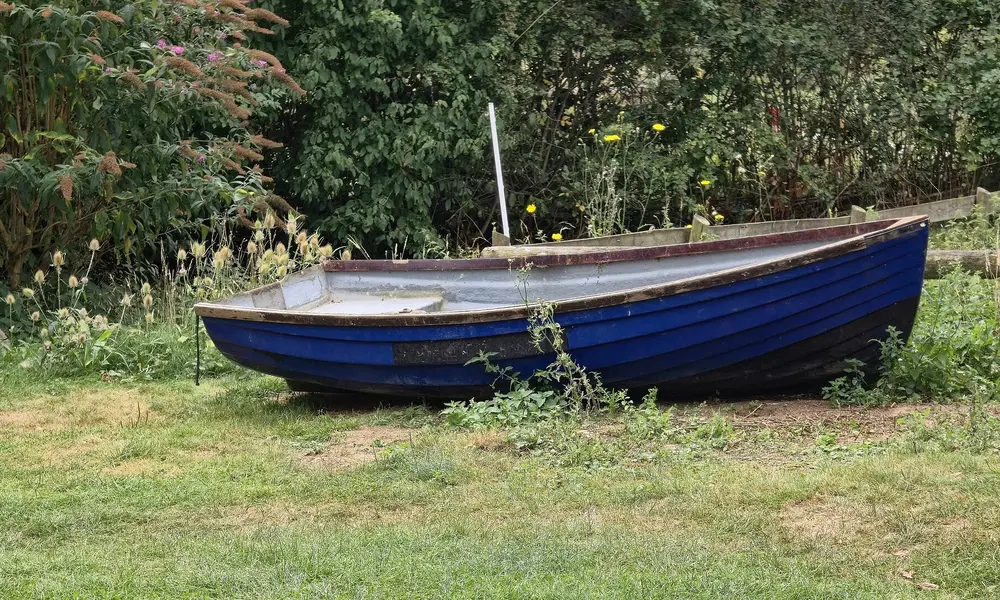
7. The garden-ornament rowboat: painted, rotten and sold as seaworthy
The garden-ornament rowboat is the saddest entry on this list, because it was never meant to float again. It sat in a garden for years, full of soil and flowers, and someone painted over the rot, put it up for sale, and called it a classic. The paint looks fresh, but press the hull and your thumb goes through soft wood, the transom flexes, and the seats are held in by rust and habit.
What to avoid
The most common rowboat regret is not a bad boat but a wrong match: a narrow racing hull hired for a family picnic, a leaking wooden boat taken out because it looked charming, or an overloaded boat that sat too low from the first minute. Avoid the trap by checking four things before you pay: the hull, dry and sound when you press it; the oars, matched in length and blade; the rowlocks, tight and even; and the real weight limit, not the number of seats. The same checks apply when you are towing a boat to the water, and our guide to the worst boat trailers of 2026 makes the same point about trailers: a good boat on a bad trailer still ends up in trouble before it ever floats.
Checklist
- Press the hull all round and check the transom: soft wood, fresh paint over rot or a flexing transom means walk away.
- Check the oars are a matched pair, the same length and blade, and that the rowlocks are tight, even and sound.
- Sit in the boat and take three even strokes: if it curves, spins or pulls to one side, hand the oars back.
- Count the crew and the gear against the real weight limit, not the number of seats, and leave one person ashore if it sits too low.
- Look for a bucket already in the boat, a warning sign the owner knows it leaks and expects you to bail.
- Check you can carry, launch and beach the boat with your own crew before you commit to a day on the water.
Frequently asked questions
How do I tell a rowboat from a canoe or a kayak?
A rowboat is rowed with two oars fixed in rowlocks, and the rower sits facing backwards. A canoe is paddled kneeling or sitting with a single-bladed paddle, facing forwards, and a kayak is paddled sitting with a double-bladed paddle, also facing forwards. If it has rowlocks and oars, it is a rowboat.
What is the first thing to check on a hire rowboat?
The hull. Press it, look for soft wood or fresh paint hiding rot, and check the boat is dry inside before you launch. Then check the oars match and the rowlocks are tight. A dry hull and matched oars are the minimum, and a boat that fails either is not worth hiring.
Why does my rowboat keep going in circles?
Usually because the hull is warped, one side drags, or the oars are mismatched. A bent keel or a one-sided repair gives the boat a permanent lean. Take three even strokes on flat water: if the boat curves on its own, the fault is in the boat, not in your rowing.
How many people can a rowboat safely carry?
Fewer than the number of seats suggests. Check the weight limit, count every person and every bag, and keep the freeboard, the height of the side above the water, at a hand’s width or more. If the waterline is a finger’s width from the top, the boat is overloaded.
Is a wooden rowboat better than a fibreglass one?
A sound wooden rowboat is lovely and a sound fibreglass one is practical, but the material matters less than the condition. A leaking wooden boat is worse than a sound fibreglass one, and a fibreglass boat too heavy to launch is worse than a light wooden one you can carry.
Should I buy a cheap second-hand rowboat?
Only after a proper check: press the hull, flex the transom, look underneath, and check the oars and rowlocks. A cheap boat that needs a new hull is not cheap. Walk away from any boat with soft wood, a rotten transom or paint that hides more than it shows.
Bottom line
The worst rowboats of 2026 are the ones that break the simple promise of a rowboat: a dry hull, matched oars, a boat that goes straight and a craft you can carry, launch and beach yourself. Check the hull, the oars, the rowlocks and the weight limit before you pay, and the boat will carry you across the lake instead of fighting you all the way there.


