Money Can’t Buy a Good Yacht: The Worst Yachts of 2026
The worst yachts of 2026 look like the good life itself: a gleaming white hull, a flybridge in the sun and a price that promises summers you will never forget. This guide names the seven worst yachts of 2026, ranked by type and pattern rather than by brand, so you can spot the trap before you buy or charter.
Key takeaways
- The ageing superyacht with outdated systems is the yacht to avoid first: old generators, wiring and stabilisers fail together, and every fix needs a specialist.
- A yacht lives or dies on its running costs: fuel, crew, berthing, insurance and maintenance can dwarf the purchase price in a single season.
- Comfort is not a luxury on a yacht: cramped cabins, noisy engines and a galley that cannot serve eight guests ruin the trip the boat was bought for.
- Charter wear is real wear: a yacht sailed hard by strangers every week ages faster than any private boat of the same years.
- Always check the engines, the generators, the systems and the service history under way, not just tied up in the marina, and walk away from any yacht that hides them.
How the worst yachts of 2026 were chosen
Every yacht below was scored on five measures. Systems and engineering come first: are the engines, generators, air conditioning, stabilisers and electronics sound and supported, or old, tired and obsolete? Running costs are second, judged on fuel, crew, berthing, insurance and maintenance, because a yacht you cannot afford to run is a yacht you cannot use. Comfort is third, covering cabins, heads, the galley, noise and motion at anchor and under way. Handling is fourth: does the boat steer, dock and hold station sensibly, or does it need a full crew for every manoeuvre? Resale and support are fifth: whether parts, yards and buyers still exist for the boat, or whether it is an orphan that nobody wants to touch.
Two notes before the list. First, no yacht here is useless on paper: they earn their place because the boat lets its owner down, not because the idea of yachting is wrong. Second, this guide ranks types and patterns, not named makes or models: no published reliability scores exist for individual yachts, This guide is strictly about yachts: larger luxury leisure vessels, motor or sailing, bought or chartered for comfort, with cabins, crew and systems far beyond a simple sailing boat. It does not cover sailboats, which are smaller wind-powered boats you sail yourself with a small crew and modest running costs. A ferry is a different thing entirely: it carries passengers on a scheduled crossing, as our guide to the worst ferries of 2026 shows, while this guide judges the luxury boat you own or charter for pleasure.
Comparison table: the worst yachts of 2026
| Rank | Yacht type | Main problem | Buy instead |
|---|---|---|---|
| 1 | Ageing superyacht, outdated systems | Generators, wiring, stabilisers fail | A newer yacht with supported systems |
| 2 | Fuel-thirsty planing motor yacht | Burns fuel, short range, noisy | An efficient displacement yacht |
| 3 | Charter-worn luxury yacht | Tired interiors, worn systems | A lightly used private yacht |
| 4 | Oversized flybridge yacht, poor visibility | Blind spots, hard to dock | A flybridge with a lower helm too |
| 5 | Budget entry-level motor yacht | Cramped cabins, cheap fittings | A smaller yacht built properly |
| 6 | Converted commercial vessel yacht | Odd layout, huge upkeep | A purpose-built yacht |
| 7 | Crewed sailing superyacht, complex rig | Needs a full crew, huge sail costs | A simpler sailing yacht |
The worst yachts of 2026
1. Ageing superyacht with outdated systems: the yacht to avoid first
The ageing superyacht with outdated systems is the bad yacht to avoid first in 2026. It looks magnificent from the quay: a long white hull, teak decks and a price far below a new boat of the same size. Step aboard and the systems tell another story: generators that trip under load, air conditioning that cannot cool the cabins, stabilisers that hunt and shudder, and electronics so old that no yard will support them. Replacing them costs a large share of the purchase price, and the work needs specialists, not a local yard. Buy a newer yacht with supported systems instead.
2. Fuel-thirsty planing motor yacht: fast, loud and always at the pump
The fuel-thirsty planing motor yacht promises speed and delivers a fuel bill that never stops. At cruising speed it burns through fuel by the hundred litres an hour, so a weekend trip costs more in diesel than the berth, the food and the crew put together. The range is short, the tanks are small for the thirst, and the engines are loud enough that conversation on deck means shouting. An efficient displacement yacht, slower but far cheaper to run, is the better buy.
3. Charter-worn luxury yacht: sailed hard by strangers every week
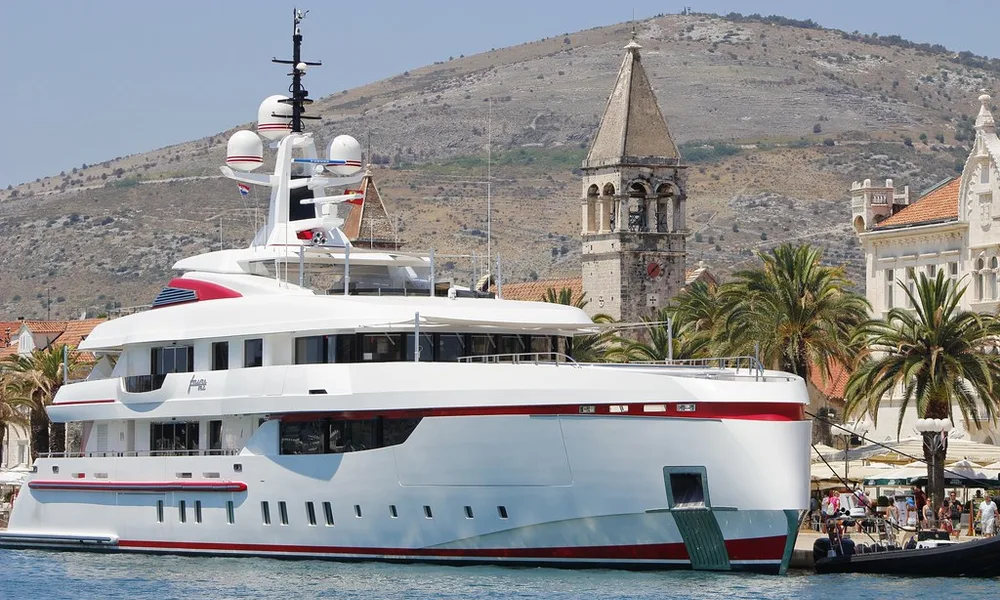
The charter-worn luxury yacht looks like a bargain: a big boat, a full inventory and a price well below a private yacht of the same age. It earned that price the hard way, chartered hard by a different party every week, with guests who had no reason to be gentle. The carpets are stained, the soft furnishings are faded, the galley equipment is tired, and the engines and generators have far more hours than a private boat would carry. A lightly used private yacht with a full service history is worth the higher price.
4. Oversized flybridge yacht with poor visibility: blind spots at every turn
The oversized flybridge yacht with poor visibility is built for the view from the top and punished by the view from the helm. The flybridge is high, wide and handsome, but from it the bow disappears, the stern is a guess, and the crew on deck are out of sight. Docking needs a full crew shouting directions, and in a crosswind the high topsides catch every gust. Choose a flybridge yacht with a proper lower helm, good sightlines and thrusters that actually hold the boat.
5. Budget entry-level motor yacht: luxury looks, cheap bones
The budget entry-level motor yacht sells the look of a much bigger boat at a price that seems too good to miss. The saloon is bright and the brochure is glossy, but the cabins are cramped, the heads are tiny, the fittings are cheap, and the hull is thin and noisy under way. Storage is an afterthought, the galley cannot serve more than four, and the boat slams in any chop. A smaller yacht built properly, with real cabins and a solid hull, is a far better buy than a big one built cheaply.
6. Converted commercial vessel yacht: a ship dressed as a yacht
The converted commercial vessel yacht promises romance and delivers a maintenance bill that never ends. The hull was built for work, not for pleasure, so the layout is odd: vast engine rooms, tiny cabins, portholes instead of windows, and decks that were never meant for sunbathing. The steel needs constant painting, the systems are industrial and thirsty, and every yard bill is priced for a ship, not a yacht. A purpose-built yacht, designed from the start for guests and comfort, is the safer buy.
7. Crewed sailing superyacht with a complex rig: a crew of six for a sail
The crewed sailing superyacht with a complex rig is the most demanding boat on this list, because it needs a full professional crew just to leave the dock. The rig is enormous and complex, the sails are heavy and expensive, and every manoeuvre needs six hands in the right place at the right time. A single sail replacement costs more than a small sailboat, and the rigging needs specialists. This is a large luxury sailing vessel, not a sailboat you handle yourself, and it should only be bought by someone ready to fund a crew all year. A simpler sailing yacht, with a smaller rig and fewer systems, is the better buy.
What to check before you buy or charter a yacht
The most common yacht regret is not a bad boat but a skipped check: engines never run under load, generators never tested at full power, or a survey that never left the marina. Insist on a sea trial and ask for the full service history and engine hours in writing. A canal boat is a different purchase with different traps, as our guide to the worst canal boats of 2026 explains, and the journey to the boat matters too: a small boat that strands you is no holiday, as our guide to the worst water taxis of 2026 shows.
Checklist: buying or chartering a yacht in 2026
- Take a sea trial and run the engines, generators and air conditioning at full load together.
- Check the engine hours, generator hours and service history in writing, and be wary of gaps.
- Sleep in the cabins and cook in the galley: if eight guests cannot eat and sleep comfortably, the yacht fails its job.
- Dock the boat yourself, or watch the crew do it: blind spots and weak thrusters show up at the quay.
- Ask what the crew costs, what the berth costs and what the insurance costs, and add them before you buy.
- Check that parts, yards and buyers still exist for the boat, or you may own an orphan.
Frequently asked questions
Are the worst yachts of 2026 unsafe?
No. The yachts on this list are uncomfortable, unreliable or expensive to keep, not unsafe. The problems here are tired systems, thirsty engines, cramped cabins and worn interiors, which waste your money and your holidays rather than putting you in danger.
How much does it really cost to run a yacht?
Far more than the purchase price suggests. Fuel, crew, berthing, insurance and maintenance add up every year, and an older yacht adds refits on top. Budget a tenth of the yacht’s value a year, and more for a large or ageing boat.
Should I buy a yacht or charter one?
Charter first, almost always. A charter lets you learn what size, layout and speed suit you, without the yearly bills of ownership. Buy only when you will use it often enough to justify the crew, berth and maintenance.
Is an ex-charter yacht a good buy?
It can be, if the price reflects the wear and the systems are sound. A well-maintained ex-charter yacht with a full service history can be good value. A tired one with no paperwork is a refit, not a bargain.
What is the difference between a yacht and a sailboat?
Size, systems and cost. A yacht is a larger luxury vessel, often motor-powered or crewed, with cabins, crew and systems far beyond a simple sailing boat. A sailboat is a smaller wind-powered boat you sail yourself with a small crew. This guide covers yachts only.
Can an old yacht still be a good buy?
Yes, if it is sound and honestly priced. A well-built old yacht with supported systems, a serviced engine and a clean survey can be a fine buy. An old yacht with obsolete systems and no paperwork is a project, not a bargain.
Bottom line
The worst yachts of 2026 fail in the same way: they promise effortless luxury on the water and deliver fuel bills, failing systems and crew costs that never stop. The ageing superyacht, the fuel-thirsty planing yacht and the charter-worn luxury yacht are the three to avoid first, Check the engines, the generators and the service history under way before you pay, and the yacht you buy will give you holidays instead of refits.