Why does a pasta maker earn a place on the counter when a packet of dried pasta costs so little? Because fresh pasta is a different food. A pasta maker turns flour and eggs into silky sheets and ribbons in about twenty minutes, and the pasta it makes cooks in two or three minutes, soaks up sauce instead of sliding it off, and tastes of egg and wheat rather than cardboard. Once you have eaten tagliatelle you rolled yourself, the packet starts to look like a backup plan.
A pasta maker is the machine that does the hard part: it rolls dough to an even thickness and cuts it into even strands, two jobs that are slow and uneven by hand. The best pasta makers of 2026 do those jobs reliably, clean up without a fight, and last long enough to become part of the weekly cooking routine. This guide explains why fresh pasta is worth the effort, the three kinds of machine you can buy, and how to choose the one that matches the way you actually cook.
Key Takeaways
- Fresh pasta cooks in two to three minutes, holds sauce far better than dried pasta, and tastes of egg and wheat.
- A manual roller is the best first pasta maker: cheap, reliable, and the most control over thickness.
- An electric roller suits cooks who make pasta weekly, and an extruder suits short shapes like penne and fusilli.
- Steel rollers and a solid clamp matter more than the number of attachments in the box.
- Never wash a pasta maker with water; brush the flour off and it will last for decades.
Why Fresh Pasta Tastes Different From Dried
Dried pasta is made to keep: extruded from semolina and water, dried hard, built to survive a year on a shelf. Fresh pasta is made to eat now: eggs, flour, and sometimes a little olive oil, rolled thin and cooked within the hour. The egg gives it a rich, almost buttery flavour, and the soft surface grips sauce in a way dried pasta never manages. A tomato sauce that slides off a dried penne clings to fresh tagliatelle, and a butter and sage sauce coats every strand.
The texture is different too. Fresh pasta has a tender bite with a little spring, and it cooks so fast that the window between perfect and overdone is about a minute. The whole meal, from flour to plate, takes less time than a delivery order, and most of that time is the dough resting, not you working. A pasta maker earns its place because it takes the one skilled job, rolling dough evenly thin, and turns it into turning a handle.
The Three Kinds of Pasta Maker in 2026
1. The Manual Roller
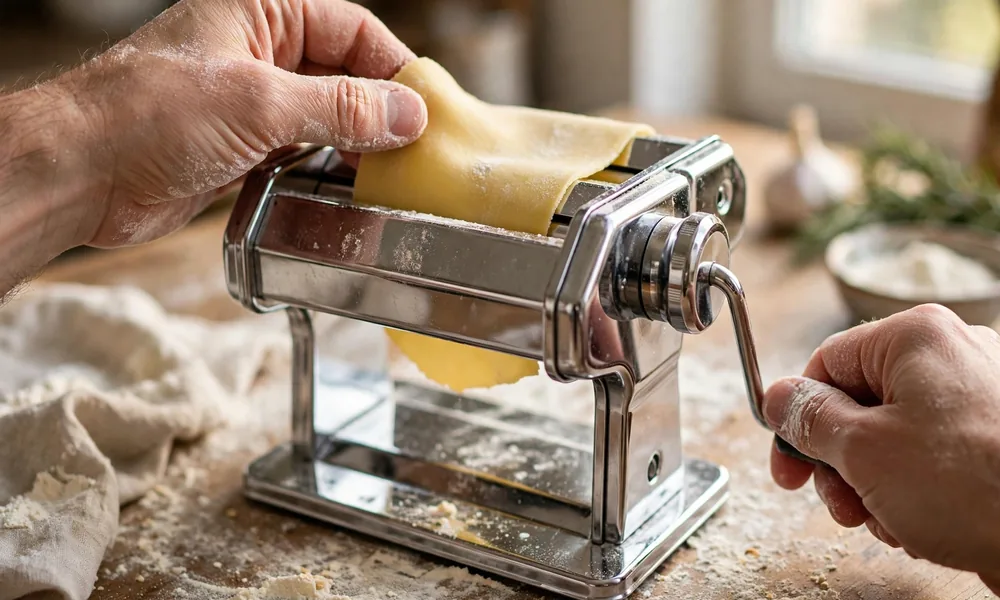
The manual roller is the classic pasta maker: a steel machine that clamps to the table, with rollers you feed dough through and a handle you turn. You pass the dough through the widest setting, fold it, pass it again, and work down the settings until the sheet is as thin as you want it. Then you swap in the cutting attachment and turn the sheet into tagliatelle, fettuccine or spaghetti. It is the best pasta maker for a first buyer, because it costs the least, has nothing to break, and gives you complete control over thickness. The only effort is the cranking: about five minutes of easy turning for a batch for four.
2. The Electric Roller
An electric roller does the turning for you, feeding the dough through at the press of a button, and some models mix the dough as well. It is the best pasta maker for cooks who make pasta every week, for anyone with a weak wrist, and for families, because it makes a double batch without tiring anyone out. The trade-off is price and size: it costs several times a manual roller and needs a permanent spot on the counter or a cupboard shelf of its own.
3. The Extruder
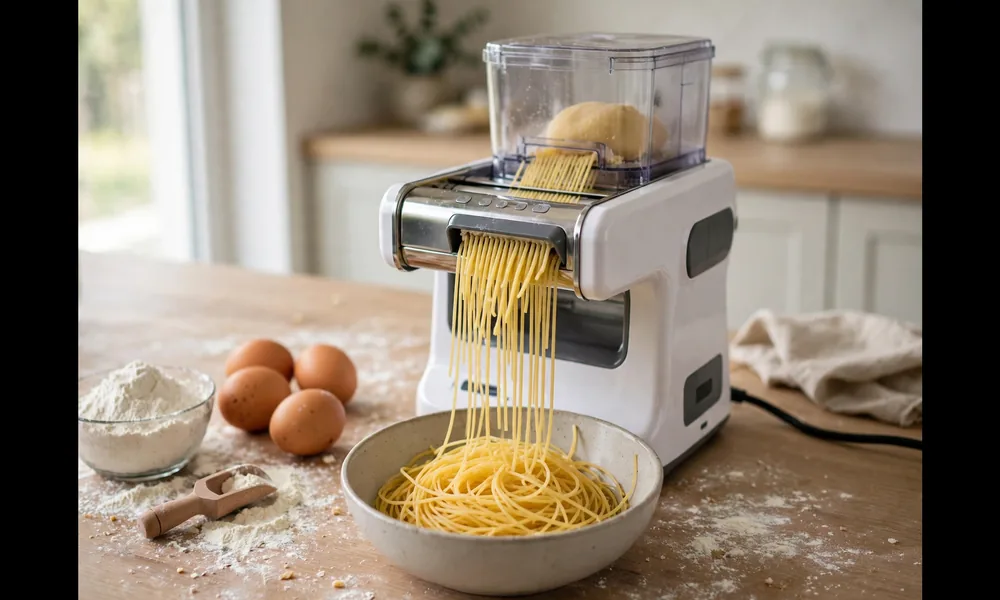
An extruder works differently: it mixes the dough and pushes it through a shaped die, so it makes short shapes a roller cannot, like penne, fusilli, rigatoni and macaroni. It is the best pasta maker for cooks who love short shapes and baked pasta dishes. The trade-off is cleaning, because dough hides in the die and the screw. Buy an extruder as a second machine, not as your first, because a roller handles the everyday shapes better and cleans up faster.
Pasta Makers Compared at a Glance
| Type | Best for | Shapes | Effort | Value |
|---|---|---|---|---|
| Manual roller | First buyers, weekly pasta | Sheets, tagliatelle, fettuccine, spaghetti | Light cranking | Excellent |
| Electric roller | Weekly cooks, families | Sheets, tagliatelle, fettuccine, spaghetti | Almost none | Good |
| Extruder | Short shapes, baked pasta | Penne, fusilli, rigatoni, macaroni | More cleaning | Good |
| Roller with motor attachment | Stand-mixer owners | Sheets, tagliatelle, spaghetti | Almost none | Very good |
One more option: if you already own a stand mixer, a pasta roller attachment turns it into an electric pasta maker for the price of the attachment alone. Our guide to the best stand mixers in 2026 covers the machines these attachments fit.
What Decides Whether a Pasta Maker Is Any Good
The rollers are everything. They should be solid steel, smooth, and perfectly parallel, so the sheet comes out the same thickness at both edges. Cheap rollers are often coated aluminium or plastic, and they flex under pressure, giving you a sheet thick on one side and thin on the other. The thin side overcooks, the thick side stays doughy, and no sauce fixes that. A steel roller machine will still be rolling perfect sheets in twenty years; a plastic one will not.
The clamp is the second thing: a weak clamp lets the whole machine walk across the worktop while you crank, so look for a wide, sturdy one and a table edge thick enough to hold it. The third thing is the thickness settings: nine or ten settings give finer control than five, and the difference shows up when you want paper-thin sheets for ravioli or lasagne, where a thick sheet makes a heavy, doughy parcel.
Attachments matter least. Most rollers come with a fettuccine and a spaghetti cutter, which covers the shapes most cooks make most of the time. Extra cutters sit in a drawer if you never make those shapes. Buy the machine for its rollers, not for the number of things in the box.
Dough, Drying and Storing: Getting the Most From Your Maker
The dough is simple: roughly one egg to every 100 grams of flour, a pinch of salt, and a little kneading until it is smooth and springy. Let it rest for thirty minutes wrapped in cling film, and it will roll far more easily than dough used straight away. Roll it through the widest setting a few times, folding it in half between passes, until the sheet is smooth and even, then work down the settings one notch at a time. Dust lightly with flour as you go, but not too much, or the strands stick together later.
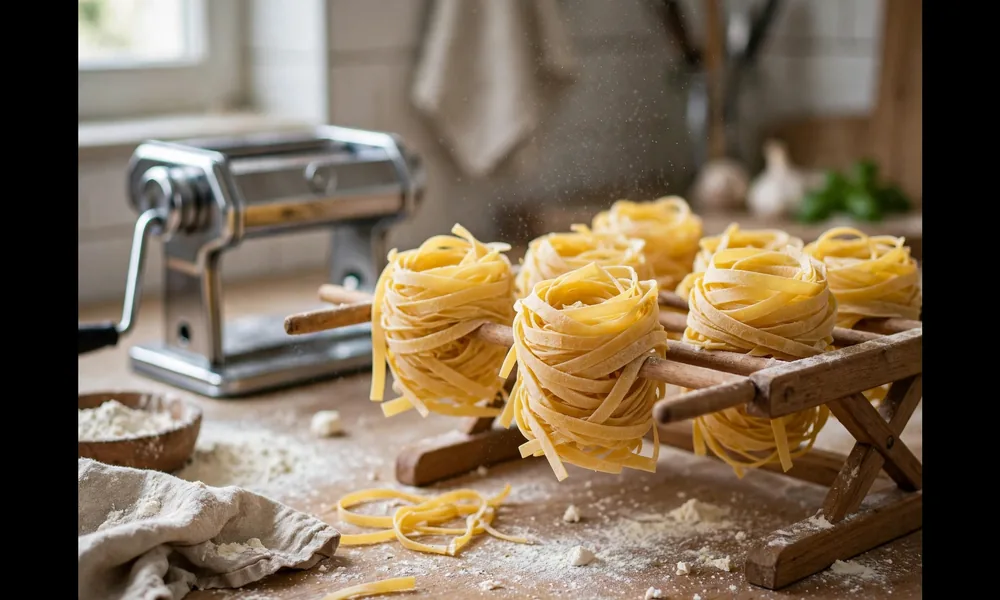
Fresh pasta needs only two to three minutes in well-salted boiling water. If you want to keep it, dry it: drape the strands over a drying rack for an hour, then store them in a paper bag. Dried this way, fresh pasta keeps for a week or two. Our guide to pasta dryers that stop fresh noodles sticking together in 2026 covers the racks that make drying easy if you make pasta often.
One rule matters more than any other: never wash a manual pasta maker with water. Water gets into the rollers, rusts the steel, and turns leftover flour into glue. Brush the flour off with the little brush that comes in the box, or a dry pastry brush, wipe it with a dry cloth, and put it away. An extruder is the exception, because its dies come off and can be washed, but the roller machine stays dry for its whole life.
What to Avoid When Buying a Pasta Maker
The worst pasta makers share the same flaws. The first is plastic rollers, which flex, wear unevenly, and give you sheets thick on one side and thin on the other. The second is a weak clamp, which lets the machine wander across the table while you work. The third is a machine sold on the number of attachments rather than the quality of the rollers: ten cutters on a machine with bad rollers is ten ways to make bad pasta.
Also beware of the gadget trap. A pasta maker with a dozen functions, a digital display and an app is solving problems you do not have: the job is rolling dough flat and cutting it evenly, and a simple steel machine does that better than a complicated one. And do not confuse a pasta maker with the other machines in the kitchen: a food processor is brilliant at chopping, slicing and kneading, but it cannot roll a sheet of pasta. They are different tools, and the kitchen that makes fresh pasta weekly usually owns both.
Before You Buy: A Quick Checklist
- Choose the type first: manual roller for a first machine, electric for weekly use, extruder for short shapes.
- Check the rollers are solid steel, smooth, and parallel, not plastic or coated aluminium.
- Test the clamp: it should grip the table firmly and not let the machine walk while you crank.
- Count the thickness settings: nine or ten settings give finer control than five.
- Check the cutters included cover the shapes you actually cook: fettuccine and spaghetti cover most meals.
- Confirm you can clean it dry with a brush; a roller machine must never be washed with water.
Frequently Asked Questions
Is a pasta maker worth it if I only cook pasta once a week?
Yes, if you enjoy cooking at all. A manual roller costs little, takes five minutes of cranking for a batch for four, and the pasta it makes is genuinely better than dried. If you cook pasta less than once a month, borrow one first.
What flour should I use in a pasta maker?
Use 00 flour for silky sheets and egg pasta, and semolina for a firmer bite and extruded shapes. A mix of the two is a good everyday compromise. Plain flour works in a pinch, but the pasta is softer and tears more easily.
How long does fresh pasta take to cook?
Two to three minutes in well-salted boiling water, sometimes less for very thin sheets. Watch it rather than timing it: fresh pasta is done when it floats and tastes tender with a little bite.
Can I make gluten-free pasta with a pasta maker?
Yes, with a gluten-free flour blend and a little xanthan gum for structure. The dough is more fragile than wheat dough, so roll it gently and expect a few tears while you learn.
Do I need a pasta dryer?
Not to start. You can drape strands over a clean broom handle or the back of a chair. A dryer earns its place when you make pasta often, because it keeps the strands separated while they dry.
Why does my pasta stick together after cutting?
Usually too much moisture and not enough flour dusting. Dust the sheet lightly before cutting, separate the strands as they come out, and toss them with a little flour. If the dough is wet, add flour a spoonful at a time next time.
The Bottom Line
A pasta maker is worth it because it turns the one hard part of fresh pasta, rolling dough evenly thin, into the easiest part, and fresh pasta really does taste different: richer, silkier, and far better at holding sauce. Buy a manual steel roller if you are starting out, an electric roller if you make pasta every week, and an extruder if short shapes are your love. Keep it dry and brush it clean, and it will still be rolling perfect sheets in twenty years.