The Worst Fencers of 2026: Habits That Lose Bouts Before They Start
The worst fencers of 2026 do not lose because they picked the wrong weapon or had one bad day on the piste. They lose the same way, bout after bout, because of habits that were never fixed: flat feet, wild lunges, a single attack repeated until every opponent has read it, and no plan for the moment things go wrong. Fencing looks fast and chaotic to a newcomer, but it is a game of distance, timing and patience, and the fencers below fail at one or more of those three things so consistently that the result is rarely in doubt.
One thing is worth saying first. Every type below appears in all three weapons, foil, épée and sabre, even though some habits suit one weapon more than another: the wild lunger is a sabre problem as often as a foil one, and the fencer who waits forever is usually holding an épée. The same lesson shows up in other sports, and our guides to the worst tennis players of 2026 and the worst swimmers of 2026 make the same point: the athletes who stay bad are the ones who keep repeating the same mistake and calling it a style.
Key takeaways
- The worst fencers lose on distance first: they attack from too far away, or stand too close to defend, and the bout is decided before a blade is raised.
- One attack is not a game plan. Fencers who repeat the same lunge or parry get read within a minute and punished for the rest of the bout.
- Footwork is the foundation of fencing, and every type on this list has a footwork problem hiding underneath the flashier mistake.
- The fencer who never adapts loses twice: once to the opponent in front of them, and again to every opponent who watches the recording.
- Watch the first thirty seconds. Flat feet, a bouncing back foot and a waving blade will tell you who is in trouble.
How the worst fencers of 2026 were chosen
Every type below was judged on five measures. Distance control comes first: does the fencer hold the right range, close it at the right moment, and recover safely after attacking? Footwork is second, judged on balance, movement in both directions, and whether the feet and the blade work together. Variety is third, because a fencer with one attack and one defence is a puzzle that takes about a minute to solve. Composure under pressure is fourth: what happens when the score is close, the clock is running down, or the first plan fails? Adaptability is the fifth measure, and the most telling, because the worst fencers fence the same bout against every opponent.
Comparison table: the worst fencers of 2026
| Rank | Fencer type | Weapon | Biggest flaw | What gives them away |
|---|---|---|---|---|
| 1 | The flat-footed foilist | Foil | Feet never move, arm reaches alone | Stuck in one spot, lunging from a standstill |
| 2 | The wild lunger | Sabre, foil | Attacks from too far, cannot recover | Huge leaps that land short, open chest |
| 3 | The one-move sabreur | Sabre | Same attack every phrase | Opponents parry before the attack begins |
| 4 | The épée waiter | Épée | Never takes the initiative | Loses on the clock, doubles favour the opponent |
| 5 | The blade-only fencer | All weapons | Arm works, feet do not | Flicks and beats from a frozen stance |
| 6 | The panic parrier | Foil, épée | Parries everything, ripostes nothing | Big circular parries, blade nowhere near target |
| 7 | The no-plan-B fencer | All weapons | One plan, no adjustment | Same fencing at 0-0 and at 14-4 down |
The worst fencers of 2026
1. The flat-footed foilist: the worst fencer of 2026
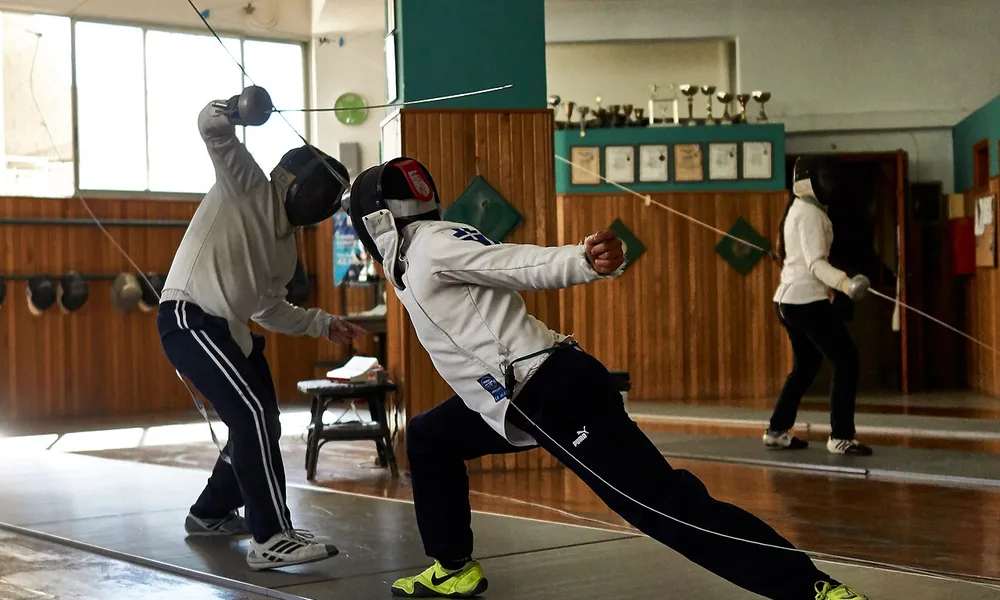
The flat-footed foilist is the worst fencer of 2026 because the mistake is so basic that everything else collapses behind it. This fencer stands in one place, weight on both heels, and tries to win bouts with the arm alone, reaching for hits a full step out of range. Foil is built on right of way, so the attack must arrive with the point threatening and the body moving forward together, and a fencer who never moves the feet cannot do that. The arm goes out, the point falls short, and the opponent steps back, parries, and scores on the riposte. What makes this type the worst is that the fix is unglamorous and slow: months of advance, retreat and lunge drills, done until the feet move before the arm does.
2. The wild lunger: all speed, no distance
The wild lunger looks dangerous for about five seconds, which is exactly how long it takes an experienced opponent to work out what is happening. This fencer attacks from far too far away, throwing the whole body into a huge lunge that lands a foot short of the target, and then stands there, chest open and balance gone, while the opponent picks them off.
3. The one-move sabreur: read in a minute, beaten all bout
Sabre is the fastest of the three weapons, and speed rewards the fencer who can change the attack at the last moment. The one-move sabreur cannot. This fencer opens every phrase the same way, usually a straight advance into a head cut, with the same rhythm, the same preparation and the same distance every time. The first time it works. The second time the opponent is ready. By the third phrase the opponent is parrying before the attack has even started, and the one-move sabreur has no answer, because there was never a second move to switch to. The fix is variety drills: the same preparation leading to three different finishes, practised until the opponent cannot tell which one is coming.

4. The épée waiter: losing slowly, by accident
Épée is the weapon where waiting can be a real tactic, which is what makes the épée waiter so hard to coach out of the habit. This fencer never attacks, never takes the initiative, and spends the whole bout hoping the opponent will make a mistake first. Against anyone competent it is a slow defeat, because a good épée fencer is happy to wait too, and happier still to score the patient hit to the hand or the foot while the waiter stands still. The clock becomes the waiter’s real enemy. Épée bouts have time limits, and a fencer who will not attack will find themselves losing on priority, or forced into a frantic final minute where every habit they avoided all bout suddenly matters.
5. The blade-only fencer: busy hands, frozen feet
The blade-only fencer is the most entertaining type on this list to watch and the most frustrating to coach. The hands are always busy: beats, flicks, binds, disengages, a constant shimmer of steel that looks like high-level fencing from the stands. The feet, meanwhile, do nothing at all. The fencer stands in one spot and tries to win the bout with wrist work alone, which works until the opponent takes one step out of range and all the clever blade work hits thin air. Fencing is a whole-body sport, and the blade is only the last part of the chain. Distance is made with the feet, timing is set with the feet, and the attack only lands because the feet put the body in the right place.
6. The panic parrier: defence without a riposte
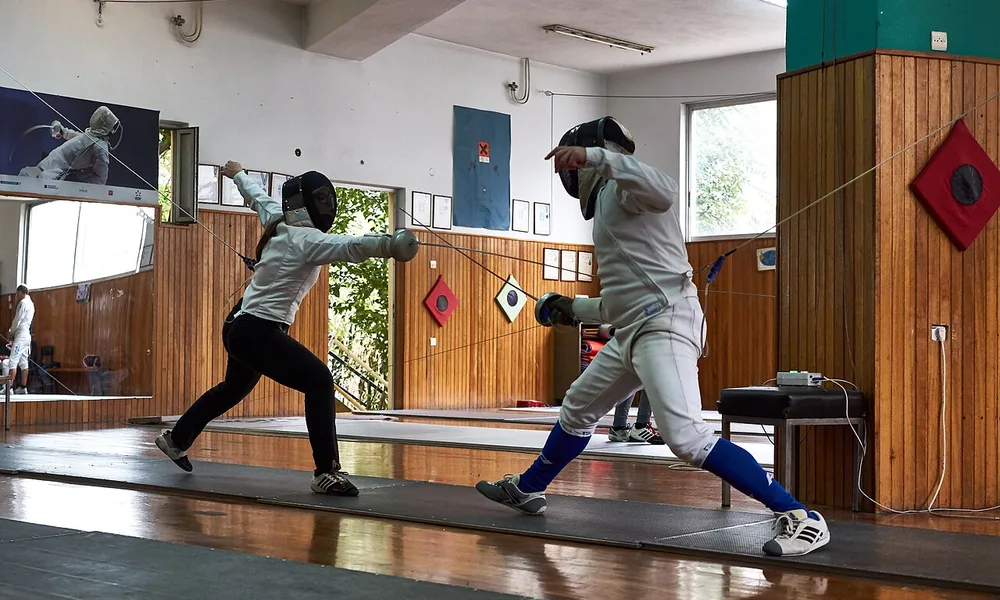
The panic parrier has learned half of fencing and thinks it is the whole sport. Every attack is met with a parry, and the parries are enormous, sweeping circles of the blade that look dramatic and accomplish nothing, because the riposte never comes. In foil, where right of way means a parry must be followed by an immediate riposte to score, this is fatal: the parry succeeds, the moment passes, and the opponent simply attacks again. In épée it is nearly as bad, because a big parry opens the very lines it was meant to close, and a calm opponent will hit into the opening the parry itself created. The parry exists to create the riposte.
7. The no-plan-B fencer: the same bout against every opponent
The no-plan-B fencer is the most complete failure on this list, because the problem is not a single technical flaw but a refusal to think. This fencer has one way of fencing, learned early and never questioned, and applies it to every opponent: the same distance, the same attacks, the same reactions, whether the opponent is tall or short, fast or slow, aggressive or patient. Good fencers adapt constantly, changing distance after a lost hit, switching attacks when a parry starts landing, slowing down when the opponent wants speed. The no-plan-B fencer does none of this, and the bout becomes a demonstration rather than a contest.
What to avoid if you fence: the habits that keep fencers bad
The honest check is to watch a recording of your own bout and count three things: how many attacks started from the right distance, how many different attacks you used, and how many times you changed your plan after losing a hit. If the first number is low, the problem is distance, and the fix is footwork drills. If the second number is one, the problem is variety, and the fix is to fence with a different attack every phrase for a month. The same honest counting works in other sports, and our guide to the worst sports movies of 2026 is a reminder that the most entertaining failures are the ones where nobody involved notices what is actually going wrong.
Checklist: spotting the worst fencers of 2026
- Watch the feet first, not the blade. If the back foot has not moved in ten seconds, the fencer is stuck.
- Count the attacks. One attack repeated all bout means the fencer has been read and will not recover.
- Check the distance. Lunges that land a foot short are a distance problem, not a speed problem.
- Look for the riposte. A parry with no riposte is a fencer who has learned half the sport.
- Watch what changes after a lost hit. Nothing changing means no plan B and a bout that is already over.
- Note the clock. A fencer who never attacks is losing on time, even if the score looks close.
Frequently asked questions
What makes a fencer the worst in 2026?
A fencer earns the label by repeating the same losing habits across bouts: bad distance, no footwork, one attack and no adaptation.
Which weapon has the worst fencers?
All three weapons have their own versions. Foil has the flat-footed arm fencer, sabre has the one-move attacker, and épée has the waiter who never attacks.
Can a bad fencer improve quickly?
Yes, if the diagnosis is honest. Footwork and distance improve fastest with drills, while variety and adaptation take longer because they need practice bouts against different opponents.
Is fencing mostly about the blade or the feet?
The feet decide more bouts than the blade. Distance, timing and balance all come from footwork, and the blade only finishes what the feet started.
How do you spot a bad fencer before a bout starts?
Watch the warm-up. Flat feet, a bouncing back foot, a blade that waves instead of threatening, and lunges that fall short in practice all show up before the first hit.
Why do bad fencers keep repeating the same attack?
Because it worked once, usually against a beginner, and the memory of that one hit outweighs ten misses.
Bottom line
The worst fencers of 2026 are not the least talented fencers, but the least adaptable ones: the flat-footed foilist who never moves, the wild lunger who never measures distance, the one-move sabreur who never varies, the épée waiter who never attacks, the blade-only fencer who never uses their feet, the panic parrier who never ripostes, and the no-plan-B fencer who never thinks. Until then, the first thirty seconds of the bout will keep telling the whole story.