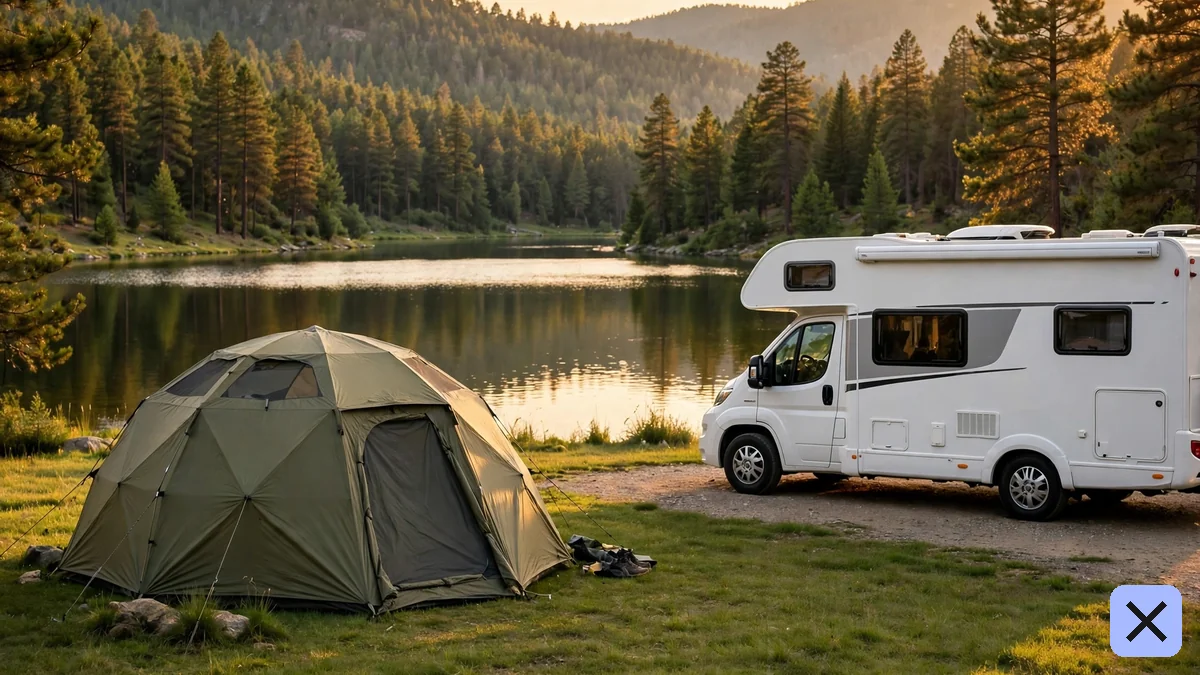
Tent vs RV camping is the first decision every outdoor trip forces you to make, and it shapes how much you spend, how well you sleep, where you can go, and how close to nature you feel. A tent puts you on the ground, under the stars, with nothing between you and the night air but a thin layer of fabric. An RV puts a roof, a bed, a kitchen and a bathroom on wheels, like a small hotel room that follows you down the road.
Neither choice is right for everyone. Tent camping wins on price, simplicity and access to wild places, while RV camping wins on comfort, convenience and weather protection. The best choice depends on your budget, your travel style, who is coming along, and how often you plan to get out.
This guide compares tent and RV camping on cost, comfort, freedom, cooking, weather and who each style suits best. By the end, you will know which one fits your next trip.
Key takeaways
- Tents cost far less to buy and run, while RVs cost far more upfront but save on hotels.
- RVs are far more comfortable, especially for families, older campers and poor sleepers.
- Tents reach remote campsites and rugged terrain that most RVs can never access.
- RVs handle bad weather and cold nights far better than any tent.
- The best choice depends on your budget, trip length and how much comfort you need.

The Core Difference Between Tent and RV Camping
The difference between tent and RV camping is not just about where you sleep. It is about how you experience the outdoors. Tent camping strips the trip back to basics: you set up your shelter by hand and live close to the ground, the weather and the forest.
What Tent Camping Really Feels Like
Tent camping is simple, physical and deeply immersive. You wake to birdsong, step straight outside into the trees, and fall asleep to the wind in the branches. There is no television, no microwave and no climate control, and for many campers that is the point. The trade-off is real: you sleep on a pad or an air mattress, you dress in a small space, and a rainy night can feel long. For people who love being outdoors, the tent is not a compromise. It is the reason for going.
What RV Camping Really Feels Like
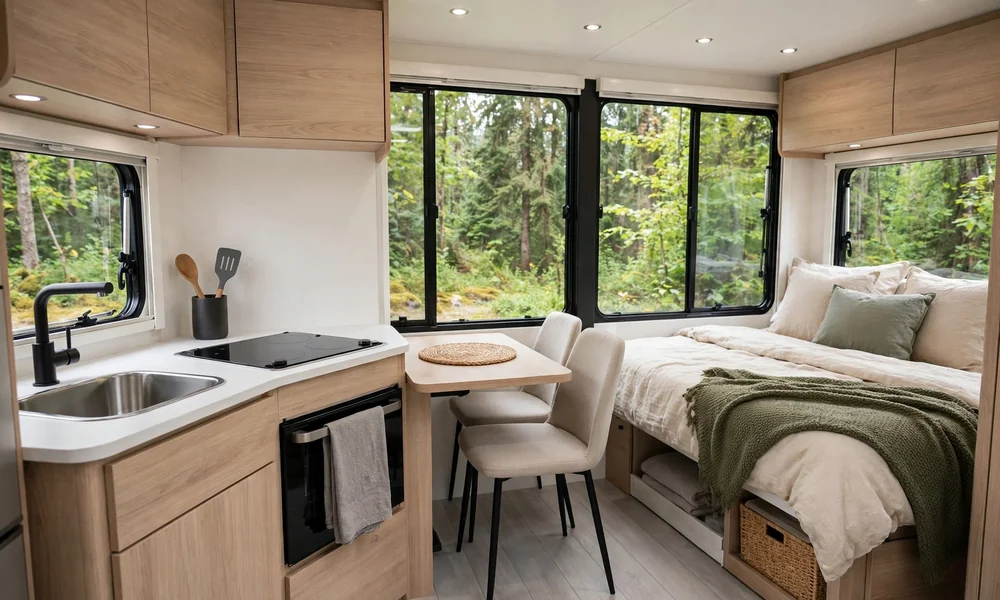
RV camping feels like bringing a small home with you. You arrive, level the vehicle, put out the awning and you are settled in minutes, with a real bed, a kitchen, a bathroom and heating or air conditioning waiting inside. The trade-off is distance from nature: you sit behind walls and windows, you need a suitable pitch, and the vehicle needs driving, fuelling and maintenance. For many families, though, that comfort is what makes regular camping possible at all.
Cost Comparison: Tent vs RV Camping
Cost is where the two styles diverge most sharply. A full tent setup costs less than a single night in some hotels, while even a modest used RV costs as much as a car. Renting closes the gap for occasional trips, but the nightly rate plus fuel and site fees still adds up fast.
| Cost | Tent Camping | RV Camping |
|---|---|---|
| Upfront cost | $200 to $800 for a good setup | $10,000 to $100,000 or more to buy |
| Rental cost | Nothing to rent | $100 to $250 per night |
| Nightly site fee | $10 to $40 | $30 to $80, more with hookups |
| Fuel and transport | Low, fits in any car | High, especially for large motorhomes |
| Ongoing costs | Minimal gear replacement | Insurance, maintenance, storage and repairs |
The Hidden Costs Most Campers Miss
Tent camping has few hidden costs, but the ones that exist are easy to overlook. Cheap gear fails at the worst moment, so a tent, sleeping pad and sleeping bag that keep you warm and dry are money well spent, and the best camping tents are the ones that survive wind and rain without leaking. RV camping hides far bigger costs: insurance, storage, servicing, tyres and repairs that can run into thousands. Fuel is the other surprise, since a large motorhome can use twice as much fuel as a family car on the same route.
Comfort, Space and Sleeping Well
Comfort is the RV’s strongest argument and the tent’s weakest one. An RV gives you a real mattress, standing room and a private bathroom. A tent gives you a sleeping pad on uneven ground and a shared campsite wash block. How much that matters depends on your body, your age and how well you sleep away from home.
Sleeping Under Canvas
Sleeping in a tent can be wonderful when the weather is kind and your gear is good. A thick pad, a warm bag and a flat pitch make a real difference. The problems start with bad ground, cold air and noise. Stones under the pad, a sloping pitch or a cold snap can turn a night into a long wait for morning.
Sleeping in an RV
Sleeping in an RV is closer to sleeping at home. You get a proper bed and a roof that blocks light and muffles sound. Heating and air conditioning keep every night comfortable. For most people the sleep quality is far better than in a tent, and that alone convinces many families and older campers to choose the RV.
Freedom, Flexibility and Where You Can Stay
A tent can go almost anywhere a car can reach and many places it cannot: forest clearings, mountain meadows, lakeside pitches and remote trailheads. An RV needs wide roads, turning space and a big enough pitch, which rules out many beautiful spots. The tent wins on access, but the RV wins on range, since you can cover long distances in comfort.
Getting Off the Beaten Path
Tent campers can reach the wildest corners of a national park, hike in with a backpack, and camp far from roads and crowds. Light gear makes it easy to change plans or squeeze into a small pitch no RV could use. If your idea of camping is solitude and mountain views, the tent is the only realistic choice.
Campgrounds, Hookups and Rules
RV campers depend on campgrounds with space, hookups and services. Many parks limit RV length, and some scenic sites ban large vehicles altogether. Booking ahead matters more in peak season, and you may need to plan your route around places that can take your vehicle. An RV lets you stay put for days with power, water and waste disposal sorted.
Cooking, Food and Daily Life at Camp
Daily life at camp is simpler in an RV and more of an adventure in a tent. An RV kitchen has a stove, a fridge, a sink and storage, so you can cook proper meals and keep food cold for days. Tent cooking means a portable stove or campfire, a cooler that needs ice, and washing up at a shared tap. Good planning closes much of the gap: the best camping coolers keep food fresh for days, and a simple menu of one-pot meals and campfire cooking works well. The real difference is effort: in an RV, cooking is a familiar chore, while in a tent it takes more time, patience and washing up.
Weather, Seasons and Bad Days
Weather is the great divider between tent and RV camping. A sunny weekend makes both styles feel easy, but a stormy one shows the difference within an hour. How much shelter you have decides whether a bad day ruins the trip or just changes the plan.
Rain, Wind and Cold in a Tent
A good tent handles rain well, but you still live with the weather. Cooking and relaxing happen outside or in a cramped porch, wet gear piles up, and everything takes longer. Strong wind can flatten a cheap tent, and cold nights demand a warm bag and insulated pad. Shoulder-season tent camping is rewarding, but it needs better gear and a willingness to be uncomfortable sometimes.
Riding Out Bad Weather in an RV
Bad weather barely interrupts an RV trip. You cook inside, eat at the table and read while the rain falls outside, and the heater keeps the evening warm. Storms still matter, since high winds and flooded roads are dangerous for any vehicle, but day-to-day rain and cold are minor inconveniences. That resilience is why many campers switch to an RV after one too many wet weekends in a tent.
Who Should Choose a Tent, and Who Should Choose an RV
The right choice comes down to who you are and how you travel. Budget, group size, trip length and comfort needs pull in different directions, so be honest about what matters most.
Tent Camping Wins When
Tent camping wins when your budget is tight, you travel light, and you want to reach wild places. It suits solo travellers, couples and hikers, and families who camp a few times a year and want an affordable way outside without a big purchase. If you enjoy setting up camp, cooking over a fire and falling asleep to forest sounds, the tent will make you happy.
RV Camping Wins When
RV camping wins when comfort matters, the group is large, or the trip is long. It suits families with young children, older campers, people with bad backs or poor sleep, and anyone travelling for weeks at a time. It also suits travellers who want to see many places without packing and unpacking daily. If you want a warm bed, a hot shower and a proper kitchen wherever you go, the RV is worth every penny.
Your Pre-Trip Checklist
Whichever style you choose, run through this short checklist before you leave home.
- Check the forecast and pack for the worst day, not the best one.
- Test your tent or RV systems before the trip, never at the campsite.
- Book your pitch in advance during school holidays and peak weekends.
- Pack food, water and cooking gear, plus one easy backup meal.
- Bring warm layers and waterproofs even when the forecast looks perfect.
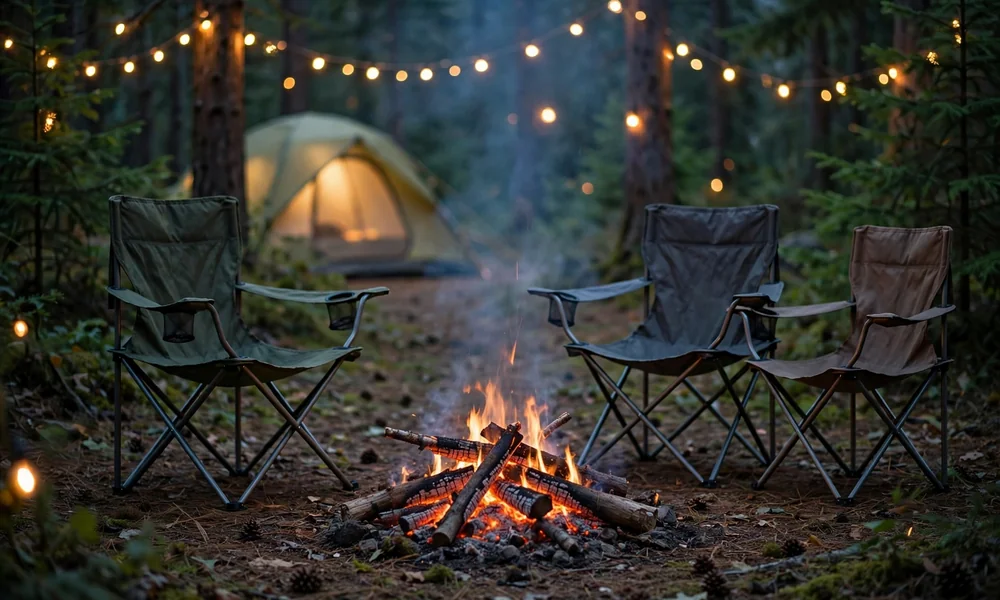
- Set up camp before dark, then settle in with the best camping chairs around the fire.
Frequently Asked Questions
Is tent camping cheaper than RV camping?
Yes, by a large margin. A complete tent setup costs a few hundred dollars and lasts for years, while buying an RV costs tens of thousands and renting one costs over a hundred dollars a night.
Can you camp in an RV in winter?
Yes, if the RV is built for cold weather, with insulation, heating and protected water pipes. Winter RV camping is far more comfortable than winter tent camping, but watch for frozen pipes and icy roads.
Is RV camping still real camping?
Yes. Camping is about spending time outdoors, not about how little comfort you allow yourself. RV campers still hike, cook outside and sit by the fire, just with a better bed at night.
Do you need a special licence to drive an RV?
In most places, a standard licence covers smaller motorhomes and campervans, while very large vehicles may need an extra category. Check the rules for your vehicle size before you book.
Which is better for families with young children?
An RV is usually better for families with young children, with a proper bed, a bathroom, a kitchen and shelter from bad weather. Tent camping can still work if the site has good facilities and the weather is kind.
Can you take a tent where RVs cannot go?
Yes. Tents fit on small pitches, forest clearings and remote sites that cannot fit large vehicles. If reaching wild, quiet places matters, a tent gives you far more freedom.
The bottom line: Choose the tent if you want low costs, wild places and the full outdoor experience, and choose the RV if you want comfort, convenience and weatherproof travel. The best style is the one that gets you outside often, so pick the one that fits your budget and group, then go and enjoy it.