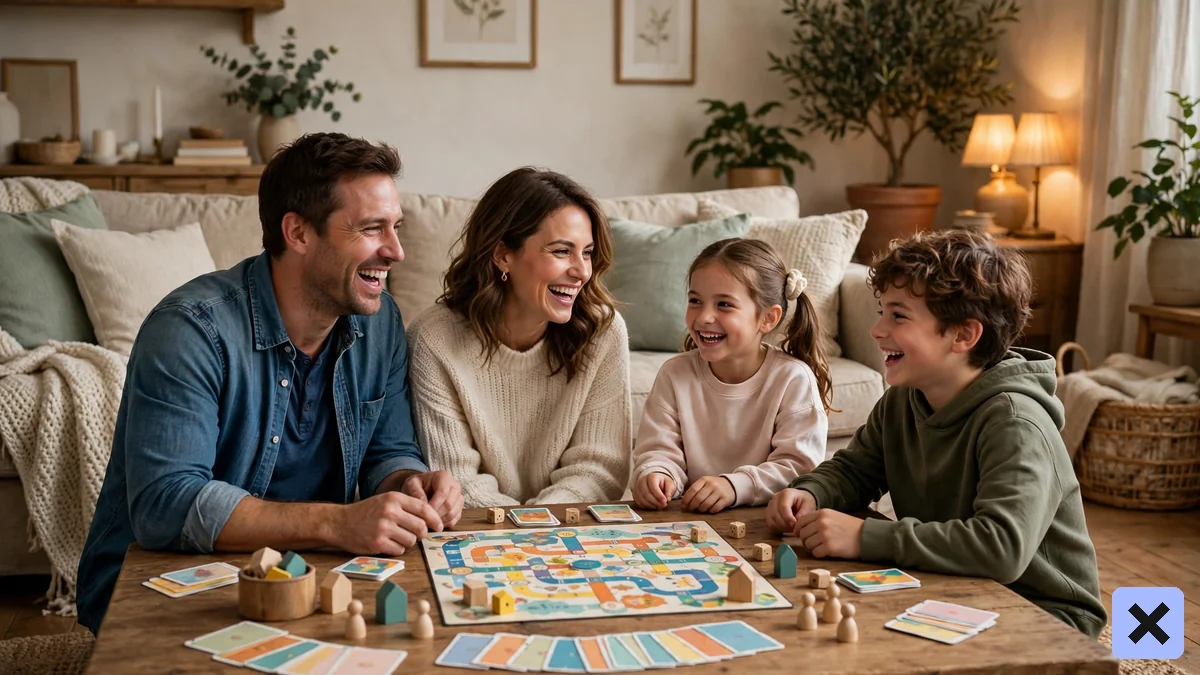
The best board games for families in 2026 are the ones that get everyone to the table without a negotiation, a lecture, or a screen. They are short enough for a school night, interesting enough for the adults, and simple enough that the youngest player can take a real turn instead of watching from the sidelines.
Family gaming has changed a lot in recent years. The strongest titles now sit in the middle, with clever choices, bright boards, and rules that can be taught in five minutes. They reward planning without punishing a seven-year-old for a single mistake, and they end before anyone gets bored or frustrated.
This guide covers quick games for busy evenings, cooperative games that end arguments before they start, and deeper strategy games for older children, all judged on how fast they can be learned, how long they really take, and how often families ask to play them again.
Key takeaways
- Choose games by the youngest regular player, not the oldest, so everyone can take a meaningful turn.
- For most families, the sweet spot is 20 to 45 minutes, with rules that can be taught in five minutes.
- Cooperative games are the best choice when competition causes arguments, because the whole table wins or loses together.
- Keep two quick games and one longer game in the cupboard, so game night works on a school night and at the weekend.
- A good family game should be fun for adults too, or it will quietly disappear from the shelf within a month.
How We Chose the Best Board Games for Families 2026
Choosing a family board game is harder than it looks, because a game has to satisfy four different people at once. A parent wants something that is not dull, a teenager wants a real decision to make, a younger child wants to feel that their choices matter, and everyone wants the game to finish while the evening is still enjoyable. The games in this guide were selected because they pass all four tests.
We looked at playing time first, because a game that promises 30 minutes and takes 90 will not survive many family evenings. We checked the recommended age against how the game actually plays, and we considered replay value and price: a family game should be easy to find, reasonably priced, and complete in the box.
What Makes a Game Truly Family Friendly
A family friendly game is one where every player has something interesting to do on every turn, where luck and skill are balanced, and where a player who falls behind still has a reason to keep playing. The best ones also handle the gap between ages gracefully, giving younger players a simpler role while older players take on a trickier decision.
Age, Time and Player Count
Age guidance is a starting point, not a rule. A bright six-year-old may enjoy a game labelled for ages eight and up, while a ten-year-old who dislikes reading may struggle with a card-heavy game. Match the game to the youngest regular player and let older players enjoy the extra challenge of playing well.
Player count is easy to overlook and hard to fix later. Some games are excellent with four players but flat with two, while others are designed for two and feel crowded with six. Check how many people usually play in your home before buying.
Best Board Games for Families 2026 at a Glance
The table below summarises the strongest family games of the year by age and evening type. Use it to shortlist two or three titles, then read the detailed sections below to find the one that matches your family most closely.
| Game type | Best for | Typical time | Players |
|---|---|---|---|
| Simple race and matching games | Ages 4 to 7 | 15 to 20 minutes | 2 to 4 |
| Tile laying and light strategy | Ages 8 to 12 | 30 to 40 minutes | 2 to 5 |
| Cooperative adventure games | Mixed ages | 30 to 45 minutes | 2 to 5 |
| Quick card and party games | Busy weeknights | 15 to 25 minutes | 3 to 6 |
| Deeper strategy games | Teens and adults | 45 to 60 minutes | 2 to 4 |
The Best Board Games for Families by Age Group
Best for Ages 4 to 7
For the youngest players, the best board games are built around colour, movement, and simple choices. Race, matching, and gentle memory games work well, because the rules can be explained in a minute and the game can be finished before attention wanders.
Cooperation can help at this age too. A game where the family works together to finish a puzzle or reach a goal removes the sting of losing and lets a parent guide a child without taking over their turn. When a young child wins a game fairly, it builds confidence, and when they lose a cooperative game, the whole table shares the result.
Travel is another reason to choose well at this age. A compact game with few pieces can be packed for a holiday or a long journey, and it can turn waiting time into play time. When you are sorting out family travel plans that include a game for the journey, a small, sturdy game is worth more than a large box that stays at home.
Best for Ages 8 to 12
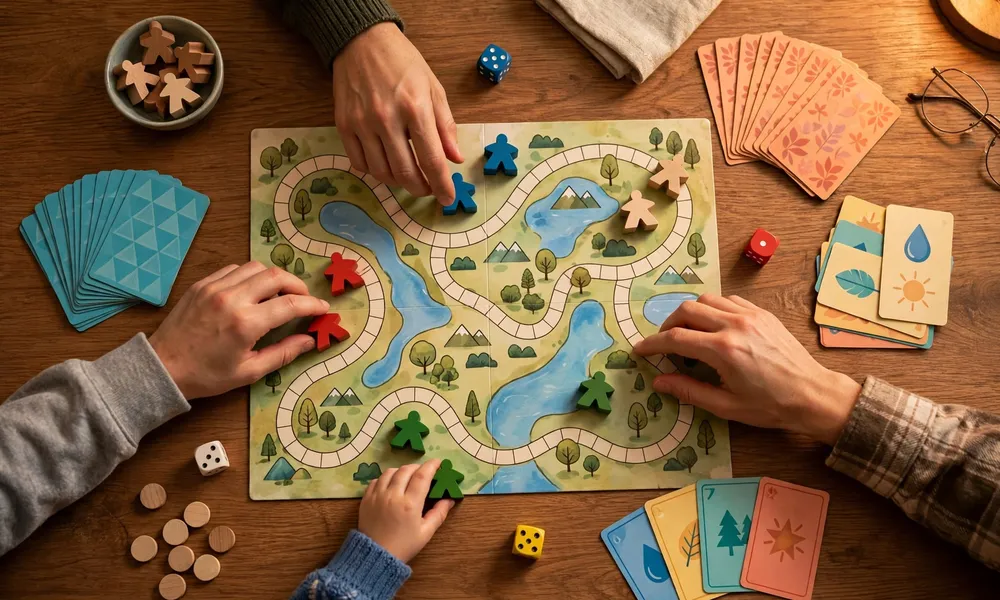
Children between eight and twelve are ready for games with real choices. Tile laying games, where players build a landscape piece by piece, are easy to learn but reward careful thinking. Light strategy games, where players collect sets or claim routes on a map, also work well, giving older children a genuine puzzle without overwhelming younger siblings.
This is also the age where a family can start to enjoy a little friendly competition. A game with points, a clear winner, and a few surprises along the way keeps everyone engaged, especially when the lead changes hands during the final rounds. The best games in this group keep the score close, so a player who makes a mistake early is not out of the running by the middle of the game.

Best for Teens and Adults Playing Together
Families with teenagers need games that respect their intelligence. Teens can spot a shallow game quickly, and they will not return to a table where their decisions do not matter. The best games for this group offer meaningful choices and a result that feels earned, with rules that can be explained in minutes, not an hour.
Best Cooperative Board Games for Families
Cooperative games deserve a special place in any family collection, because they change the question at the table. Instead of asking who will win, the family asks whether the team can win together. That single change removes most of the arguments that spoil family game night, and it makes the game enjoyable for players of very different ages and abilities.
Best Quick Board Games for Busy Weeknights
Not every family evening has an hour to spare. On a school night, the best game is often a quick one that can be set up in two minutes, played in 20, and packed away before bedtime. Quick card games, simple dice games, and short party games are ideal here, because they deliver the fun of game night without the commitment of a long session.
Quick games are also the best way to replace screen time without a battle. A short game after dinner gives the family something enjoyable to do together, and it is much easier to suggest than a long game that feels like a commitment. If you are weighing up screens against table games, it helps to know which tablets disappoint children most often, because a game night that everyone enjoys is a far better evening than a tablet that frustrates the child using it.

How to Build a Family Game Night That Actually Sticks
A regular game night is less about the games and more about the routine. Families that play often usually have a fixed time, a simple ritual, and a low bar for starting. Friday after dinner, Sunday afternoon, or a midweek evening can all work, as long as everyone knows when it happens and the evening does not depend on a perfect mood.
Game night also travels well. A family that plays at home will often enjoy playing on holiday too, especially when the whole group is staying together and the evenings are free. When you are comparing places to stay for a family trip with room for a game night, a place with a large table and a comfortable living area is worth more than a place with a bigger television.
Family Game Night Checklist
Use this short checklist before you buy a new family game, and again before the first play, so the evening runs smoothly and the game gets a fair chance to impress the table.
- Check the age guidance against the youngest regular player, not the oldest.
- Confirm the real playing time, including setup, and match it to the evening you have free.
- Count the players who usually play, and choose a game that is at its best with that number.
- Read the rules once before game night, so the first play starts quickly and confidently.
- Keep the first game short, and save longer games for when the habit is established.
- Put the game somewhere visible after playing, so someone suggests it again next time.
Frequently Asked Questions
What is the best board game for a family with young children?
The best board game for a family with young children is a short, colourful game with simple rules, large pieces, and a clear goal that a child can see. Race games, matching games, and gentle cooperative games work well, and most can be finished in 15 to 20 minutes.
How long should a family board game take?
For most families, the best playing time is 20 to 45 minutes. Games under 20 minutes suit weeknights and younger children, while games of 30 to 45 minutes suit a relaxed evening or a weekend. Games over an hour suit families with older children who already enjoy longer games.
Are cooperative board games better for families?
Cooperative board games are often better for families, especially when competition causes arguments or when players are very different ages. The whole table wins or loses together, so a loss feels shared rather than personal.
How many board games does a family need?
Most families do well with five to eight games that cover different styles, rather than a large shelf of similar titles. A good starter set includes one quick game, one cooperative game, one light strategy game, and one longer game for older players.
What age can children start playing board games?
Many children can start playing simple board games from around age four, with games based on colour, matching, and counting rather than reading or complex rules. Short games with large pieces work best at this age.
How do I get teenagers to join family game night?
Let teenagers choose the game sometimes, and pick titles that respect their intelligence, with real decisions and a result that feels earned. Strategy, word, and social games often work well with teens.
The Bottom Line
The best board games for families in 2026 are the ones that fit your family as it is now, not the family you imagine in a perfect evening. Pick by the youngest regular player, keep the playing time honest, and choose games that adults enjoy too. Start with a short game, build a simple routine, and let everyone take a turn choosing. Do that, and the board will come out of the cupboard on its own, week after week.