The Worst Fairs to Give a Miss: The Worst Sports Fairs of 2026
The worst sports fairs of 2026 are not the small ones with a handful of rides. The worst sports fairs fail in a much more basic way: they charge a fairground price for a visit that never lets you enjoy the fair. This guide ranks the worst types of sports fair, so you can spot a bad one before you pay for the tokens.
Key takeaways
- A sports fair is about the rides and the games: if the rides are tired and the games cannot be won, you paid for nothing.
- Tokens are the hidden cost of a bad fair, and the bundle that never matches a ride price is visible before you buy it.
- A fair that packs up early is selling you hours it never delivers.
- Noise, crowds and nowhere to sit turn a fair from fun into endurance, and all three are visible from the gate.
- Walk the whole fair before you buy tokens, and count the working rides.
How the worst sports fairs were chosen
Every type below was scored on five measures. The rides come first: how many are actually running, and are they maintained or held together with hope? The games are second, judged on whether they can honestly be won, or whether the prizes are bait for a game with no real chance. Fair pricing is third: the real cost once tokens, bundles and per-ride charges are added, not the headline price. The hours are fourth, because a fair that opens late or packs up early steals time. Comfort is fifth: the noise, the seating and the way out.
Two notes before the list. First, no individual fair is named here, because the problem is the pattern, not the place. Second, this is about the fair as a travelling funfair, not the event around it: our guide to the worst sports festivals of 2026 ranks the gatherings that spoil a weekend. Our guide to the worst sports markets of 2026 shows how a market row can waste an afternoon of its own.

Comparison table: the worst sports fairs of 2026
| Rank | Fair type | Main fault | What it costs you |
|---|---|---|---|
| 1 | The rickety ride | Poorly maintained, creaking, jerking rides | A ride you regret halfway round |
| 2 | The rigged game stall | Games that cannot honestly be won | Tokens spent, prizes never won |
| 3 | The token-price trap | Bundles that never match ride prices | Leftover tokens worth nothing |
| 4 | The one-ride wonder | Three rides total, all for small children | A fair finished in ten minutes |
| 5 | The fair that packs up early | Rides closing before the advertised time | Hours paid for, never delivered |
| 6 | The deafening fair | Speakers at full blast, no quiet corner | A headache instead of a day out |
| 7 | The tired attraction | Same faded rides year after year | A fair you have already seen, worse |
The worst sports fairs of 2026
1. The rickety ride: the worst fair of all
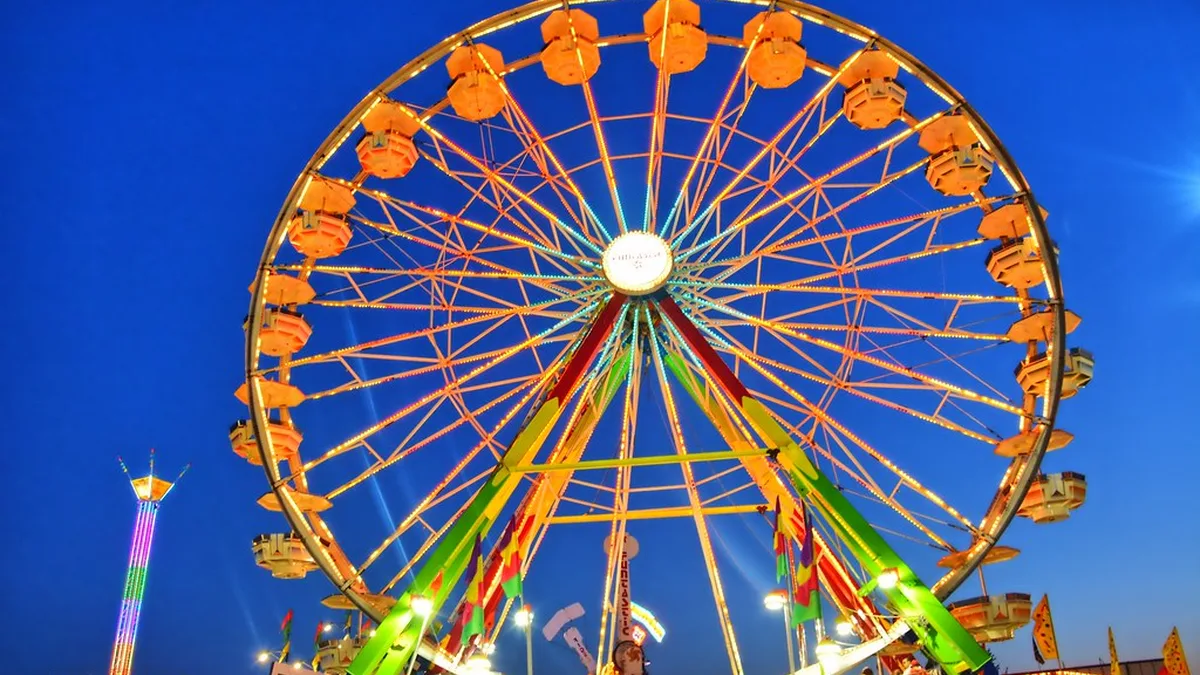
The rickety ride is the worst sports fair you will ever visit, and it is not close. The ride looks fine from the ground, all paint and lights, but the moment it starts you feel it: a judder that was not there last year, a creak on every turn, a seat that rocks on its mountings, a safety bar that clicks shut a fraction too late. A good fair keeps its rides painted, greased and inspected, and the operator watches the ride, not the phone. The rickety ride does none of that. The signs are plain before you board: rust on the joints, peeling paint, and an operator who waves people on without looking at the restraints. If the ride looks tired, do not ride it. No thrill is worth a machine that is telling you it is tired.
2. The rigged game stall: a game you cannot win
The rigged game stall does not hide what it is, and that is part of the trick. The prizes are big and bright above the counter, the ducks are lined up in a row, the rings are stacked neatly beside the bottles, and the price of a go looks small. Then you play, and the duck you need is the one that never comes up, the ring bounces off a bottle it should have dropped over, and the ball rolls off a hoop that looks wider than it is. Some games are hard, and hard is fair. A rigged game is different: the winning throw is nearly impossible by design. If nobody is winning and the prizes never change, keep your tokens. A stall where nobody wins is not a game; it is a till.
3. The token-price trap: tokens that never add up
The token-price trap starts with a fair headline price and ends with a pocket full of tokens you cannot spend. The tokens come in bundles: ten for this price, twenty for a better one, fifty for the best value of all. Then you look at the ride prices, and nothing matches. The big ride costs seven tokens, the small ride costs four, the game costs three, and no bundle divides cleanly into the rides you actually want. You finish the day with two tokens left, worth nothing, and the only way to use them is to buy more tokens. The mismatch is obvious at the first ride, but by then you have already bought the bundle. Add up the rides before you buy the bundle, and buy the smallest bundle first.

4. The one-ride wonder: a fair finished in ten minutes
The one-ride wonder is a fair that was advertised as a funfair and turns out to be three rides and a game stall. There is a small carousel, a tiny train for toddlers, and one ride for older children that is closed half the time, and that is the whole fair. A fair does not need to be huge, but it needs to be what it promised: enough rides to fill an afternoon, for more than one age group. Families notice within ten minutes, when the children have ridden everything and are asking what is next. Count the rides before you pay. If you can count them on one hand, the fair is a ten-minute visit with a full-day price.
5. The fair that packs up early: hours you never get
The fair that packs up early sells you a full evening and delivers half of one. The posters say open until late, the tokens are sold until late, and then the rides start closing one by one while the evening is still young: the big ride first, then the games, then the lights, until the fair is a dark field with a queue at the token booth asking for refunds that never come. A fair that opens late will usually close early. Check the closing time at the gate, and if the rides are already closing when you arrive, buy the smallest token bundle or none at all.
6. The deafening fair: nowhere quiet to stand
The deafening fair is the one where every ride has its own speaker, every speaker is at full volume, and there is nowhere to stand that is not inside somebody’s music. A good fair leaves a quiet corner. The deafening fair has none, because every square metre is wired for sound. The test is simple: stand at the gate for a minute. If you have to raise your voice to the person next to you before you have even entered, the fair will be louder inside, and it will not get quieter. Fans who know the same problem at a match will recognise it, and our guide to the worst sports carnivals of 2026 shows how a noisy crowd can ruin a day out in the same way.
7. The tired attraction: the same fair, worse every year
The tired attraction is the fair you visited last year, and the year before, with the same rides, the same paint, and the same dead bulbs, only older. The paint has faded to a colour nobody chose, the lights that worked last year are dark this year, the cars have new scratches and the same old dents, and the whole fair has the look of something that is being run down rather than run. A travelling fair lives on return visits, and a fair that never changes is betting that you will not notice. You will notice, because the ride you loved as a child is now the ride with the torn seat and the flickering sign, and the fair that felt exciting now feels neglected. If nothing has changed since your last visit except the date on the poster, spend your afternoon somewhere else.
What to avoid when visiting a sports fair
The most common fair regret is a bad buy: a big token bundle bought before walking the fair. Avoid the trap by checking three things before you pay: the rides that are actually running, the token maths, and the closing time. Walk the whole fair first, count the working rides, and only then buy tokens, starting with the smallest bundle.

Checklist: visiting a sports fair
- Walk the whole fair before you buy tokens, and count the working rides.
- Check the token maths: make sure a bundle divides cleanly into whole rides.
- Watch a game stall before you play, and skip any stall where nobody is winning.
- Look at the ride before you board it: rust, peeling paint and a distracted operator.
- Confirm the closing time at the gate, and buy the smallest bundle if rides are already closing.
- Find the quiet corner and the way out before the crowds build.
Frequently asked questions
How do I tell a rigged fairground game from a hard one?
Watch the stall before you play. A hard game still has winners and the prizes change through the day. A rigged game has no winners, the same prizes all day, and an operator who rushes you on.
Should I buy the biggest token bundle?
Only after you have walked the fair and added up the rides you want. Big bundles save money only if the tokens divide cleanly into whole rides; otherwise the smallest bundle is the better buy.
What should I check before boarding a fairground ride?
Look at the joints and cars for rust and damage, check the safety bar clicks shut, and watch the operator: a good operator watches the ride, not the phone. If the ride looks tired, skip it.
Why do fairs close early?
Usually a thin crowd or a long drive to the next town. You paid for the hours on the poster, so check the closing time at the gate, and buy fewer tokens if rides are already closing.
Is a small fair always a bad fair?
No. A small fair with honest rides and fair token prices can be the best part of a matchday. Size is not the problem; the problem is a fair that promises more than it delivers.
How is a sports fair different from a sports festival?
A fair is a travelling funfair built around rides and games, while a festival is a multi-day event built around live sport, with a programme and a schedule. The fair is the attraction itself.
Bottom line
The worst sports fairs of 2026 are the ones that fail at being a fair: the rickety ride, the rigged game stall, the token-price trap, the one-ride wonder, the fair that packs up early, the deafening fair, and the tired attraction that comes back worse every year. Walk the fair before you buy tokens, count the working rides, and check the token maths and the closing time.