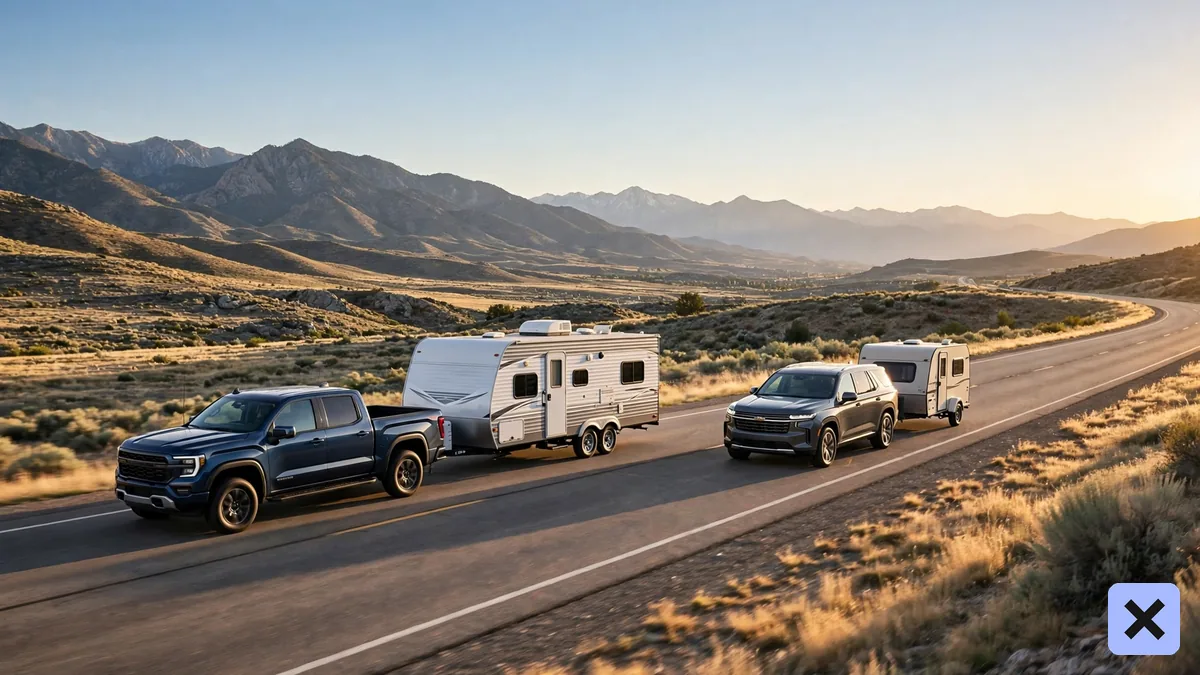
Choosing between a pickup and an SUV for towing is one of the most practical decisions a driver can make, and one of the easiest to get wrong. Both can pull a trailer, a boat, or a camper, but they do it in very different ways, and the right answer depends far more on what you tow and how often than on the biggest number on a spec sheet.
Pickup trucks are built around a separate frame and an open bed, which gives them an edge in maximum towing capacity, payload, and stability with heavy trailers. SUVs wrap similar strength in a closed, passenger-friendly body that is easier to live with every day.
This guide compares pickups and SUVs for towing on the things that actually matter: capacity, stability, payload, comfort, and running costs. By the end, you will know which one fits your trailer and your life.
Key takeaways
- Pickups generally tow more than SUVs, with full-size trucks rated well above most three-row SUVs.
- SUVs tow best with lighter trailers such as small campers, utility trailers, and jet ski trailers.
- Payload matters as much as towing capacity, because tongue weight eats into the weight your vehicle can carry.
- A longer wheelbase and a heavier tow vehicle usually mean a calmer, more stable towing experience.
- For daily driving, SUVs are quieter, easier to park, and more comfortable for passengers than most pickups.
The Short Answer: Pickup vs SUV for Towing
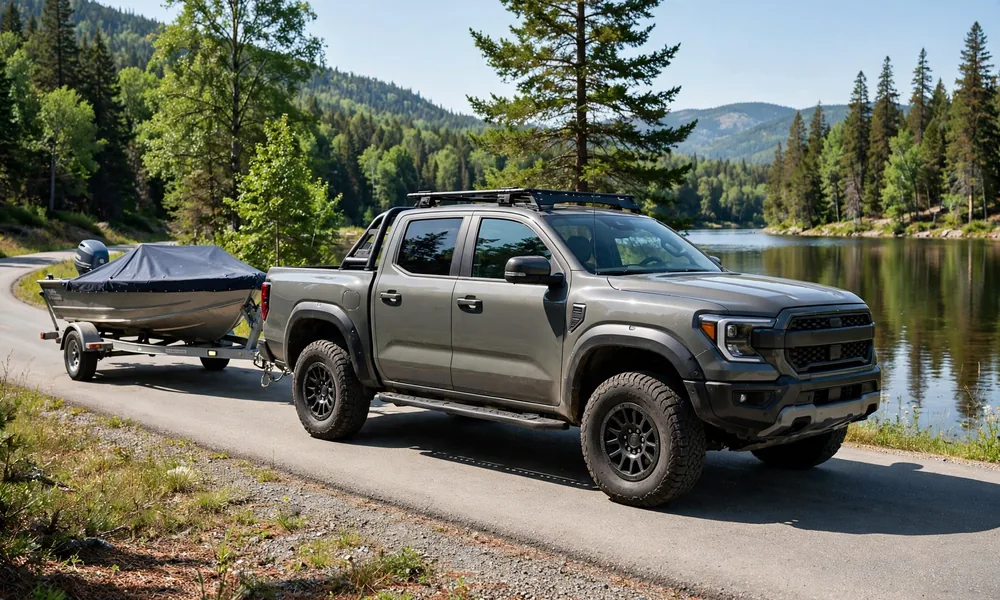
If you tow heavy loads regularly, a pickup is almost always the better tool. Full-size pickups are designed from the ground up to pull and carry weight, with strong frames, large engines, and heavy-duty cooling. A typical full-size pickup can tow between 9,000 and 13,000 pounds when properly equipped. Most SUVs, even the biggest ones, top out somewhere between 5,000 and 8,000 pounds.
That does not mean SUVs cannot tow. A well-chosen SUV can handle a small travel trailer, a pop-up camper, a boat, or jet skis with ease. The trouble starts when the trailer gets big. With large travel trailers, heavy car haulers, or horse trailers, most SUVs simply run out of capacity, payload, and wheelbase.
The simplest rule is this: if your trailer weighs more than about 7,000 pounds loaded, or if you tow most weekends, buy the pickup. If your trailer is lighter, you tow a few times a year, and the vehicle will spend most of its life as a family car, an SUV is often the smarter choice.
How Towing Capacity Really Works
Towing capacity is the maximum weight a vehicle is rated to pull, but that single number hides a lot of detail. The rating assumes a specific configuration, with the right engine, axle ratio, and cooling package. Two trucks that look identical can have ratings thousands of pounds apart, so always check the rating for the exact vehicle you are buying.
Payload and Tongue Weight
Payload is the weight a vehicle itself can carry, and a trailer’s tongue weight counts against it. A 7,000-pound trailer typically puts 700 to 1,050 pounds on the hitch, and that weight comes straight out of your payload. Add four passengers and luggage, and many SUVs are already at their payload limit.
Why Wheelbase and Weight Matter
A longer wheelbase helps a tow vehicle resist trailer sway, the side-to-side movement that makes towing feel nervous in crosswinds or when a large truck passes. Pickups, with their long frames, have a natural advantage here. A heavier tow vehicle helps too, because the trailer has less ability to push the vehicle around.
Pickup Trucks: Where They Win for Towing
Pickups win on the fundamentals of towing. Their body-on-frame construction is the same approach used by commercial trucks, giving them the strength to handle heavy tongue weights. Their longer wheelbases and heavier curb weights add stability.
Maximum Capacity and Heavy Trailers
When the job is big, pickups are in a class of their own. A half-ton pickup can comfortably handle a large travel trailer or a heavy boat, while a heavy-duty diesel pickup can tow a fifth-wheel camper or a loaded equipment trailer that no SUV could legally pull. If you own a trailer that weighs more than 8,000 pounds, a pickup is usually the only sensible choice.
Payload and the Open Bed
The open bed is a practical advantage that matters more than most buyers expect. Firewood, generators, bikes, and coolers can all ride in the bed without taking up passenger space, and a tonneau cover keeps them secure and dry. That leaves the payload rating working for the trailer rather than for luggage.
SUVs: Where They Win for Towing
SUVs win on everyday livability, and for many owners that matters more than maximum capacity. An SUV carries five to eight people in a quiet, weatherproof cabin, with secure cargo space behind the rear seats. If the vehicle is a family car first and a tow vehicle second, that comfort is hard to give up.
Comfort and Daily Driving
Most SUVs ride more smoothly than pickups, handle more nimbly, and fit more easily into parking spaces and garages. Their shorter length makes them easier to manoeuvre in towns, and their enclosed cargo area keeps luggage dry and out of sight. For a driver who tows a few times a year and commutes the rest, an SUV is simply a nicer vehicle to live with.
When an SUV Is Enough
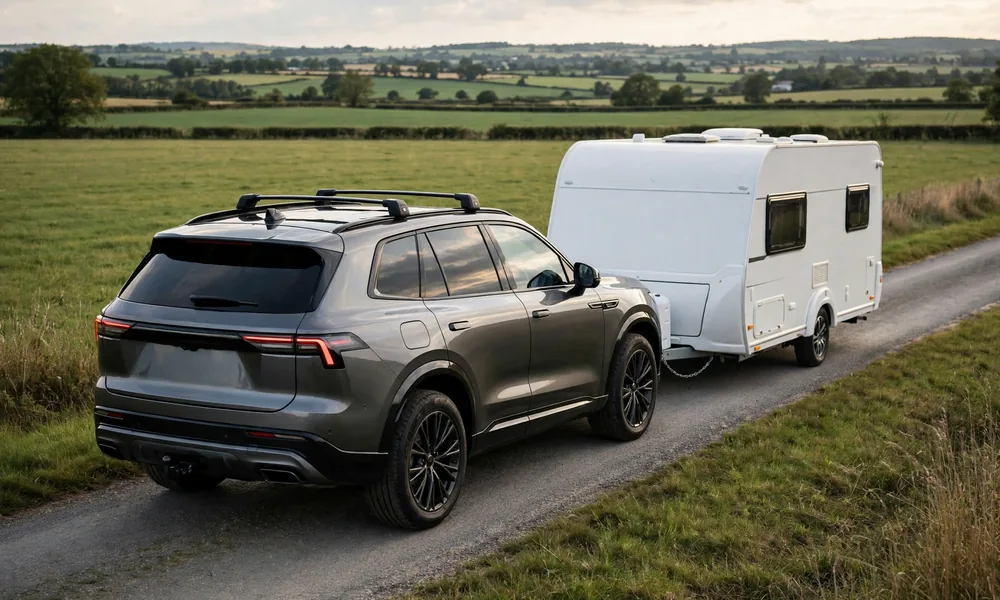
An SUV is enough when the trailer is modest and the load is well matched. Small travel trailers, teardrop campers, pop-up campers, utility trailers, and single-axle boat trailers are all squarely in SUV territory. Many three-row SUVs tow 5,000 pounds or more. The key is to stay comfortably inside the rating and use a weight-distribution hitch when the trailer is heavy enough to need one.
Pickup vs SUV for Towing: Head-to-Head
The table below sums up the main differences.
| Factor | Pickup Truck | SUV |
|---|---|---|
| Maximum towing capacity | 9,000 to 13,000+ pounds | 3,500 to 8,000 pounds |
| Payload | 1,500 to 2,500+ pounds | 1,000 to 1,700 pounds |
| Stability with heavy trailers | Excellent, long wheelbase | Good with light trailers |
| Passenger comfort | Good, but truck-like | Excellent, quiet cabin |
| Cargo flexibility | Open bed, very flexible | Enclosed, weatherproof |
| Daily driving ease | Large, harder to park | Easier, more nimble |
| Fuel economy while towing | Lower, but stable under load | Better unloaded, drops fast |
What Are You Actually Towing?
The trailer you own, or plan to buy, should decide the vehicle. A mismatch here is the most common and most expensive towing mistake, because a trailer that is too heavy for the vehicle is not just uncomfortable, it is unsafe and can damage the drivetrain, the brakes, and the suspension.
Small Trailers: Utility, Jet Skis, and Pop-Up Campers
Trailers under 3,500 pounds are easy work for almost any SUV or pickup. A utility trailer, a pair of jet skis, a small fishing boat, or a pop-up camper will tow happily behind a midsize SUV, and you will barely notice it is there. In this weight range, choose the vehicle you prefer to drive every day. If you are comparing engines, read our guide to petrol versus diesel SUVs for towing, which explains how fuel type changes the towing experience.
Midsize Trailers: Boats and Travel Trailers
Trailers between 3,500 and 7,000 pounds are the grey zone where the choice gets interesting. A capable three-row SUV can handle this range with the factory towing package, but it will be working hard. A half-ton pickup handles the same load with far more margin, which means less strain, better braking, and a calmer drive. If you tow in this range more than a few times a year, the pickup’s extra margin is worth having.
Heavy Trailers: Fifth Wheels and Horse Trailers
Trailers over 7,000 pounds belong behind a pickup, full stop. Large travel trailers, horse trailers, and car haulers all need the capacity, payload, and stability that only a truck provides. Fifth-wheel trailers cannot be towed by an SUV at all, since they need a hitch mounted in a pickup bed.

The Hidden Costs of Towing
Towing changes the running costs of any vehicle. Fuel economy drops sharply while towing, often by a third or more, and the heavier the trailer, the bigger the drop. A pickup’s larger engine may use more fuel unloaded, but it often works less hard under load, so the gap narrows on the highway with a trailer behind.
Maintenance matters too. Towing puts extra wear on brakes, tyres, and transmissions, so service intervals shorten and parts cost more. SUVs cost less to run day to day, but towing near their limit accelerates wear, so staying inside the rating saves money. Before you buy, avoid the errors that catch out first-time towers. Our list of the worst towing mistakes drivers make covers the most common ones.
Towing Checklist: Before You Buy or Hitch Up
Run through this checklist before every long trip.
- Weigh the trailer fully loaded, with water, fuel, and gear, and compare it with the vehicle’s rated towing capacity.
- Check the tongue weight and confirm it is between 10 and 15 percent of the loaded trailer weight.
- Add up passengers and cargo, then confirm the total stays inside the vehicle’s payload rating.
- Confirm the tow vehicle has the factory towing package, including the right cooling and hitch receiver.
- Fit a weight-distribution hitch and trailer brakes whenever the trailer is heavy enough to need them.
- Test the lights, brakes, chains, and tyre pressures on both the vehicle and the trailer before every trip.
Frequently Asked Questions
Can an SUV tow a travel trailer?
Yes, many SUVs can tow a small or midsize travel trailer, provided the trailer’s loaded weight stays within the SUV’s rated capacity. Most three-row SUVs tow between 5,000 and 8,000 pounds. Always check the loaded weight rather than the dry weight.
Is a pickup always better than an SUV for towing?
Not always. Pickups are better for heavy trailers and frequent towing, but an SUV can be the better choice for light trailers and daily family use. The best vehicle is the one that matches your trailer and your everyday needs.
What is the safest towing setup for a beginner?
The safest setup is a vehicle with plenty of spare capacity, a trailer well below its limit, a weight-distribution hitch, and a trailer brake controller. Keep speeds moderate, allow longer braking distances, and practice reversing in an empty car park before your first trip.
Does towing damage an SUV?
Towing within the manufacturer’s ratings should not damage an SUV, but towing at or beyond the limit can strain the transmission, brakes, and suspension. The risk rises when the trailer is heavy or the roads are hilly, so stay well inside the rating and service the vehicle on schedule.
How much trailer can a half-ton pickup tow?
Most modern half-ton pickups tow between 9,000 and 13,000 pounds when properly equipped, though the exact figure depends on the engine, axle ratio, cab, and bed configuration. Always check the rating for your specific truck, and remember payload and tongue weight can limit it.
Should I choose a pickup or an SUV if I tow only a few times a year?
If you tow rarely and the trailer is light, an SUV is usually the better buy, because it is quieter and more comfortable day to day. A pickup makes more sense if the trailer is heavy, even if you tow rarely. If you are still deciding between family-friendly tow vehicles, our roundup of the best family SUVs for 2026 is a good place to start.
The Bottom Line
For heavy trailers and regular towing, a pickup is the clear winner, with the capacity, payload, and stability that make big loads feel manageable. For lighter trailers and a vehicle that doubles as a comfortable family car, an SUV is often the smarter choice. Match the vehicle to the trailer you actually own, leave a generous margin below the rated limits, and the right answer will be obvious.


