Ear Cleaners That Clear Wax Gently and Safely in 2026
The best ear cleaners clear earwax gently, without pushing it deeper or scratching the delicate skin inside your ear. Earwax is not dirt: it protects the ear canal, traps dust, and usually works its way out on its own. But when it builds up, hearing goes muffled, ears feel full, and everyday sounds seem distant. This guide compares the best ear cleaners of 2026 on the things that actually decide whether they help or harm: gentleness, control, ease of use, and how safely they reach the wax without going too far.
Most earwax problems come from the wrong tool, not from too much wax. Cotton buds push wax deeper and can scratch the canal. Fingers and hairpins are worse. A proper ear cleaner is designed to soften wax first, then remove it slowly, with a tip that cannot go too far and a method you can control.
Key takeaways
- Soften wax before you remove it: drops used for a few days make cleaning far gentler and more effective.
- Never push anything deep into the ear canal: the tip should stay where you can see it.
- Cotton buds make wax problems worse by packing wax against the eardrum.
- Warm water rinses work best after softening, never with force or a high-pressure jet.
- Stop and see a doctor if you have pain, discharge, dizziness, or a sudden change in hearing.
How we judged the best ear cleaners
Every cleaner here was judged on the same five points: how gently it removes wax without scratching or pushing it deeper; how much control you have over depth and pressure; how easy it is to use without a mirror or a second pair of hands; how easy it is to clean and keep hygienic; and how clearly it warns you when a problem needs a doctor instead of a home tool.
The best ear cleaners at a glance
| Ear cleaner | Best for | How it works | Gentleness | Approx. price |
|---|---|---|---|---|
| Softening ear drops | Most people, first step | Oil softens wax | Very gentle | $5–$12 |
| Bulb syringe kit | Rinsing after drops | Warm water rinse | Gentle | $8–$18 |
| Spiral silicone cleaner | Light surface wax | Soft twist scoop | Gentle | $6–$15 |
| Camera ear cleaner | Seeing what you clean | Live view, scoop tip | Gentle if used slowly | $25–$55 |
| Metal curette set | Dry flakes at the opening | Small loop scoop | Needs care | $10–$20 |
| Lighted ear cleaner | Checking before cleaning | LED tip, scoop | Gentle | $12–$25 |
| Irrigation bottle kit | Stubborn softened wax | Controlled warm rinse | Gentle if pressure is low | $12–$28 |

The 7 best ear cleaners for 2026
1. Best overall: softening ear drops
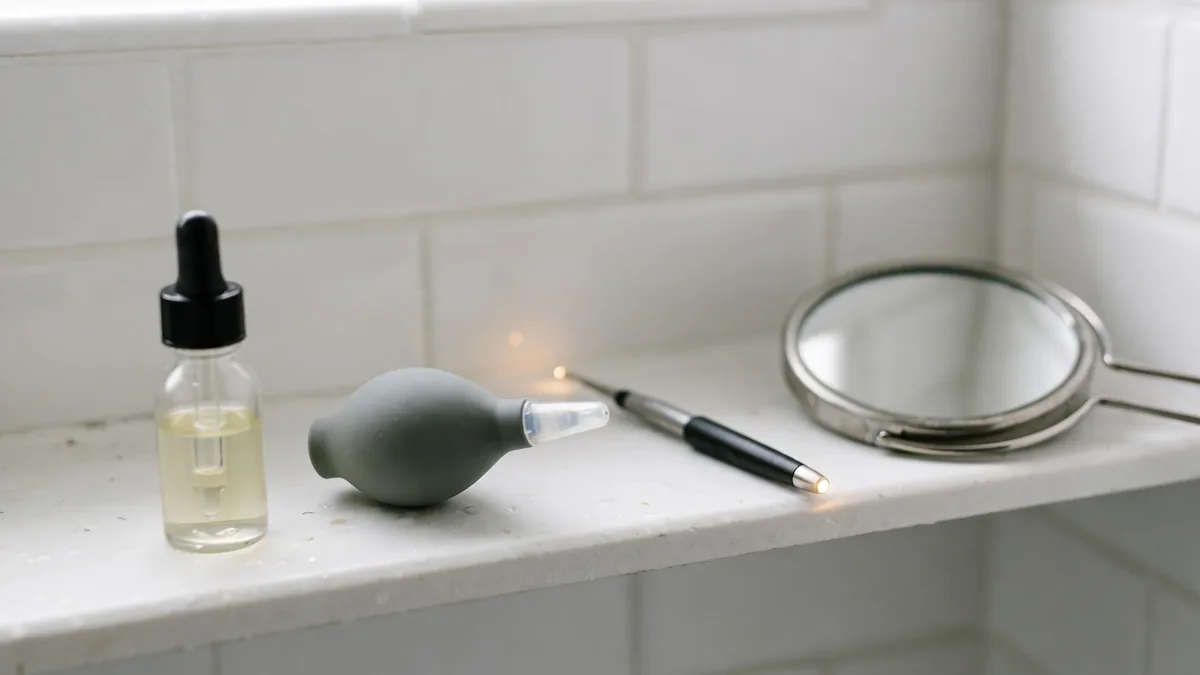
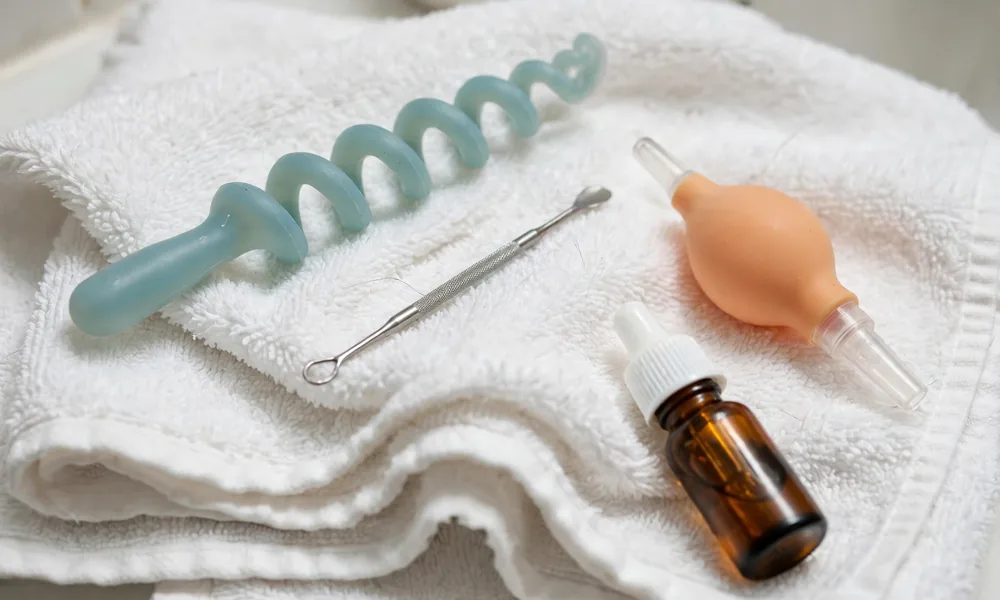
Ear drops are the best starting point for almost everyone, because they solve the problem without putting anything hard into your ear. A few drops of olive oil or a pharmacy softening solution, used for three to five days, loosen wax so it drains out on its own or rinses away easily. They cost very little, they cannot scratch anything, and they work for the most common cause of muffled hearing: dry, hard wax that has built up slowly.
2. Best for rinsing: bulb syringe kit
A bulb syringe is the gentlest way to rinse softened wax out. You fill it with body-temperature water, tilt your head over a basin, and squeeze slowly so the water flows along the canal and back out again. The soft rubber tip cannot scratch, and the pressure is entirely in your hand, so you stop the moment anything feels uncomfortable. Use it after several days of drops, with warm water only, and never squeeze hard.
3. Best for light wax: spiral silicone cleaner
A spiral silicone cleaner is a soft, flexible tool you twist gently at the entrance of the ear to lift surface wax. The spiral shape catches flakes that sit near the opening, and the silicone is soft enough that it will not scratch if it touches the skin. It suits people who get a light build-up near the outer ear and want a quick, reusable tool for between deeper cleans. It is not a tool for deep wax: if you cannot see the wax, do not chase it.
4. Best for seeing clearly: camera ear cleaner
A camera ear cleaner puts a tiny lens and light on the tip and shows the inside of your ear on your phone, so you can see exactly what you are doing. That visibility is its real advantage: you stop guessing, you see when the wax is gone, and you notice if the skin looks sore or the wax is packed hard against the drum. Use it slowly, keep the tip shallow, and treat the camera as a way to check, not as a reason to dig.
5. Best for dry flakes: metal curette set
A metal curette is a small loop on a handle, made for lifting dry flakes of wax that sit right at the ear opening. It works well for that one job, and poorly for everything else. The metal is unforgiving, so it needs a steady hand, good light, and a strict rule: only clean what you can see, and stop at the first sign of discomfort.
6. Best for checking first: lighted ear cleaner
A lighted ear cleaner is a simple scoop with a small LED at the tip, so you can see into the outer ear before you touch anything. That quick look often saves a clean altogether: many blocked feelings come from wax sitting near the opening, which a lit scoop can lift in seconds, while deeper wax needs drops and time. It is cheap, easy to keep in a bathroom drawer, and a good first tool for anyone who is unsure whether their ears actually need cleaning at all.
7. Best for stubborn wax: irrigation bottle kit
An irrigation bottle kit is a step up from a bulb syringe, with a shaped tip and a bottle that gives a steadier, more controlled rinse. It suits wax that has softened with drops but will not shift with a gentle squeeze. The key is low pressure: a slow, steady stream of warm water, aimed along the canal wall rather than straight at the eardrum.
How to clean your ears safely
Start with drops. Lie on your side with the blocked ear facing up, put in the recommended number of drops, and stay still for five minutes so the oil reaches the wax. Repeat once or twice a day for three to five days. You may hear a fizzing or feel fullness as the wax softens, which is normal. After a few days, rinse in the shower or with a bulb syringe and warm water, letting the water run in gently and drain out on its own. Dry the outer ear with a towel, and do not put anything else into the canal afterwards.
If you use a tool instead, the rules are stricter. Wash your hands, clean the tool, and work in good light with a mirror. Only touch wax you can see at the opening, move slowly, and stop immediately if you feel pain, sharpness, or dizziness. People who wear earplugs every day should clean more carefully, because plugs can push wax deeper over time. Our guide to the top earplugs for sleep, work, and concerts explains how to fit plugs properly so they seal without packing wax inward. The same care applies at work: if you wear ear protection that blocks noise without the bulk, wipe the seals clean and check your ears regularly.
Ear cleaners vs cotton buds
Cotton buds feel like they clean, but they usually make things worse. A bud is wider than the canal opening, so it pushes most of the wax deeper while removing only a little from the surface. Pushed wax hardens against the eardrum, which is how a small build-up becomes a painful blockage. Buds can also scratch the thin skin inside the ear, which invites infection, and a slipped bud can injure the eardrum itself. The rule is simple: clean only the outer ear with a cloth or a bud, and never put anything past the opening. A proper ear cleaner respects that boundary by design, while a cotton bud ignores it.
Mistakes that make earwax worse
The most common mistake is cleaning too often. Ears clean themselves, and over-cleaning strips away the wax that protects the canal, leaving it dry, itchy, and prone to infection. The second mistake is using cold water for a rinse, which can cause dizziness and discomfort. The third is cleaning both ears with the same dirty tool, which spreads bacteria. The fourth is ignoring warning signs: pain, discharge, bleeding, ringing, or a sudden drop in hearing are reasons to see a doctor, not to clean harder. The fifth is using ear candles, which can drip hot wax into the ear. Keep a bottle of drops in your first-aid kit that covers real emergencies so you always have the gentle option to hand, and leave the rest to patience.
Before you buy: quick checklist
- Pick drops first: softening is the safest step and often the only one you need.
- Check the tip: it should be soft, smooth, and unable to reach deep into the canal.
- Look for a depth guard or a short tip on any tool that goes near the ear.
- Make sure it is easy to clean: washable tips and a storage case keep it hygienic.
- Avoid anything that promises to suck wax out with strong suction or heat.
- Keep the packaging warnings: if it says see a doctor for pain or discharge, believe it.
Frequently asked questions
How often should I clean my ears?
Most people need to clean their ears rarely, if ever, because wax migrates out on its own. A gentle clean every few weeks suits people who build up wax quickly, wear earbuds or earplugs daily, or swim often.
Are ear drops safe to use?
Softening drops are safe for most people when used as directed, but not if you have a perforated eardrum, an ear infection, discharge, or pain. If any of those apply, or you have had ear surgery, see a doctor before putting anything into your ear.
Can I use a camera ear cleaner on children?
Children’s ear canals are smaller and more sensitive, and children move without warning, so home tools are not recommended for them. If a child complains of blocked hearing or ear pain, a doctor should look first. Never use a metal tool on a child.
Why does my hearing go muffled after swimming?
Water can swell earwax and trap it against the eardrum, which muffles sound for a few hours. Tilting your head and letting the water drain, then drying the outer ear, usually clears it.
Do ear candles work?
There is no reliable evidence that ear candles remove wax, and they carry real risks: hot wax dripping into the ear, burns, and blocked canals. Doctors do not recommend them. Drops and a gentle rinse are safer and actually work.
When should I see a doctor about earwax?
See a doctor if you have pain, discharge, bleeding, dizziness, ringing, or a sudden change in hearing, or if home cleaning has not helped after a week of drops. A doctor can remove wax safely with proper instruments and check that nothing else is causing the problem.
Bottom line
The best ear cleaners start gently: softening drops for a few days, then a warm rinse if anything is left. Tools like a spiral cleaner, a lighted scoop, or a camera cleaner help only for wax you can see near the opening. Clean less often than you think, never use cotton buds inside the canal, and see a doctor the moment cleaning hurts or hearing changes. Gentle patience clears more wax than any forceful tool.