The best bandages of 2026 are the ones you forget you are wearing. A good bandage stays put through washing, work and a walk, protects the cut underneath, and comes off without a sting. A bad one curls at the edges within an hour, lets water in, or sticks so hard that removing it hurts more than the cut did. This guide compares the best bandages for everyday cuts, blisters and knocks in 2026, judged on adhesion, comfort, waterproofing and how kindly they treat skin when they come off.
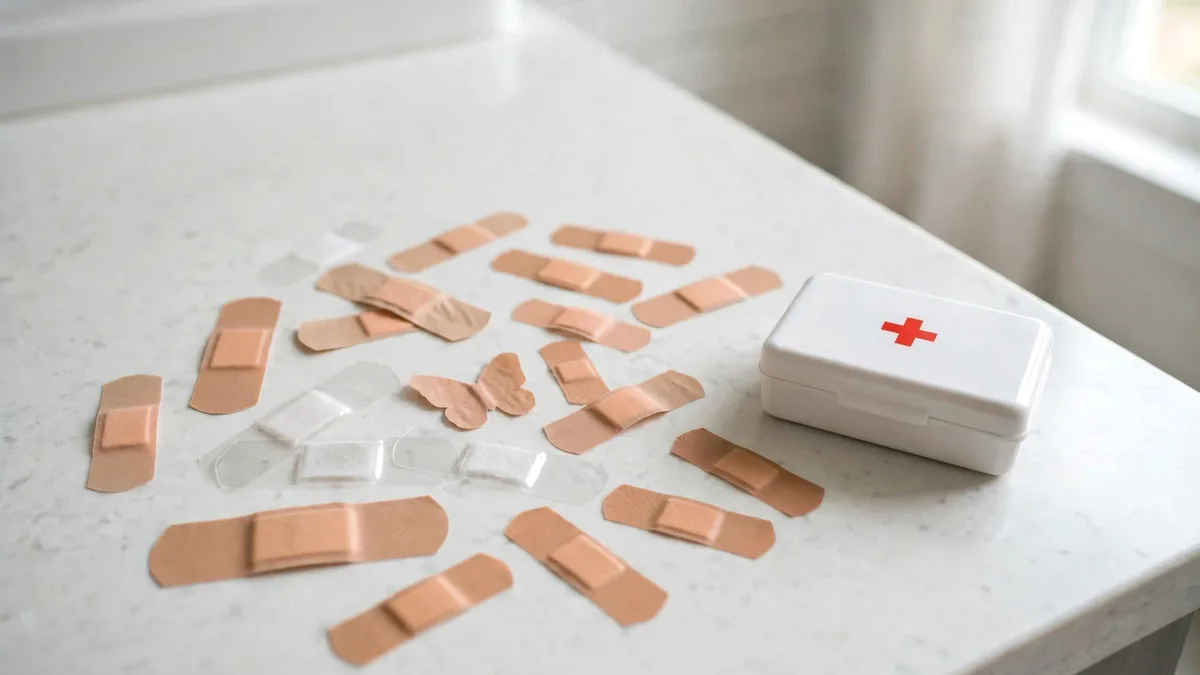
Bandages are not all the same. Adhesive plasters suit small clean cuts, fabric bandages flex with fingers and knuckles, waterproof ones keep a wound dry in the shower, blister bandages cushion heels and toes, and compression bandages support a sprain. Buying the right type for the injury matters more than the brand on the box, and keeping a small range at home means the right one is always within reach.
Key Takeaways
- Match the bandage to the injury: adhesive plasters for small cuts, fabric for joints, waterproof for wet work, blister bandages for heels.
- A bandage should stay put for a full day of normal use, but come off without pulling skin or leaving sticky residue.
- Change a bandage daily, or sooner if it gets wet, dirty or loose, so the wound stays clean and you can check how it is healing.
- Waterproof does not mean soak-proof: a waterproof bandage survives a shower, but not a long bath or a swim.
- Keep a small range at home, in several sizes, and check expiry dates twice a year, because old adhesive fails first.
How We Picked the Best Bandages for 2026
We started with adhesion, because a bandage that falls off is no bandage at all. The best ones stick to clean, dry skin for a full day, flex with the body part they cover, and keep their edges flat instead of curling. We tested them on fingers, knuckles, heels and knees, through handwashing, typing and walking, because a bandage that only works on a flat forearm is not much use in real life.
Next we looked at the pad: absorbent enough for a small cut, non-stick so it does not glue itself to the wound, and large enough to cover the injury with a margin all round. We also weighed comfort and removal, because a bandage that hurts coming off will be avoided next time, and waterproofing, because most cuts need to survive a shower. Finally we considered range and value, since a box with several sizes beats a box of one size nobody needs.
The Best Bandages of 2026 at a Glance
| Bandage | Type | Waterproof | Best for |
|---|---|---|---|
| FlexiFabric Everyday | Fabric adhesive | Splash-proof | Best overall |
| AquaGuard Waterproof | Clear film adhesive | Yes | Showers and wet work |
| BlisterShield Heel | Hydrocolloid | Yes | Blisters |
| CompressionWrap Support | Elastic roll | No | Sprains and swelling |
| GentleSkin Sensitive | Silicone adhesive | Splash-proof | Sensitive and older skin |
Best Overall: FlexiFabric Everyday
The woven fabric stretches with fingers and knuckles instead of fighting them, so it stays flat through a day of typing, cooking and washing up, and the adhesive holds firmly without leaving a sticky ring when it comes off. The range of sizes in the box means there is one that fits a fingertip, a knuckle and a knee. If you only buy one box of bandages this year, buy this one.
Best for Showers and Wet Work: AquaGuard Waterproof
The clear film seals around the cut and keeps water out through a shower and a handwash, while staying thin and flexible enough to forget about. It is less breathable than fabric, so do not leave it on for days, and it sticks best to completely dry skin. For a cut on a hand that gets wet all day, nothing else comes close.
Best for Blisters: BlisterShield Heel
It is shaped for heels and toes, where blisters actually happen, and it survives walking, running and a shower without peeling. Do not pop a blister to fit one on: clean the skin, apply it over the intact blister, and leave it until it starts to lift. For new shoes and long walks, keep a few in your bag before you need them.
Best for Sprains and Swelling: CompressionWrap Support
The elastic stretches evenly, the clips hold it without slipping, and it can be washed and reused. Wrap it snugly but not tightly: you should be able to slip a finger under the edge, and if the fingers or toes beyond it go cold, pale or numb, loosen it straight away. A sprain that does not improve in a few days needs proper medical attention.
Best for Sensitive and Older Skin: GentleSkin Sensitive
It lifts away without pulling skin, hair or the wound underneath, which matters for older skin, for children, and for anyone who changes a bandage every day. The adhesion is gentler, so it will not survive heavy wet work, but for everyday cuts on fragile skin it is the kindest bandage in this guide.
Adhesive, Fabric, Waterproof or Compression?
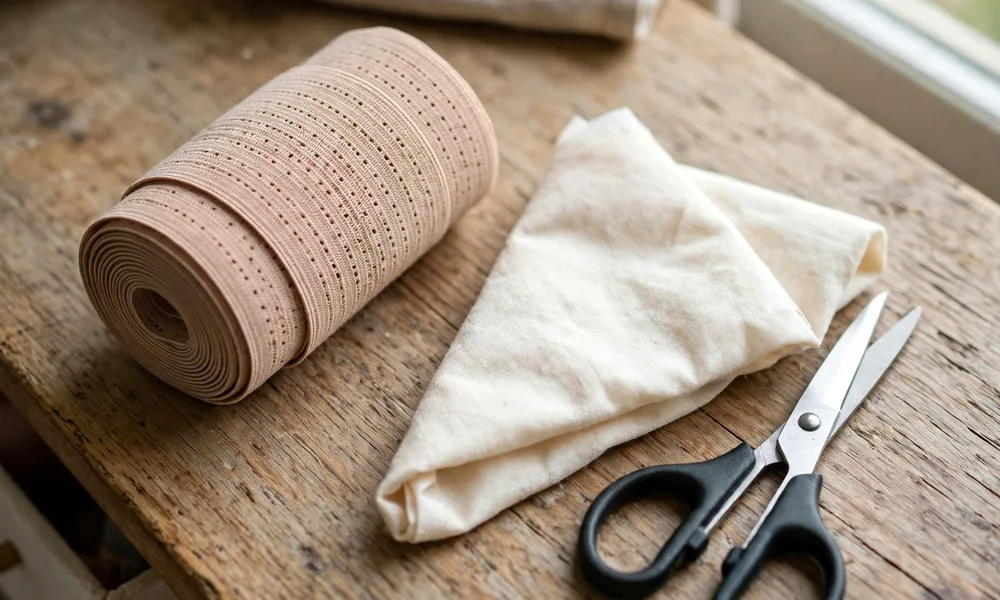
Adhesive plasters are the default: a sticky strip with a pad in the middle, for small clean cuts on flat skin. They are cheap, easy to apply with one hand, and come in every size, but they struggle on joints and in water. Fabric bandages are the same idea with a woven backing that stretches, so they suit fingers, knuckles, elbows and knees, and they breathe better, which helps healing. Clear film bandages are waterproof and almost invisible, ideal for hands and for cuts that must stay dry, but they trap moisture if left on too long.
How to Apply a Bandage Properly
Start by cleaning the cut. Wash your hands, rinse the wound gently under clean running water, and pat it dry with a clean cloth or gauze. Do not use cotton wool, which leaves fibres in the wound, and do not scrub. Apply the bandage to clean, dry skin: any moisture, cream or blood under the adhesive stops it sticking, and a bandage applied over a wet wound will peel off within the hour. Centre the pad over the cut, with a margin of pad all round it, and smooth the adhesive down from the middle outwards so there are no air pockets at the edges.
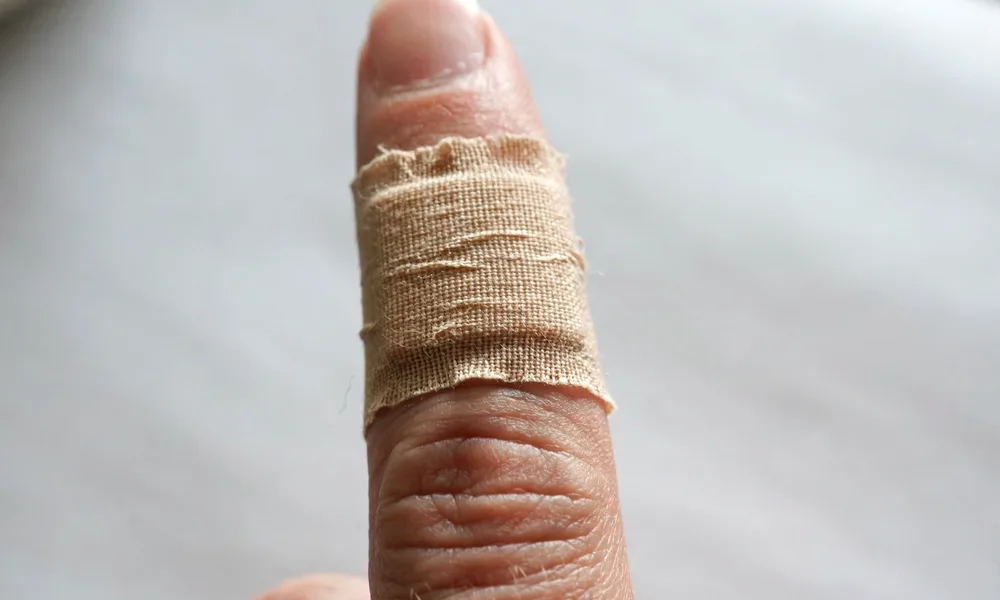
For fingers, wrap the bandage so it flexes with the joint rather than across it, and use a fingertip-shaped plaster where the shape demands it. For heels, apply the blister bandage to dry skin before you put your shoes on, and smooth it down firmly for thirty seconds. Change the bandage daily, or sooner if it gets wet, dirty or loose, and check the wound each time: it should look cleaner and less red day by day, not worse.
What to Keep at Home, in the Car and on a Walk
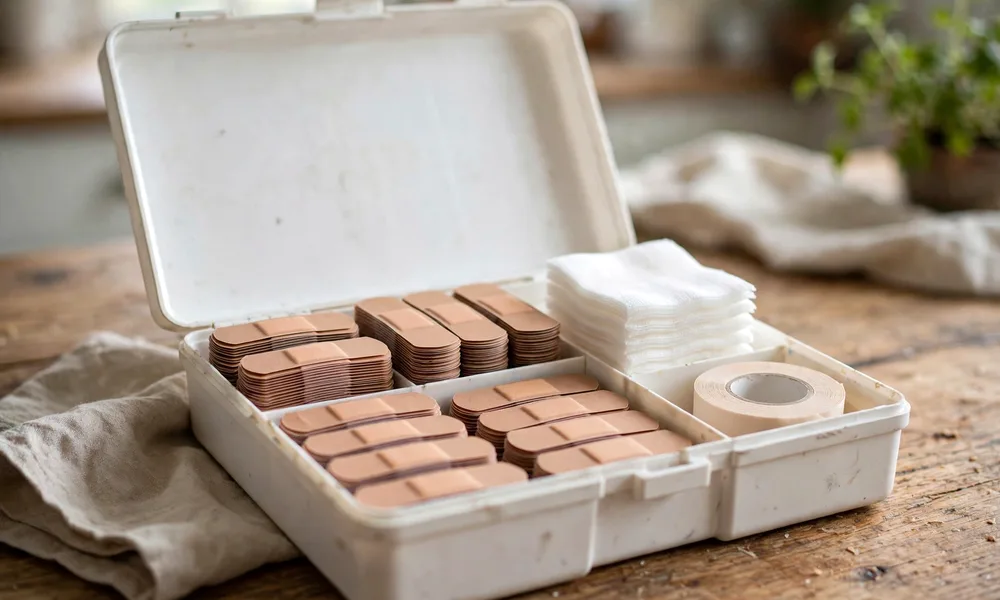
A home kit needs more than one box of plasters. Keep fabric adhesive bandages in several sizes, a few waterproof film bandages, blister bandages, a roll of compression bandage with clips, a triangular bandage, gauze pads, medical tape, scissors and antiseptic wipes, all in one box that everyone in the house knows the location of. Our guide to building a first-aid kit explains how to put that box together around the injuries that actually happen in your house, and how often to check it.
A car kit can be smaller: plasters, a compression bandage, gauze and tape, in a bag that lives in the boot. A walking kit is smaller still: blister bandages, a few plasters and tape, in a waterproof pouch. The same logic applies at a bigger scale to emergencies: our comparison of emergency kits vs first-aid kits explains what a home really needs beyond the everyday box, and the same dressing principles apply to pets too, as our guide to pet first-aid kits shows, though a pet wound should always be checked by a vet.
When a Bandage Is Not Enough
Most small cuts heal fine under a bandage, but some need more than that. A cut that keeps bleeding after ten minutes of firm pressure, a deep cut where you can see fat or muscle, a cut on the face, a bite, a puncture wound, or a wound with dirt or rust in it that you cannot wash out all need medical attention. So does any wound that becomes more painful, redder, hotter or more swollen after a day or two, or one with red streaks spreading from it, or a fever afterwards: those are signs of infection, and a bandage will not fix them.
People with diabetes, poor circulation, or a weakened immune system should be extra careful with even small wounds on the feet and legs, and should seek advice sooner rather than later. The same applies to anyone taking blood-thinning medicine. A bandage is for everyday injuries that are getting better, not for injuries that are getting worse.
Your Bandages Checklist
- Match the bandage to the injury: fabric for joints, waterproof for wet work, hydrocolloid for blisters, compression for sprains.
- Clean the wound gently and dry the skin properly before you apply a bandage.
- Centre the pad over the cut, with a margin all round, and smooth the adhesive from the middle outwards.
- Change a bandage daily, or sooner if it gets wet, dirty or loose.
- Keep several sizes at home, in the car and in a walking kit, and check expiry dates twice a year.
- Seek medical help for deep cuts, bites, punctures, or any wound that gets worse instead of better.
Frequently Asked Questions
How often should I change a bandage?
Once a day is the usual rule, or sooner if it gets wet, dirty or loose. Changing it daily lets you check the wound and keeps it clean. Hydrocolloid blister bandages are the exception: leave them on until they start to lift, which can be several days.
Are waterproof bandages really waterproof?
They keep water out through a shower and handwashing, if applied to clean, dry skin. They are not soak-proof: a long bath, a swim, or washing up without gloves will usually let water in at the edges.
Should I let a cut air out or keep it covered?
Keep it covered while it is healing, especially in the first few days. A covered wound stays moist, which helps it heal faster, and stays protected from dirt and knocks. Letting it dry out and scab over is slower and more likely to scar.
Why does my bandage keep falling off?
Usually because the skin was damp, greasy or hairy when it was applied, or because the bandage is the wrong type for the spot. Dry the skin properly, choose a fabric bandage for joints, and smooth the edges down firmly for thirty seconds after applying it.
What is the difference between a plaster and a compression bandage?
A plaster is a sticky strip with a pad for covering a small cut. A compression bandage is a roll of elastic for supporting a sprain, controlling swelling, or holding a dressing in place. They do different jobs and are not interchangeable.
Can I use a bandage on a blister?
Yes, but use a hydrocolloid blister bandage, not an ordinary plaster. It cushions the blister, keeps it moist so it heals faster, and stays on for days. Do not pop the blister first.
The Bottom Line
The best bandages are the ones that stay put, protect the cut and come off kindly: the FlexiFabric Everyday for most injuries, the AquaGuard Waterproof for wet hands and showers, the BlisterShield Heel for blisters, the CompressionWrap Support for sprains, and the GentleSkin Sensitive for fragile skin. Match the type to the injury, apply it to clean dry skin, and change it daily. A good bandage is a small thing, but on the day you need one, it is the only thing that matters.