Emergency Kits vs First-Aid Kits: What Your Home Really Needs in 2026
Most homes have a first-aid kit, and most homes would be in trouble if the power went out for three days. Emergency kits and first-aid kits sound like the same thing, but they solve different problems. A first-aid kit treats injuries. An emergency kit keeps a household fed, warm, lit, informed, and able to call for help when the lights, the heating, and the water stop working.
Confusing the two is the most common preparedness mistake there is. A box of plasters and bandages will not charge a phone, boil water, or tell you when it is safe to go outside. A bag full of tinned food and torches will not stop a cut from bleeding. You need both, as separate kits with separate jobs, and this guide draws that line clearly, then shows what belongs in the broader emergency kit.
Key Takeaways
- An emergency kit covers survival for 72 hours without power, water, or shops, while a first-aid kit covers injuries, and one cannot replace the other.
- Water, light, warmth, information, and communication come before gadgets, and most ready-made kits are weakest on water.
- A first-aid pouch belongs inside an emergency kit, but it is one item, not the whole bag.
- Build for your household, not a generic list, because a baby, a dog, or daily medication changes everything.
- Check the kit every six months, because batteries die, food expires, and water goes stale.
Emergency Kits vs First-Aid Kits: The Difference That Matters
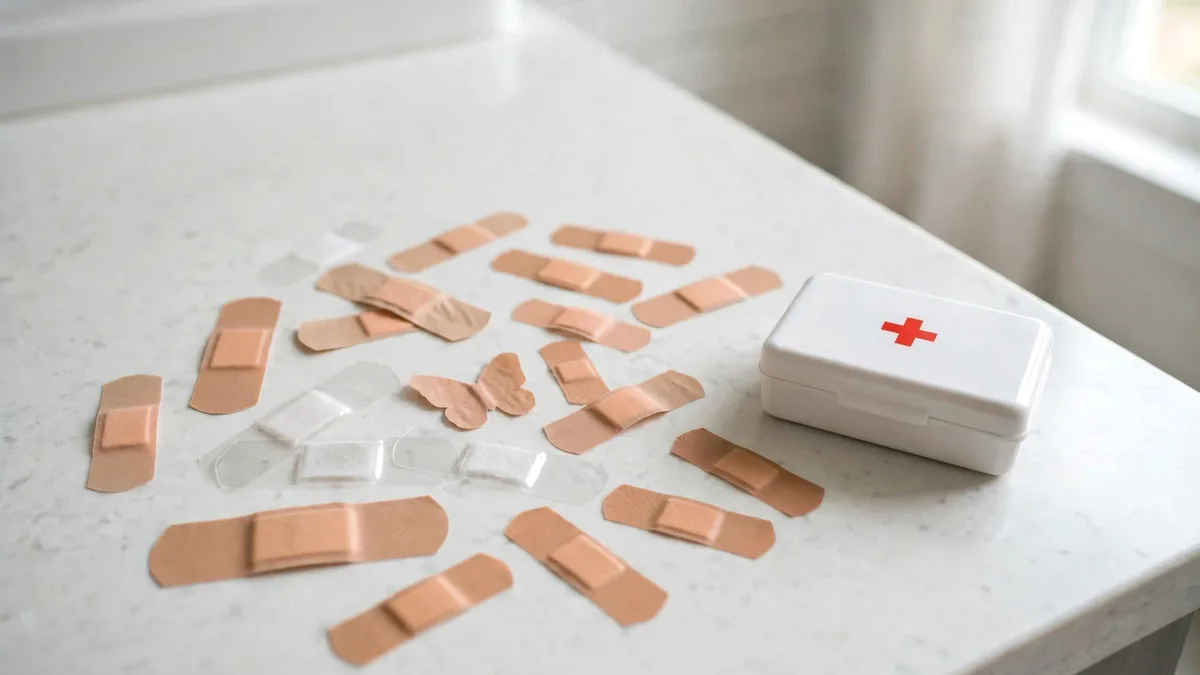
A first-aid kit answers one question: what do I do when someone is hurt? It holds wound dressings, plasters, antiseptic, scissors, tweezers, pain relief, and a first-aid guide. Its job is measured in minutes, from the moment of an injury until professional help arrives. It is small, it lives in a bathroom cabinet or a car boot. Our guide to building a first-aid kit that covers real emergencies walks through exactly what belongs in one.
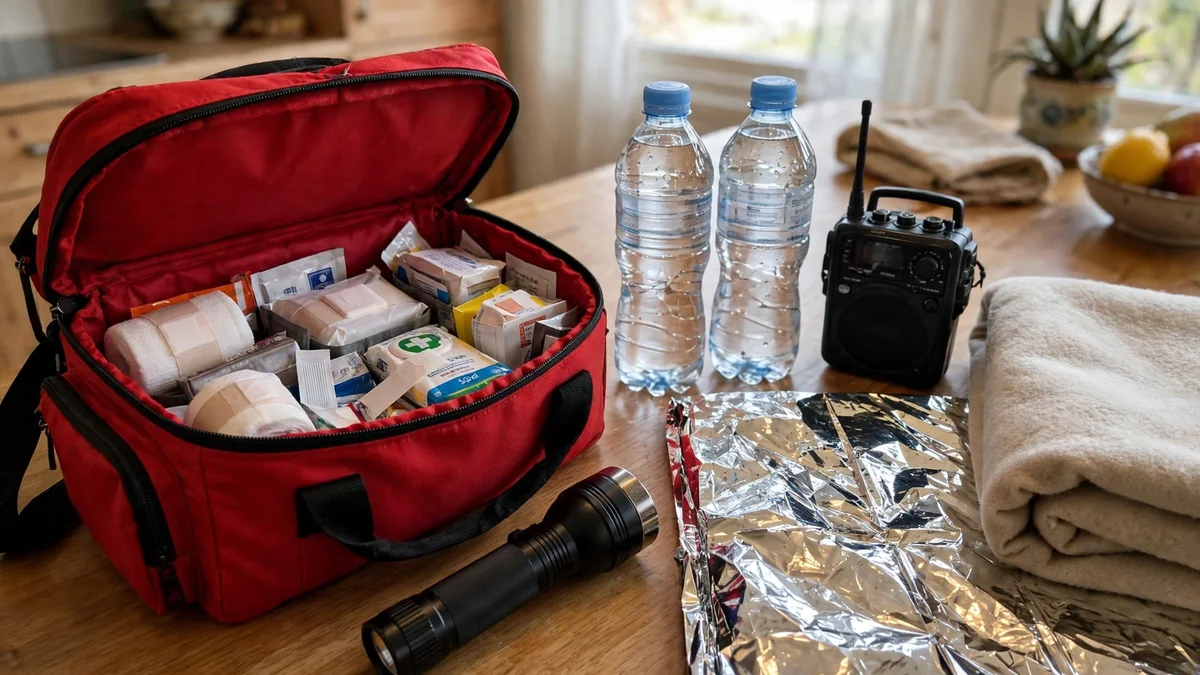
An emergency kit answers a bigger question: what do we do when the house stops working? A storm takes down the power lines, a flood closes the roads, or an evacuation order arrives with an hour’s notice. The kit has to keep everyone alive and comfortable for at least 72 hours without mains power, running water, heating, or shops. That means water and food, light and heat, a way to hear official advice, a way to charge a phone, documents, cash, and basic tools. A first-aid pouch sits inside it, but it is perhaps a tenth of the contents.
The confusion matters because it leads people to buy the wrong thing and feel prepared. A shop-bought first-aid kit labelled as an emergency kit is the classic trap: a neat red box that would be useless in a blackout. The honest answer is that a prepared home has both kits, kept in different places and built for different jobs. This guide is about the bigger one.
What Belongs in a Real Emergency Kit
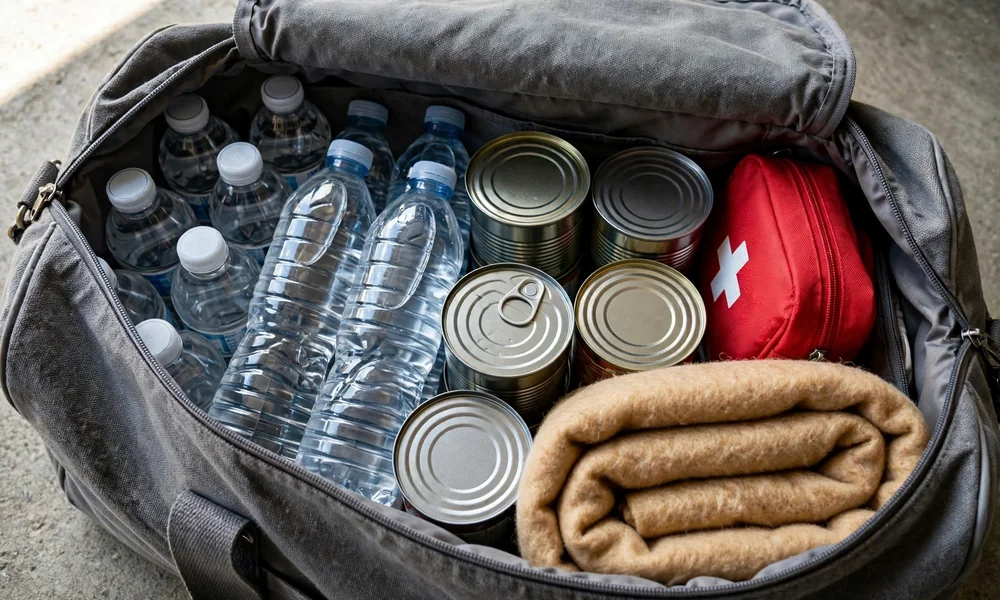
Start with water, because it is the item most kits get wrong. The standard advice is three litres per person per day, which means a family of four needs about 36 litres for three days. No ready-made kit holds that much, so plan for stored water at home plus a way to make more. Keep bottled water in a cool dark place and rotate it every six months, and add purification tablets or a portable filter so tap water can be made safe. A collapsible container is worth its weight if you need to carry water from a distribution point.
Food comes next, and the rules are simple: no cooking required, no refrigeration, and nothing anyone in the house will refuse to eat under stress. Tinned beans, soup, and fish, dried fruit and nuts, cereal bars, peanut butter, and crackers all work. Add a manual tin opener, because an electric one is useless in a blackout. Never use a camping stove indoors. Check expiry dates twice a year and eat the oldest items first.
Light and warmth are the third group, and they make a blackout bearable rather than frightening. A wind-up or battery torch for every adult, plus a lantern for the room you will spend the evening in, changes everything after dark. A good lantern lights a room well enough to cook, read, and keep children calm, which a torch beam cannot do. Add spare batteries and a foil blanket per person. A house without heating cools fast in winter, and warmth is a safety issue, not a comfort one.

Information and Communication: The Kit Most People Forget
In a real emergency, information is as important as food. You need to know whether to stay or leave, whether the water is safe, and when the power is coming back. A phone is the obvious tool, but a dead phone is a brick, so the kit needs a way to charge it. A charged power bank is the minimum, and a hand-crank or solar charger is better. Keep charging cables in the kit and a paper list of numbers, because contacts stored only in a dead phone are no use at all.
A battery or wind-up radio is the second half of the information plan. Mobile networks fail, and when they do, local radio is often the only source of official advice. A radio that also charges a phone and works as a torch earns its place in any kit, and our guide to the best weather radios of 2026 covers the models that pick up emergency broadcasts reliably. Keep it where you can find it in the dark, and test it every time you check the kit.
Documents and money are the last group, and they are the one people regret skipping. Keep a waterproof pouch with identification, insurance details, a list of medications and allergies, and contact details for family and your insurer. Add cash in small notes, because card machines stop working when the power does, and ATMs go dark too.
Emergency Kits Compared
There are three sensible ways to get an emergency kit, and the right one depends on your budget, your time, and how much you want to tailor the contents.
| Kit type | Best for | Watch out for |
|---|---|---|
| Ready-made 72-hour kit | A fast start, one purchase | Usually short on water and light on food quality |
| Build-your-own bag | Exact fit for your household | Takes time, easy to forget the boring items |
| Ready-made kit plus top-ups | Best balance for most homes | Check expiry dates on the pre-packed food first |
| Grab bag by the front door | Fast evacuation | Keep it light, a bag you cannot carry is no use |
Build It for Your Household, Not a Generic List
A generic list is a starting point, and your household is the finishing point. A baby changes the kit completely: formula, nappies, wipes, a change of clothes, and a way to warm a bottle without power. A dog or a cat needs food, water, a lead, medication, and a carrier. Someone on daily medication needs at least a week’s supply in the kit, plus a written list of doses.
Think about where the kit lives. A kit buried at the back of a garage is one you will not find in the dark during a storm. Keep the main kit somewhere you can reach it in under a minute, in the dark, without a torch. A grab bag by the front door covers evacuation, and a smaller kit in the car covers breakdowns. If you live in a flat, lifts stop in a power cut, so the kit needs to be carryable down the stairs.
Talk through the plan with everyone in the house, including children old enough to understand. Everyone should know where the kit is, what is in it, and what the household will do if the power goes out, if the water stops, or if you have to leave in a hurry. A kit nobody knows about is barely better than no kit at all. Practice one evening: turn the lights off, find the kit, light the lantern, and check that the radio works. It takes ten minutes and finds the gaps a list never will.
Common Mistakes That Make Emergency Kits Useless
The first mistake is buying a kit and never opening it. Sealed boxes hide dead batteries, stale food, and missing items, and the only way to know is to open the bag, check every item, and try the torch and the radio. The second mistake is storing it somewhere you cannot reach, like a high shelf or the loft. The third is forgetting water. Almost every ready-made kit is short on water, and water is the one thing you cannot improvise.
The fourth mistake is packing for a camping trip instead of an emergency. A kit full of gadgets looks impressive and helps very little when the real problem is three days without power in your own home. Spend the money on water, light, warmth, and a radio before anything clever. The fifth mistake is never checking the kit again. Batteries leak, food expires, and medication changes.
Checklist: Build and Check Your Emergency Kit
- Water: three litres per person per day for three days, plus purification tablets or a filter.
- Food for three days that needs no cooking or refrigeration, plus a manual tin opener.
- Light and warmth: a torch per adult, a room lantern, spare batteries, and a foil blanket per person.
- Information: a wind-up or battery radio, a charged power bank, cables, and a paper list of numbers.
- First aid: a proper first-aid pouch inside the kit, plus a week’s supply of any daily medication.
- Documents and cash: ID copies, insurance details, medication list, and small notes in a waterproof pouch.

Frequently Asked Questions
What is the difference between an emergency kit and a first-aid kit?
A first-aid kit treats injuries with dressings, plasters, and basic medicines. An emergency kit keeps a household going for 72 hours without power, water, or shops, covering water, food, light, warmth, information, and communication. A first-aid pouch belongs inside it, but it is only one part of it.
How much water should an emergency kit hold?
Plan on three litres per person per day, about 36 litres for a family of four. Store what you can at home and add purification tablets or a filter so you can make more water safe.
Are ready-made emergency kits worth buying?
Yes, as a starting point. A ready-made 72-hour kit is far better than nothing, but almost all are short on water and light on food quality. Buy one, open it, check every item, then top it up with water and food your household will actually eat.
Where should I keep my emergency kit?
Somewhere you can reach in under a minute, in the dark, without a torch. A cupboard near the front door or in the kitchen works for most homes. Keep a grab bag by the door for evacuation and a kit in the car for breakdowns.
How often should I check my emergency kit?
Every six months, at the same time you check your smoke alarms. Replace batteries, rotate water and food before expiry, update medication and documents, and test the torch and radio.
Do I still need a first-aid kit if I have an emergency kit?
Yes. The emergency kit covers survival, and the first-aid kit covers injuries. Keep a full first-aid kit in the bathroom or kitchen where cuts and burns happen, and a smaller first-aid pouch inside the emergency kit.
The Bottom Line
An emergency kit is not a first-aid kit with extra snacks. It is a different tool for a different problem: keeping your household fed, warm, lit, informed, and able to call for help when the systems you rely on stop working. Build one for your household, keep it where you can reach it in the dark, and check it every six months.