
Best Lanterns 2026
The best lanterns of 2026 are the ones you actually reach for when the lights go out, the sun sets on the patio, or the campsite turns dark. A good lantern is not just a pretty object with a glow. It spreads light where you need it, runs long enough for a whole evening, survives a knock off the table, and feels easy to carry, hang, or set down. The wrong one is dim where it matters, harsh where it should be warm, or dead before dinner is over. This guide covers the whole lantern family in one place: bright LED workhorses, soft decorative lights, solar and rechargeable models, and old-fashioned flame lanterns that still earn their keep. Whatever you need light for, there is a lantern here that fits, and the notes below will help you pick it without paying for features you will never use.
A lantern earns its place by doing one job well: lighting a space, not just a spot. A torch throws a beam in one direction, but a lantern glows in every direction at once, so everyone around the table can see their plate, their book, or their cards. That is why lanterns show up at campsites, on patios, in gardens, and in emergency kits. The best ones share a few traits. They give off warm, even light without a blinding bright spot. They run for hours on a charge or a set of batteries. They are steady on uneven ground and light enough to carry with one hand. And they are built to survive rain, dust, and the occasional drop, because a lantern that only works indoors on a calm evening is not much use when you really need it.
How to Choose a Lantern
Start with where you will use it most, because that decides almost everything else. A lantern for the patio needs to look good and give off a soft, warm glow that flatters a meal. A lantern for camping needs to be bright, tough, and light to pack. A lantern for power cuts needs long runtime and a battery you can trust after months in a cupboard. A lantern for a garden path or a balcony needs to handle rain and, ideally, charge itself from the sun. Buying one lantern to do all four jobs usually means it does none of them well, so be honest about your main use and let that lead. The secondary uses are a bonus, not the reason to buy.
Brightness matters, but more is not always better. Lantern brightness is measured in lumens, and for most uses between 100 and 400 lumens is plenty. A lantern of around 150 lumens lights a small table for two. Around 300 lumens covers a family picnic table or a small tent. Anything above 500 lumens is for lighting a whole campsite or a large garden, and it will eat through batteries much faster. Just as important is the quality of the light. Warm white light, around 2700 to 3000 kelvin, feels cosy and is kind to the eyes in the evening. Cool white light looks brighter on paper but can feel harsh and clinical, and it attracts more insects outdoors. The best lanterns let you dim the light and, on some models, switch between warm and cool tones.
Runtime is the number most buyers forget to check, and it is the one that causes the most disappointment. A lantern that claims 400 lumens may only hold that brightness for an hour before dimming, while a well-designed one gives a steady 150 lumens for ten hours or more. Look for runtime figures at a usable brightness, not just the maximum. Rechargeable lanterns usually run longer and cost less over time, but they need charging before a trip, so keep the cable somewhere you will find it. Battery lanterns are ready whenever you are, as long as you keep spare batteries in the drawer. Solar lanterns charge themselves during the day, which is wonderful for the garden, but they need real sunlight, not just a bright room, to fill up.
The Main Types of Lantern
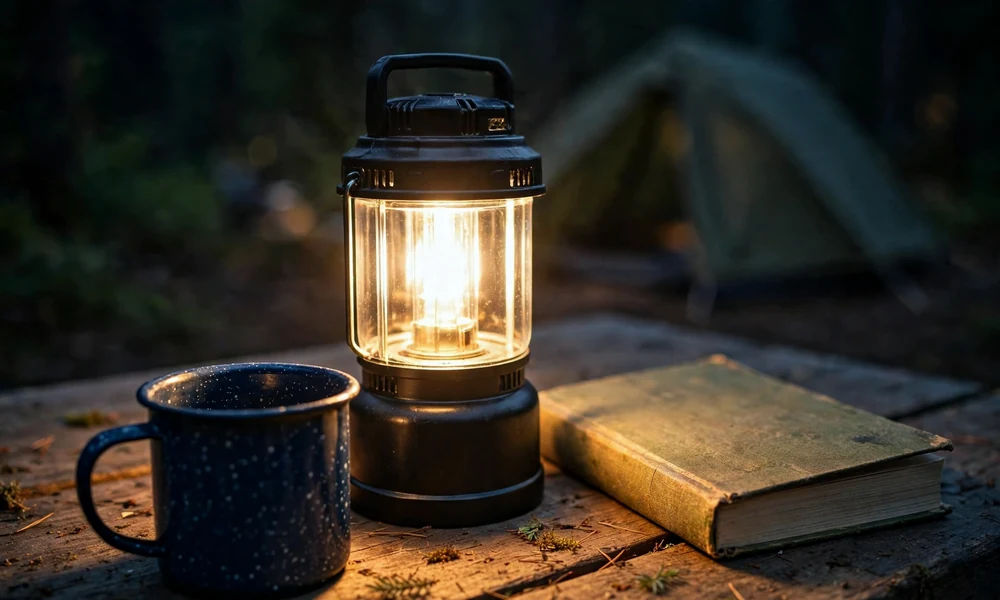
LED lanterns are the most popular type today, and for good reason. They are bright, efficient, cool to the touch, and safe around children and tents. Most run on rechargeable batteries or standard cells, and many double as a phone charger in an emergency, which can be genuinely useful on a long trip. The best LED lanterns have a dimmer, a warm light setting, and a hook or handle for hanging. Their weakness is that they depend on batteries or a charge, so they are only as reliable as your charging habits. If you want a deeper look at the ones built specifically for the outdoors, our guide to the best camping lanterns of 2026 compares nine models worth packing.
Rechargeable lanterns sit in the middle: brighter than most solar models, cheaper to run than battery ones, and ready to go after a night on the charger. Many now charge over USB-C, the same cable as a phone, which makes them easy to top up anywhere. Some are compact enough to slip into a bag, while others are larger and built to light a whole room during a power cut. When comparing them, check how long they take to charge fully, because a lantern that needs eight hours on the plug is less handy than one that fills up in three. Also check whether it can run while charging, which matters if you want to use it as a steady light at home.
Flame lanterns are the oldest type and still the most atmospheric. A hurricane lantern burns kerosene or lamp oil behind a tall glass chimney that shields the flame from the wind, and it gives off a flickering amber light that no LED has quite matched. They need no batteries and no charging, which makes them a strong choice for power cuts and stormy weather. But they need fuel, matches, and care: the glass gets hot, the flame must never be left unattended, and they belong outside or in a well-ventilated space, never in a closed tent. If that old-fashioned charm appeals to you, our guide to the best hurricane lanterns for wind-proof light in 2026 covers the safest and steadiest models.

Lanterns for the Home and Garden
At home, a lantern is at its best when it is easy to grab and pleasant to live with. Keep one in a hallway cupboard or on a kitchen shelf, charged and ready, so a power cut is an inconvenience rather than a scramble in the dark. A lantern with a low, warm setting is ideal for a bedroom during an outage, bright enough to read by but gentle enough not to wake the whole house. In the garden, lanterns work best in groups: two or three smaller lights along a path or around a seating area give a warmer, more even glow than one very bright light. Solar lanterns shine here, because they switch themselves on at dusk and need no attention at all.
For patios and outdoor dining, the lantern should flatter the food and the faces around the table, not flood the scene like a floodlight. Warm light, a dimmer, and a design that hides the bare bulb all help. Hanging lanterns work well over a table, while table lanterns suit smaller spaces and can be moved as the evening goes on. If your patio is exposed to wind, choose a heavier lantern or one with a stable base, because a light lantern will topple at the worst moment. Our guide to the outdoor lanterns that light the patio without the glare in 2026 looks at the models that get this balance right.
Lanterns for Camping and the Outdoors
On a camping trip, a lantern is the centre of the evening. It lights the cooking area, the table where you eat, and the tent where you read before sleep. The best camping lanterns are bright enough to cook by, light enough to carry to the washing-up area, and tough enough to survive being knocked over by a dog or a child. A hook on top is worth its weight, because hanging a lantern from a tent loop or a branch spreads the light far better than setting it on the ground. A red light mode is a useful extra, since it preserves your night vision and bothers insects less. Pack spare batteries or a power bank, and test the lantern at home before you leave, because discovering a dead lantern at a dark campsite is a miserable start to a trip.
Water resistance matters more outdoors than most people expect. A lantern does not need to survive being dropped in a river, but it should cope with rain and damp grass. Look for an IPX4 rating or better, which means it can handle splashing water from any direction. A rubberised base helps it grip a wet table, and a sturdy handle makes it easy to carry with cold or wet hands. Weight is the other trade-off: the brightest lanterns are often the heaviest, so think about how far you will carry it from the car. For a short walk to a pitch, a big bright lantern is fine; for a hike to a wild campsite, a small, light one is the smarter choice.

Staying Safe With Lanterns
Lanterns are simple devices, but a few safety habits make them safer and longer-lasting. Never use a flame lantern inside a tent, a caravan, or any small closed space, because the flame uses oxygen and gives off fumes. Keep flame lanterns away from curtains, dry leaves, and anything that can catch fire, and let the glass cool before you pack it away. For LED and rechargeable lanterns, the main risk is the battery: do not leave them charging unattended for days, and replace any battery that swells, leaks, or gets hot. Store lanterns clean and dry, with batteries removed if they will sit unused for months, because a leaking battery can ruin a good lantern. A quick wipe of the glass or lens now and then keeps the light bright, since dust and soot dim the glow more than most people realise.
The Verdict
The best lantern for most people in 2026 is a warm-white rechargeable LED lantern with a dimmer, a hook, and enough runtime for a whole evening, because it works at home, in the garden, and at a campsite without fuss. Add a solar lantern for the patio, so there is always light at dusk with no effort at all, and a flame hurricane lantern in the emergency kit, so a storm or a power cut never leaves you in the dark. That trio covers almost every situation for less than the cost of one gadget you will barely use. Buy the lantern that matches your main use, check the runtime at a brightness you would actually use, and choose warm light over raw brightness. Do that, and the next time the sun goes down or the power goes out, you will already have the light you need.


