Bypass the Worst Sports Vans of 2026
The worst sports vans of 2026 are not the ones with the oldest paint or the plainest seats. They are the small vans that carry a youth team, an amateur squad or a club side to an away game and fail at the simple job in front of them: they leave late and arrive after kick-off, they pack players in with no room for knees or kit, they break down on the motorway, or they forget to bring the team home. This guide ranks the worst types by the damage they do to a team’s matchday.
Key takeaways
- The worst sports vans are van types, not operators: the same seven failures turn up on away days in every sport and every town.
- Legroom and kit room decide a team van: a van that fits the players but not their bags has already failed half the squad.
- A van that breaks down has already failed: the match goes on without the team, and no apology gets the minutes back.
- Seatbelts are not optional extras: a van with missing or broken belts is the most dangerous type on this list.
- Check the seats, the belts, the kit space and the return trip before you book, and walk away from any van that hides them.
How the worst sports vans were ranked
Every type below was scored on five measures. Space comes first: can a full squad sit with room for knees, and is there somewhere real for the kit bags, or does the kit ride on laps and in the footwells? Safety is second, judged on working seatbelts for every seat, seats that are fixed properly, and a van that has been looked after. Reliability is third, because a van that breaks down is only a van until it stops. Punctuality is fourth: does the van leave on time, know the ground, and arrive with time to warm up? The return journey is fifth: does the van bring the team home?
Two notes before the list. First, no real operator is named here, because the same seven van types turn up everywhere. Second, this is about the small team van itself, the eight to fifteen seat van that carries one squad and its kit, not the long-distance coach that carries the fans: our guides to the worst sports buses of 2026 and the worst sports shuttles of 2026 cover the coach and the short hop that fail in their own ways. It is also about the trip, not the van model: the build quality of the vehicle itself is a different question.

Comparison table: the worst sports vans of 2026
| Rank | Van type | Main fault | Worst moment |
|---|---|---|---|
| 1 | The no-legroom van | No room for knees or bags | An hour folded in half |
| 2 | The kit-crammed van | Kit on laps and in footwells | Bags buried under the bench |
| 3 | The breakdown van | Old van, no backup plan | Watching kick-off from the hard shoulder |
| 4 | The late van | Leaves late, arrives later | No warm-up, straight onto the pitch |
| 5 | The no-seatbelt van | Belts missing or broken | A sudden stop with nothing holding you |
| 6 | The freezing-or-boiling van | Heating and air conditioning broken | Shivering in February, sweating in August |
| 7 | The mystery-pickup van | No pickup point, no times | Watching your van leave without you |
The worst sports vans of 2026
1. The no-legroom van: the worst van of all
The no-legroom van is the worst type of sports van, because it fails at the one job a team van has. A van exists to carry a squad for an hour or two in reasonable comfort, and a van that packs in an extra row until knees press into the seat in front cannot do that for a grown player. The seats are narrow, the pitch is short, the bag has nowhere to go except on your lap, and by the first half hour your legs have gone numb. Sit in the seat before you book, and if your knees touch the seat in front, make another plan.
2. The kit-crammed van: the bags ride, the players suffer
The kit-crammed van is the van that was booked for the players and forgot the kit. The squad fits, just about, but the bags do not, so they ride on laps, in footwells and piled on the back bench, and the last player in has nowhere to put their feet. Boots dig into shins, water bottles roll under seats, and the kit for the second half is buried under bags that nobody can reach without standing up in a moving van. A team van needs a real load space for the kit, not a gap between the seats: ask where the bags go before you book, and count the bags, not just the seats.
3. The breakdown van: old van, no backup plan
The breakdown van looks like a bargain until it stops. The van is old, the engine sounds rough from the start, and the driver keeps the speed down on the motorway, and then the warning lights come on and the van pulls onto the hard shoulder with a cloud of steam. Players stand on the grass verge in their kit while the driver phones for help that is two hours away. The match starts without you. Ask what happens when the van breaks down before you book, and never trust a van with no backup plan.
4. The late van: arriving after the warm-up
The late van is the van that builds in nothing and hopes for the best. The van leaves twenty minutes late because half the squad is still finding the pickup point, then hits traffic it should have planned for, then takes the wrong turn near the ground, and the players walk in with no time to change and no time to warm up. A good van leaves early, plans for traffic and tells players the pickup time in writing, with a map. If the departure time is already tight, the van will be late.
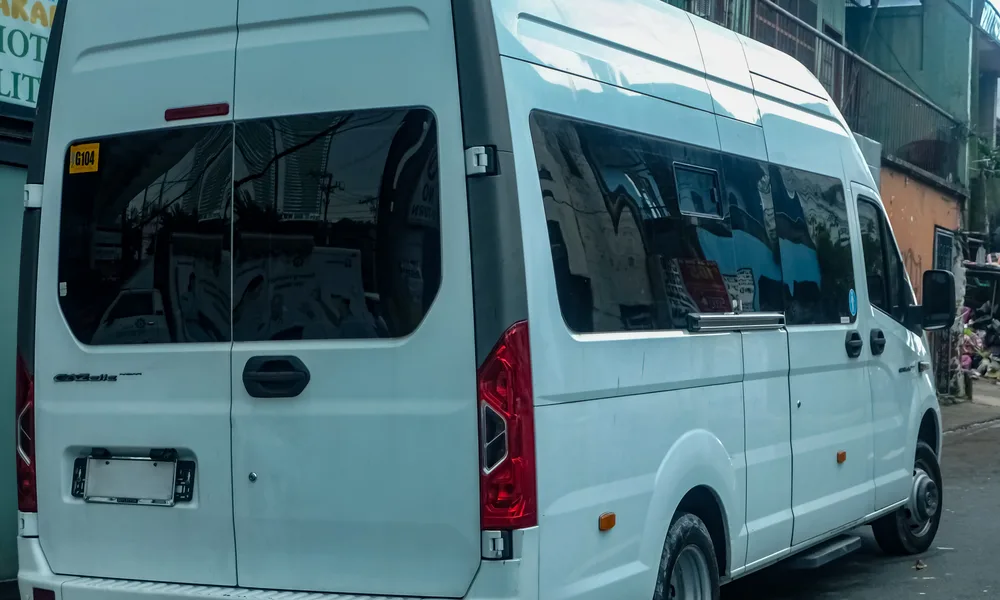
5. The no-seatbelt van: the dangerous one
The no-seatbelt van is the most dangerous type on this list, and the one to walk away from without argument. The belts are missing from the back row, or broken, or tucked away where nobody can reach them, and the seats themselves wobble on their runners. Players sit unbelted because there is nothing to belt into, and a sudden stop throws everyone forward at once. No match is worth that risk. Check every belt before anyone sits down, and if a single belt is missing or broken, refuse the van and say so plainly.
6. The freezing-or-boiling van: the weather, indoors
The freezing-or-boiling van is the van where the heating and the air conditioning gave up long ago and nobody told the squad. In February the windows mist up, the players sit in coats and gloves, and the driver keeps the engine running just to keep the windscreen clear. In August the van is a metal box in the sun, the windows barely open, and the players arrive sweating through their shirts before the match has started. A van that cannot hold a steady temperature is a van that has not been looked after. Ask the driver to run the heating and the air conditioning before you load up.
7. The mystery-pickup van: no point, no times, no answers
The mystery-pickup van is the van that expects the squad to guess. There is no pickup point, no time in writing and no list of who is travelling, just a message that says the van will come round in the morning. The van turns up at the wrong end of the car park, or an hour early, or not at all, and nobody can say which stop is the right one. A good van publishes a pickup time and a place, with a phone number that answers. If the plan is a guess, the van will leave someone behind.
What to avoid when booking a team van
The most common team regret is not a bad van but a wrong match: a van booked for eleven players that holds nine, a kit load discovered at the kerb, or a return trip that was never arranged. Avoid the trap by checking four things before you pay: the real seat count with belts, not the word spacious; the kit space, measured in bags rather than promises; the backup plan for a breakdown; and the return time and pickup point in writing. The same checks work for the whole trip, and our guide to the worst sports travel of 2026 makes the same point about the package around the van.
Checklist: booking a team van
- Count the seats with working belts, not the seats on the advert, and sit in the back row yourself before you book.
- Count the kit bags and check where they actually go, with room left over for water bottles and a first aid kit.
- Pull every seatbelt out and click it in, and refuse the van if a single belt is missing or broken.
- Ask what happens if the van breaks down, and get the backup plan and a phone number that answers in writing.
- Confirm the pickup point, the departure time and the return time in writing, with a map the whole squad can see.
- Check the heating and the air conditioning before you load up, and ask when the van was last serviced.
Frequently asked questions
How many players should a team van carry?
As many as there are seats with working belts, and no more. A van that seats twelve carries twelve players, and the kit needs its own space on top of that. If the squad is bigger than the belted seats, book a second van or a bigger vehicle.
What is the worst type of sports van?
The no-legroom van, because it fails at the one job a team van has: carrying a squad in reasonable comfort. The no-seatbelt van is the most dangerous, but the no-legroom van is the one you will meet most often, on almost every away day.
How do I check a van before I book it?
Sit in the back row, pull every belt out and click it in, and load a kit bag to see where it goes. Ask for the service history, the backup plan for a breakdown, and the pickup and return times in writing before you pay anything.
Is a van better than a coach for a small squad?
For a squad of eight to fifteen players with kit, yes: a van is cheaper, easier to park and quicker to load than a coach. For a bigger group, or a long trip with supporters as well, a coach is the better choice, and the van becomes a second vehicle rather than the plan.
What should I do if the van breaks down on the way?
Keep the squad together and off the road, call the backup number you were given when you booked, and tell the opposition as early as you can. Never accept a lift in an unbelted vehicle, and never let players walk along a motorway to the ground.
Who is responsible for the van on matchday?
The person who booked it. Check the belts, the seats, the kit space and the return trip before the squad loads up, and raise any problem before the van moves, not after it has left the car park.
Bottom line
The worst sports vans of 2026 are easy to recognise and hard to avoid: the no-legroom van that folds the squad in half, the kit-crammed van that forgets the bags, the breakdown van with no backup, and the no-seatbelt van that no team should ever ride in. Count the belted seats, count the kit bags, get the return trip in writing, and the van will get the team to the match instead of getting in its way.