
The candle vs diffuser for home scent debate comes down to one simple question: do you want a burst of fragrance and flickering light, or a steady background scent that never needs a match? Both can make a home smell wonderful, but they work in very different ways, cost different amounts over time, and suit different rooms and routines. Pick the wrong one and you end up with a scent you can barely notice, or one that is far too strong for the space.
Candles win on atmosphere. A lit candle gives you a warm glow, a gentle crackle if you choose a wooden wick, and a scent that fills the room within minutes. Diffusers win on consistency. A reed diffuser releases fragrance around the clock without a flame, and an electric diffuser lets you control the strength with a timer. Neither is better in every home, which is why so many people end up using both.
This guide compares the two side by side, from scent strength and running cost to safety, air quality and style, so you can choose with confidence. We also cover the rooms where each one works best, the mistakes that waste money, and a simple checklist to help you decide in under a minute.
Key takeaways
- Candles deliver stronger scent quickly and add warm light, but need supervision and burn down in 40 to 60 hours.
- Reed diffusers give a gentle, constant scent for weeks with no flame, yet they are subtle and struggle in large or draughty rooms.
- Electric diffusers offer the most control over strength and timing, but they need power, water and regular cleaning.
- Over a year, a reed diffuser is usually the cheapest option, while candles cost more per hour of scent.
- The smartest setup for most homes is a diffuser for everyday background scent and a candle for evenings and guests.

How Each One Actually Works
A candle scents a room by melting wax. Heat from the flame releases fragrance oils trapped in the wax, and the warm air carries the scent outward. The throw is strongest while the candle burns and fades within an hour or so of blowing it out. A diffuser works differently. Reeds draw scented oil up through thin sticks and release it slowly into the air, while an electric diffuser uses ultrasonic vibrations to turn water and essential oil into a fine cool mist.
The Case for Candles
Candles are the oldest home scent tool for a reason. They are immediate, beautiful and easy to move from room to room. A good candle can scent a medium living room in ten minutes, and the flame itself becomes part of the room, especially in the evening. The trade-off is effort. You must light it, watch it, trim the wick, and remember to blow it out. A standard 200 gram candle lasts around 40 to 55 hours, so a candle lit for three hours every evening is gone in about two weeks.
The Case for Diffusers
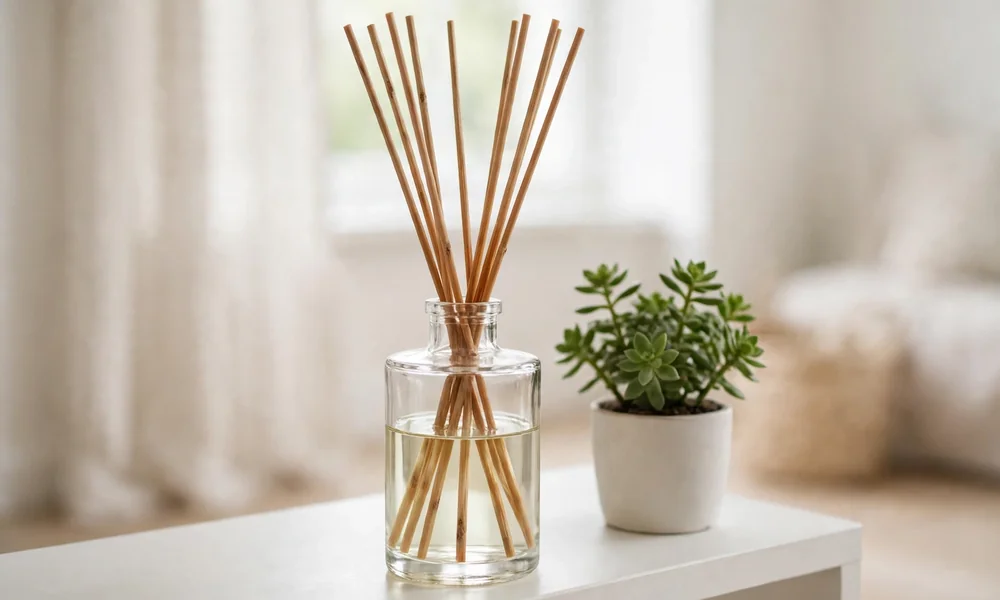
Diffusers are the set-and-forget option. A reed diffuser starts working the moment the reeds go in and keeps going for four to eight weeks, asking nothing of you except an occasional flip of the reeds. Electric diffusers are more hands-on but far more flexible: you choose the oil, set a timer, and adjust the mist level to suit the room. The trade-off is subtlety. Reed diffusers rarely fill a room the way a candle does, and electric models need a power socket and a wipe-down every few days to stop residue building up.
Scent Strength and Coverage
If you want a room to smell amazing the moment guests walk in, a candle wins. Its scent throw is bold and immediate, and a large candle can carry fragrance into a hallway or an open-plan kitchen. Diffusers are quieter. A reed diffuser scents the few feet around it beautifully but often disappears in a large room, and in a draughty space the scent drifts away before you notice it. Electric diffusers sit in between: a strong mist setting can scent a medium room well, though the effect fades quickly once the machine switches off.
Room size is the deciding factor. In a bedroom, bathroom or small study, a reed diffuser is often all you need, and its gentle scent never overwhelms. In a living room or open-plan space, a candle or an electric diffuser on a higher setting does the heavy lifting. If your home has high ceilings or you leave windows open, expect any scent option to work harder, and place the diffuser near where you sit.
Cost Over a Year
A good scented candle costs between fifteen and forty pounds, and a regular burner will go through one every two to three weeks. That adds up to somewhere between two hundred and fifty and six hundred pounds a year. A reed diffuser costs twenty to forty pounds and lasts one to two months, so a year of background scent comes to roughly one hundred and twenty to two hundred and forty pounds. Electric diffusers are the cheapest to run once you own the machine: a bottle of essential oil lasts for months, and the only real costs are water, power and the occasional replacement of reeds or pads.
| Option | Upfront cost | How long it lasts | Yearly cost | Effort |
|---|---|---|---|---|
| Scented candle | £15 to £40 | 40 to 55 hours | £250 to £600 | High |
| Reed diffuser | £20 to £40 | 4 to 8 weeks | £120 to £240 | Very low |
| Electric diffuser | £25 to £60 plus oils | Months per bottle | £60 to £150 | Medium |
The cheapest option is not always the best value. A candle you love and light every evening is money well spent, while a reed diffuser that is too weak for your living room is wasted money however cheap it is. Buy the format that matches the room, not the one with the lowest price tag, and you will spend less in the long run.
Safety, Air Quality and Pets
Safety is where diffusers pull clearly ahead. A candle is an open flame, and it should never be left burning in an empty room, near curtains, or where a pet or child can knock it over. Most candle fires start when a lit candle is forgotten, so the rule is simple: if you leave the room for more than a few minutes, blow it out. Diffusers have no flame, which makes them the safer choice for bedrooms, nurseries and homes with curious pets.
Air quality deserves a mention too. Cheap candles made with paraffin wax can release soot, and heavily fragranced candles can irritate sensitive noses in a small closed room. Soy and beeswax candles burn cleaner, and trimming the wick to about five millimetres before each burn keeps the flame small and the soot down. Choosing the wrong fragrance is a common mistake, and our guide to the worst candle scents for your home shows which ones to avoid. With diffusers, the main concern is the oil itself: some essential oils, including tea tree and certain citrus blends, are not safe around cats and dogs, so check the oil before you diffuse it in a home with pets.
Ambience and Style
A candle does more than scent a room: it changes how the room feels. The flicker of a flame makes an evening bath, a dinner table or a quiet reading corner feel calm and special in a way no diffuser can match. Diffusers are quieter visually, but they can be beautiful objects in their own right, with slim glass bottles and natural reeds that suit a hallway console or a bathroom shelf without drawing attention to themselves.
Style is personal, but the rule is simple: let the candle be the star in the evening and let the diffuser blend into the background during the day. If the living room is your showcase space, the same care that goes into choosing finishes for a feature wall should go into the scent you choose for it. Match the vessel to the room, keep the styling simple, and remember that lighting matters as much as scent when you are setting a mood, so it is worth avoiding the worst lamp choices for rooms as well.

Which Rooms Suit Which
The best choice changes from room to room, and the happiest homes often mix both. A reed diffuser is ideal for a hallway, a bathroom or a guest bedroom, where you want a pleasant scent around the clock without thinking about it. A candle belongs in the living room and dining room, where you are present to enjoy it and can keep an eye on the flame.
Bedrooms deserve a little caution. A diffuser gives you scent all night without any risk, while a candle should be blown out well before you fall asleep, no matter how relaxing it feels. Kitchens are a different case: cooking smells overpower a reed diffuser, so a candle lit after dinner or an electric diffuser on a strong setting works better. Home offices suit a small diffuser, which keeps the scent steady through a working day without the distraction of a flame.
How to Get the Best From Either
Whichever you choose, a few habits make a real difference. Burn a new candle until the whole top layer of wax has melted, or it will tunnel and waste wax. Flip diffuser reeds once a week to refresh the scent, and replace them when they stop drawing oil. Keep both away from direct sunlight and radiators, which dry out oil and melt wax unevenly.
- Trim the wick to 5 mm before every burn.
- Burn a candle for at least one hour, never more than four.
- Flip reed diffuser sticks weekly and replace them monthly.
- Place diffusers at waist height, not on the floor.
- Keep candles and diffusers away from draughts and radiators.
- Blow out candles before leaving the room or going to sleep.
Frequently Asked Questions
Is a candle or a diffuser better for a large living room?
A candle, or an electric diffuser on a high setting. Reed diffusers are usually too subtle for large open spaces, so use them in smaller rooms and let a candle do the work where you entertain.
How long does a reed diffuser last?
Most last four to eight weeks. Flipping the reeds weekly keeps the scent stronger, and placing the diffuser in a warm spot helps the oil travel, though direct sunlight will shorten its life.
Are diffusers safe to leave on overnight?
Reed diffusers are safe to leave out around the clock because they have no flame and no power. Electric diffusers should be used with a timer, and you should check that the oils are safe for pets and children in the house.
Do candles or diffusers cost more over a year?
Candles usually cost more. A regular candle user can spend two hundred and fifty to six hundred pounds a year, while a reed diffuser costs roughly half that and an electric diffuser costs less still once you own the machine.
Can I use both a candle and a diffuser in the same room?
Yes, and it often works well. Use the same scent family in both so they blend rather than clash, and let the diffuser carry the background scent while the candle adds warmth in the evening.
Which is better for allergies or sensitive noses?
A diffuser with a single, simple essential oil is usually gentler, because you control the strength. Choose fragrance-free or lightly scented soy candles if you prefer candles.
The Bottom Line
The bottom line is simple: choose a diffuser for effortless, everyday scent and a candle for atmosphere, evenings and occasions. A reed diffuser keeps a bedroom or hallway smelling fresh for weeks with no effort at all, while a candle turns an ordinary evening into something warm and inviting. Most homes are happiest with both, each doing the job it does best, in the room where it belongs.


